
An above-ground pool has two very different kinds of edging: the visible top rail that people see around the rim, and the small coping clips concealed beneath it. Most products sold as above ground pool edge covers in this comparison are the second kind. They hold the excess material of an overlap vinyl liner against the top of a compatible pool wall before the stabilizer rail and top ledge go back on.
That distinction changes the buying decision. A strip can match your pool diameter yet have the wrong cross-section for the metal wall, or the correct profile but too few pieces to reach all the way around. Buying a 24-foot-round kit does not automatically mean the part will fit an Intex tubular frame, a beaded liner, or an existing curved rail system.
The eight options below range from a small ten-piece flat-coping pack to larger sets of 75 or 80 shorter clips. Their main differences are the stated profile, individual length, number of pieces, and intended pool dimensions. Use those details together with your old coping, not as replacements for checking it.
Quick Comparison of Above Ground Pool Edge Covers
The table highlights what each package contains. A package advertised for a particular diameter still requires a match to the pool wall, liner attachment method, and existing coping shape.

- 10 flat-style plastic strips
- Each strip is 24 inches long
- For metal-wall pools with overlap liners
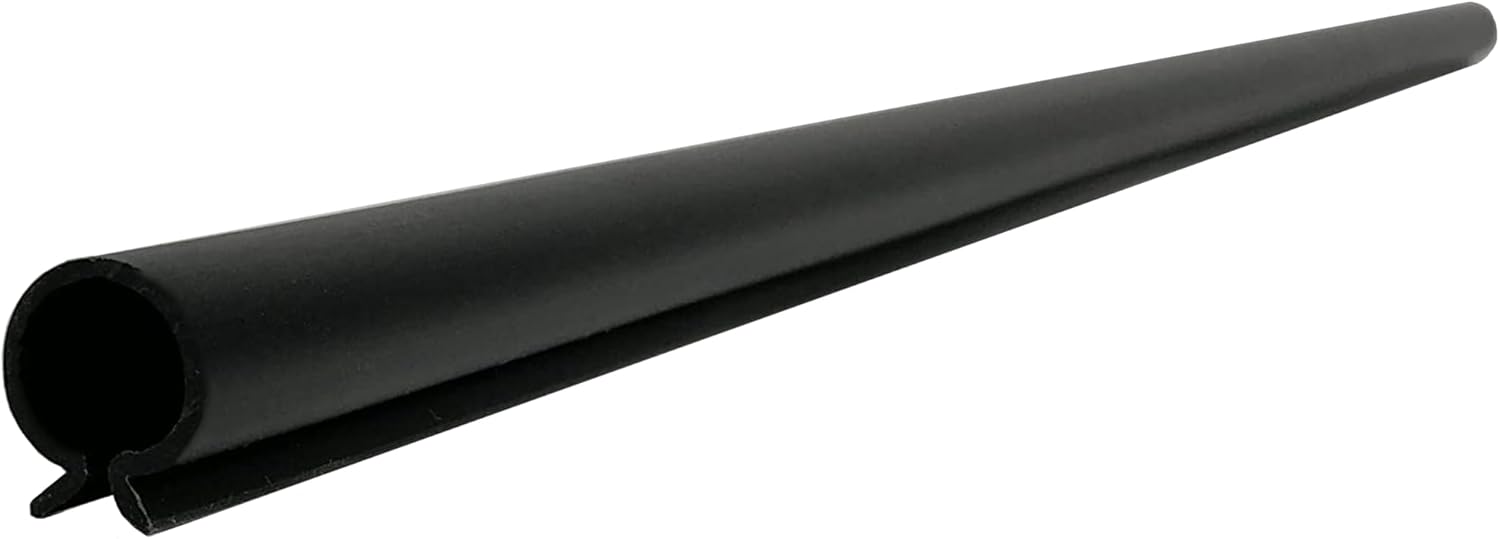
- 2-foot plastic coping pieces
- Intended for above-ground overlap liners
- Pack selection depends on pool size

- 80 individual clips
- Each clip is approximately 15.8 inches long
- PVC design marketed for pools up to 33 ft
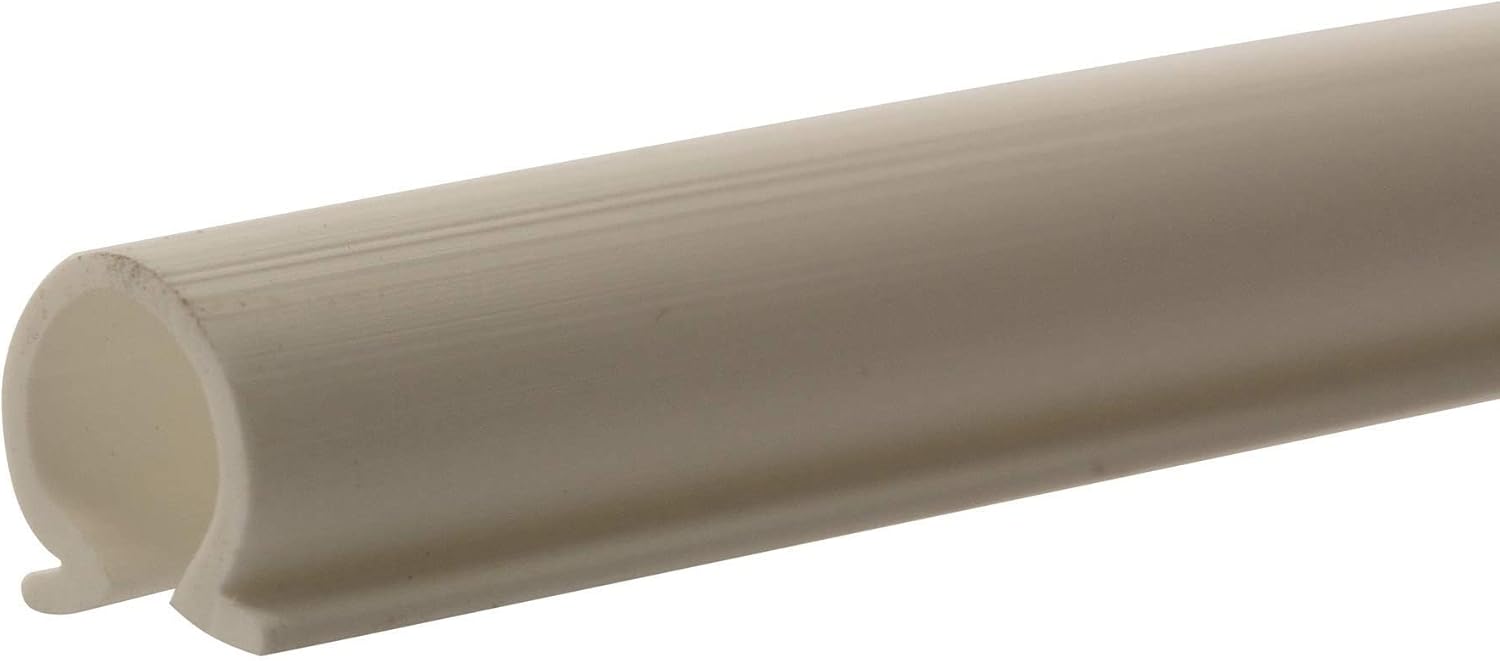
- 19 snap-on coping sections
- Each section is 4 feet long
- Round-style design for 24 ft round pools

- 38 plastic coping clips
- Listed for 24-foot round above-ground pools
- Designed for overlap liner retention

- 33 polyethylene strips
- Each strip is 24 inches long and 1 inch wide
- Listed for 18/21 ft round or 12 × 24 ft oval pools

- 75 polyethylene coping clips
- Each is 15.74 inches long and about 1 inch wide
- Listed for 27–30 ft round and selected oval pools

- 38 flat-style plastic strips
- Each strip is 2 feet long
- Designed for 24-foot round pools or smaller
What to Check Before Buying Pool Coping Strips
Confirm that you have an overlap liner
An overlap liner hangs over the metal wall; plastic coping sections grip it at the rim, then the supporting top structure is fitted. A beaded liner instead attaches to a bead receiver, and many J-hook or unibead installations do not use these separate plastic clips at all. Identify the liner attachment method before comparing any of the eight packs.
A quick visual inspection often settles the question. If old clips sit directly over a folded sheet of vinyl at the wall edge, replacement coping strips are relevant. If the liner has a molded bead or hook suspended from a purpose-made channel, buying generic overlap clips is unlikely to solve a loose or damaged rail.
Compare flat and round profiles, not just the length
Flat-style and round-style describe the cross-section that grips the wall and liner, not whether the swimming pool itself is round. A 24-foot round pool can require flat-style coping, round-style coping, or a manufacturer-specific retention arrangement. A label saying “24 ft round” therefore tells you the target circumference, not the exact shape of the pool wall.
Remove one serviceable strip and photograph its end profile beside a ruler. Check the mouth opening, overall curvature, thickness, and how the stabilizer rail sits over it. A strip that requires excessive force can cut, pinch, or bunch the vinyl. If the profile is not clear, the pool manufacturer or a compatible original replacement part is the safer purchasing route.
Calculate the usable perimeter
A nominal round-pool diameter describes the pool, but the coping must reach its entire upper circumference. For quick estimates, multiply a round pool diameter by approximately 3.14. A 24-foot round pool is about 75.4 feet around; a 21-foot round pool is about 66 feet, before any practical fitting allowance.
Then multiply the number of pieces by the verified length of each piece. Thirty-eight two-foot clips total 76 feet, and nineteen four-foot clips also total 76 feet. Both look appropriate for a 24-foot round pool on paper, but each leaves very little excess for cutting or unusable ends. Measure the old perimeter or check the installation parts list when available.
Account for seams, bends, and installation access
Short clips create more joins, yet they can be easier to work around curves and during staged installation. Long clips reduce the number of separate pieces but can be cumbersome near uprights or top-track sections. Oval pools need their actual end-to-end perimeter, not a guess based only on the longest dimension.
Also consider access around the wall. If a deck closely surrounds the pool, removing the upper ledge and stabilizer parts can require working clearance that the coping-strip package cannot provide. These clips do not substitute for the structural top rail, stabilizer track, top caps, or protective padding.
Flat 24-Inch Above Ground Pool Coping Strips – 10 Pack
- 10 flat-style plastic strips
- Each strip is 24 inches long
- For metal-wall pools with overlap liners
Where the ten-piece format makes sense
This ten-pack is a repair-oriented purchase rather than a whole-pool kit for most homeowners. Ten pieces at two feet each give 20 linear feet of nominal coverage, enough to replace a damaged stretch or supplement strips that remain usable elsewhere. The individual two-foot pieces are manageable when only a section of the top ledge has been opened.
The important identifying detail is flat-style coping. The Amazon description explicitly distinguishes it from round-style material and describes metal-wall, overlap-liner use. A flat profile that matches the original edge can be more useful than a larger package with the wrong cross-section.
For someone changing an entire liner, the small count becomes the limitation. One ten-piece order is nowhere near a complete 18-, 21-, or 24-foot round perimeter. Rather than assuming a few packs will be sufficient, divide your measured circumference by two feet and allow for installation waste only after confirming that the clips fit.
How the strip sits on the wall
The plastic clip goes over vinyl that has been brought across the top of the retaining wall. It temporarily holds that material while the top components are fitted back into position. The clip is concealed after installation; it is not a decorative cap that stays visible along the top seat.
Because the retaining wall and upper stabilizer track both affect fit, the broad claim of use with overlap liners should not be taken as universal across pool brands. If an old clip is unusually deep, sharply curved, or locked into a proprietary metal channel, compare the cross-section carefully before buying.
When reinstalling several existing rails, work according to the pool manufacturer’s order. The position of each top plate and support matters; forcing a generic clip into a misaligned section is not an appropriate fix for a bent or loose structural component.
Why a small package can still be practical
Local replacement is reasonable when the rest of the coping is intact and the liner is not being removed completely. Clips broken during rail disassembly or pieces lost in storage are common reasons to keep spares of the correct profile. A modest pack limits unused material if only a few feet need attention.
However, small packs can be a false economy if every old clip has become brittle. A new liner places renewed demands on the full ring of coping. Inspect several old sections for cracks, deformation, and poor grip before deciding how much to replace.
Color is not a dependable selection criterion here. The listing says supplied colors can vary, and correctly positioned coping is normally hidden under the upper rail assembly. Fit, grip, and total required length matter much more.
Who should choose another option
Choose this pack when the existing part is flat style, the retaining wall is a conventional metal-wall overlap-liner design, and a limited number of replacement sections is needed. It is particularly sensible when you know the original part profile and want to avoid buying a large kit.
For complete 24-foot-round installation, a kit that specifies the required full-perimeter quantity is easier to plan. Lake Effect is a different profile and should not be treated as an automatic substitute; compare the 38-piece Sun2Solar flat kit if the original coping is flat. For pools with beaded liners, none of these overlap clips is an appropriate default.
Pros
- Flat profile explicitly specified for matching wall-edge systems
- Small ten-piece pack suits replacement of damaged sections
- Two-foot lengths are practical for handling around curved walls
- Non-corrosive plastic is covered by the installed top rail
Cons
- 20 linear feet is insufficient for most complete pools
- Not compatible with every round-profile coping system
- Color can vary between supplied batches
8STREME 2 ft Overlap Liner Coping Strips
- 2-foot plastic coping pieces
- Intended for above-ground overlap liners
- Pack selection depends on pool size
A size-selectable approach
The 8STREME listing describes two-foot plastic liner clips intended for above-ground round pools. Rather than treating the full product family as one fixed kit, the seller directs buyers to select a package according to pool size. That makes the option relevant to more than one diameter, but only if the actual selected count and profile are confirmed.
Two-foot pieces are a familiar length in overlap-liner installations. They are long enough to cover meaningful sections without asking an installer to handle a four-foot run of flexible material while keeping the liner seam positioned. Their smaller format can also make it easier to stop and adjust the vinyl before progressing.
The listing does not establish a single quantity that can safely be assigned to every option shown under this ASIN. Before ordering, confirm the selected quantity in the seller’s variation controls and calculate the resulting coverage rather than borrowing counts from a different product in this guide.
Material and resistance claims
8STREME describes the material as non-corrosive plastic with resistance to sunlight, chemicals, and weather. For a component near pool water, non-metallic construction avoids the rust issue that could affect a metal retaining clip. UV resistance is relevant during uncovered portions of installation, even though the finished component should normally sit under the top structure.
Those claims do not establish an exact service life or make the strips immune to bending and age-related brittleness. More importantly, resistant plastic does not compensate for a profile that is too tight. A clip still needs to fit over the particular wall and liner arrangement without damaging either surface.
A buyer comparing this product with PE or PVC competitors should focus first on geometry and package count. The listing does not give a reliable numerical material thickness, so a claim that it is thicker or stronger than another set would not be justified.
Installation and adjustments
Installation is a staged process: the overlap liner is positioned, the clip is set over the rim to retain it, and the stabilizer rail or other appropriate top components are restored. The seller describes the pieces as suitable for DIY installation. Actual difficulty depends on the liner, pool wall condition, and the arrangement of the top hardware.
Work around the pool without removing every structural top part at once unless the manufacturer’s instructions specifically say to do so. Maintaining wall stability is important. Recheck the liner seam and outside overlap frequently; a coping strip holds the liner in its current position, whether that position is correct or not.
A clip that snaps on easily over an empty edge might behave differently once vinyl is folded across the wall. Test it with the actual liner thickness, especially if a heavy replacement liner is being installed.
Practical buyer fit
This is a reasonable option for shoppers who want two-foot coping sections and can choose the pack count matching their pool size. It also appeals when a liner change is already scheduled and the older clips are weathered or missing.
The main caution is the product-family presentation. Read the selected variation as carefully as the headline, verify the included piece count, and check the wall profile against an existing strip. If you need an explicitly flat or round cross-section, another listing that states that detail could reduce uncertainty.
Pros
- Two-foot format simplifies perimeter estimates
- Manufacturer describes UV- and chemical-resistant plastic
- Suitable for replacing clips during an overlap-liner change
- Designed to grip the liner at the pool wall
Cons
- Exact supplied pack count needs confirmation at checkout
- No precise wall-edge profile dimensions are published
- Round-pool emphasis requires separate fit checking for ovals
Nucucina 15.8-Inch Coping Strips – 80 Pack
- 80 individual clips
- Each clip is approximately 15.8 inches long
- PVC design marketed for pools up to 33 ft
What eighty short clips change
Nucucina supplies 80 separate pieces, each described as about 15.8 inches long. The stated total is roughly 105.3 linear feet before allowing for cuts, gaps, or damaged ends. A 33-foot round circumference is about 103.7 feet, so the nominal coverage is close to the pool size advertised by the seller.
This distinction is important: a high piece count does not necessarily mean abundant extra material. The shorter length means this package requires substantially more individual placements than a long-strip kit. In return, handling each section along a curved wall can be more controlled, especially when the liner needs frequent adjustment.
The seller also describes the clips for oval pools, but no single oval perimeter follows automatically from a “33 ft” round-pool claim. If you have an oval, determine the proper perimeter from its installation documents or measure the wall edge directly.
PVC construction and fit
The listing identifies the strips as PVC. That matters mainly because the material is intended to flex enough to clip over the liner and pool wall. An adequate spring grip is helpful, yet the correct cross-section still controls compatibility. A flexible strip shaped incorrectly can be just as unsuitable as a rigid one.
There is no verified universal opening size or profile drawing that confirms these clips for every metal-wall pool. The seller’s compatibility description supports overlap-liner use on above-ground pools, but it is not a replacement for examining the existing coping. Compare the thickness of the wall lip and folded vinyl with an actual sample if uncertainty remains.
PVC should not be treated as evidence of a specific number of seasons of use. Storage, chemical exposure, and the mechanical stress of repeated removal differ among pools. Check the pieces for cracking before reusing them after a liner change.
Working with many joints
Eighty shorter clips make it possible to work in small stages. Install the first few only after the liner overlap is correct, then move around the perimeter while checking that the seam remains at the intended height. Avoid treating the snapping process as the final fit check: once the pool begins filling, adjustments become harder.
Every joint is a point where alignment needs attention. Do not force one clip to overlap another unless the pool maker calls for that arrangement. Misaligned ends can lift a section of stabilizer track or pinch a fold of vinyl beneath the coping.
The large package is not a reason to crowd every piece onto a smaller pool. Use enough correct coping for the intended continuous retention pattern, then keep spare clips for later repairs.
Best and less suitable situations
Nucucina is attractive for owners with larger round pools who prefer shorter pieces and want a package with a count explicitly aimed at a 33-foot diameter. The advertised PVC material and 80-piece quantity are its clearest differences from the standard two-foot packages.
Buyers who want fewer joints should consider a longer-piece kit after checking profile compatibility. Anyone needing a known flat or round cross-section may also prefer a product with that designation in its listing. For a 24-foot pool, this set could leave unused clips, but the amount of spare coverage depends on the actual layout.
Pros
- High piece count targets large circumferences
- Short sections are easier to position incrementally
- PVC construction is intended to flex around curved walls
- Listing describes use with round and oval overlap-liner pools
Cons
- More individual joints to position than with four-foot strips
- Size claim does not prove a particular wall-profile fit
- Nominal 33-foot coverage leaves little allowance for unusable sections
Lake Effect Pools 24 ft Round Coping – 19 Strips
- 19 snap-on coping sections
- Each section is 4 feet long
- Round-style design for 24 ft round pools
Why the four-foot sections matter
Lake Effect Pools supplies nineteen pieces described as four feet long, giving 76 linear feet of nominal coping. The circumference of a 24-foot round pool is about 75.4 feet. This is a closely sized package rather than a general-purpose surplus assortment.
Four-foot clips create fewer joins than two-foot or 15.8-inch clips. If the original upper wall accepts this style, a longer continuous section can simplify the sequence of positioning, fastening, and checking alignment. The compromise is that longer pieces need more careful handling when the liner is shifting or the wall has obstacles.
The listing identifies the product as round-style coping. Here “round style” concerns the clip shape, not merely the circular pool. That is the most important compatibility feature to confirm before considering the convenient nineteen-piece count.
Installation with a round profile
Round-profile coping is intended to slip over the folded overlap liner at the pool wall. The original shape of the wall top and the stabilizer track needs to accept its curve. An installer should be able to seat the clip without using it to pull a damaged top edge back into position.
When a liner is being replaced, arrange the vinyl evenly before setting the longer clips. If the floor-to-wall seam is uneven, a four-foot section will hold a larger area in the wrong position, making rework more inconvenient. Keep the staged setup orderly and check each section before moving on.
The vendor notes that the color can vary. Since this component is covered by the rail, the color has little effect on use. The profile, length, and absence of cracked material are more important acceptance checks.
The close perimeter calculation
Nineteen times four is 76 feet; a perfect circle 24 feet across measures approximately 75.4 feet around. This leaves only a small theoretical difference. Real pools have wall joints, upright positions, and installation tolerances, so do not plan to waste a substantial length and still assume the kit will finish the perimeter.
The sensible approach is to confirm that the product is the specified style for the pool and follow the pool manufacturer’s layout. The nominal count is a selling point only if that compatibility is already established. A longer strip is not automatically more secure simply because it has fewer gaps between components.
If some pieces must be shortened, use a method approved for the material and leave smooth ends. Sharp or badly cut plastic beside vinyl can create an avoidable wear point.
Who should consider it
This is one of the more clearly differentiated options for a known 24-foot round pool that uses round-style coping. It offers a complete-looking count of long sections and a straightforward reason to choose it over a flat two-foot kit.
It is a poor blind replacement for existing flat coping. It is also not a universal edge guard, cushioning strip, or metal top-rail replacement. If the original profile is flat, inspect the Sun2Solar kit instead; if the clip shape remains uncertain, resolve that fit question before buying either.
Pros
- Long sections mean relatively few piece-to-piece joints
- 76 linear feet closely tracks a 24-foot round perimeter
- Round-style profile is identified rather than left ambiguous
- Non-corrosive snap-on construction for overlap liners
Cons
- Round-style cross-section can be wrong for flat-style wall edges
- Very little nominal excess length in a 24-foot round application
- Color may differ from product photographs
24 ft Round Pool Coping Strips – 38 Pack
- 38 plastic coping clips
- Listed for 24-foot round above-ground pools
- Designed for overlap liner retention
A focused 24-foot-round replacement set
This package offers 38 coping clips marketed for a 24-foot round above-ground pool. That fixed target is useful when a complete liner replacement is planned and the owner wants to purchase a named pool-size kit rather than calculate several small packs. The product is intended to retain an overlap liner at the rim.
Unlike the Sun2Solar listing, this product page does not establish a dependable individual clip length or clearly identify flat versus round style. It would be tempting to infer two feet per piece because some other 38-count products have that measurement, but that would mix specifications from different kits.
The practical decision is therefore based on its stated quantity and pool size, with a further requirement to verify the clip cross-section. An existing clip, a manufacturer part number, or a dimensional drawing is much better evidence of fit than the 38-count alone.
How to read the material description
The seller describes plastic coping clips for above-ground overlap liners and notes that the color can be black, white, or gray. There is no reason to select this product on visual color consistency, because the installed clip should sit below the top rail.
Marketing wording calling it professional grade does not give an objective tensile strength, wall thickness, or service-life rating. Its useful, verified purpose is simply holding the overlap liner while the pool’s top assembly is fitted. Avoid assuming it outlasts other plastic strips without relevant comparative evidence.
If old coping has turned brittle, a full refresh can be sensible during a liner change. Inspect the pool wall for rust and sharp edges as well; new plastic clips cannot correct structural corrosion or damaged metal.
Installation and quantity planning
Thirty-eight pieces are a plausible count for a 24-foot round kit, but the correct number alone cannot guarantee complete coverage when a product page does not confirm the length of every strip. Do not calculate a guaranteed 76-foot total for this specific model without checking the supplied dimensions.
Before dismantling the upper rails, lay out the new clips and compare a sample with the existing wall edge. If the shape and opening differ, stop before the liner becomes difficult to hold. During installation, maintain tension and alignment evenly instead of trying to correct slack by clamping it harder.
The pack is aimed at a whole-perimeter task. If only one old clip is damaged, the ten-piece flat option could be more economical if its profile matches; buying a full 38-piece pack primarily for a minor repair creates unnecessary surplus.
Who it fits
This set fits a shopping situation where the pool is 24 feet round, uses an overlap liner, and the original coping profile can be checked separately. It is more specific about total piece count than the variable-package 8STREME listing.
It is less suitable for buyers who need a confirmed flat or rounded cross-section directly from the listing. In those cases, the clearly labeled Sun2Solar flat kit or Lake Effect round-style kit provides a more useful first filter, provided the pool manufacturer’s design agrees.
Pros
- Pack count corresponds to a complete 24-foot round kit
- Smaller sections can be positioned in stages
- Color variation is disclosed by the seller
- Focuses on one specific pool diameter rather than a broad universal claim
Cons
- Individual strip length is not clearly verified in this listing
- Exact flat-versus-round profile needs visual and dimensional checking
- Color may be black, white, or gray
Biggun 24-Inch Coping Strips – 33 Pack
- 33 polyethylene strips
- Each strip is 24 inches long and 1 inch wide
- Listed for 18/21 ft round or 12 × 24 ft oval pools
Where thirty-three pieces fit
Biggun offers 33 pieces at 24 inches each, creating 66 feet of nominal coverage. Its listed target pools include 18- and 21-foot round models as well as a 12-by-24-foot oval. The seller’s size examples therefore distinguish it from the 24-foot round kits elsewhere in the comparison.
The arithmetic explains both the appeal and the limitation. An 18-foot round pool has a circumference of roughly 56.5 feet, so this package provides additional linear footage for that idealized circle. A 21-foot round pool is about 66 feet around, almost exactly the total advertised length. There is little nominal allowance for mistakes at the larger round size.
For the oval example, the path of the perimeter depends on the actual straight sections and curved ends. Do not substitute a rectangular calculation for the pool’s physical edge; use the original part list or a direct measurement when possible.
Material and one-inch width
The brand identifies polyethylene, or PE, as the coping material and gives each strip a nominal width of one inch. Both details are useful but have limits. PE is a non-corrosive plastic used for flexible parts, while the nominal width helps compare the product with your existing clip.
One inch does not tell you the precise opening between the sides of the clip, nor the shape that seats over the wall. A narrow channel can be incompatible with a thick folded liner even if the outside width looks similar. Treat the listed measurement as a screening detail, not proof of a universal fit.
The product description suggests opening the clips slightly by hand before sliding them over the liner. If a strip needs excessive bending, that is a reason to question compatibility instead of applying additional force.
Planning an installation around the uprights
Two-foot pieces offer a practical rhythm on a conventional metal-wall pool. A helper can hold the liner while another installer sets clips around a short section, then the team can check the overlap before proceeding. This can matter most where support uprights divide the work into small spans.
The seller lists other package counts for other pool sizes. Keep the 33-count configuration separate from those alternatives: the 38-count option described elsewhere on the listing should not be assumed to arrive with this ASIN.
Even a correct kit does not fix misaligned stabilizer rails. During reassembly, keep screws, plates, and caps assigned to their original positions and follow the order specified by the pool maker. The coping’s job is liner retention, not structural bracing.
The buyer it suits
Choose Biggun when you have a pool size named in the 33-piece configuration and want verified two-foot PE clips with a stated nominal width. The explicit pack calculation is easier to evaluate than a quantity that changes with selection.
For 24-foot round pools, the 33-piece set is not the seller’s advertised configuration. For a 21-foot round pool, measure carefully because the nominal 66-foot supply leaves essentially no spare linear footage. For any other shape, confirm the original coping profile first.
Pros
- Explicit 24-inch length and one-inch nominal width
- 33 strips supply 66 linear feet of material
- PE construction intended for liner retention
- Published sizing examples include a specific oval footprint
Cons
- A 21-foot round circumference nearly uses all 66 feet
- Nominal width is not enough to prove profile compatibility
- Not the seller-recommended quantity for 24-foot round pools
Niuyhe 15.74-Inch Coping Strips – 75 Pack
- 75 polyethylene coping clips
- Each is 15.74 inches long and about 1 inch wide
- Listed for 27–30 ft round and selected oval pools
A kit built around larger perimeters
Niuyhe’s listed option supplies 75 clips, each about 15.74 inches long and one inch wide. Multiplying the stated length by the quantity gives approximately 98.4 linear feet before trimming. The seller points this set toward 27-, 28-, and 30-foot round pools, along with selected large ovals.
A 30-foot round circumference is roughly 94.2 feet, which illustrates why 75 short pieces can be useful for that size. By contrast, a 33-foot round pool is larger than this configuration’s explicitly recommended round range. Do not substitute Nucucina’s 33-foot claim for Niuyhe’s separate product.
The shorter format can be helpful around curved walls. The tradeoff is that each clip must be aligned, seated, and checked, giving the installer many more handling steps than a four-foot strip system.
PE construction and the lip dimensions
The listing describes PE coping, with individual sections about 40 cm by 2.5 cm. These figures are consistent with the advertised approximate 15.74-inch length and one-inch width. Material type and nominal width help narrow the choice but cannot establish wall fit on their own.
A clip has to clear the folded liner and retain it without creating sharp pressure points. Pool wall profiles differ, and the seller’s examples are based mainly on pool sizes rather than engineering drawings for every top-wall assembly.
There is also an Amazon catalog detail worth checking when ordering: the supplied link can display the 75-piece selection under a related variation identifier. Keep the user-selected 75-piece quantity visible in the product selector before completing a purchase, rather than assuming any other displayed pack is identical.
Quantity examples and practical flexibility
The seller provides example counts for several pool shapes, including 64 pieces for a 27-foot round pool, 67 for a 28-foot round pool, and 72 for a 30-foot round pool. Those examples leave some spare clips within the 75-piece assortment. They are seller guidance, not a substitute for the original installation manual.
The listed oval examples include 16-by-32-foot and 18-by-33-foot pools. Unlike a round circumference, oval perimeter calculations depend on the geometry of the curved ends and straight sides. Different pool brands with the same nominal footprint can use different coping arrangements.
Test one clip before removing a whole ring of existing coping. If the profile works, the shorter pieces are manageable for staged alignment. If it does not, the number of spares in the package is irrelevant.
When to consider another set
This is a candidate for larger round pools within the advertised 27-to-30-foot range, particularly when the owner wants many short pieces instead of long runs. A 75-piece configuration is not an interchangeable replacement for every 75-piece coping family, because cross-sections and liner attachment systems vary.
Anyone covering a 33-foot round wall should compare the larger nominal footage of Nucucina’s 80-piece 15.8-inch set and verify profile compatibility. For a 24-foot pool, a specifically sized 24-foot kit is usually easier to plan. The right choice depends on measured coverage plus physical fit, not the highest count.
Pros
- 75-piece set provides flexibility on larger pool perimeters
- Short sections can follow curves without handling long rails
- Dimensions and several fit examples are supplied
- PE clips are intended for securing overlap liners
Cons
- Large number of joints adds installation handling
- Amazon displays a related variant identifier for the 75-piece option
- Pool-size claims still require matching the retaining-wall edge
Sun2Solar 24 ft Round Flat Coping – 38 Pieces
- 38 flat-style plastic strips
- Each strip is 2 feet long
- Designed for 24-foot round pools or smaller
An explicitly flat 24-foot kit
Sun2Solar provides 38 two-foot pieces of flat-style coping for a nominal 76 linear feet. It is promoted for 24-foot round above-ground pools or smaller. For a known flat-profile pool wall, that gives the buyer a much clearer starting point than a product that only says “pool coping.”
The 24-foot diameter corresponds to about 75.4 feet of circumference. In theory, 38 two-foot strips almost match that perimeter; in practice, installation details still need checking. The product is not intended to provide several spare long sections for a full 24-foot pool.
The reference to smaller pools means that some pieces can remain unused. It does not imply that a smaller pool’s top-wall cross-section will be compatible automatically.
What flat style really tells you
Flat style refers to the shape of the plastic clip that goes over the metal wall and folded vinyl liner. The wall’s top edge and stabilizer rail assembly must accept that shape. The product is meant to sit beneath the visible pool top rail, not to serve as an exposed bumper or handrail cover.
The listing also describes non-corrosive plastic. That is appropriate for a part located near treated pool water, but it does not show resistance to every weather condition or guarantee a particular lifespan. A flat clip that fits without straining the liner is more important than claims of durability alone.
If the original component has a rounded cross-section, do not rely on the matching 24-foot diameter. Lake Effect supplies a round-style alternative, subject to confirmation that its specific curve matches the pool.
Handling 38 two-foot sections
Two-foot sections divide the work into small, repeatable steps. After the liner hangs evenly, each clip can retain one manageable stretch before the installer moves to the next section. That helps if the liner needs repositioning around uprights or if an oval-shaped pool has sections with different geometry.
More joints are the tradeoff compared with nineteen four-foot lengths. Make sure adjacent pieces do not leave loose areas or press awkwardly against rails, plates, or top caps. A correctly assembled stabilizer system remains essential for the overall pool wall structure.
The nominal 76-foot quantity has little margin on a full 24-foot round wall. Keep the pieces organized before starting and do not cut several at once without checking the last section’s required length.
Who should consider it
This package makes sense for a 24-foot round pool with a flat-style coping system and an overlap liner. The combination of stated profile, count, and length reduces guesswork compared with the generic 38-piece set.
The strongest reason not to buy it is incompatible wall geometry or a different liner attachment type. Beaded and J-hook liner arrangements may use entirely different retention parts. Confirm the actual existing profile before treating the Sun2Solar size claim as evidence of fit.
Pros
- Flat-style profile is stated explicitly
- Two-foot pieces offer manageable placement
- 38-piece kit provides 76 nominal linear feet
- Non-corrosive plastic sits below the pool top rail
Cons
- Not the correct choice for all rounded coping profiles
- A 24-foot round uses nearly all the nominal coverage
- Pool size alone cannot establish compatible wall geometry
Detailed Buying Guide: How to Choose Above Ground Pool Edge Covers
Start with the exact wall and liner system
The most expensive mistake is assuming that a pool’s diameter completely identifies its coping. Two 24-foot round pools from different manufacturers may have different top-wall profiles, stabilizer rails, and liner mounting methods. A dimension given in feet identifies the overall pool, not the cross-section of the small plastic clip. Look first for a compatible original part number in the pool installation manual.
An overlap liner is the intended application for all eight products discussed here. Its excess vinyl folds over the top of the wall and is temporarily secured by coping before the top assembly goes on. A beaded liner hangs in a receiver track. J-hook designs hook directly over the wall, and their installation manuals can specify no separate plastic coping strips. Buying overlap clips for one of these arrangements is not routine maintenance.
If you have a steel-wall pool and the old coping has been discarded, do not estimate clip size from the thickness of the wall alone. The folded vinyl changes the total thickness, and a rail or channel above the clip affects the available space. Photograph a similar installed section if one remains, then compare the opening and outer shape against product images or manufacturer drawings.
Understand the difference between 15.8-inch, 24-inch, and 48-inch strips
The piece length influences both installation speed and the number of joins. Short sections measuring around 15.8 inches, such as those in Nucucina and Niuyhe kits, can be moved into position in small steps. They require many placements over a large circumference, but they do not demand that the installer keep a four-foot length of flexible material aligned at once.
Two-foot sections are a middle option. Biggun specifies this length, as do the flat Sun2Solar strips, the flat ten-pack, and the 8STREME pieces. They let you recheck liner position frequently without producing quite as many separate joints as the shorter format. The right length is not inherently the strongest; the gripping profile and proper upper-wall assembly determine whether it functions as intended.
Lake Effect’s four-foot pieces can reduce installation joins considerably on a compatible 24-foot round pool. Their shape is explicitly described as round style, which can outweigh the convenience of the length if your wall requires flat coping. More continuous pieces also mean greater care during staging, particularly where access is obstructed by a close deck.
Estimate perimeter without treating the pack as universal
For a round pool, the rough circumference in feet is the nominal diameter multiplied by pi. Examples are about 56.5 feet for 18 feet, 66.0 feet for 21 feet, 75.4 feet for 24 feet, 84.8 feet for 27 feet, 94.2 feet for 30 feet, and 103.7 feet for 33 feet. These estimates help detect obvious count errors before an order.
Total advertised coverage is piece count multiplied by piece length. That is simple for the flat ten-pack (20 feet), Biggun 33 two-foot strips (66 feet), Sun2Solar 38 two-foot strips (76 feet), and Lake Effect 19 four-foot strips (76 feet). Nucucina’s 80 by 15.8 inches is about 105.3 feet; Niuyhe’s 75 by 15.74 inches is about 98.4 feet. These are nominal material totals, not guarantees about usable coverage.
If the exact length is not established for a listing, avoid assigning it a calculated total simply because another similarly sized kit is sold with the same count. That caution is especially important for the generic 38-piece 24-foot-round listing. Ask for the dimensions or use the pool manufacturer’s specified coping quantity.
Oval pools need a different approach. A nominal 12-by-24-foot footprint tells you the overall dimensions, but the amount of straight wall and the radius of each curved end determine the perimeter. An oval with a different wall geometry can require a different number of the same nominal-length clips.
Decide between full replacement and spot repairs
When one or two pieces break during routine disassembly, an appropriately sized small pack can be sufficient if the remaining material is still flexible and grips properly. The ten-piece flat package exists for this sort of selective replacement. Check the unaffected areas before assuming a local repair is the entire solution.
A complete liner replacement creates a natural opportunity to assess every clip. A mix of old brittle coping and a new liner is less desirable than a complete correctly matched set, especially when parts have begun to split or lose their grip. Inspect several clips from different sides of the pool, because sunlight exposure and moisture can vary around the perimeter.
Do not rely on a new clip to compensate for a bent top wall, severe corrosion, or a missing stabilizer track. Those conditions involve different parts of the pool structure. Repair them according to the pool maker’s directions before fitting a new liner.
Use material claims in context
Most of these coping products are plastic. Nucucina identifies PVC; Biggun and Niuyhe identify PE; the remaining listings principally use descriptions such as non-corrosive plastic. Both PVC and PE can be used to make flexible clips, but naming a polymer does not verify identical flexibility, impact resistance, or operating life across manufacturers.
For the installed part, mechanical fit is usually the immediate purchasing concern. A clip must hold the folded liner without a sharp edge or damaging pressure. The seller’s resistance claims can be useful supporting information, but do not make them a substitute for the proper cross-section or sufficient quantity.
If the product does not publish a measured wall thickness or reliable test result, do not assume it is heavier or longer lasting than an alternative. Avoid using a vague “heavy duty” label as a technical specification.
Check color, finish, and storage conditions
Several sellers warn that the supplied color may vary. That is generally not a major drawback because coping is normally hidden below the pool’s finished top assembly. Color should not take priority over a smooth molded edge, correct gripping opening, and intact plastic.
Inspect all pieces when they arrive. Look for splits, warped channels, or rough edges that could catch vinyl. Keep the remaining clips away from unnecessary heat and direct sunlight during storage. Do not leave them buried under heavy equipment that could permanently deform their shape.
When a pool is reopened and the top structure is inspected, pay attention to any visible liner movement near a coping seam. Do not assume an old strip has held its shape merely because it remains in place. A damaged rail or displaced top plate also calls for separate attention.
Plan around decks and difficult access
A deck built close to the upper wall can make a liner change more complicated. Coping strips fit under the pool’s top assembly, and parts of that assembly often have to be removed in a particular sequence. Restricted access may make even a straightforward snap-on product difficult to install.
Work with the pool installation guide rather than lifting every top rail at once. The wall may rely on its top components for stability at certain stages. Never remove more supporting structure than the pool manufacturer permits. If a deck covers screws, plates, or rail ends, solve that access issue before ordering a coping kit.
Neither a short nor a long coping strip becomes a deck-mounted safety edge cover. If the concern is a hard deck-to-pool transition, exposed sharp trim, or a place swimmers rest their arms, you are looking for a different product category: purpose-made edge padding or compatible protective trim.
Treat warranties and return conditions as separate questions
None of the eight listings provides a consistently verified warranty term suitable for a direct warranty-length comparison. Do not infer a warranty from the brand name or from a similar pool accessory sold by the same company. Inspect the seller’s written warranty and return information for the exact selected option before buying a large quantity.
Because profile compatibility can be difficult to judge from photographs, a practical return policy can matter as much as a nominal count difference. Keep the packaging and compare one undamaged clip to the old part before committing to extensive disassembly. Avoid marking, bending, or cutting the entire pack before confirming compatibility.
Direct Product Comparisons
Sun2Solar 38-Piece Flat Kit vs Lake Effect 19-Piece Round Kit
These two sets target the same nominal 24-foot round pool circumference but make different design choices. Sun2Solar supplies 38 flat-style sections at two feet each; Lake Effect supplies nineteen round-style sections at four feet each. The nominal material length is 76 feet for both, which is why pool diameter alone cannot decide between them.
Choose according to the original coping profile first. Once that has been confirmed, consider handling: Sun2Solar’s smaller pieces permit more frequent liner-position checks, while Lake Effect’s longer pieces reduce the number of joints. Neither is a direct substitute for the other simply because the printed pool diameter matches.
Sun2Solar 38-Piece Kit vs Generic 38-Piece 24 ft Kit
The products have the same listed count and 24-foot-round target, but the verified level of detail differs. Sun2Solar specifically describes flat-style two-foot coping. The generic kit identifies its use with overlap liners and 24-foot round pools without establishing the individual length or cross-sectional style as clearly.
That makes Sun2Solar more informative when you already know the original clips are flat. The generic product remains an option if its profile can be confirmed independently and the exact quantity is correct. Avoid assigning Sun2Solar dimensions to the other listing.
Biggun 33 Pieces vs 8STREME 2 ft Pieces
Both listings describe two-foot sections, yet the package information differs. Biggun’s supplied configuration is explicitly 33 pieces, with polyethylene construction, a one-inch nominal width, and named 18-/21-foot round and 12-by-24-foot oval applications. 8STREME uses a pool-size selection approach rather than one fixed count across its listing.
For a 21-foot round wall, Biggun’s 66 feet is essentially the mathematical circumference, making careful planning important. 8STREME may offer a more suitable selection in another count, but buyers must verify that quantity and profile. The difference here is not demonstrably superior durability; it is the specificity of the package data.
Nucucina 80 Pieces vs Niuyhe 75 Pieces
These are the two largest-count sets and both use shorter pieces. Nucucina states about 15.8 inches per PVC clip and markets the 80-piece set for round pools up to 33 feet. Niuyhe states roughly 15.74 inches per PE clip and explicitly lists 27-, 28-, and 30-foot round pools along with selected ovals.
Their nominal totals differ by nearly seven feet: about 105.3 feet for Nucucina compared with about 98.4 feet for Niuyhe. The extra Nucucina footage is most relevant to a larger perimeter; for a smaller compatible pool, some pieces will be unused. Do not assume the two brands have the same grip profile because the pieces are nearly the same length.
Flat Ten-Pack vs Full-Perimeter Packages
The 20-foot flat ten-pack is the clearest spot-repair quantity in the group. It suits a handful of damaged sections when the old and new profiles match. A 24-foot-round replacement job needs around 75.4 feet of total coping path, so the ten-pack is not an efficient complete-pool solution by itself.
Full-perimeter packages are easier to count and organize for a planned liner change. Sun2Solar, Lake Effect, Biggun, Nucucina, and Niuyhe give useful length-and-quantity combinations. The tradeoff is buying more material than necessary if only a small area needs attention.
Installation Tips for Overlap Liner Coping
Prepare and inspect before the liner goes over the wall
Identify all top rail components and the order of removal in the pool manual. Work with adequate help because an unsupported or poorly controlled pool wall can move unexpectedly. Check for corrosion, burrs, missing hardware, and bent retaining edges. A snap-on clip should never be used as a structural repair.
Have the coping pieces arranged by length and inspect each for cracks or rough edges. Compare a sample against an original section. If the fit feels wrong even before the liner is installed, stop and confirm the part rather than assuming it will seat after the upper rail is forced on.
Position the liner before relying on the clips
Spread the overlap liner according to the liner manufacturer’s instructions and keep the floor-to-wall seam in its specified position. Hang excess vinyl evenly over the outside wall. If one side carries more overlap than another, clipping it in place will preserve that unevenness rather than solve it.
Use a helper or approved temporary hold-down arrangement while fitting sections of coping. Set the clips gently and recheck the liner after several placements. Do not drag stiff or cracked plastic across the vinyl. If wrinkles or an uneven seam appear, adjust the liner before continuing.
Reinstall stabilizer rails and top components in order
Once a section of coping is correctly seated, restore the stabilizer rail, plates, and related pieces as the pool manufacturer directs. Do not assume that the clip itself supports the wall. Many pool manuals emphasize keeping enough top structure in place during liner work to preserve wall stability.
Pay attention where clips end close to an upright or rail connector. The rail should sit as designed, without rocking on a poorly positioned joint. If a component no longer lines up, identify the cause rather than overtightening screws or removing a necessary clip.
Inspect fit before filling proceeds
Confirm that the liner sits evenly and is retained around the full perimeter. Pool installation guides often provide specific instructions for how liner tension and overlap should be checked during filling. Follow those directions closely; pressure from water can make repositioning the liner much harder.
Never cut away excess overlap merely because it looks untidy. Some pool manuals require the surplus vinyl to remain folded beneath the coping so the liner cannot slip. Cutting requirements around skimmer and return fittings also depend on the pool and liner model, not the coping-strip advertisement.
Common Buying Mistakes
Mistaking coping clips for visible cushioned edging
Most coping strips in this article are hidden liner-retention parts, not touch-friendly pool-rim cushions. If you need impact padding around a deck, a protective cover for a metal edge, or a replacement decorative top cap, these products solve a different problem. Match the accessory category to the actual part that needs replacing.
Buying by pool diameter and ignoring profile
A 24-foot label does not distinguish flat from round coping. Lake Effect and Sun2Solar are both aimed at 24-foot round pools, yet their listed profiles differ. Compare the wall edge and old clip before relying on the size printed in the product name.
Using a piece count from another listing
Thirty-eight pieces in one package do not verify 24-inch lengths in every other 38-piece package. Likewise, a variation selector can change the quantity sold under the same broad product title. Confirm the selected item count and measured length for the exact listing you intend to buy.
Forgetting the real circumference of an oval pool
An oval is not a rectangle with four straight sides. Its curved ends and straight wall lengths determine the actual retaining path. Generic perimeter charts can be helpful starting points, but the original pool documentation or direct measurement is more reliable for selecting enough coping.
Assuming extra clips can compensate for a damaged pool wall
Additional plastic clips do not repair bent rails, corroded metal, broken stabilizers, or missing top plates. Those are separate issues involving the pool structure. Address them before reinstalling a liner, and seek professional help if the wall is compromised.
Cutting pieces or liner material too early
A premature cut reduces the ability to change the overlap and can leave gaps at the final section. Lay out the coping, work around the top rim, and verify the last space before trimming a piece. Follow the pool manual on whether excess liner material must remain folded beneath the coping.
Assuming a clip that looks similar is identical
Two pieces can appear alike in photographs but have different mouth openings, wall-contact curves, or stiffness. A successful installation requires contact with the actual liner and wall profile. A trial fit with an unused sample is more informative than broad claims about universal compatibility.
Frequently Asked Questions
What are above ground pool edge covers called?
The answer depends on the component. Plastic pieces that hold an overlap liner at the top wall are usually called coping strips or liner coping clips. The visible finished edge can be called a top rail, top ledge, cap, or rim trim. Cushioning that protects swimmers from a hard edge is a separate product category.
Do coping strips work with every above-ground pool?
No. These products are intended mainly for conventional above-ground walls with overlap vinyl liners. Beaded, J-hook, unibead, and some tubular-frame pools use different liner-retention systems. Even among overlap liners, the required coping profile can vary.
How many coping strips does a 24-foot round pool need?
It depends on piece length and the original system. A 24-foot round perimeter is about 75.4 feet. Thirty-eight two-foot pieces or nineteen four-foot pieces each nominally provide 76 feet. Confirm the pool maker’s recommended quantity because the kit may have little spare length.
Are flat and round coping strips interchangeable?
Not automatically. “Flat” and “round” describe different profiles that meet the wall and folded liner. A pool with flat coping can be incompatible with a curved clip even when both products are sold for the same diameter. Match the original cross-section or the manufacturer’s specified replacement.
Can I use pool coping strips with a beaded liner?
A conventional beaded liner normally hangs in a bead receiver rather than being retained with overlap-liner coping. Consult the specific installation instructions before buying clips. A product intended for an overlap liner should not be treated as the default solution for a beaded system.
Are two-foot or four-foot coping pieces easier to install?
Two-foot sections offer more frequent opportunities to check the liner and are easier to handle in short spans. Four-foot pieces reduce the number of joins but require more care to position without moving the liner. The existing coping profile is more important than either convenience difference.
Is it necessary to replace coping strips when replacing a liner?
Not every pool manufacturer requires an entirely new set, but replacing cracked, brittle, distorted, or poorly gripping strips is prudent. A liner change makes the existing coping accessible for inspection. If many sections show age-related wear, a complete matching set can simplify the job.
Can a 75-piece kit cover a 30-foot round pool?
For the Niuyhe option, the seller describes 75 clips at about 15.74 inches each and includes 30-foot round pools in its sizing examples. That is approximately 98.4 feet of nominal material versus about 94.2 feet of round perimeter. The stated coverage does not eliminate the need to check clip profile and actual wall layout.
What should I do if the new coping clips are too tight?
Stop and check the profile, wall shape, and thickness of folded vinyl. A clip that requires extreme force can damage the liner or indicate the wrong replacement. Do not hammer or deform a piece to compensate for incompatible geometry; confirm the manufacturer-approved component instead.
Are these coping strips suitable for pools with surrounding decks?
They can still be appropriate if the pool has a compatible overlap-liner wall system, but the deck may obstruct access to the top rails and stabilizer components. The presence of a deck does not change the coping profile required. Follow the pool manufacturer’s disassembly sequence and address access limitations first.
Do pool coping strips make the top edge safe to sit on?
No. These clips retain a liner beneath the upper pool assembly; they are not load-bearing seats, grab rails, or protective safety padding. Sitting on or loading the top rail can be unsafe unless the pool manufacturer specifically permits it. Use the pool and any deck only as designed.
Final Buying Considerations for Above Ground Pool Edge Covers
The first decision is whether you need concealed coping for an overlap liner or a visible protective edge cover. If it is the liner-retention clip, match the original wall profile before shopping by diameter. Then calculate the required piece quantity and total length, taking into account any layout requirements in the pool manual.
For a 24-foot round pool with flat-style coping, Sun2Solar offers a clearly described 38-piece, two-foot configuration; Lake Effect provides an alternative nineteen-piece, four-foot round-style configuration for pools that use that profile. Biggun is a size-specific 33-piece option for named smaller round and oval arrangements. Nucucina and Niuyhe address larger perimeters using many short clips, while the flat ten-pack is more relevant to limited repairs.
If the top-wall geometry does not match, none of those size advantages will make the product suitable. Correct liner type, correct clip profile, enough usable coverage, and careful installation are the factors that should settle the purchase.
Author