
A hydrostatic pressure relief valve for a swimming pool serves a very different purpose from a pump check valve or a filter air-release fitting. It gives groundwater beneath an in-ground pool a path into the pool when outside pressure becomes high enough to threaten the shell. That difference matters most when a pool is partially or completely drained, because removing the weight of the pool water also removes much of the force holding the structure down.
The five valves compared here are not interchangeable simply because their product names contain the words hydrostatic relief. The Hayward SP1056 has a documented sump-and-collector arrangement, Waterway sells two distinct part numbers, Perma-Cast builds a bronze PV-20, and GripNex markets a Hayward-compatible replacement. Selecting one means matching the actual main-drain sump, pipe threads, available clearance, and the installation instructions—not choosing by color or appearance.
For a pool with a high water table, an intact valve is only one part of the protection plan. Drainage below the shell, groundwater monitoring, the condition of the drain assembly, and the decision to empty the pool all deserve attention. The following comparisons explain what each product brings to that decision and which compatibility questions must be resolved before purchase.
Quick Comparison of Hydrostatic Relief Valves
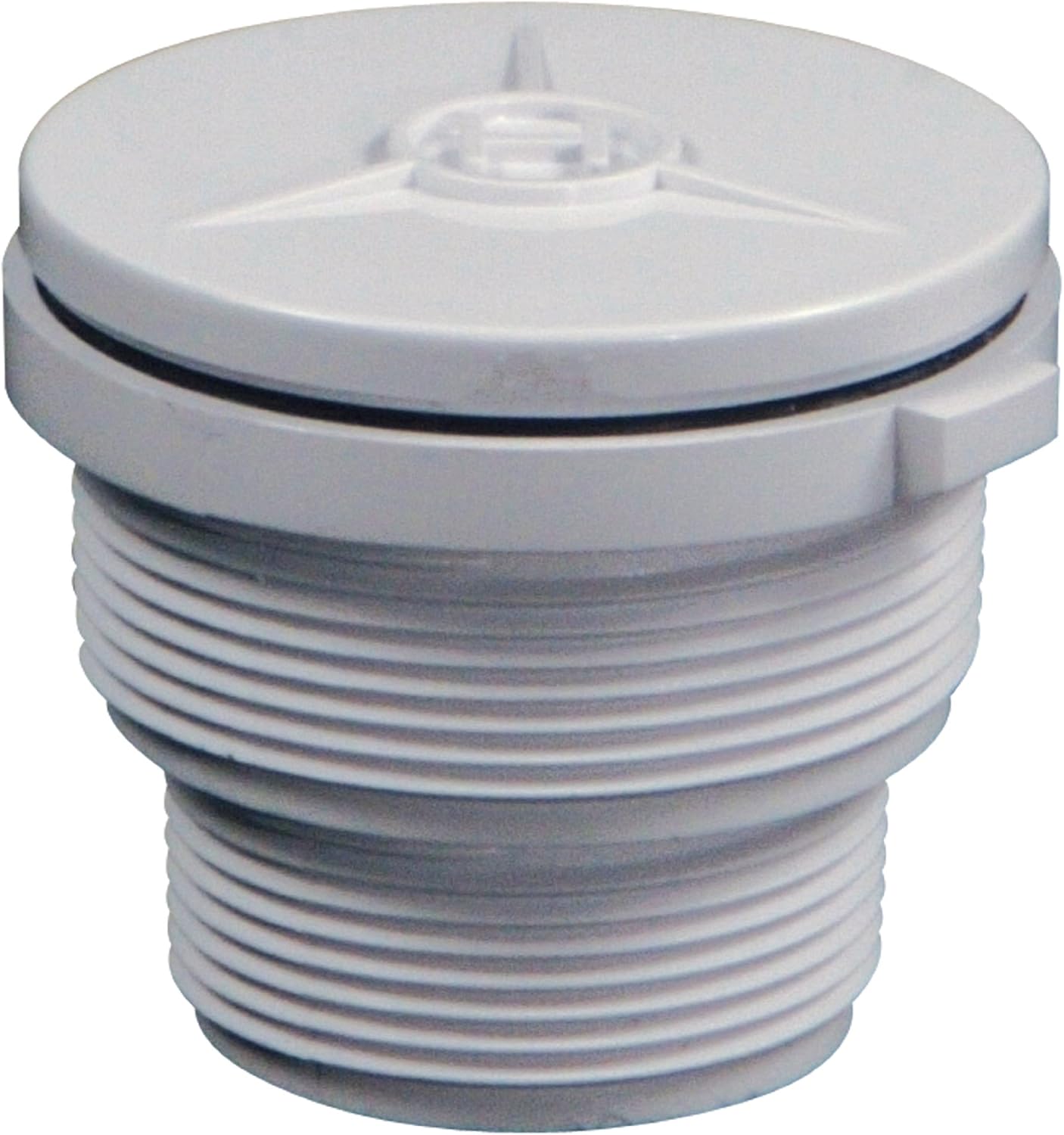
- Genuine Hayward SP1056 replacement valve
- Fits specified 1½-inch or 2-inch NPT sump connections
- Spring-loaded white ABS body with O-ring seal

- Waterway part 600-2100; white plastic construction
- Catalog describes 1½-inch / 2-inch MPT configuration
- Amazon FPT wording conflicts with manufacturer catalog

- Manufacturer part 600-2140; white finish
- Listed for 2-inch male pipe thread connection
- Separate Waterway model from 600-2100

- Bronze body and cap with spring-loaded mechanism
- Designed for 2-inch pipe threads
- O-ring seal and stainless steel spring hardware

- Aftermarket valve sold under GripNex brand
- Advertised as compatible with Hayward SP1056
- Spring-loaded construction; verify actual sump fit
For an existing Hayward SP1056 installation, the genuine Hayward valve is the most direct model-number match. The GripNex item is an aftermarket compatibility claim, not an original Hayward part. Waterway 600-2100 and 600-2140 must be checked as separate models, while the Perma-Cast PV-20 is the clearly identified bronze option with a 2-inch threaded connection.
What to Look for Before Buying a Pool Hydrostatic Relief Valve
Identify the actual sump or drain-body connection
The important measurement is the threaded opening receiving the valve, not the visible diameter of the drain cover. Many drain assemblies contain different ports for suction plumbing, hydrostatic relief, or a collector tube. A valve that appears to have the right nominal pipe size can still be wrong if the receiving port, thread orientation, or internal arrangement does not match.
If the old valve can be identified without disturbing an unsafe drain, obtain its manufacturer and stamped part number. A builder’s equipment records, the sump model or the original parts diagram can be more informative than a photo taken from above the water. The part number gives you a better starting point than a generic online claim that a valve fits “most pools.”
Read MPT, FPT, and NPT correctly
MPT means male pipe thread, while FPT means female pipe thread. NPT describes the tapered pipe-thread standard commonly used in US plumbing; the nominal 1½-inch or 2-inch size does not describe the measured outside diameter of a finished fitting. A male-threaded replacement must mate with the correct female-threaded opening, and thread form matters as much as the number printed on the package.
The Waterway 600-2100 listing demonstrates why these details should not be guessed. Its Amazon title uses “1.5-inch FPT,” yet Waterway’s own catalog describes model 600-2100 as a 1½-inch hydrostatic relief valve / 2-inch MPT arrangement. Resolve that conflict against the actual part drawing and your sump before ordering; do not buy or modify plumbing based on one title alone.
Check the collector tube and under-pool drainage path
An automatic valve can release pressure only if groundwater can actually reach its inlet. Some assemblies use a slotted collector tube or a gravel-connected well below the sump. A blocked collector, a plugged bottom port, or an installation made without the intended subsurface connection can defeat the reason for having the valve even when the top looks new.
Hayward’s SP1056 installation guide specifically calls for the SP1055 slotted collector tube at the bottom of the sump. That is a system-specific instruction rather than permission to fit the collector to every competing valve. Existing site construction should be checked before assuming that replacing the visible spring-loaded device restores the whole drainage system.
Choose the material for the installation, not appearance
Molded plastic valves are common in pool sumps and avoid the weight and expense associated with a bronze casting. Hayward specifies ABS for its SP1056; a Waterway distributor identifies PVC for the 600-2100. Plastic is not inherently unsuitable for a submerged relief component, but installation force, chemical compatibility, thread preparation, and the condition of the mating fitting remain important.
Perma-Cast uses corrosion-resistant bronze for the PV-20 body and cap, paired with stainless hardware and an O-ring. That construction can make sense where a project specification calls for a bronze component. It does not establish that bronze is universally better, that it opens at a different verified pressure, or that it should replace a plastic valve in a sump not intended for its dimensions.
Allow for the moving valve, cover and service access
A spring-loaded hydrostatic valve needs to open and reseat without interference. The space above it, the drain cover geometry, the position of the collector, and the way the cover fastens are therefore part of the fit assessment. The wrong clearance can create a problem even if the threads engage.
Check the entire drain assembly rather than comparing just the cap diameter. An installer should also confirm that a replacement will not compromise the suction outlet cover or its required safety configuration. Hydrostatic relief and anti-entrapment functions are separate; replacing one part never substitutes for a properly installed, compliant drain cover.
Hayward SP1056 Hydrostatic Relief Valve
- Genuine Hayward SP1056 replacement valve
- Fits specified 1½-inch or 2-inch NPT sump connections
- Spring-loaded white ABS body with O-ring seal
The Hayward SP1056 is the most straightforward starting point when the existing valve is already identified as SP1056. It is an original Hayward spring-loaded hydrostatic relief component with a white ABS body and an O-ring seal. Its main value is not a broad promise that it works in every in-ground pool; it is the availability of a precise manufacturer part number and a matching installation document for the specified sump arrangement.
Original Hayward design and materials
Hayward describes a compact spring-loaded valve made from ABS plastic. In this application, the spring biases the closure while the O-ring provides the sealing surface. The mechanism can open in response to an appropriate outside-to-inside pressure difference and close as that difference subsides. That automatic operation distinguishes it from a threaded winterizing plug, which stays closed until someone removes it.
The white housing is practical for identifying the part during drained-pool servicing. There is no benefit in choosing a hydrostatic valve solely because it matches a drain cover, however. The key parts are the external threads, seating surfaces, spring assembly, and intended position in the sump. A visually similar white valve from another manufacturer is not evidence of equivalent fit or opening behavior.
Connection sizes and collector arrangement
Hayward’s installation guide specifies use with an internal 1½-inch NPT or 2-inch NPT connection in the sump. It also identifies the SP1055 slotted collector tube on the bottom. That pairing gives a useful purchasing check: a pool technician can compare the installed sump configuration and the collector arrangement against the diagram before selecting SP1056 as the replacement.
The guide also explains that the SP1055 collector accommodates two nominal thread sizes and includes a size-specific instruction for a 1½-inch sump. This is not an invitation to modify the tube without the manufacturer’s complete instructions or professional assessment. If a prior repair left an unrecognized plug or unusual adapter in the lower port, the whole assembly requires examination rather than a simple valve swap.
How the seal and spring affect practical use
A healthy O-ring must seal properly when the valve is closed, while the spring-loaded element must remain free enough to move. Grit, scale or debris can interfere with either function. A leaking or stuck valve may let water move in an unintended direction or may fail to respond properly to pressure beneath the pool. Those are reasons to inspect the system, not to adjust spring tension without a specification.
Hayward’s distributor information describes the SP1056 as having a self-cleaning O-ring design, but no spring opening-pressure figure is provided in the installation guide. The description should not be interpreted as a guarantee that a neglected valve will remain clear. Mechanical components in the deepest part of a pool still depend on the condition of the drainage path and on correct service.
Installation and servicing considerations
The manufacturer specifies PTFE thread-sealing tape for molded plastic connections and warns against petroleum-type pipe dope that could damage the material. The same guide cautions against overtightening and identifies an SP1056T tool for engaging the fitting. These details matter because a cracked sump connection or an improperly seated valve can be more serious than the original replacement problem.
Access often requires work at the main drain. That brings a separate and substantial suction-entrapment hazard if equipment is energized or covers are missing, broken, or unsecured. Pool-drain servicing is a job for a qualified professional who can isolate equipment, evaluate groundwater before any draining, and restore the approved drain-cover assembly. Installing the correct valve does not make an unsafe cover safe.
Who should consider the Hayward SP1056
This valve is especially relevant to an owner whose builder records or existing hardware specify Hayward SP1056. It also gives pool-service contractors a defined manufacturer installation reference, reducing uncertainty compared with choosing a part based only on a broad compatibility statement. Where equipment standardization matters, retaining the original part number can simplify future maintenance records.
An owner with a Waterway sump, an unusual collector, or a separately specified 2-inch bronze fitting should not treat SP1056 as a universal substitute. Even two components sold for 2-inch plumbing may have different installed heights and compatibility requirements. The stronger buying approach is to identify the installed sump first, then decide whether a genuine replacement is appropriate.
Important tradeoffs
The original-model identity is a strong advantage, but it is limited to installations where that model belongs. ABS construction also calls for careful handling of threads and seal surfaces during installation. The documentation does not establish a universal fit for every pool shell or main-drain manufacturer, and the valve itself does not lower the local water table or remove groundwater from the property.
Do not assume that installing a new SP1056 permits a pool to be drained during wet weather. A high water table can create substantial uplift on a shell, and a valve is only one element of the drainage strategy. A pool professional must assess site conditions before reducing water depth, particularly after storms or where a pool has previously shown groundwater intrusion.
Pros
- Genuine Hayward SP1056 part with a clear model identity
- Manufacturer instructions define sump threads and SP1055 collector relationship
- Spring-loaded design with O-ring sealing
- White ABS construction avoids a metal casting
Cons
- Correct choice depends on the specific sump and collector arrangement
- Plastic threaded components require care during installation
- Valve replacement alone does not manage high groundwater
Waterway 600-2100 Hydrostatic Relief Valve
- Waterway part 600-2100; white plastic construction
- Catalog describes 1½-inch / 2-inch MPT configuration
- Amazon FPT wording conflicts with manufacturer catalog
Waterway 600-2100 deserves particular attention because its connection description varies between sources. Amazon labels the listing “1.5-inch FPT,” but Waterway’s published catalog identifies the manufacturer part as a 1½-inch hydrostatic relief valve / 2-inch MPT. A distributor also describes it as having stepped threaded geometry. Rather than treating that conflict as a minor typo, a buyer should regard the exact existing sump connection as a required verification step.
What the Waterway part number actually establishes
The part number 600-2100 is useful because Waterway lists it separately from 600-2140. The official catalog gives a 1½-inch and 2-inch configuration for 600-2100, rather than presenting the two models as the same product under alternate names. That difference is the most important fact for purchase planning. The number printed in the listing should match the physical replacement or the official parts diagram.
Waterway markets hydrostatic relief products for drainage and suction assemblies. The white molded construction is familiar in pool-service environments, but its appearance alone says little about port compatibility. A white valve with stepped exterior threads can be photographed from an angle that obscures the actual male-versus-female connection, so visual comparison should support—not replace—part-number verification.
Reconciling the FPT and MPT descriptions
A female-threaded fitting receives a male thread; a male-threaded valve screws into a female-threaded fitting. The terms cannot be interchanged without changing the mechanical connection. Here, the Amazon title and some reseller terminology suggest FPT while the manufacturer catalog calls out 2-inch MPT. Other listings also refer to stepped 1½-inch and 2-inch threads, creating further room for a hurried buyer to misread the item.
Before ordering, request confirmation using the actual manufacturer part number, dimensional drawing or clear view of both ends of the device. Have the installer identify which port in the sump accepts the valve and whether an adapter is present. Neither thread sealant nor forcing the component into a port can correct a genuine thread mismatch. Avoid modifying the housing simply to make a purchase appear to fit.
Construction, sealing and upkeep
A pool-industry distributor identifies the 600-2100 material as PVC and the color as white. Plastic construction can suit a permanent underwater sump installation where it is compatible with the surrounding parts. It also means that care is needed around thread loading, cross-threading and overtightening. A damaged plastic connection can become difficult to repair once embedded in a pool floor.
The operating role remains hydrostatic relief, not filtration or suction control. The valve must retain access to groundwater on the underside and a clear route into the pool on the upper side. Do not assume a moving valve proves the drain system is functioning: clogged collector media, sediment or an improperly configured port can obstruct water before it reaches the valve.
Where the 600-2100 can be a sensible replacement
This model is a logical candidate where construction records or an existing identifiable valve specify Waterway 600-2100. It may also come into consideration for a sump that a pool professional confirms uses the manufacturer-defined 1½-inch / 2-inch interface. In either case, the installation decision rests on the verified port geometry and corresponding service documentation.
Its primary appeal is a recognizable Waterway part number and a molded-plastic layout associated with standard pool drain components. Do not interpret the title as a promise that every 1½-inch pipe connection fits. Pool plumbing often contains multiple ports and nominal sizes within a single assembly, and the presence of the right number elsewhere in the plumbing does not establish compatibility.
Limitations worth understanding before ordering
The conflicting thread labels introduce more uncertainty than with the well-documented Hayward SP1056. The manufacturer catalog provides the nominal configuration but does not, in the materials reviewed, give a model-specific opening-pressure value or authorize use with every sump. If the seller cannot resolve the connection description for the exact part supplied, that is a reason to pause the purchase.
The valve will also need the appropriate below-sump connection to perform its intended role. Replacing a component that looks worn will not correct a missing groundwater path, and a new valve does not justify emptying the pool when the water table is high. A site assessment remains necessary whenever structural uplift is a possibility.
Pros
- Traceable Waterway 600-2100 manufacturer part number
- Manufacturer catalog identifies a 1½-inch / 2-inch configuration
- White molded-plastic design for pool drain assemblies
- Useful candidate for like-for-like Waterway replacement
Cons
- Amazon FPT label conflicts with Waterway catalog MPT wording
- Exact thread geometry should be confirmed before purchase
- Does not replace a proper groundwater collector or drainage system
Waterway 600-2140 2-Inch MPT Hydrostatic Relief Valve
- Manufacturer part 600-2140; white finish
- Listed for 2-inch male pipe thread connection
- Separate Waterway model from 600-2100
The Waterway 600-2140 is the other Waterway model in this selection. Its Amazon listing calls it a white 2-inch MPT hydrostatic relief valve, and the product-detail section identifies manufacturer part number 600-2140. Waterway catalogs also list 600-2140 independently of 600-2100. That makes this the model to investigate when the existing equipment specifies the 600-2140 number or a compatible 2-inch male-threaded relief connection.
How it differs from the 600-2100
The most important difference is the manufacturer part number and the advertised connection configuration. Waterway’s catalog describes 600-2100 with 1½-inch / 2-inch wording, while 600-2140 is the separate 2-inch hydrostatic valve entry. The Amazon 600-2140 title explicitly identifies 2-inch MPT. Even where these designs look similar in photos, the two part numbers should not be treated as alternate stock codes for one generic valve.
That separation matters during a service visit. If an installer arrives with the wrong model, the valve may not engage the expected threads or may sit differently within the sump. Correctly identifying 600-2140 in advance can avoid assuming that any Waterway hydrostatic valve will fit based on the brand name alone.
White plastic design and drain integration
The 600-2140 is sold as a white pool hydrostatic relief valve with a 2-inch male-thread connection. It is a compact component installed within the appropriate drain assembly rather than a stand-alone groundwater pump. The outside appearance is not a basis for asserting an opening-pressure rating, and a nominal thread callout does not establish clearance beneath every cover.
Before a replacement is approved, the technician should inspect the sump seating surfaces, the intended path for groundwater, and the clearance between the valve and safety cover. Work at the drain assembly must preserve the outlet’s anti-entrapment protection and its secure fastening. A fitting that screws in but interferes with the cover is not a satisfactory installation.
Selecting it for a 2-inch connection
Start by confirming that the installed component is Waterway 600-2140 or that the drain manufacturer expressly lists it as compatible. The next step is matching the actual male and female thread interface, not simply measuring the width of the top cap. A nominal 2-inch pipe system can contain other fitting sizes, adapters and different openings around the sump.
The 2-inch label is useful as a filter for possible purchases, but it is not an instruction to force a valve into any 2-inch opening. Main drain plumbing is a safety-related assembly, and identification of the correct relief port should be left to a person familiar with the model. That is especially important if previous repairs have changed the fittings.
Practical tradeoffs and buyer fit
For an existing Waterway 600-2140 setup, sticking to the designated replacement part reduces uncertainty about model identity. It also avoids the heavier construction of the bronze PV-20 where a plastic component is already specified. Neither characteristic establishes that the Waterway device is inherently more reliable; they simply distinguish its form and intended connection.
A buyer seeking an alternative to a Hayward SP1056 should not select 600-2140 merely because both products include a 2-inch thread reference. The two manufacturers provide different part identities and documentation. A correct substitute must fit the entire sump arrangement, maintain valve movement, and respect the drain manufacturer’s instructions.
What is not established by the product listing
The Amazon listing does not provide enough model-specific technical data to claim a particular spring opening pressure, a quantified service life or universal pool-type compatibility. Those omissions do not make the part unusable; they mean the buyer should rely on exact replacement identification rather than invented performance claims. Do not base the decision on an assumed benefit that has no published specification.
The product is also only a component of a larger groundwater management system. If a pool is being drained, a contractor should assess local groundwater and any connected well points or underdrains before work begins. The replacement valve should never be regarded as permission to ignore wet-ground conditions.
Pros
- Clearly identified Waterway model 600-2140
- Amazon listing specifies 2-inch male pipe threads
- White finish suited to existing white plastic assemblies
- Distinct part number helps with like-for-like ordering
Cons
- Not equivalent to 600-2100 solely because both are Waterway products
- 2-inch labeling alone does not confirm sump or cover clearance
- No verified opening-pressure specification in the available listing
Perma-Cast PV-20 2-Inch MPT Bronze Hydrostatic Valve
- Bronze body and cap with spring-loaded mechanism
- Designed for 2-inch pipe threads
- O-ring seal and stainless steel spring hardware
Perma-Cast PV-20 is the clear material alternative in this group. Unlike the white molded-plastic models, it uses a bronze body and cap. Perma-Cast’s technical sheet identifies a 2-inch hydrostatic relief valve, a spring-loaded mechanism and an O-ring seal. Those specifics make it relevant for projects that call for a bronze 2-inch threaded component, but the material change does not remove the need to verify the sump and under-pool drainage design.
Bronze construction and the internal parts
The manufacturer lists a corrosion-resistant bronze valve body and bronze cap, along with an O-ring, a stainless steel spring, and stainless steel fastening hardware. The metal body is a genuine design distinction: this is not simply another white valve sold with a different label. The published drawing also illustrates the way the spring and sealing elements fit within the casting.
Bronze is commonly selected for water-contact hardware because it offers useful corrosion resistance, though actual service conditions and water chemistry still matter. A bronze body does not guarantee that the O-ring, spring or seat will stay clean forever. The entire assembly remains a mechanical device that must be installed correctly and maintained as part of the pool’s groundwater-relief system.
Published dimensions and why they matter
Perma-Cast’s PV-20 specification drawing shows an overall height of approximately 3.09 inches and an indicated width of 2.45 inches. These are dimensions from the manufacturer drawing, not clearance guarantees for every sump. The part is identified for 2-inch pipe threads, so both the mating threads and the space available for the assembled cap must be considered.
A dimensioned drawing is helpful when the valve must sit below a particular main-drain cover or within a tight collection chamber. Even so, the dimensions alone do not prove compatibility. The installed depth of the threaded port, amount of exposed body, gasket position and neighboring features can affect the final location of the cap.
Spring-loaded pressure relief and seal design
The PV-20 operates as a spring-loaded relief component with an O-ring seal. Groundwater exerting sufficient pressure from below is intended to overcome the closing force and move into the pool, helping reduce the pressure difference acting on the shell. The valve is not a manual release plug and is not intended to serve as the circulation system’s normal operating check valve.
Perma-Cast’s published sheet does not provide a verified opening threshold expressed in psi or inches of water. That means buyers should avoid comparing it against the other products using an invented numerical cracking pressure. What can be compared with confidence is its 2-inch application, metal casting, spring mechanism and documented set of sealing components.
Installation implications of a metal valve
Metal and plastic components respond differently to installation force. A robust bronze housing should not be used as an excuse to overtighten the receiving drain fitting, especially where the mating sump is molded plastic. Excess force can still damage the surrounding housing, compromise the thread interface or create difficult repairs in the pool floor.
The correct thread standard, approved sealing method and installation torque or tightening procedure should come from the applicable equipment instructions. Where a bronze component is replacing a previously installed plastic valve, a technician should check that the transition is explicitly allowed. Similar nominal threads do not independently establish that the substitute is safe for the existing drain assembly.
When bronze is a reasonable preference
The PV-20 has a stronger case where a builder, design professional or maintenance specification expressly calls for a bronze 2-inch hydrostatic valve. It is also worth examining where a metal replacement is already present and the exact PV-20 part number is marked or recorded. The manufacturer documentation offers an actual component breakdown, which can help a professional identify the intended hardware.
There is less reason to purchase PV-20 merely to upgrade a conventional plastic valve in a typical pool. The pool’s plumbing and sump determine compatibility, and a more substantial material does not guarantee better pressure protection. If a white plastic valve is the specified part, replacing it with bronze without an approved fit assessment can create a new problem rather than solve one.
Tradeoffs against the plastic models
The bronze assembly is physically and materially different, which can affect handling, installed clearance and project cost relative to simpler molded fittings. It offers clear construction advantages for buyers who specifically require bronze, but that value depends on the job. The verified sources do not demonstrate that PV-20 opens sooner, drains more groundwater, or lasts a measurable number of years longer than SP1056 or the Waterway valves.
It also remains a 2-inch threaded valve, not a universal retrofit kit. No relief valve can compensate for a poorly connected collector system, inadequate drainage around a pool or the decision to drain into a high-water-table condition without planning. A buyer should see PV-20 as one carefully specified part within a complete installation.
Pros
- Corrosion-resistant bronze body and cap
- Manufacturer technical sheet identifies stainless spring hardware and O-ring
- Specified for 2-inch pipe threads
- Published dimension drawing supports fit assessment
Cons
- Bronze construction does not prove compatibility with a plastic sump
- Different material can complicate an unapproved retrofit
- No published comparison establishes a superior opening pressure
GripNex SP1056-Compatible Spring-Loaded Hydrostatic Relief Valve
- Aftermarket valve sold under GripNex brand
- Advertised as compatible with Hayward SP1056
- Spring-loaded construction; verify actual sump fit
GripNex sells this item as a spring-loaded hydrostatic valve compatible with Hayward’s SP1056. Its shorter product name should retain the word compatible, because the listing identifies the brand as GripNex rather than Hayward. For pool owners looking for an aftermarket part, that distinction is important: an advertised replacement relationship is a starting point for checking the fit, not proof that the manufacturer designed or approved the component.
Aftermarket identity and intended match
The Amazon listing identifies a GripNex valve marketed for Hayward SP1056 applications in pools and spas. It describes a spring-loaded hydrostatic relief design and non-corrosive construction. This provides a useful distinction from a wholly generic valve with no stated replacement reference, but the product should not be represented as an original Hayward component.
Compatibility needs to be evaluated against the actual pool drain arrangement. Some valves share an outwardly similar cap, body and thread profile while differing in installed height or the way they seat. A buyer can use “SP1056-compatible” to narrow the search but should still compare the specific drain and sump identifiers, connection geometry and other service requirements.
What the listing establishes about construction
GripNex describes a spring-loaded component made with non-corrosive materials for pool environments. The listing supports the intended pressure-relief function and aftermarket Hayward compatibility claim. However, the available information does not justify assigning it Hayward’s exact ABS grade, opening pressure, tool instructions, warranty terms or documented SP1055 collector relationship.
This is a common issue with compatible replacement parts: the reference number tells you what they claim to replace, not that every internal specification has been duplicated. The practical question is whether the supplier can confirm the exact connection and whether the installation professional is willing to use it in the specified sump under the applicable instructions.
Comparing the GripNex and original Hayward parts
For the original SP1056, Hayward publishes a model-specific installation guide stating compatible sump thread sizes and the required collector tube. For the GripNex alternative, the core publicly visible point is its seller-stated compatibility. That documentation gap matters more than minor differences in cap appearance. A known original part provides a cleaner reference when a contractor is restoring an existing Hayward assembly.
A compatible option can still be considered if the seller confirms the relevant dimensions, thread engagement, sealing arrangement and approved application. It should not be chosen by assuming every claim made for the Hayward product automatically transfers to the GripNex valve. In particular, do not use Hayward-specific installation instructions as a substitute for any instructions supplied for the aftermarket part unless compatibility has been established.
Pressure relief versus general pool plumbing
The component is intended for hydrostatic relief beneath an in-ground pool shell. It does not regulate pump discharge pressure, protect a filter tank from trapped air or replace a suction-side check valve. Those other parts may also be described as “pressure valves,” but they operate in different locations and against different pressure conditions.
The distinction becomes particularly important for shoppers searching from a generic repair symptom. Water appearing near a drain, bubbles at the pump, or pressure displayed on a filter gauge are not enough to identify a failed hydrostatic relief valve. Diagnosis should establish the actual component and failure mode before the replacement is purchased.
Who might choose an aftermarket SP1056 option
This part fits the shopping brief when a customer is specifically considering an alternative to Hayward SP1056 and can confirm the replacement is acceptable for their installation. The explicit compatible-with-SP1056 labeling helps organize the comparison, and the spring-loaded configuration aligns with the same broad type of component.
It is a weaker fit for a complex or undocumented sump, a system whose builder requires genuine Hayward parts, or an installation where exact instructions and dimensional data are essential. In those cases, the original SP1056 or another precisely specified part is easier to assess. Claims of broad pool-and-spa suitability should not replace model-level checks.
Most important limitations
The listing does not establish that this third-party item is identical in construction or tested performance to the Hayward OEM valve. There is also no verified basis to assert that it opens at the same pressure or uses exactly the same collector-tube arrangement. Those are meaningful unknowns because a relief component has a structural-protection role rather than merely a cosmetic one.
As with all five models, installation should preserve suction-outlet safety and account for groundwater conditions. No aftermarket label makes it safe to remove a drain cover while circulation equipment is operating or to empty a pool without a groundwater assessment. The correct order is to verify the existing assembly, confirm the replacement, and arrange professional service.
Pros
- Explicitly marketed as a Hayward SP1056-compatible alternative
- Spring-loaded hydrostatic relief configuration
- Separate GripNex brand identity is identifiable
- Potential option for a confirmed aftermarket replacement job
Cons
- Not a genuine Hayward SP1056 component
- OEM material and installation specifications cannot be assumed identical
- Compatibility claim still needs verification against the actual sump
Detailed Buying Guide for Swimming Pool Hydrostatic Relief Valves
Understand how hydrostatic pressure can lift an in-ground pool
Water in the soil exerts pressure against whatever surrounds it. When the groundwater level rises around a buried swimming pool, that water can push upward against the underside of the shell. A filled pool resists that force partly through the weight of the water inside it. Once the pool is drained, much of that resisting weight disappears even though the groundwater outside may remain high.
The resulting pressure difference can damage the shell, lift parts of the pool, or cause a more extensive failure. Conditions vary by site: soil type, rainfall, underground springs, nearby bodies of water, drainage works, and the pool’s construction all affect risk. A relief valve helps address one path for pressure equalization, but it cannot replace a comprehensive drainage design or expert assessment.
The common phrase “pool popping” describes a potentially serious uplift event, not an ordinary maintenance inconvenience. It is particularly relevant during resurfacing, tile work and other projects that require a low water level. The presence of a hydrostatic valve is not proof that every drainage scenario is safe.
Know where the relief valve normally sits
Many installations place the hydrostatic relief connection in or beneath the main drain sump at the deep end. Groundwater enters through an intended collection area, passes to the relief opening, and may enter the pool when pressure beneath it is high enough. The configuration is not identical in every concrete, fiberglass, or vinyl-lined pool. Some systems instead use dedicated fittings or other engineered drainage arrangements.
The relief valve is generally hidden by the pool’s drain-cover assembly, which is another reason product selection is not a visual task completed from the deck. The cover is also part of the suction-outlet safety system, and accessing it can introduce serious entrapment hazards. A professional can assess both the pressure-relief component and the cover configuration in the same service plan.
Compare 1½-inch and 2-inch connections carefully
Nominal pipe sizes identify compatible plumbing families rather than simple ruler measurements. A 2-inch male pipe thread is not chosen by measuring a cap to be two inches across; actual thread diameters and taper need to match the receiving fitting. Some valves are stepped to relate to more than one nominal sump port, whereas others are sold for a single nominal connection.
Hayward’s SP1056 guide describes its applicable 1½-inch and 2-inch NPT sump connections. Waterway 600-2100 has manufacturer catalog wording involving both nominal sizes, while Waterway 600-2140 and Perma-Cast PV-20 are identified as 2-inch products. GripNex references SP1056 compatibility without independently establishing every original Hayward installation detail. Keeping these facts separate prevents one product’s measurements from being assigned to another.
Inspect the entire groundwater path, not just the visible cap
The pressure-relief path can include gravel below the pool, a slotted collector, a sump passage and the valve itself. If soil or debris blocks an upstream connection, replacing the top component cannot restore free movement of groundwater. Likewise, a relief valve installed over a permanently sealed port has no useful connection to the pressure it is supposed to address.
A professional inspection should identify how the drainage path was built and whether it remains clear. Where the pool has a separate well point or sump-pumping system, the contractor should understand how those components work together. The appropriate response to unusual ground seepage is not automatically a larger valve; first confirm what the existing system was designed to do.
Distinguish a spring-loaded valve from a removable plug
A spring-loaded relief valve has a closure intended to respond to differential pressure. A threaded plug is a closure that remains shut unless deliberately removed. Although an experienced pool contractor may use a designed relief port during a controlled drain procedure, a plug should not be described as providing automatic hydrostatic relief.
The distinction also matters when inspecting old pool installations. A part found in the sump might be a winterizing plug, an adapter, or a damaged relief component. Until identified, its presence does not establish that the pool has functioning pressure relief. If a previous owner or contractor modified the drain, obtain a professional assessment before planning any significant water removal.
Evaluate plastic and bronze on the same basis
Material choice is relevant to corrosion, handling and long-term compatibility, but it does not determine opening pressure by itself. ABS, PVC and bronze each have different installation considerations, and all require compatible sealing surfaces. In mixed-material assemblies, the weaker mating fitting may limit the safe tightening force even when one component is metal.
For the products here, original compatibility is usually a more reliable first filter than material. A genuine Hayward plastic valve may be the better match for an SP1056 sump than a bronze fitting with the same nominal thread size. Conversely, a project specifically designed around a PV-20 could be better served by retaining the documented bronze part instead of substituting a white valve without approval.
Understand spring action without inventing a pressure rating
A spring-loaded valve is biased closed, while rising outside pressure can push against the valve element. It opens when the relevant pressure forces overcome the spring and other mechanical resistance. How quickly it opens and how it reseats depend on the actual design, sealing surfaces and condition of the mechanism. This is not a setting that should be adjusted by trial and error in a swimming pool.
Manufacturer pages for this selection establish that several models are spring-loaded, but they do not provide comparable certified opening-pressure figures for all five products. Therefore, it is not reasonable to rank these valves by claimed sensitivity, speed of response or relief capacity. Those performance questions require specific engineering documentation or an approved pool design.
Recognize why clearance and drain-cover position matter
Even a correctly threaded valve has to occupy a physical space below the drain cover. A taller assembly, raised cap, unusual collar or added adapter can interfere with that space. The valve must be able to move as intended, and the drain cover must fit and fasten in accordance with its safety instructions.
The manufacturer drawing for Perma-Cast PV-20 is useful because it supplies physical dimensions. Comparable dimensions for every other model should not be guessed from photographs or shipping boxes. If the original sump is shallow or modified, ask the installer to confirm the installed clearance with the actual replacement and drain-cover model.
Plan servicing around groundwater, not the weather forecast alone
A sunny day does not guarantee a low water table. Rain from previous days can continue moving through soil, and seasonal groundwater levels sometimes remain elevated after visible surface water disappears. Pools near waterways, low-lying sites and properties with poor drainage can have significant groundwater pressure even when the pool deck looks dry.
Before draining for painting, resurfacing, plaster repairs or structural work, a qualified pool contractor should determine whether groundwater needs to be monitored or actively managed. Well points and subsoil drains must be evaluated for the specific site. Simply relying on the small valve beneath the drain cover can leave the shell exposed to forces much greater than the owner anticipates.
Think about maintenance records and future replacement
Record the manufacturer, part number and drain assembly in the pool’s equipment documentation. Photos taken by the service technician during a properly isolated repair can help identify the replacement later. A receipt or service report can also note whether the collector path was inspected and whether the drain cover was reinstalled with approved hardware.
This record is especially helpful for Waterway 600-2100 because of the FPT/MPT naming conflict, and for the GripNex part because aftermarket compatibility statements can change across sellers. Future service should rely on a documented physical installation, not a vague note saying “white 2-inch pressure valve.”
Direct Product Comparisons
Hayward SP1056 vs GripNex SP1056-Compatible Valve
These two products compete for the attention of someone replacing an SP1056-style valve. Hayward is the original manufacturer identified on the SP1056 installation guide. GripNex is an aftermarket brand that markets a spring-loaded substitute for that reference number. This is a meaningful difference in documentation, not simply a label preference.
The Hayward instructions state which 1½-inch or 2-inch NPT sump arrangement is intended and specify the SP1055 collector tube. The GripNex listing claims compatibility, but those original Hayward specifications cannot automatically be transferred to a third-party component. Choose the original part where a job requires exact OEM documentation; consider the alternative only after the actual drain and replacement are confirmed compatible.
Waterway 600-2100 vs Waterway 600-2140
These are separate Waterway product numbers. Manufacturer catalog entries describe 600-2100 as a 1½-inch relief valve / 2-inch MPT configuration and 600-2140 as a 2-inch hydrostatic valve. The Amazon title for 600-2100, however, calls it FPT, whereas the 600-2140 title calls it 2-inch MPT. That is precisely why the two should not be treated as interchangeable.
If a technician has already identified a 600-2140 in the sump, purchasing a 600-2100 based only on the Waterway brand is unnecessarily risky. The reverse is also true. The installation drawing, receiving thread, valve height and relevant manufacturer part number should decide the choice, not an assumption that the apparently larger model must be better.
Waterway 600-2140 vs Perma-Cast PV-20
Both listings involve a nominal 2-inch connection, but their material construction differs sharply. Waterway 600-2140 is the white plastic model, while PV-20 uses a bronze body and cap with stainless spring hardware. Perma-Cast also publishes a dimensioned technical sheet. Those are practical differences for projects with specific material or documentation requirements.
Neither model is automatically a drop-in substitute for the other. Matching the nominal thread alone does not confirm geometry below the cover, and a bronze valve may place different handling demands on a plastic receiving fitting. Keep the original specified model unless the drain manufacturer or a qualified pool professional confirms the replacement choice.
Hayward SP1056 vs Waterway 600-2100
These valves appeal to buyers dealing with recognizable white pool-drain assemblies, and both have descriptions involving 1½-inch and 2-inch connection sizes. Hayward has a clearly documented OEM pairing with an SP1055 slotted collector; Waterway identifies 600-2100 in its own catalog, but its Amazon title introduces the male/female thread conflict discussed above.
The buying decision is not which brand has the friendlier general description. Identify the actual sump and collector design first. A builder-specified Hayward system is a better starting point for SP1056; an existing Waterway 600-2100 system is a better starting point for the corresponding Waterway component. Cross-brand substitutions require positive compatibility confirmation.
Perma-Cast PV-20 vs Hayward SP1056
Perma-Cast’s PV-20 provides bronze construction with a defined 2-inch pipe-thread application. Hayward’s SP1056 is a white ABS part with documented 1½-inch and 2-inch sump use, alongside a particular collector tube. The material difference is immediately visible, but the installation context matters more than the weight or finish of the component.
A pool specification calling for a bronze PV-20 should not be fulfilled with an ABS SP1056 without approval. Similarly, a known Hayward SP1056 sump is not necessarily improved by fitting bronze. Neither manufacturer document establishes that one valve has a superior response threshold in the other’s system; a correct fit and proper drainage design are the decisive factors.
Installation, Inspection and Ongoing Care
Before any valve replacement
Confirm the reason for replacing the component. A planned resurfacing job, a visibly damaged cap and unexplained seepage are different situations. The first calls for a coordinated groundwater-management plan; the second for part identification and inspection; the third for diagnosis before assuming the valve is responsible. The replacement model should be selected only after the underlying condition is understood.
Have a qualified pool professional isolate circulation equipment and evaluate the suction-outlet assembly before touching the drain cover. Damaged, unsecured or missing suction covers create serious entrapment hazards. The existing cover and fastening requirements must be preserved during the repair. Operating the pump with an exposed drain should never be treated as a normal troubleshooting method.
During the replacement
The installer should compare the existing part against the intended replacement before committing to installation. That means identifying the receiving port, checking the threads, examining the seal area and confirming the valve has the required movement and cover clearance. Cross-threading, excessive tightening and unsuitable thread compounds can harm plastic components, even if the new valve itself looks undamaged.
For the Hayward SP1056, the manufacturer specifies PTFE tape and cautions against pipe dope that can crack molded plastic. Those details should not be blindly applied to every material or manufacturer. The correct instructions for the precise replacement, sump and sealing surfaces control the job.
After the work is complete
The completed service should leave the drain cover secure and the pool’s suction-outlet safety arrangement intact. A technician should document what was installed, the condition of the original parts and any concern about the collector or groundwater connection. If a valve was replaced during an empty-pool renovation, groundwater observations should continue as long as the shell remains vulnerable.
Routine ownership is more about recognizing warning signs and maintaining records than repeatedly opening a submerged valve. Unexplained water entry, signs of shell movement, damaged drain fittings or uncertain system configuration call for a professional inspection. A relief component cannot be judged healthy simply because pool water appears clear.
Common Buying Mistakes to Avoid
Buying by the visible cap size
The cap is what appears in photos, but the actual connection is hidden below it. Two valves with similar white circular tops may have different external threads or required clearances. Identify the installed part number and sump interface before treating a product photograph as a fit guide.
Confusing the relief port with the suction port
Main drains often combine several functions in one housing. A hydrostatic valve is not intended to replace the suction piping, an inlet fitting or an anti-entrapment cover. Installing any component in an incorrect port can compromise the plumbing design and create an unsafe configuration.
Treating every 2-inch valve as interchangeable
The products in this comparison show why that assumption fails. Hayward SP1056, Waterway 600-2140 and Perma-Cast PV-20 all refer to a 2-inch connection in some way, yet they have different model identities and installation requirements. Nominal size is one attribute, not an approval for substitution.
Ignoring conflicting listing information
A seller title may contain a wrong thread abbreviation or omit a significant compatibility condition. The Waterway 600-2100 example is a direct reason to check the manufacturer’s catalog and the physical assembly. Do not use a wrench, sealant or an improvised adapter to compensate for unresolved product information.
Assuming bronze automatically means greater protection
Bronze construction is a defined advantage for certain material specifications, but hydrostatic protection depends on more than the housing. The valve must open under the intended conditions, remain connected to groundwater, and fit correctly. A heavy metal valve in the wrong sump does not offer meaningful protection.
Draining a pool just because a relief valve is installed
A relief valve is not a promise that an empty shell will withstand every groundwater condition. High water tables can exist after earlier rain or alongside rivers and poorly drained ground. A qualified contractor should plan draining around site conditions and any necessary groundwater control.
Mistaking a filter air-relief valve for a hydrostatic valve
A filter air-relief valve is normally part of the above-ground filter system and is used to release trapped air during prescribed servicing. A hydrostatic valve is associated with groundwater beneath the pool shell. These parts are not substitutes for each other, even though both may be found by searching for pressure-relief equipment.
Frequently Asked Questions
What does a hydrostatic pressure relief valve do in a swimming pool?
It provides an intended route for groundwater beneath an in-ground pool to enter the pool when outside pressure becomes sufficiently high. This reduces the pressure differential acting on the shell. The valve works as part of a drain or subsurface groundwater collection arrangement rather than as a pump or filter component.
Where is a pool hydrostatic relief valve located?
A common arrangement places the valve in the main-drain sump near the deepest part of an in-ground pool. Other pool designs can use different fittings or drainage systems. The correct location and accessibility depend on how the particular pool was built.
Can a hydrostatic valve stop an in-ground pool from popping out of the ground?
It can help relieve pressure that contributes to uplift, but it cannot guarantee that a pool shell will remain stable. Soil conditions, water table, underdrain design and water level inside the pool all matter. A professional groundwater assessment is especially important before emptying a pool.
Are the Waterway 600-2100 and 600-2140 the same valve?
No. Waterway assigns separate part numbers and descriptions. The 600-2100 catalog entry refers to a 1½-inch relief valve / 2-inch MPT configuration, while 600-2140 is identified as a 2-inch valve. Confirm the exact installed part and threads rather than assuming the models interchange.
Why does Waterway 600-2100 say FPT on Amazon and MPT in the catalog?
The supplied Amazon listing calls the product 1.5-inch FPT, but Waterway’s manufacturer catalog identifies part 600-2100 using 2-inch MPT terminology. These are conflicting connection descriptions. Verify the actual replacement and receiving sump threads before purchase; neither abbreviation should be ignored.
Does Hayward SP1056 require a collector tube?
Hayward’s installation guide specifies the SP1055 slotted collector tube on the bottom of the sump in the stated installation arrangement. That part is involved in the groundwater collection path. A technician should check that the installed collector matches the designed system and is not blocked or omitted.
Is GripNex SP1056 the same as the original Hayward valve?
No. GripNex is an aftermarket brand whose listing claims compatibility with Hayward SP1056. It should not be presented as a genuine Hayward part, and Hayward specifications should not be presumed identical. The exact fit and installation requirements need separate confirmation.
What is the difference between a bronze and plastic hydrostatic valve?
Bronze and molded plastic have different material properties, weights and installation considerations. The Perma-Cast PV-20 has a bronze body and cap, while the Hayward SP1056 uses ABS. Material alone does not establish better pressure performance or compatibility; the specified sump, valve design and connection are still decisive.
Can I replace a 1½-inch valve with a 2-inch valve?
Only if the specific sump and relief design support the replacement or an approved arrangement. Nominal size is not enough because thread engagement, adapters, collector paths and cover clearance must also match. An incorrect valve should not be forced or modified to fit.
Does a hydrostatic valve prevent water from leaking out of the pool?
The valve is intended to admit groundwater under suitable differential pressure and seal when that condition subsides. A damaged seal, debris or incorrect installation can create unwanted water movement. An unexplained drop in pool water level needs diagnosis; it should not automatically be blamed on the relief valve.
Should the valve be replaced whenever the pool is drained?
Hayward distributor guidance recommends replacing its SP1056 when a pool is drained. That advice should not automatically be assigned to every brand or installation. During a professionally planned drain, inspecting the existing valve, collector and drain assembly is a sensible opportunity to determine what needs replacement.
Can I remove a main-drain cover to inspect the hydrostatic valve myself?
Main-drain assemblies can present severe suction-entrapment hazards, especially if equipment can run or a cover is damaged or unsecured. A qualified pool professional should isolate equipment, assess groundwater conditions and restore the cover properly. Inspection is not worth compromising outlet safety.
Final Buying Considerations
For a hydrostatic pressure relief valve swimming pool replacement, identify the exact sump and existing valve model first. Hayward SP1056 has an explicit installation guide and collector arrangement for the specified sump. GripNex markets a third-party SP1056-compatible alternative, but that label does not make it an OEM part. Waterway 600-2100 and 600-2140 carry distinct manufacturer numbers and should remain distinct in the purchase decision.
Perma-Cast PV-20 is the option to examine when a project calls for a 2-inch bronze hydrostatic valve with a published component drawing. It is not automatically an upgrade for a pool designed around a plastic fitting. Material, nominal size, existing threads and physical clearance must all work together for a replacement to make sense.
The most consequential decision often happens before ordering: whether the pool can safely be drained and whether its groundwater collection system is functioning. A correctly identified valve, approved installation and professionally assessed water-table conditions are more important than an attractive product claim. Choose the component that belongs to the actual drain assembly and leave potentially hazardous sump work to a qualified pool professional.
Author