A replacement part for a Millennium sand filter needs to match the actual valve or tank, not just the name on the equipment. Some Millennium-branded systems share Waterway Carefree components, including the WVS003 multiport valve and several size-specific internal assemblies. Those connections make repairs possible, but they also create opportunities to order an almost-identical part that will not fit.
The main distinction is the location of the fault. Sand returning to the pool suggests an issue with the lateral-and-manifold collection system or filter media. A leak at the valve collar calls for inspection of the mounting seal and retaining hardware. Water running to waste while the valve is in filter mode raises a different question about the internal diverter and spider gasket. The products below cover those separate repair jobs.
Use the part numbers as the deciding reference. This guide covers Waterway WVS003 valve components and 16-, 19- and 22-inch Carefree manifolds, with a closer look at the assemblies, seals and controls that are commonly confused. Before opening any filter, stop the pump, isolate power and release all pressure according to the manufacturer’s instructions.
Quick Comparison of Millennium Pool Filter Parts
The table separates complete assemblies from small service components. All products have distinct repair purposes; similar appearance or branding is not evidence that two parts can replace each other.

- Complete WVS003 top-mount multiport valve
- 1.5-inch connection configuration
- Split-nut mounting style

- Lateral-and-manifold assembly for 16-inch Carefree tanks
- Waterway replacement part 505-2140
- Internal sand-retention and water-collection assembly

- For 19-inch Waterway Carefree sand filters
- Complete lateral-and-manifold assembly
- Part number 505-2150

- 22-inch Carefree internal assembly
- Separate part number 505-2160
- Lateral-and-manifold sand collection system

- Individual thread-style lateral
- Waterway part number 505-1930B
- For matching Carefree lateral configurations

- Valve-to-tank multiport collar seal
- Part number 805-0435B / 805-0435
- Waterway WVS003 interface

- Internal diverter assembly for WVS003
- Gasket fitted to the diverter
- Replacement part 600-9500B

- WVS003 multiport top or lid assembly
- Part number 600-9600B
- Listed with gasket on the supplied offer

- Split-nut mounting assembly for the WVS003
- Part number 505-3010B
- Secures the valve at the filter connection

- Threaded sleeve for the split-nut interface
- Waterway part 505-3000B
- Works within documented WVS003 mounting system

- Lid handle replacement
- Part number 602-1931B
- For the WVS003 multiport valve family

- Valve actuation spring
- Waterway 827-0002B
- Listed inside the WVS003 multiport assembly

- Spider-style internal diverter gasket
- Part 711-1910 / 711-1910B family
- For Waterway WVS003 valve internals
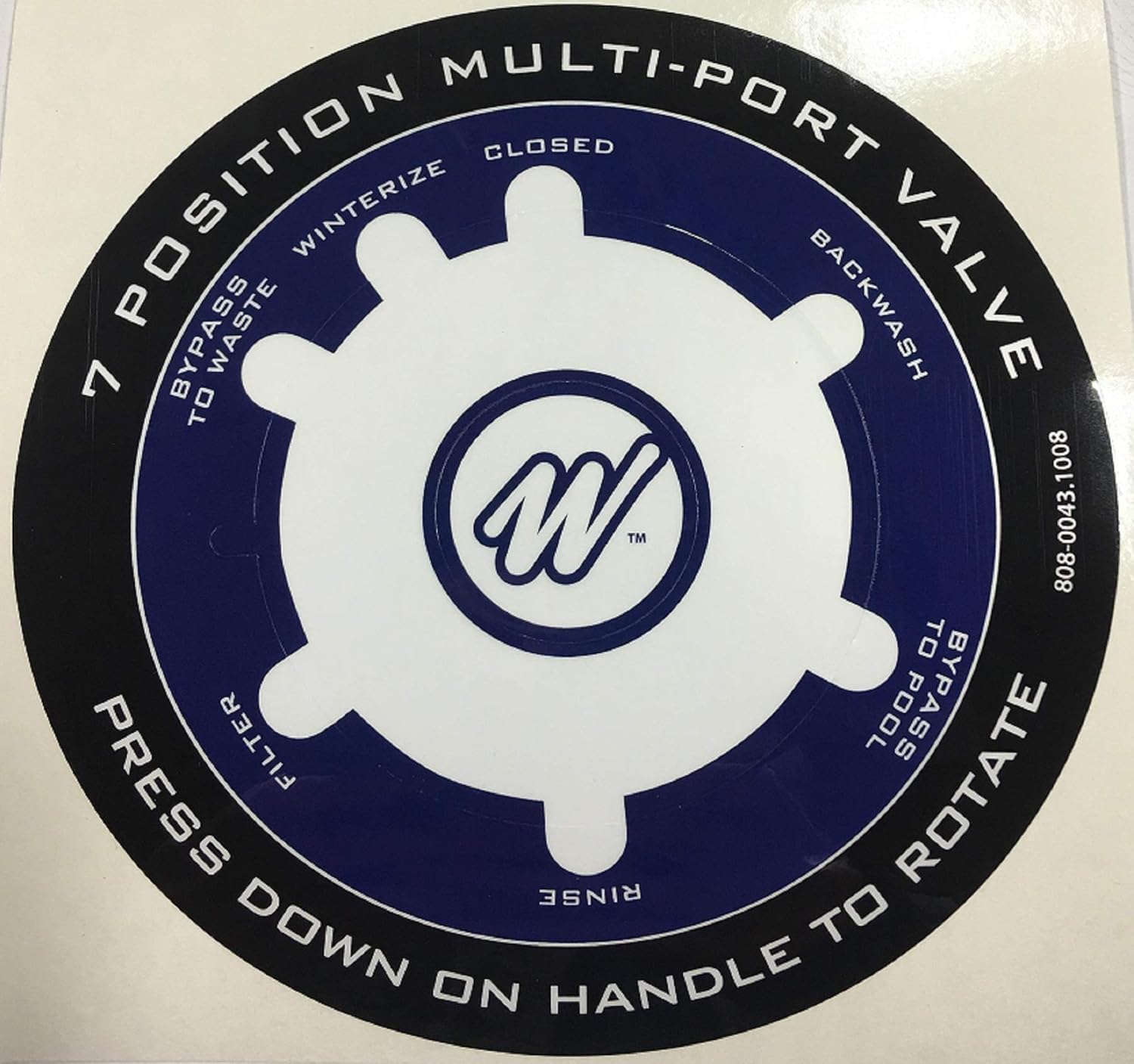
- Position label for WVS003 multiport valve
- Waterway decal part number 808-0043
- Restores legible control markings
What to Look for Before Buying Millennium Pool Filter Parts
The original part number matters more than the brand on the box
Millennium is associated with certain Waterway Carefree-branded pool filters, but a visible product name is not enough to establish exact compatibility. Look for Waterway, WVS003, a Carefree tank size or another permanent manufacturer identifier. Photograph the current part before removing it.
Internal assemblies are sized to the filter tank
The 505-2140, 505-2150 and 505-2160 belong to the 16-, 19- and 22-inch Carefree filter sizes respectively. These figures refer to the filter tank, not the swimming pool. Choose the size listed for the actual equipment.
Valve gasket, mounting seal and collar parts are different
The 711-1910 spider gasket works inside the multiport valve, while the 805-0435B seals the valve-to-tank mounting joint. The 505-3010B is a split-nut retaining assembly, and the 505-3000B is the matching threaded sleeve. None should be treated as substitutes for the others.
Replacement scope affects installation difficulty
A decal or external handle is a smaller repair than opening a sand-filled tank. Complete valve replacement requires careful alignment of the plumbing and valve connection. A new lateral-and-manifold assembly generally involves removing filter media, so plan the repair around the actual failure rather than ordering the largest available assembly.
Waterway WVS003 1.5-Inch Multiport Sand Filter Valve
- Complete WVS003 top-mount multiport valve
- 1.5-inch connection configuration
- Split-nut mounting style
Why a complete valve matters
If an older filter has several valve problems at once, a complete replacement is often simpler than identifying a series of worn internal pieces. The WVS003 directs water through the sand tank and its connected plumbing for normal filtration, backwashing and other valve operations. Replacing the complete unit addresses the valve body and operating assembly together, but it does not repair cracked filter tanks, defective plumbing or damaged laterals.
Fit and configuration
This is the 1.5-inch WVS003 split-nut configuration identified in Waterway Carefree parts documentation. Before ordering, verify the marking on the installed valve, the style of the attachment collar, the number and orientation of ports, and whether your existing connections use unions or adapters. An older clamp-style valve or a different brand of filter must not be assumed interchangeable merely because the pipes measure 1.5 inches.
When replacement is sensible
Consider the full valve after checking whether leakage comes from the lid, the valve-to-tank O-ring, the diverter or a loose fitting. A cracked housing or multiple deteriorated components can justify buying the assembled valve. One failed spider gasket, on the other hand, may not justify replacing the entire head. Check which connection hardware and seals the specific package contains rather than assuming every accessory is supplied.
Practical installation considerations
Photograph the old plumbing before disconnecting it, and mark the pump, return and waste lines. Shut off the pump, isolate the electrical supply and release all pressure before opening the filter. A valve must sit squarely on its mating tank connection, with the correct collar and O-ring in place. Follow the filter maker’s tightening and startup directions; overtightening plastic parts can cause damage.
Who should choose it
The WVS003 is the appropriate candidate when the existing installation already uses that documented valve and the fault is not confined to an inexpensive service part. Owners who need only a handle, spring or decal can keep the larger assembly intact. Buyers whose filter has an unidentified Millennium badge should find the underlying Waterway model number first.
Pros
- Replaces the full valve rather than a single worn component
- Matches documented Waterway split-nut WVS003 installations
- Avoids rebuilding multiple deteriorated internal parts
Cons
- Higher-scope repair than an individual gasket or handle
- Requires careful plumbing and tank-interface verification
- Not a universal replacement for older clamp-style valves
Waterway 505-2140 Carefree 16-Inch Lateral and Manifold
- Lateral-and-manifold assembly for 16-inch Carefree tanks
- Waterway replacement part 505-2140
- Internal sand-retention and water-collection assembly
What the assembly does
Under the sand bed, a network of slotted laterals collects filtered water while retaining the sand inside the vessel. The 505-2140 is the assembly Waterway lists specifically for its 16-inch Carefree tank. Sand coming back through pool returns can point to a damaged lateral, a broken manifold connection or a problem with the sand itself, so a careful inspection matters before buying parts.
Why 16 inches is not a small detail
This is a filter tank size designation, not the overall length of the replacement assembly. The 16-inch part cannot automatically be substituted for the 19- or 22-inch versions, because the internal reach and geometry are specified separately. Measure the filter tank as instructed by the manufacturer and match its model identification; do not use the pool diameter to determine the manifold part.
Service choices
A full assembly is more practical when several branches have cracked, the center connection is damaged or the internal system has aged unevenly. If the problem is limited to one detachable, correctly identified lateral, replacing that component alone can reduce the extent of the repair. Check the existing threaded arrangement before deciding which method is appropriate.
Replacing buried internals
Accessing the manifold requires opening the filter and removing the filter media without forcing the internal plastic parts. Protect the center standpipe opening so sand cannot enter it during refilling. After reassembly, use the exact sand grade and fill amount in the manual rather than treating sand quantity as the same for all Carefree sizes.
A sensible buyer
Choose this part for a confirmed 16-inch Carefree setup needing an internal assembly replacement. It is not a solution for a dripping multiport valve, a loose collar or a filter whose only issue is a hard-to-turn handle.
Pros
- Dedicated 16-inch filter size designation
- Replaces multiple connected internal elements in one repair
- Useful when the manifold itself is damaged
Cons
- Requires emptying and opening the filter tank
- Wrong choice for 19-, 22- or 26-inch variants
- Not needed if only one compatible lateral has failed
Waterway 505-2150 Carefree 19-Inch Lateral and Manifold
- For 19-inch Waterway Carefree sand filters
- Complete lateral-and-manifold assembly
- Part number 505-2150
How it differs from the 16-inch part
The 505-2150 serves the 19-inch Carefree filter size. Its role is the same as the smaller unit, but Waterway assigns a separate number because these are not interchangeable one-size-fits-all accessories. Confirm the label on the tank before taking it apart, especially if the system was sold with a different retail name.
Recognizing an internal failure
A persistent stream of sand entering the pool after maintenance can indicate a fractured collector, although sand that escaped during a recent service can also take time to clear. If the amount continues and the correct media is installed, inspection of the lateral network is reasonable. Low return flow alone does not prove a manifold failure; pressure, pump condition and valve position also affect flow.
What a complete assembly saves
If a central hub connection has failed, purchasing individual finger-like laterals will not repair the hub. A matched complete assembly can avoid mixing worn and new pieces. Inspect all connections and the standpipe seat during disassembly, and avoid forcing plastic threads to compensate for an incompatible part.
Planning the media replacement
This repair is easiest to combine with a scheduled sand change because the tank must already be opened and emptied. Record the original standpipe position, use the maker’s protective filling guide, and do not add sand before the assembly is correctly seated. Waterway gives the 19-inch Carefree a different sand requirement from the 16- and 22-inch tanks.
Limitations and buying fit
This assembly is appropriate for a verified 19-inch Carefree unit with a damaged collection system. It is not proof that a generic 19-inch filter from another maker shares the same geometry, and it cannot solve a worn spider gasket or a leak above the tank.
Pros
- Correct Waterway-listed component for 19-inch Carefree filters
- Includes the manifold-level repair instead of only one lateral
- Convenient to install during planned sand service
Cons
- Requires access beneath the full sand bed
- Does not fit by diameter alone across filter brands
- Unnecessary for external valve leaks
Waterway 505-2160 Carefree 22-Inch Lateral and Manifold
- 22-inch Carefree internal assembly
- Separate part number 505-2160
- Lateral-and-manifold sand collection system
Designed for the 22-inch tank
Waterway identifies 505-2160 as the lateral and manifold assembly for its 22-inch Carefree filter. Buying it instead of a smaller assembly matters because the laterals must reach and collect water within the specified filter bed while fitting the manufacturer’s center connection. A similarity in appearance between replacement pictures is not a compatibility test.
An important lateral distinction
Waterway’s Carefree parts listing distinguishes the 505-1930 threaded lateral arrangement from a separate 519-5370 lateral identified for 22- and 26-inch filters. This matters if you are comparing the complete 505-2160 assembly with the single 505-1930B lateral elsewhere in this guide. Check the parts diagram and the installed branch count rather than treating every Waterway lateral as identical.
Repair decision
A damaged 22-inch manifold is a strong reason to consider the entire assembly. Where only a single branch is broken and the exact replacement is available, a smaller repair may be possible. Inspect for cracks near the hub and verify that the standpipe is intact; repeated sand loss after a new lateral is installed can point to a different damaged connection.
Handling during installation
A larger filter generally involves more filter media to move and more time spent reaching the buried collector. Arrange a clean space for removed components, keep dirt out of open plumbing, and use the proper sand filling guide after seating the assembly. Do not lift the standpipe by pulling against brittle laterals.
Who should consider another component
If water leaks around the upper valve while the tank is running, look at the valve-to-tank seal and split-nut first. If a pump is losing prime, inspect the suction side. The 505-2160 belongs in an internal-sand-return repair, not in every filter troubleshooting basket.
Pros
- Purpose-built for the 22-inch Carefree filter size
- Complete internal water-collection assembly
- Avoids mixing small-filter laterals with a larger manifold
Cons
- Significant tank disassembly required
- Different from the 16- and 19-inch assemblies
- Single replacement 505-1930B lateral may not match its arrangement
Waterway 505-1930B Threaded Carefree Filter Lateral
- Individual thread-style lateral
- Waterway part number 505-1930B
- For matching Carefree lateral configurations
Why individual laterals matter
The thin, slotted branches at the bottom of a sand filter are vulnerable to damage during an improper media change or from an existing mechanical defect. This 505-1930B is a single thread-style lateral, not an entire manifold. It is intended for a repair in which the hub and the remaining branches are sound.
Check the exact arrangement
The current manufacturer’s Carefree replacement chart lists 505-1930B as a threaded lateral in an eight-piece arrangement, while identifying 519-5370B separately for 22- and 26-inch filters with 12 required. Filter production years and other Waterway lines can have different lateral types. Examine the old part’s connector, count and assembly diagram before purchasing.
The benefit of a focused repair
One cracked branch does not automatically require replacing the entire collector network. A same-part-number replacement limits unnecessary work and keeps an undamaged manifold in service. However, if the hub is split, multiple branches are brittle or the standpipe is compromised, installing one new finger will not fix the larger defect.
Avoid common installation errors
Do not screw a replacement into a damaged plastic socket using excessive force. Threads should engage smoothly, and the branch should sit in its intended position without stressing the hub. Never operate a sand filter with a missing or fractured lateral; escaping sand can enter pool plumbing and create further cleanup.
Best use case
A confirmed matching thread-style Waterway lateral, with the rest of the assembly in good condition, is the reason to select this part. Owners of a larger Carefree tank should give special attention to the alternate 519-5370B number shown in the manufacturer’s chart.
Pros
- Smaller-scale repair than replacing the full manifold
- Matches a named Waterway threaded design
- Preserves serviceable collector components
Cons
- Does not include the central manifold
- Incorrect for twist-lock or different thread designs
- Requires checking the alternate larger-filter lateral specification
Waterway 805-0435B WVS003 Valve Collar O-Ring
- Valve-to-tank multiport collar seal
- Part number 805-0435B / 805-0435
- Waterway WVS003 interface
What the O-ring seals
This circular gasket belongs at the multiport valve mounting interface rather than inside the water-diverting rotor. A damaged, compressed or misplaced collar seal can allow water to appear where the valve connects to the tank. Replacing a correctly identified worn seal is a much narrower repair than purchasing a complete valve.
Know which gasket is leaking
Pool filter valves have several sealing points that look similar from the outside. The 805-0435B is not the spider gasket that separates internal valve passages, nor is it necessarily the lid O-ring. Follow the moisture to its actual source with the equipment off and depressurized before deciding which seal to order.
Installation details that matter
Clean the groove and mating surfaces before positioning a new O-ring. Look for chips, warping or cracks in the plastic under the collar; no flexible seal can restore a broken pressure-bearing connection. Use only lubricant approved for the seal and filter materials, if the manufacturer instructs you to use one, and do not stretch or twist the ring into place.
Practical limitations
If water emerges from a port union, drain cap or the valve lid, this ring does not address that connection. A split-nut that fails to seat squarely can also prevent a good seal from holding. Replace mounting hardware as needed instead of tightening harder and risking damage to the filter neck.
Who should consider it
Owners who have confirmed a leaking WVS003 valve-to-tank joint and found damage to this particular seal have the clearest reason to buy it. It is a poor substitute for the different 711-1910 spider gasket used inside the valve.
Pros
- Specific multiport mounting O-ring
- Can resolve a local seal problem without replacing the valve
- Easy part number to cross-check in Waterway diagrams
Cons
- Does not seal the internal flow passages
- Will not repair cracked or distorted mating plastic
- Seal identification must be confirmed before opening the collar
Waterway 600-9500B WVS003 Diverter with Spider Gasket
- Internal diverter assembly for WVS003
- Gasket fitted to the diverter
- Replacement part 600-9500B
Why the diverter is significant
The diverter is the internal rotating component that places the valve passages in different flow configurations. If water enters the waste line during normal filtering, or functions bleed into one another, the diverter and its spider-style seal deserve inspection. The 600-9500B replaces that assembly rather than just supplying an uninstalled gasket.
The factory-fitted gasket advantage
Waterway’s own parts chart recommends purchasing the diverter with the gasket glued in place by the factory. That guidance matters because a loose spider gasket must sit in the correct channels without distortion or displaced adhesive. This assembly is particularly useful where both the seal and its carrier show wear.
Confirm the actual fault
Continuous discharge at the waste line can have more than one cause, including an incorrect valve position, trapped debris, torn gasket or damaged seating surface. Turn off the pump before changing valve positions and verify the operating condition rather than immediately concluding that the complete diverter is defective. A cracked outer housing would require a different repair.
Scope of replacement
This component fits inside the documented WVS003 valve arrangement. It is not a complete multiport valve, a new filter tank or a lateral collector. Confirm the condition of the lid assembly, spring and fasteners before disassembly so you can identify any other parts that require attention.
The buyer it suits
Select the 600-9500B when the diverter and its integrated sealing surface are compromised or when replacing the loose gasket alone is undesirable. For a simple worn handle, the 602-1931B is more focused; for a broken top housing, inspect 600-9600B instead.
Pros
- Combined diverter and gasket repair
- Follows the manufacturer’s preference for a factory-glued gasket
- Addresses internal flow-routing wear
Cons
- More involved than replacing an external seal
- Not a complete valve or top housing
- Requires correct reassembly and valve identification
Waterway 600-9600B WVS003 Multiport Valve Lid
- WVS003 multiport top or lid assembly
- Part number 600-9600B
- Listed with gasket on the supplied offer
The part of the valve it repairs
The 600-9600B is Waterway’s multiport lid assembly. Its job is different from the rotating diverter inside the valve and from the full WVS003 housing. A damaged top, worn upper components or a failed lid connection may call for this replacement rather than a new filter valve.
Understand what comes in the package
The supplied listing describes a multiport valve top with gasket, while Waterway’s master diagram identifies the replacement as a lid assembly. Those descriptions do not establish that every internal component or fastener is included. Compare the seller’s actual package contents with the exploded view and make sure any separate pieces you need are present.
How to decide between the lid and diverter
Water bypassing between valve functions points more directly to an internal sealing or diverter issue than to cosmetic damage on the top. An external leak from the top joint deserves inspection of the lid seal, screw seating and plastic surface. Avoid purchasing an upper assembly solely because the handle has become stiff; a spring or handle issue is a separate possibility.
Reassembly precautions
A top-mounted valve contains a spring-loaded mechanism. Take care when removing retaining screws and do not work on a pressurized unit. Document the existing orientation, keep seals free of grit and use the correct fasteners. If the valve body or its screw posts are cracked, a replacement lid by itself might not provide a sound repair.
Buying fit
Choose this part for a verified WVS003 valve with damage confined to the top assembly. It is not an interchangeable cover for every Waterway multiport generation and not a substitute for a 505-3010B collar at the tank interface.
Pros
- Dedicated replacement for the upper multiport assembly
- Allows repair without automatically replacing the entire valve body
- Documented WVS003 parts-family match
Cons
- Package contents should be confirmed against the listing
- Will not repair a cracked lower valve housing
- Does not replace buried sand filter internals
Waterway 505-3010B WVS003 Split-Nut Assembly
- Split-nut mounting assembly for the WVS003
- Part number 505-3010B
- Secures the valve at the filter connection
Why the mounting nut is important
This part secures the multiport valve at the filter’s threaded collar connection. It is a mechanical retaining component, not the gasket that produces the water seal. A loose, cracked or incorrectly seated nut can prevent a sound joint even when the correct O-ring is present.
The name can be confusing
The supplied listing uses nut terminology, while the Waterway Carefree diagram identifies 505-3010B as a split-nut assembly. That is the manufacturer part number to use for cross-checking. It should not be confused with the 505-3000B threaded sleeve or with a complete 505-3020B kit that includes additional mounting pieces.
When replacing it helps
Inspect for cracked plastic, stripped engagement surfaces and damage created by previous overtightening. If the nut is sound but the valve-to-tank joint leaks, the seal may be the real cause. If both the nut and sleeve are defective, replacing one while reusing the other could leave the connection unreliable.
Installation and safety
Do not attempt to tighten a retaining nut on a pressurized filter. Switch off and isolate the pump, release pressure, follow the manufacturer’s disassembly sequence and make sure the valve is correctly aligned before reattaching the connection. Plastic retaining assemblies should be tightened only as directed, without improvised leverage.
Best application
Owners with a confirmed WVS003 split-nut mount and damaged retaining hardware can use this specific assembly. Users with an older clamp-mounted valve should verify the whole mounting style rather than assuming that a split nut can be substituted.
Pros
- Targets damaged valve-retaining hardware
- Part number matches Waterway’s split-nut diagram
- Less extensive than a complete multiport replacement
Cons
- Not the sealing O-ring or threaded sleeve
- Not universally compatible with older collar styles
- Cracked tank threads require a different repair
Waterway 505-3000B WVS003 Threaded Sleeve
- Threaded sleeve for the split-nut interface
- Waterway part 505-3000B
- Works within documented WVS003 mounting system
What the sleeve does
The 505-3000B threaded sleeve forms part of the collar mounting arrangement that holds the multiport head against the filter connection. It is not the same component as the external split nut, although the two operate together. A damaged sleeve can make an otherwise usable nut difficult to seat correctly.
Distinguish sleeve from nut
Waterway lists 505-3000B and 505-3010B as separate parts, and it also identifies a 505-3020B split-nut assembly kit with sleeve and O-ring. This distinction matters when assessing a broken connection: buying only the nut cannot replace damaged sleeve threads. Examine both pieces before making a purchase.
Symptoms and inspection
Cross-threading, visible cracking or a collar that fails to engage properly are reasons to inspect this sleeve. Water dripping around the joint is not enough by itself to prove the sleeve is defective, since an aged 805-0435B O-ring can leak even with intact hardware. Pressure must be relieved before touching any retaining parts.
Fit and handling
Keep the old part available for comparison, and check the Waterway diagram for the valve generation and tank neck. A mismatched thread profile can damage plastic components even if it begins to turn. Do not cut, heat or force the sleeve to make an uncertain replacement fit.
Who should select it
This replacement is suitable for the confirmed threaded-sleeve fault in a WVS003 split-nut connection. If the problem lies inside the diverter, a collar sleeve offers no solution; a damaged valve housing or tank neck calls for broader evaluation.
Pros
- Replaces the sleeve rather than the entire valve
- Manufacturer-documented mounting component
- Useful when sleeve threads are damaged but other parts remain serviceable
Cons
- Does not include every collar component
- A leaking joint may instead need an O-ring
- Incorrect threading can damage the filter neck
Waterway 602-1931B WVS003 Multiport Valve Handle
- Lid handle replacement
- Part number 602-1931B
- For the WVS003 multiport valve family
The handle’s actual function
The handle provides the user-operated lever for selecting a valve position. It is a mechanical control, not the part that seals internal water passages. Replacing a cracked or broken handle can restore comfortable operation if the shaft and supporting mechanism remain in good condition.
When stiffness signals something else
A difficult-to-turn lever may reflect a worn spring, internal debris, gasket problems or seized moving components. Forcing it can damage both the handle and the valve mechanism. First make sure the pump is completely off, and then inspect the cause instead of assuming that fresh plastic alone will cure the problem.
Installation scope
The exact handle attachment and any required retaining hardware should be checked against the existing WVS003 assembly. The manufacturer identifies 602-1931B as the lid handle only. Do not expect it to include the diverter, new spider gasket, spring or full lid unless the particular seller expressly provides them.
Readable settings still matter
If the handle moves correctly but the valve’s positions are unreadable, the 808-0043 label may be the relevant purchase. If the water is escaping through the waste line in filter mode, inspect the diverter and its seals rather than replacing a serviceable lever.
Who should buy it
This is a focused replacement for physical handle failure in a confirmed WVS003 assembly. It is not a remedy for a cracked pressure housing, broken tank neck or unreliable internal flow separation.
Pros
- Small, targeted replacement for a broken lever
- Preserves an otherwise functioning valve assembly
- Manufacturer-identified handle part number
Cons
- Does not include the internal diverter
- Handle stiffness can have other underlying causes
- Needs verification of retaining hardware and valve generation
Waterway 827-0002B WVS003 Valve Spring
- Valve actuation spring
- Waterway 827-0002B
- Listed inside the WVS003 multiport assembly
Why a spring affects operation
The internal spring helps provide the return force associated with the valve’s handle and diverter mechanism. When this component is damaged or no longer functioning correctly, the lever may not behave normally. That does not mean every stiff handle is a failed spring; debris, damaged seals and other worn parts require consideration.
A repair with hidden complexity
This is an internal component in a spring-loaded assembly, not an external clip to exchange while the pump runs. Before opening the valve, disconnect power and eliminate pressure according to the manufacturer’s instructions. Retaining parts can move when compression is released, so owners uncomfortable with this type of repair should use a qualified pool service technician.
Avoid guessing from appearance
Springs can look similar while differing in dimensions or mechanical characteristics. The part number 827-0002B is the useful identifier for this Waterway valve family. Do not substitute a generic hardware-store spring based only on a visual match.
What to inspect at the same time
If the lid is already open, inspect the handle, diverter surfaces, gasket seating and other accessible components. A new spring will not restore damaged plastic threads, broken mounting hardware or a permanently deformed diverter. Keeping the repair focused on the confirmed defect prevents unnecessary expense.
Best customer fit
Choose the spring when inspection confirms that this specific component has failed in a matching WVS003 valve. A new lid assembly or complete valve may be more suitable if several internal pieces are damaged.
Pros
- Precise internal spring part number
- Avoids replacing a serviceable valve housing
- Appropriate for a confirmed spring failure
Cons
- Access involves a spring-loaded valve mechanism
- Not an all-purpose cure for a stiff handle
- Does not include the handle, gasket or diverter
Waterway 711-1910 WVS003 Spider Diverter Gasket
- Spider-style internal diverter gasket
- Part 711-1910 / 711-1910B family
- For Waterway WVS003 valve internals
What makes this seal different
A spider gasket separates the passages inside the multiport valve so water takes the selected route. If the gasket is torn, lifted out of its channels or deteriorated, water may leak toward the waste outlet or cross between functions. It is unrelated to the large 805-0435B O-ring that seals the valve at the tank collar.
Why correct seating is critical
Unlike a simple round O-ring, a spider gasket has a shaped path that must align with the internal ports. Waterway’s parts documentation recommends the diverter assembly with its gasket glued in at the factory. That is a useful consideration before attempting a gasket-only repair, particularly if the retaining channels are worn or damaged.
Checking the gasket versus diverter
A fresh gasket cannot fix a warped carrier or a broken internal sealing surface. Inspect the diverter and the valve body as well as the rubber component. If both are damaged, the 600-9500B assembled diverter may be a more appropriate purchase than the separate 711-1910.
Repair discipline
Handle the gasket according to the manufacturer’s installation and adhesive instructions, not generic advice for unrelated valves. Keep the sealing channels clean, allow any specified curing time and never test the repair with an open pressure vessel. A repeated leak after replacement calls for diagnosis rather than stacking extra adhesive into the grooves.
Best match
This is a potential option for a confirmed damaged WVS003 spider gasket with otherwise serviceable mating surfaces. It is not interchangeable with the mounting collar O-ring, lid seal or union gaskets.
Pros
- Targets internal port separation rather than external leakage
- Can be a smaller repair than replacing the whole diverter
- Matching Waterway spider-gasket part family
Cons
- Incorrect fitting can allow continued bypass
- Manufacturer favors a factory-fitted diverter gasket
- Cannot compensate for warped internal plastic
Waterway 808-0043 WVS003 Multiport Valve Position Decal
- Position label for WVS003 multiport valve
- Waterway decal part number 808-0043
- Restores legible control markings
What the label actually solves
The 808-0043 is a replacement position decal for a Waterway seven-position multiport valve, including WVS003. It restores the visual markings that help identify how the handle should be set. This is particularly useful when sun exposure, cleaning or age has left the original label faded or peeled away.
Accuracy before appearance
A decal must correspond to the actual valve’s functions and their orientation. A visually attractive replacement with a different port layout can create dangerous confusion when selecting backwash, waste or filter operations. Cross-check the old markings, the valve body and the Waterway part diagram before applying the new label.
Installation details
Clean and dry the mounting surface so the adhesive can adhere evenly. Place the decal in the specified orientation without covering mechanical indicators or fasteners. Apply it only when you have confirmed the correct positions; do not use a sticker to guess at missing or unidentified settings.
What it cannot repair
A decal does nothing for a broken handle, compressed spring, spider-gasket leak or cracked housing. If a valve is hard to move or sends water through the wrong port, mechanical diagnosis comes first. The label helps prevent selection mistakes, but it is not a replacement for proper valve operation.
When this part is enough
Choose this low-scope component when the valve is working as intended and only the position markings need replacing. It is unnecessary if a complete replacement valve already arrives with correct, legible labeling.
Pros
- Refreshes faded valve setting labels
- Specific Waterway seven-position decal part number
- No internal valve disassembly required
Cons
- Cosmetic and instructional function only
- Must align with the actual valve positions
- Will not correct any mechanical or sealing fault
How to Confirm Your Millennium Pool Filter Before Buying
The Millennium name versus the actual manufacturer
A pool owner may have a filter marketed as Millennium even though its replacement hardware belongs to the Waterway Carefree family. That connection is useful for finding parts, but it is not a guarantee that every product carrying either name uses the same valve, tank or internal collector. A pool retailer may have sold several different assemblies under one store brand over time.
Start with the permanent label on the filter tank or valve, not the words printed on the pump motor. Record the full filter model, tank diameter, valve part number, connection type and any revision information. Photos of the valve, collar and tank neck help when comparing with an exploded parts diagram. The best matching method is an exact part number, not a visually similar shape.
The Waterway Carefree documentation lists WVS003 and a family of related components. Other Waterway filter lines, including Clearwater versions, can use some of the same valve parts yet have different manifold assembly numbers. This is one reason the pool's sales name should never override a documented model number.
Identify your filter tank diameter correctly
The 16-, 19- and 22-inch numbers in the manifold listings refer to the matching filter tank size. They are not the length of a single lateral, the width of the swimming pool or a measurement of the whole filter system including its base. A label is preferable to a tape measurement because oval tank shapes and outer molded features complicate measurements.
Waterway identifies 505-2140 for 16-inch Carefree filters, 505-2150 for 19-inch Carefree filters and 505-2160 for 22-inch Carefree filters. The same manufacturer's 26-inch unit uses the separately numbered 505-2180, which is not one of the listed affiliate products. Buying a 22-inch assembly for a 26-inch unit simply because the images look alike is a poor shortcut.
Confirm the multiport attachment style
Carefree documentation identifies the WVS003 as a split-nut style multiport valve. Earlier pool equipment can use a different mounting collar or clamp, and the outer plumbing can also differ. Compare the way the valve locks to the tank as carefully as the pipe connection size. A matching nominal pipe size is not enough to establish compatibility.
A split-nut connection involves several distinct parts. The 505-3010B nut retains the assembly, the 505-3000B threaded sleeve supplies part of the engagement surface, and the 805-0435B O-ring is the corresponding valve-mount seal. Each addresses a different fault. If all three are damaged, investigate the manufacturer's combined mounting-kit options rather than assuming one product includes everything.
Check the installed lateral pattern
When sand appears in the pool, identify how many branches are fitted and how they attach to the manifold. Waterway's current Carefree chart lists a 505-1930B threaded lateral in an eight-piece arrangement and a different 519-5370B lateral for certain larger filters in a 12-piece arrangement. Other versions and model years require their own verification.
Do not order eight or 12 replacement laterals just because those numbers appear on a diagram for another tank. Start by examining the exact unit. Replacing a single cracked branch may be appropriate, but a broken center manifold or several brittle connections can make a complete internal assembly the more practical repair.
Detailed Buying Guide for Filter Valves, Laterals and Seals
Complete valve or individual replacement part?
A complete WVS003 valve is attractive when the outer housing is damaged or when several internal components have deteriorated together. It eliminates the need to assemble an assortment of aging parts, but it also means disconnecting plumbing and carefully matching the valve-to-tank connection. Its wider repair scope is not automatically a benefit when the fault is minor.
Individual components offer a narrower response: a collar O-ring for a confirmed collar leak, a handle for a broken lever, a spring for a verified spring defect or a spider gasket for damaged internal passage sealing. Paying attention to the actual symptom and the parts diagram reduces the likelihood of buying a full valve for a failure that could have been repaired at the component level.
An important exception is gasket installation. Waterway recommends the diverter with its spider gasket already bonded in place, rather than treating every loose gasket replacement as equally straightforward. The difference is not simply about convenience: proper placement affects internal flow separation.
How a multiport valve routes water
During normal filtration, pool water moves through the filter medium and returns to the pool. Backwash reverses or redirects the flow for cleaning the media, while rinse and waste settings perform other tasks described by the valve maker. The multiport mechanism isolates those routes by positioning internal passages and seals.
A valve can therefore leak in two very different ways. An external leak leaves water visible around the tank collar, lid or plumbing connections. An internal leak can send water toward the waste port even when the handle points to filter. The first problem suggests an outer seal or fitting; the second calls for inspection of the diverter and its spider gasket.
Never rotate the handle with the pump running. Turn the pump completely off and use the manufacturer’s sequence for changing positions. A sticker that shows the wrong orientation can make even a healthy valve confusing to operate, which is why matching the 808-0043 decal to the exact valve matters.
Sand filter laterals, manifolds and standpipes
The collector assembly is buried below the filter media. Water passes through the media and enters slots in the lateral branches, while the sand grains are intended to remain inside the tank. A cracked branch or manifold can provide an unintended path for sand to enter the return plumbing.
Not every case of cloudy water or poor circulation is caused by broken internals. Cloudiness can reflect water chemistry or filtration problems, and weak flow can result from clogged baskets, dirty media, a pump issue or incorrect valve settings. Sand visibly collecting at return jets is a more specific reason to investigate the laterals, provided loose sand from recent servicing has been ruled out.
Lateral and manifold assemblies must match the tank geometry and the standpipe connection. The number and arrangement of the fingers can matter just as much as nominal tank size. Do not mix components from the Carefree and Clearwater product families without an exact documented cross-reference.
Choosing a gasket without mixing up its location
The 805-0435B is the multiport mounting O-ring, and its location is at the valve-to-filter connection. The 711-1910 belongs inside the multiport diverter. Their shapes and functions differ. A small lid O-ring and the unions on the plumbing introduce still more sealing points, so a buyer needs to determine where the escaping water originates.
Replacing the right seal requires more than measuring an old flattened rubber ring. Part number and installation location are more reliable than a rough visual match. Check that both sealing surfaces are intact and free of grit. A new O-ring cannot compensate for a distorted collar or cracked plastic neck.
The spider gasket requires extra care because it must stay correctly seated around several flow channels. A loose or wrongly fitted gasket may continue to allow flow into the wrong passage. If the diverter's gasket groove is also damaged, the factory-fitted 600-9500B assembly deserves consideration.
Understanding the B suffix in part numbers
Some Amazon listings describe 505-3010B as the same as 505-3010, or 600-9500B as the same as 600-9500. Waterway's current Carefree parts chart uses many of the B-suffix numbers, while older diagrams can show the base number. Those relationships are useful search clues, not permission to ignore physical revisions.
Check the complete part description, the manufacturer diagram for your filter's generation and the seller's listed package contents. Be especially careful with changes to valve attachment systems, lateral couplings and kits that combine several parts. The same root number does not prove that every accessory is included in both listings.
What to inspect before reopening a sand filter
Sand filter repairs often involve disconnecting water lines and moving heavy quantities of wet media. Before starting, confirm that you have the proper manual, room to work and a plan for collecting the old sand. Photographs of the original assembly can help prevent orientation mistakes during reinstallation.
A tank containing residual pressure is hazardous. Shut off and isolate the pump and follow the filter manufacturer’s pressure-release procedure before loosening a valve, lid or collar. Replace damaged pressure-retaining components rather than trying to seal structural cracks with household glue or extra tightening force.
When refill work is complete, follow the manufacturer's specified media type, fill amount and startup settings. A standpipe that shifts during filling or a blocked center opening can undermine an otherwise correct replacement. A trained pool professional is the appropriate choice when the filter connection or pressurized assembly is uncertain.
Troubleshooting Common Millennium Sand Filter Symptoms
Sand returns through the pool jets
Sand discharging from the returns is a clue to inspect the collector side of a sand filter. First distinguish an occasional release after a sand change from continuing deposits during ordinary filtration. Check whether the specified filter sand was used and whether the tank was filled to the correct level.
If sand keeps returning, damaged laterals or a broken manifold become stronger possibilities. For a verified Carefree tank, the 505-2140, 505-2150 and 505-2160 are size-specific complete internal replacements. The 505-1930B is a single lateral for a matching arrangement. There is no reason to buy a new WVS003 valve unless inspection also identifies a valve defect.
Water trickles from the valve-to-tank collar
A wet ring below the multiport head points attention toward the collar region, but water can run down from a leak above it. Dry and inspect the assembly to find where it first becomes wet, with appropriate precautions around running equipment. A damaged 805-0435B seal is one candidate if the leak truly originates at the valve mounting joint.
If the retaining hardware has cracked or no longer engages properly, inspect the 505-3010B split nut and 505-3000B sleeve. Replacing the gasket while reusing a deformed retaining surface may not resolve the problem. Never tighten a pressurized joint or try to stop a structural leak by adding force.
Waste line runs while the valve is set to filter
An unintended discharge at the waste outlet during normal filtration suggests a problem with the multiport's internal route separation. Possible causes include a worn spider gasket, debris under a sealing surface or damage to the diverter. First verify the lever position and that the valve is being operated according to its instructions.
The 711-1910 addresses the separately fitted spider gasket; the 600-9500B provides the replacement diverter with gasket. The latter is attractive where the seating surface has worn or a factory-bonded gasket is preferred. Neither part will correct an incorrectly connected waste line or a cracked valve housing.
Handle sticks, snaps or fails to return
A broken lever suggests examining the 602-1931B handle, whereas an abnormal return action can involve the 827-0002B spring. The two parts are not substitutes for each other. Internal contamination, a swollen seal or another damaged element can also make the handle difficult to operate.
Stop the pump before selecting a different valve setting. Do not increase force to overcome a stuck mechanism; doing so can damage the rotating internals. Because the valve contains compressed parts, internal inspection needs a safe disassembly sequence and may warrant professional assistance.
Control settings are unreadable
If the valve still functions but the printed settings have faded, the 808-0043 decal is a narrower remedy than replacing the valve top. Match its position sequence with the actual WVS003 valve before applying it. A wrong orientation is not a harmless cosmetic issue when it can lead someone to select the wrong flow path.
If water routing does not match the known handle settings, replacing the label is not a mechanical fix. Diagnose the diverter and valve before operating the system further.
Low flow or rising filter pressure
Low return flow, a rising pressure gauge reading or a pump that struggles to maintain circulation does not automatically mean the manifold is broken. Check the pump strainer and pool baskets, filter media condition, pump operation and valve setting according to the equipment manual. Blocked plumbing and poor suction-side conditions can create related symptoms.
A sand filter that requires frequent backwashing may have a media or water-quality issue rather than a failed WVS003 valve. The parts in this guide should be selected to repair a confirmed component fault, not used as a substitute for basic filtration diagnosis.
Direct Comparisons That Help Narrow the Purchase
WVS003 valve versus 600-9600B lid versus 600-9500B diverter
These three products address different levels of the same valve. WVS003 is the complete multiport valve, 600-9600B is the upper lid assembly, and 600-9500B is the internal diverter with its gasket. Choose based on the damaged location rather than assuming that all three can be installed interchangeably.
A fractured lower valve body can make the full WVS003 the appropriate candidate. A cracked or otherwise damaged top may call for 600-9600B. Internal bypass around an intact valve housing points more directly toward the diverter or spider gasket. Check any accessories already supplied with an assembly to avoid buying duplicate parts.
505-2140 versus 505-2150 versus 505-2160
The difference is filter tank size: 16, 19 and 22 inches, respectively, within the Waterway Carefree family. These numbers identify the manufacturer's three separate internal collector assemblies. No one version is an upgrade over another; the right one is the one specified for the existing filter.
Do not select the larger assembly on the theory that it will filter more effectively inside a smaller tank. Internal geometry, lateral reach and standpipe fit are predetermined by the tank design. A 26-inch Carefree filter calls for its own part family and should not be squeezed into this three-product comparison.
505-1930B single lateral versus a complete manifold
If the central hub remains solid and just one matching threaded branch is cracked, an individual 505-1930B can be the smaller purchase. When the hub or several branches are damaged, a complete assembly prevents mixing a repaired piece with a deteriorated structure.
The lateral pattern must still match. Waterway separately identifies a 519-5370B arrangement for certain larger Carefree filters. Owners should not assume that a single 505-1930B fits every listed complete assembly merely because the same brand appears on the package.
805-0435B O-ring versus 711-1910 spider gasket
A valve collar drip and an unintended waste-line discharge are different symptoms. The 805-0435B provides the external seal where the multiport mounts to the tank. The 711-1910 works inside the valve to keep the selected water passages separated.
A spider gasket does not stop a leaking collar, and a collar O-ring does not repair internal bypass. Selecting by leak location is more useful than choosing the least expensive gasket with a matching brand name.
505-3010B split nut versus 505-3000B sleeve
The split nut retains the valve assembly, while the threaded sleeve provides the associated threaded engagement. If one component is cracked or stripped, verify the other before making a replacement decision. Waterway also lists combined mounting assemblies in its wider parts catalog.
Neither part automatically replaces the O-ring at that joint. Structural cracks in the tank neck or valve body need their own solution, not simply new collar hardware. This is a connection where exact matching is essential because it holds a pressurized vessel together.
Common Buying Mistakes to Avoid
Buying by the Millennium name alone
The sales label may not identify the OEM hardware. Find a tank or valve number and compare it with the Waterway Carefree parts chart. A part that fits one Millennium-branded unit should not be described as a universal fit for every pool system with that name.
Confusing water leaks with sand leaks
External water around the valve mounting area directs attention to gaskets, fasteners and mounting surfaces. Actual sand emerging at the pool returns points toward the buried collector assembly or filter media conditions. Mixing these symptoms often results in an unnecessary purchase.
Treating every 1.5-inch multiport valve as identical
Pipe size matters, but so do the mounting collar, valve body shape, port arrangement, adapter type and production version. Check the existing WVS003 marking and attachment method before disconnecting lines.
Assuming every complete assembly includes every fastener
A lid assembly, split-nut assembly and diverter assembly have different scopes. Seller titles may emphasize one included gasket while omitting the condition of other accessories. Check the listing's actual included contents and the exploded drawing so the repair is not interrupted by a missing seal or retaining part.
Replacing just a seal on broken plastic
A new O-ring cannot repair a cracked pressure-retaining component. A new spider gasket cannot correct a damaged diverter groove. Inspect the mating surfaces before assuming that replacement rubber alone will produce a lasting repair.
Using excess force during reassembly
Pool filter connections often use molded plastic components. Forcing mismatched threads or overtightening a split nut can crack the tank or valve. A component that does not seat correctly needs fit verification, not an improvised longer wrench.
Skipping pressure-release precautions
Sand filters are pressurized equipment. Isolate electricity, stop the pump and release pressure following the manufacturer's instructions before disassembly. Never loosen an operating filter's top, valve or retaining collar to diagnose a leak.
Frequently Asked Questions
Are Millennium pool filter parts the same as Waterway Carefree parts?
Some Millennium-branded sand filters are associated with Waterway Carefree equipment, but that does not make every part interchangeable. Confirm the actual tank, multiport valve and component numbers. A brand label alone is insufficient evidence of fit.
What does WVS003 mean on a pool filter?
WVS003 identifies a Waterway multiport valve assembly used in documented Carefree sand filter systems. The listed product is the 1.5-inch split-nut version. Match the installed valve and mounting hardware before ordering a replacement.
Which manifold fits a 16-inch Carefree sand filter?
Waterway identifies part 505-2140 for the 16-inch Carefree lateral-and-manifold assembly. Other tank sizes have different part numbers. Verify the existing filter model rather than relying only on the product picture.
Which assembly is used for a 19-inch filter?
The manufacturer identifies 505-2150 as the 19-inch Carefree lateral and manifold assembly. It is not interchangeable with the 16-inch 505-2140 or 22-inch 505-2160 just because the assemblies appear similar.
What is the 22-inch Carefree replacement manifold number?
For the 22-inch Carefree sand filter, Waterway lists 505-2160. Check the exact variant and assembly diagram, especially if you are also buying separate lateral branches.
Why is sand coming out of my pool return jets?
Persistent sand from the returns can indicate a cracked lateral, broken manifold or an issue with the filter media or recent service. Verify sand type and inspect the internal collector if the problem continues. A valve O-ring does not repair a broken collector.
What is the difference between a lateral and a manifold?
Laterals are the slotted branches that collect water while retaining sand. The manifold is the central structure to which the branches connect. A single cracked lateral can sometimes be replaced individually, while a damaged hub usually requires a larger assembly repair.
Can I replace just the WVS003 spider gasket?
A separately fitted 711-1910 gasket is available, but Waterway recommends a diverter assembly with its gasket glued into place by the factory. Inspect the groove and mating surfaces before deciding between the gasket and the 600-9500B assembly.
Which O-ring fits the WVS003 valve collar?
Waterway lists the 805-0435B as the multiport valve mounting O-ring. It differs from the lid seal, union seals and the internal spider gasket. Confirm that the leak actually originates at the valve-to-tank interface.
Can I switch a multiport valve setting while the pump is running?
No. Switch the pump off and follow the valve manufacturer's instructions before changing positions. Operating the handle under flow can damage the internal valve and its seals.
Will a new split nut stop every leak at the valve base?
No. The split nut provides retention; the separate O-ring provides sealing. A leak may also involve a damaged threaded sleeve, valve seat or tank neck. Diagnose the joint before ordering only one component.
Is a WVS003 valve decal interchangeable with other labels?
The 808-0043 is listed for specific Waterway seven-position multiport valves, including WVS003. Match the setting sequence and orientation with the actual unit. Incorrect labels can lead to selecting the wrong operation.
Final Buying Considerations
Start with the confirmed equipment identification and the location of the damage. For a WVS003 valve with broad structural or multi-component trouble, the full valve is a candidate; for a damaged internal diverter, the 600-9500B is a more focused option. A leaking mounting joint may instead need the 805-0435B O-ring, 505-3010B nut or 505-3000B sleeve, depending on which part actually failed.
Where the pool is returning sand, identify the exact filter tank before comparing the 505-2140, 505-2150 and 505-2160 manifold assemblies. A single 505-1930B threaded lateral should only be selected for a matching existing lateral arrangement, especially because Waterway uses different lateral part numbers on some larger filters. The handle, spring, spider gasket and decal serve still other purposes and should not be bought as generic fixes.
The right Millennium pool filter parts are the parts named in the diagram for the exact filter you own. Verify the valve model, tank size, assembly type and package contents before placing an order. A careful diagnosis can avoid unnecessary work and helps ensure that a rebuilt sand filter operates as intended.
Author