
A multi port valve for a pool filter determines whether the pump sends water through the filter, reverses flow for backwashing, bypasses the media or discharges water through a waste line. If the valve leaks or its handle no longer selects the intended passage, replacing it may restore normal operation. The challenging part is buying an assembly that attaches to the exact filter already installed.
The valves below include top-mount sand-filter models and side-mount sand or diatomaceous earth (D.E.) designs. Their ports range from 1.5 to 2 inches, but identical pipe sizes do not make their tank connections interchangeable. Begin with the existing valve part number, the filter model, the attachment geometry and the flow direction. Then compare the practical differences among the available replacements.
Quick Comparison of 12 Multiport Pool Valves
Use the picture and fitting description to narrow your options, then check the corresponding review for the compatibility details that a short table cannot capture. The product identification matters more than the apparent similarity between valve handles.

- 1.5-inch top-mount connections
- Seven flow functions, including winterize
- Split-nut attachment used on newer Waterway filters

- 2-inch, six-way top-mount valve
- Clamp connection with 8-inch filter neck
- Specified by Pentair for Tagelus TA100D

- 1.5-inch six-way clamp-style valve
- Pentair part 262506
- Associated with smaller Tagelus TA D filters

- 1.5-inch plumbing size
- Side-mounted, pre-plumbed configuration
- Six-position valve for Pentair D.E. systems

- 2-inch side-mount replacement valve
- Bulkhead fittings supplied in valve configuration
- Pentair lists FNS, FNS Plus and NSP applications

- 2-inch FIP top-mount connection
- Six-position VariFlo selector
- Hayward specification identifies sand-filter use
- 1.5-inch threaded water ports
- Top-mount six-position valve
- Listed for specific Cristal-Flo, Smarclean and Hydro III filters

- 2-inch FPT top-mount valve
- Aftermarket alternative to Pentair 261185
- Praher TM-22-PB part family

- 2-inch female-threaded side mount
- Pre-plumbed for Sta-Rite configuration
- Praher SM2-SR2 assembly

- 1.5-inch FIP side-mount valve
- Pentair/PacFab Triton sand plumbing
- Praher SM1-PP3; SM-10-3 family

- 2-inch FIP side-mount assembly
- Pre-plumbed for Pentair FNS-type D.E. filters
- Aftermarket reference for Pentair 261152

- Aftermarket valve referencing 261173
- 1.5-inch threaded ports
- Six positions; listed 7.5-inch centerline
How to Choose the Correct Multi Port Valve for a Pool Filter
Match the filter before comparing features
Find the manufacturer and complete model number on the filter tank, not just on the pump. An existing Pentair sand tank might be Tagelus or Triton; a Pentair D.E. tank might be FNS Plus or Quad D.E. The correct valve families vary between them. The old valve label, tank model plate and an exploded parts diagram are the most useful items to compare before ordering.
Top-mount and side-mount valves serve different installations
Top-mount valves sit directly above the filter tank, often on a clamped or threaded neck. Side-mount valves connect to two openings on the side of the tank, commonly using elbows, unions or bulkhead fittings. A top-mounted replacement needs the correct tank-neck seal; a side-mounted one needs the proper connection spacing and water-flow arrangement. Neither type should be chosen solely by the size of its external pipe threads.
Check port dimensions, threads and the whole assembly
A valve described as 1.5-inch FIP has female pipe-threaded fittings at the specified nominal size. Two-inch FPT describes a different pipe size, but still does not establish neck diameter or side-fitting compatibility. Also distinguish a bare valve from one supplied with a clamp, O-ring, pre-plumbed elbows or unions. Hardware already attached to an old filter may be reusable, but its age, condition and fit must be assessed.
Count operating positions without assuming they are identical
Six-way and seven-function valves have overlapping capabilities, but position labels and the winterizing arrangement differ by design. Waterway explicitly identifies seven functions for WVS003, while Hayward specifies six positions for SP071621. Read the markings of the selected model and the filter instructions. The ability to backwash is useful only if the selected flow route matches the sand or D.E. filter it operates.
Waterway WVS003 1.5-Inch Top-Mount Sand Filter Valve
- 1.5-inch top-mount connections
- Seven flow functions, including winterize
- Split-nut attachment used on newer Waterway filters
The WVS003 is intended for owners replacing a Waterway-style top-mounted sand filter valve rather than changing their entire filtration system. Its main distinguishing feature is the split-nut fastening arrangement, which matters just as much as the nominal 1.5-inch plumbing. Waterway identifies the WVS003 as the split-nut version in its Service Logic family, associated with models from 2002 onward; its older WVS002 has a different collar arrangement.
The split-nut connection is the deciding detail
A replacement valve can have the correct pipe size yet fail to attach to the filter neck. The WVS003 uses a split-nut mounting approach at the tank and a 1.5-inch valve configuration. Inspect the existing retaining assembly, adapter and sealing ring before ordering. If the old installation has an earlier collar instead, the WVS002 family is the comparison to investigate, not something to treat as a direct substitute.
What the seven settings actually provide
Waterway lists Filter, Backwash, Rinse, Waste, Recirculate, Closed and Winterize among the seven functions. During regular filtering, the selector routes water through the sand bed. Backwash and rinse are maintenance steps; waste allows water to leave the system without returning to the pool, and recirculate bypasses the media. The winter setting addresses shutdown, but the complete pump and filter still need the manufacturer-recommended freeze protection.
Installation and plumbing checks
The valve goes on top of the filter, so overhead space is relevant. Confirm that the standpipe and diffuser enter the valve correctly and that the seal sits cleanly before tightening the retaining hardware. Mark pump, return and waste lines while the old unit is still connected. The positions of those ports—not merely the diameter printed in the listing—determine whether nearby rigid PVC can be reused without cutting.
Practical advantages and tradeoffs
A seven-function selector provides a separate winterize setting without needing a different valve design. Its ABS body is suited to this product category, but it does not make the connection immune to cracked unions, old seals or misalignment. The biggest drawback is the narrow mounting compatibility. It is particularly easy to purchase an apparently similar Waterway valve when the installed unit uses a different neck attachment.
Who should choose this model
Consider WVS003 if the existing valve or filter documentation identifies the Waterway split-nut design. Owners of compatible Waterway sand filters gain a replacement with the familiar operating layout. Someone with a Pentair TA100D, a Hayward S310 series or a side-mounted D.E. system should instead select by that specific manufacturer's fitting geometry. A universal-looking handle is not proof of interchangeable parts.
Pros
- Seven listed operating functions, including winterize
- Split-nut design for the corresponding Waterway filter assemblies
- 1.5-inch format suits the specified plumbing family
- Dedicated backwash and rinse selection
Cons
- Not a replacement for Waterway collar-style assemblies
- Tank neck, seals and plumbing still require careful matching
- Top-mounted layout needs clearance above the tank
Pentair 261185 2-Inch Tagelus TA100D Multiport Valve
- 2-inch, six-way top-mount valve
- Clamp connection with 8-inch filter neck
- Specified by Pentair for Tagelus TA100D
The 261185 is one of the most specific choices here: Pentair's own valve table ties it to the Tagelus TA100D, with a 2-inch valve size and an 8-inch neck arrangement. That is more meaningful than the general phrase 'fits Tagelus.' Smaller Tagelus variants use different part numbers and neck dimensions, even when they share the same sand-filter concept.
Correct Tagelus size and clamp style
Pentair distinguishes the 261185 from its 1.5-inch 262506 and from 2-inch valves intended for certain TA60 arrangements. This model's 8-inch neck is central to its fit. Read the tank nameplate and verify the original valve part number before using any seller's broad compatibility claim. A two-inch threaded port cannot compensate for a clamp ring that is sized for the wrong tank.
Six-way operation and everyday use
The six-position selector provides the operating paths needed for filtering and routine sand maintenance, along with a winterizing arrangement described by Pentair. The positive-lock handle is meant to keep a selected flow path engaged. Shut the pump off whenever changing settings and allow the system to stop completely. A selector handle is not a flow-control knob to be turned while water is being pushed through the valve.
What the clamp assembly means for installation
This is a top-mounted, clamp-style valve, so the seal between the valve and tank needs to fit the TA100D hardware. Pentair's parts references list separate clamp and O-ring components for this filter family. Confirm exactly which pieces are included in the offered package rather than assuming every photographed fitting arrives in the box. The standpipe, tank neck and horizontal plumbing also need to line up without forcing the valve sideways.
Why a larger connection is not a universal upgrade
The two-inch format belongs to this specific filter system. Installing a larger-diameter valve on a smaller incompatible tank does not automatically improve circulation. The whole system—including tank, pump and plumbing—sets practical flow constraints. Compared with a 1.5-inch valve, this part is less useful to households that merely happen to have 1.5-inch rigid pipe around the equipment pad.
Most appropriate buyer
This is the straightforward route for a properly identified TA100D owner who wants a Pentair-specific replacement. It is less attractive for an uncertain installation because the neck requirement leaves little room for improvisation. If the filter label reads TA30D, TA40D, TA50D or TA60D, stop and check the manufacturer's matching valve table before choosing a different part.
Pros
- Pentair-listed TA100D replacement application
- 2-inch valve sized for the specified filter
- Six-position positive-lock selector
- Clearly defined 8-inch neck specification
Cons
- TA100D-specific fit rules out many other Tagelus filters
- Clamp and sealing hardware inclusion must be verified
- Wrong neck size cannot be fixed by changing pipe adapters
Pentair 262506 1.5-Inch Six-Way Sand Filter Valve
- 1.5-inch six-way clamp-style valve
- Pentair part 262506
- Associated with smaller Tagelus TA D filters
Although this Amazon listing uses a generic Sta-Rite/Pentair description, the corresponding Pentair part is commonly identified as 262506. Pentair specifies it as a 1.5-inch six-way clamp valve with a 6-inch neck in the Tagelus TA D family. It is therefore important not to confuse it with the larger 261185 simply because the two products perform comparable tasks.
Recognize the part, not only the title
The central identification is the 262506 replacement reference. Pentair's product table associates it with TA30D, TA40D, TA50D and TA60D arrangements, while compatible equipment histories can require checking older filter revisions. The original valve stamp and the filter serial information provide a stronger basis for ordering than the shorthand 'Sta-Rite/Pentair sand filter.' It is worth examining the actual tank-neck clamp before buying.
ABS construction and operating selection
The listed ABS construction and six-position layout put the emphasis on standard backwash-valve functions rather than extra automation. An owner can select filtration, cleaning and bypass paths using the handle and indicator. Proper gasket condition matters more than handle appearance: an internal diverter that does not seal can send water out the waste port during filtering, even though the handle seems fully engaged.
Installation differences from larger Tagelus valves
The 6-inch neck requirement is the major physical difference from the 261185. A pipe reducer is not an answer to a valve-to-tank mismatch. Confirm the mounting clamp, tank O-ring, centre standpipe and any necessary adapter before dismantling the filter. Labeling the return and waste hoses is particularly useful when an old valve has faded markings or differently oriented connections.
When a six-way valve makes sense
For compatible sand filters, the familiar set of operating positions allows ordinary backwashing without disassembling the filter vessel. The valve is useful when the existing cover, housing or diverter has deteriorated to the point where replacing a complete assembly is more practical than rebuilding it. A good valve, however, cannot correct channeled sand, broken laterals or an undersized pump.
Who should look elsewhere
Owners with a TA100D should not select this smaller valve merely because the replacement is described as a Tagelus component. It is also not an interchangeable match for the Waterway split-nut or Praher side-mount choices in this article. Verify whether the existing filter uses a clamp-mounted top assembly before treating this as the appropriate replacement path.
Pros
- Traceable Pentair 262506 replacement reference
- Defined 1.5-inch six-way configuration
- Designed around a 6-inch clamp neck
- Appropriate for designated smaller Tagelus arrangements
Cons
- Not the TA100D 8-inch neck valve
- Generic Amazon title can obscure exact fit
- Different filter generations deserve a part-number cross-check
Pentair 1.5-Inch D.E. Side-Mount Six-Way Valve
- 1.5-inch plumbing size
- Side-mounted, pre-plumbed configuration
- Six-position valve for Pentair D.E. systems
This listing targets a different job from a top-mounted sand filter valve. It describes a 1.5-inch, six-position Pentair D.E. side-mount assembly supplied with plumbing. The attached pipework is central to how the valve connects to a D.E. filter's upper and lower openings. Matching the direction of flow and connection spacing is essential; a valve that merely shares a 1.5-inch port measurement can still be wrong.
Side mounting changes the fit checklist
A side-mount D.E. valve stands beside the filter and connects through two fittings on the tank. Check the vertical distance between those openings, the thread or union style and which line enters the filter. A nominal pipe size describes the plumbing, not the gap between bulkheads. Pentair lists different D.E. valve families for FNS-type and Quad-type systems, so the full valve reference should be confirmed against the old assembly.
Why the included plumbing matters
Pre-plumbed bends reduce the amount of routing a buyer must fabricate, but only when their geometry matches the filter. Incorrectly aligned rigid pipes can place persistent stress on plastic connection points and cause leaks or cracking. Look at the complete old assembly before removal and photograph the pump, return and waste port labels. This avoids assuming that two valves with similar-looking handles have identical inlet and outlet paths.
Filtering and backwashing a D.E. filter
The multiport selector changes where water travels, while the D.E. grids or cartridges provide the actual filtration. Backwashing removes accumulated debris and also discharges some filter media. The correct quantity of D.E. must be replaced afterward according to the filter manual. A six-way layout does not remove the need to open air-relief devices and follow the manufacturer's startup procedure after maintenance.
Practical limitations
This valve is not the default choice for a sand filter, and its pre-plumbed installation is less forgiving than an unconnected valve body. The Amazon title does not give enough information to treat it as a universal fit across every Pentair D.E. series. For an installation with old or modified bulkhead fittings, verify the precise replacement family before cutting existing pipes.
Best-fit situation
Select this listing for an existing Pentair D.E. installation only after confirming its valve identification and plumbing arrangement. It has particular appeal when the whole connected side assembly needs replacement. For a filter with 2-inch piping, consider a confirmed 2-inch D.E. valve such as the Pentair 261142 or the Praher SM2-PP2 instead of adapting blindly.
Pros
- Side-mount design suits identified Pentair D.E. systems
- Pre-plumbed assembly reduces custom pipe construction when matched
- Six-position manual control
- 1.5-inch size for corresponding older layouts
Cons
- Compatibility depends on bulkhead geometry and flow direction
- Not suited to top-mount sand tanks
- Filter family needs verification beyond the generic listing wording
Pentair 261142 2-Inch HiFlow D.E. Valve with Plumbing
- 2-inch side-mount replacement valve
- Bulkhead fittings supplied in valve configuration
- Pentair lists FNS, FNS Plus and NSP applications
Pentair 261142 combines a 2-inch HiFlow-style side valve with a specific set of bulkhead plumbing for its designated D.E. filters. The company lists it for FNS, FNS Plus and NSP systems with a 7.5-inch centerline. That pairing of valve and connecting pipework is the selling point. It does not become a Triton or Quad D.E. replacement just because the port size looks appropriate.
The 7.5-inch centerline
Centerline is measured between the centres of the two filter connection openings, not from the ground or from the outside of the valve. Pentair gives the 261142 a 7.5-inch centerline and specifies its FNS-family application. Cross-check that dimension with the actual tank and existing bulkheads. Two assemblies may share this spacing while requiring different internal directions or plumbing fittings, so measurement alone is not the final test.
Matching the D.E. flow path
A D.E. filter uses a defined route into and out of the grids. Valve variants intended for other Pentair filters can reverse the expected inlet and outlet relationships. Follow the existing filter arrows or technical diagram rather than the convenience of how the pipes happen to sit. Replacing a failed valve with the correct arrangement is more important than selecting the largest available connection.
Installation and included connection pieces
The manufacturer's catalogue specifically describes 261142 as a two-inch arrangement with bulkhead fittings. That can make a damaged, aging side assembly easier to renew as one system. Still inspect sealing surfaces and tank threads before installation. Old fittings sometimes seize or leave deposits that prevent a good seal. If the existing return line is rigid, allow for realigning it without putting bending stress on the new valve.
Maintenance considerations
Its six-position style supports backwashing, but the cleaning sequence remains dependent on the filter's instructions. A D.E. unit requires proper recharging with filter powder after backwashing; running with too little media is not a substitute for cleaning. The pump must be off before the selector is moved, and the pressure gauge must be checked during work that opens any pressurized equipment.
Who benefits most
This is a focused Pentair replacement for buyers with the specified 2-inch FNS, FNS Plus or NSP configuration and its correct connections. The comparable Praher SM2-PP2 is worth comparing if the owner is weighing original equipment against an aftermarket pre-plumbed assembly. Buyers with a Pentair Triton sand filter or Quad D.E. filter should look to the matching valve family instead.
Pros
- Pentair-designated fit for the stated FNS-family filters
- Includes the specified bulkhead-fitting configuration
- 2-inch pipe size and 7.5-inch centerline documented
- Six-position side-mounted operation
Cons
- Not interchangeable with Pentair Triton/Quad configurations
- Requires precise bulkhead and flow-direction matching
- Existing rigid PVC may need careful reconnection
Hayward SP071621 VariFlo 2-Inch Top-Mount Valve
- 2-inch FIP top-mount connection
- Six-position VariFlo selector
- Hayward specification identifies sand-filter use
The Hayward SP071621 belongs to the VariFlo XL top-mount family. Hayward specifies a 2-inch female-threaded connection, six selector positions and sand-filter mounting. This is an important distinction from the smaller SP0714T or the side-mounted VariFlo versions. When the existing equipment matches the larger Hayward top-mount assembly, the SP071621 offers a clearly documented replacement path.
Identify the specific Hayward tank
Hayward's product literature connects SP071621 to the larger top-mount sand-filter range, while parts dealers commonly identify applications involving S310-series tanks. Use the actual filter nameplate and neck measurements to check the match. Hayward valve bodies and lids can bear moulded numbers that are component identifiers rather than the full assembly SKU. A photograph of the handle label alone may not establish compatibility.
A six-position control rather than a seven-position unit
The official specification lists six positions for SP071621. Hayward offers other VariFlo designs with different counts and port sizes, so do not infer that every selector includes exactly the same marked settings. A sight glass is valuable for watching waste water during backwash, although what is included in the shipped valve package should be confirmed from the seller's specific inventory.
Threading and clamp installation
Two-inch FIP describes the threaded water connections. It says nothing by itself about the clamp ring that attaches the valve to the tank. Make sure the neck diameter, O-ring and clamp assembly correspond to the filter. Some listings for the bare SP071621 distinguish it from kits that include additional clamping hardware. Reuse an existing clamp only when its condition and fit are acceptable.
Ease of maintenance
The top-mounted position keeps all valve connections close to the filter lid, making the pipe routing relatively compact. It also means the installer must have space above the sand tank to remove and position the new unit. Cleaning the sealing surfaces and supporting the vertical standpipe during refitting helps avoid leaks or internal misalignment. Always backwash according to the tank maker's pressure and operating instructions.
Who should choose the Hayward
This model makes sense for a confirmed Hayward 2-inch top-mount sand filter that calls for SP071621. It is less suited to smaller sand filters using SP0714T or to a Hayward D.E. system requiring a side valve. Its benefit is exact placement within the Hayward parts family, not a promise that it fits most above-ground or in-ground pools.
Pros
- Hayward-documented SP071621 specifications
- 2-inch FIP connections for corresponding installations
- Six-position sand-filter top-mount control
- Clear distinction from side-mount VariFlo models
Cons
- Larger top-mount fittings restrict filter compatibility
- Clamp and O-ring package contents need confirmation
- Not a replacement for 1.5-inch SP0714T models
Praher TM-12-L 1.5-Inch Top-Mount Multiport Valve
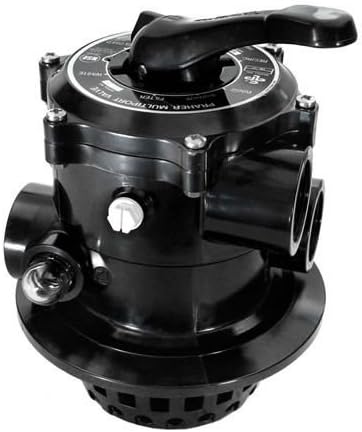
- 1.5-inch threaded water ports
- Top-mount six-position valve
- Listed for specific Cristal-Flo, Smarclean and Hydro III filters
The Praher TM-12-L is for owners replacing a familiar 1.5-inch top-mount valve on selected older sand-filter families. Retailer catalogues identify it with Sta-Rite Cristal-Flo, Waterway Smarclean and Baker Hydro III applications. Those names help narrow the search, but they are not a reason to skip inspection of the filter neck or the existing valve's precise attachment method.
Why the TM-12-L label matters
Praher uses similar TM-series naming for different assemblies, and a single letter can correspond to an important mount or connection difference. Here the listing identifies the TM-12-L and 1.5-inch threaded ports. Confirm the complete part reference on the old valve or the tank's parts diagram. A 'top mount, 1.5-inch' search result by itself could point to several incompatible products.
Using the six-position selector
The six-position TM-12-L serves the routine purpose of changing between normal filtering and maintenance paths. As with other manually operated multiport valves, move the handle only after the circulation pump is fully stopped. If the selector has become hard to press, forcing it is unwise: a stuck spring, worn diverter or accumulated debris may need attention before the entire assembly is considered unusable.
Plumbing and access considerations
A top-mounted replacement usually retains the general filter-pad footprint, but rigid lines may no longer align with every outlet. Note which pipe is marked Pump, Return and Waste before dismantling the original valve. Check that the adapter at the tank throat matches this Praher model and that the centre standpipe enters without binding. The installer needs vertical working room and a clean, undamaged tank seal.
What it does not solve
A new multiport valve controls routing; it will not repair split tank threads, cracked standpipes or damaged sand-filter laterals. If sand is returning to the pool, diagnose the internal filter components as well. Similarly, a low-flow complaint could be caused by blocked baskets, air ingress, a dirty filter bed or an unrelated plumbing restriction rather than the six-way selector.
Most suitable application
The TM-12-L is most useful when the existing unit or manufacturer diagram confirms that exact Praher arrangement. It may be attractive for maintaining an older, otherwise serviceable sand filter instead of replacing the complete tank. If the present assembly carries a Waterway WVS003 split-nut attachment, do not presume this Praher top mount will engage it correctly just because both use 1.5-inch plumbing.
Pros
- Specified TM-12-L replacement identity
- 1.5-inch threaded water connections
- Matches named older sand-filter families when confirmed
- Top-mounted six-position operation
Cons
- Similar TM-series names can hide mounting differences
- Not a general-purpose replacement for every 1.5-inch tank
- Older filter seals and adapters may also need service
Praher TM-22-PB 2-Inch Pentair 261185 Replacement Valve
- 2-inch FPT top-mount valve
- Aftermarket alternative to Pentair 261185
- Praher TM-22-PB part family
This Praher Plastics CMP listing is the direct aftermarket comparison to the Pentair 261185. Its identified TM-22-PB family uses 2-inch female threaded ports and is marketed as a replacement for the corresponding TA100D-style top-mount assembly. That relationship is useful when the original valve has failed but the filter tank remains sound. The final purchase still depends on verifying flange, clamp and seal compatibility.
How it differs from the Pentair original
The headline difference is replacement branding, not a change to the filter's required geometry. Retailer cross-references place TM-22-PB alongside part 261185, but the buyer should match the actual installed valve model and filter tank. The original Pentair 261185 has its own official TA100D description. Check both the required neck attachment and the included fittings before deciding which of the two makes more sense for your repair.
Two-inch FPT and top mounting
Female pipe threads accept compatible male-threaded pool plumbing components; the two-inch designation is the nominal connection, not the external body width. This valve mounts above a sand tank. It therefore cannot replace a side-mount D.E. multiport even if the inlet pipe happens to be two inches. Be careful when reusing threaded fittings: excessive tightening or incorrect thread sealing can crack the plastic housing.
Selector functions and the seal system
The complete multiport changes the path for filtration, backwashing, rinsing and other service settings. The valve's internal diverter and gasket must seal the unused passages, particularly the waste path. A replacement can resolve a worn valve body or major selector problem, but it cannot correct a tank-neck seal that has been crushed or installed out of position. Inspect those parts while the system is depressurized.
Practical buying compromises
Choosing an aftermarket cross-reference can be reasonable for an identified compatible installation, but it introduces an extra confirmation step: ensure the actual item shipped is the claimed TM-22-PB configuration. Do not rely on a seller's claim of universal Pentair compatibility. If the existing valve is a smaller 1.5-inch TA D model, this product is not the corresponding alternative.
Who should consider it
Owners who already know they need Pentair 261185 can compare this Praher option without changing the target filter family. It is not a shortcut for diagnosing an unidentified valve. If the original manufacturer part number cannot be read, measure the tank neck and consult the filter parts diagram first; buying on superficial appearance risks a time-consuming return and an out-of-service pool.
Pros
- Aftermarket cross-reference to Pentair 261185
- Identified Praher TM-22-PB product family
- 2-inch FPT plumbing format
- Direct alternative for a verified TA100D-style installation
Cons
- Cross-reference still requires a tank-and-clamp fit check
- Not an alternative to 1.5-inch top-mount models
- Package contents and original seals should be confirmed
Praher SM2-SR2 2-Inch Sta-Rite Side-Mount Valve
- 2-inch female-threaded side mount
- Pre-plumbed for Sta-Rite configuration
- Praher SM2-SR2 assembly
The SM2-SR2 addresses the Sta-Rite side-mount connection pattern rather than the Pentair FNS or Triton plumbing shapes. Supplier catalogues describe a 2-inch female-threaded valve with the associated Sta-Rite pipework. It is a strong candidate when an older Sta-Rite installation has a complete failed side-mounted multiport and the tank fittings remain usable, but the exact model and flow route must be verified.
Sta-Rite plumbing is the important distinction
The letters SR in this Praher part are useful identification markers for the Sta-Rite arrangement. Compare them with SM2-PP2, which is pre-plumbed for a different Pentair D.E. family. An installer must check the orientation of both tank openings and the adjoining pipe elbows; swapping brands of pre-plumbed valves based only on a two-inch label risks routing water through the filter incorrectly.
Side-mount construction and operating layout
The valve connects beside a sand or D.E. filter through an aligned pipe assembly rather than locking into a tank neck. The two-inch FPT designation helps with outside piping selection. What it does not specify is the connection geometry of every Sta-Rite filter in circulation. Check the original part number and compare each union, elbow and bulkhead rather than trusting an abbreviated compatibility list.
Repair considerations on older equipment
Older Sta-Rite pads sometimes contain a mix of replacement unions, pipe reductions and previously glued PVC. Photograph the complete plumbing before removing anything. Decide whether the new pre-plumbed assembly can mate with the existing hardware without twisting it. Replacing the valve may require additional gaskets or unions, particularly when the old ones are brittle or have been compressed for years.
Routine filter operation
The multiport makes backwashing and waste routing convenient when its passages are correctly matched to the filter. It does not determine when the media should be serviced; the filter pressure baseline and owner's instructions do. A D.E. configuration, where applicable, requires replenishing the correct amount of D.E. after backwashing. A sand filter uses its own backwash and rinse instructions instead.
Where it fits best
Choose SM2-SR2 for a confirmed Sta-Rite side-mount replacement where the original fitting pattern is known. It is not meant to serve as a universal retrofit to a top-mount filter or every Pentair D.E. tank. If the current assembly carries PacFab or FNS-type plumbing, inspect the SM2-PP2 family instead of assuming the connection bends are identical.
Pros
- Complete 2-inch Sta-Rite-oriented side-mount design
- Pre-plumbed configuration can reduce fabrication
- Female-threaded water connections
- Identifiable SM2-SR2 part reference
Cons
- Different from Praher Pentair/PacFab plumbing versions
- Precise inlet/outlet geometry must be checked
- Old unions and seals may need separate replacement
Praher SM1-PP3 1.5-Inch Triton Sand Multiport Valve
- 1.5-inch FIP side-mount valve
- Pentair/PacFab Triton sand plumbing
- Praher SM1-PP3; SM-10-3 family
This is a more targeted product than a general 1.5-inch valve listing. Praher SM1-PP3 is the pre-plumbed 1.5-inch side-mount arrangement for the Pentair/PacFab Triton sand-filter family. Supplier specifications identify its SM-10-3 base design and Pentair plumbing. That makes it different from the 1.5-inch D.E. valve also listed here, despite the similar size and mounting position.
Triton sand versus Pentair D.E.
Pentair separates Triton and Quad D.E. flow arrangements from its FNS-family D.E. arrangements in its valve tables. The Praher SM1-PP3 follows the Triton-side pattern and is cross-referenced by suppliers with the corresponding 261173 valve family. Check the original filter and plumbing before relying on that comparison. The filtration medium changes the intended flow routing; sand-specific connections should not be treated as interchangeable with every D.E. model.
The purpose of the pre-plumbed elbows
The shaped connecting pipework is intended to line up with the filter's side openings. That can make a like-for-like repair cleaner than building bends from separate fittings. It only saves work when the centerline, union style and inlet orientation match. Buyers should compare a photograph of their current valve and a parts diagram, including the direction of the waste outlet, before modifying existing PVC.
Practical six-way control
The SM1-PP3 uses a manually selected multiport design for ordinary filter and cleaning operations. It is an alternative to taking apart a sand vessel whenever the owner needs to backwash, provided the selected route is correct. With any six-position multiport, an improperly seated internal gasket can allow water to escape through an unwanted path, so a persistent waste-line trickle should prompt inspection.
Why 1.5-inch does not mean universal
Pipe size is only one of several dimensions. The 1.5-inch FIP ports do not guarantee that a valve made for a Triton sand tank will fit a Sta-Rite side mount or a Waterway top mount. A converter fitting can adapt some external piping, but it cannot fix an incorrect flow direction or incompatible filter bulkheads. Matching by part number generally avoids more labor than trying to retrofit an unrelated valve.
Who should buy it
The clearest buyer is a Pentair/PacFab Triton sand-filter owner with the appropriate 1.5-inch side-mount arrangement. Someone with a Pentair Quad D.E. filter should confirm the precise documented valve configuration rather than assuming all cross-references cover all generations. If the filter is an FNS Plus D.E. model, the Praher SM2-PP2 is a different family that deserves consideration only after checking size.
Pros
- Purpose-built Pentair/PacFab Triton sand plumbing
- Praher SM1-PP3 part is easy to identify
- 1.5-inch FIP water connections
- Pre-plumbed side configuration for compatible tanks
Cons
- Sand-flow arrangement is not a universal D.E. fit
- Not appropriate for top-mounted tanks
- Bulkhead and elbow alignment remain essential
Praher SM2-PP2 2-Inch FNS D.E. Multiport Valve
- 2-inch FIP side-mount assembly
- Pre-plumbed for Pentair FNS-type D.E. filters
- Aftermarket reference for Pentair 261152
Praher SM2-PP2 is a pre-plumbed 2-inch side-mounted valve associated with Pentair's FNS-type D.E. filter plumbing. Supplier cross-references link it to the Pentair 261152 valve assembly. That matters because Pentair 261142, although also associated with the FNS family, is specifically described with bulkhead fittings; the two products should be compared for included hardware rather than treated as identical boxes.
Matching the FNS plumbing family
The SM2-PP2 uses an SM-20-2 style base valve with Pentair plumbing, according to supplier specifications. It is intended for the relevant FNS/Nautilus D.E. layout, not an ordinary Triton sand-filter connection. Verify the tank part number, 2-inch lines and side-port geometry. If an older installation has been modified, compare physical connection points and the original valve's markings before relying on any generic model list.
Pre-plumbed but not installation-free
The attached plumbing may reduce the number of elbows and adapters that have to be fabricated. It will not automatically connect to old rigid pipework without adjustment. Account for the horizontal clearance required beside the filter, as well as the access needed to loosen unions, service the valve top and replace a gasket. Incorrect pipe support can transfer weight to the filter's tank fittings.
Valve replacement versus internal repair
When a diverter seal or gasket has failed, rebuilding the existing valve can sometimes cost less than replacing the complete assembly. Compare the condition of the housing, handle, screws and plumbing; cracks or stripped fittings favor a new assembly. Praher's SM2-PP2 also has identifiable replacement parts for the internal selector in parts catalogues, but select repair components for this model rather than a visually similar variant.
D.E. filter maintenance
A D.E. valve directs backwash waste, but the filter needs the proper restart and media-recharge process afterward. A clean sight glass is useful for observing discharge, where one is fitted. Never use the CLOSED selector position while the pump is running. A new valve will not fix worn filter grids, clogged plumbing or incorrect D.E. dosage, and those issues can mimic valve-related poor circulation.
When this is the more useful alternative
SM2-PP2 is worth comparing with the manufacturer's corresponding Pentair valve for confirmed FNS-family plumbing, particularly when a complete aftermarket pre-plumbed assembly is acceptable. It is not the matching Praher product for Sta-Rite plumbing—that is the SM2-SR2 family—or for 1.5-inch Triton sand plumbing, where SM1-PP3 is the distinct candidate.
Pros
- Defined SM2-PP2 aftermarket replacement identity
- 2-inch FIP pre-plumbed side mount
- Documented Pentair FNS-type D.E. application
- Cross-reference to Pentair 261152 family
Cons
- Not the Sta-Rite or Triton pre-plumbed arrangement
- Connection kit contents differ among comparable Pentair valves
- Rigid pipe layouts may still need alterations
261173-Compatible 1.5-Inch Six-Position Side-Mount Valve
- Aftermarket valve referencing 261173
- 1.5-inch threaded ports
- Six positions; listed 7.5-inch centerline
This third-party listing targets a specific Pentair part number rather than a brand-wide pool-filter category. It identifies a 1.5-inch six-position side-mounted valve, threaded water connections and a 7.5-inch centerline as a replacement for 261173. Pentair's original 261173 belongs to the Triton and Quad D.E. family, so that is the starting point for checking whether this alternative is appropriate.
Start with the 261173 reference
Pentair's catalogue documents the original 261173 as a 1.5-inch, 7.5-inch-centerline valve for the Triton and Quad D.E. family. That correspondence provides a useful technical reference for evaluating the aftermarket product. The seller's stated compatibility should still be checked against the exact installed filter and its piping. If the old unit is 261177 instead, that is a different Pentair application, even though the centerline and port size sound similar.
Understand the 7.5-inch dimension
For a side-mounted valve, the centerline is the vertical distance between the two mating filter connections. Measure center to center rather than across the outsides of the fittings. Verify that the threaded connections are the right kind and that the return and pump flow paths match the filter. The presence of an advertised sight glass does not eliminate the need to check the waste outlet orientation.
Materials and the replacement proposition
The listing describes a PVC construction and a manual six-position selector. Those are sensible category details but are not evidence that the valve lasts longer than original equipment. Inspect the diverter operation, gasket seating and the quality of threads on arrival. Any sign of damage warrants resolving before mounting the assembly onto a pressurized pool circulation system.
Handling backwash and shutdown
The user operates the selector according to the filter manufacturer's labelled paths and instructions. Sand and Quad D.E. filters do not have identical post-backwash media requirements; a Quad D.E. system needs the prescribed media recharging. The winterizing procedure also extends beyond the valve itself. Pump, filter housing, drain points and exposed pipework need attention according to climate and the installation manual.
Buyer profile and limitations
This product is suited to someone whose existing valve is documented as Pentair 261173 and who is comfortable verifying a third-party cross-reference. The exact 1.5-inch threaded fittings and 7.5-inch spacing must be confirmed. Buyers unable to establish their old filter model should prioritize identifying it first rather than taking a chance on a listing that contains several broadly compatible-sounding terms.
Pros
- Explicit 261173 replacement claim
- Listed 1.5-inch threaded water ports
- Published 7.5-inch centerline description
- Six-position side-mount format
Cons
- Aftermarket claim requires careful model checking
- Not interchangeable with Pentair 261177 D.E. routing
- Included fittings and seal details deserve inspection
Detailed Buying Guide: Measurements, Operation and Maintenance
Find the valve part number in three places
Start with the label around the selector handle, then examine molded markings on the body, and finally consult the filter tank information plate. These markings may identify different components. A molded lid number is not always the complete assembled-valve SKU. Compare the complete part against the manufacturer’s replacement-parts diagram, including any adapter or union kit associated with the installed filter.
Older equipment also changes over time. Manufacturers sometimes specify different fittings for a given filter model based on its production period. If the tank label is worn, photograph the complete assembly and measure its connection points rather than guessing from a filter name used across several generations. Where original documentation has been lost, an authorized parts specialist can help identify the correct arrangement.
Measure side-mount centerline correctly
For side-mounted filter valves, centerline spacing is the distance between the centres of the two filter-connection openings. Many Pentair side-mount products in this guide reference 7.5 inches, but that alone does not prove they are interchangeable. The upper port may be an inlet on one valve family and an outlet on another. A mistake here can direct the backwash path incorrectly or cause a pump to run against a closed passage.
Measure from the centre of the upper bulkhead to the centre of the lower one before removing the old valve. Also record how far the fittings project from the tank, the union diameter, and the position of the external waste port. A manufacturer parts drawing is valuable for distinguishing similar assemblies that otherwise appear identical in product photographs.
Understand tank-neck size on top-mount sand filters
Top-mounted replacements introduce a different measurement problem. The valve may connect by a clamp ring, collar, split nut or another tank-specific adapter. In Pentair’s Tagelus parts information, 261185 is listed with an 8-inch neck for TA100D, while 262506 is associated with a 6-inch neck for certain smaller TA D filters. Neither valve should be chosen merely because the pool’s equipment uses the Pentair brand.
Before loosening a clamp, turn off power, isolate the plumbing when appropriate and release the filter pressure according to its manual. Inspect the gasket and clamp for distortion or damage once access is safe. Replacing a valve without replacing a damaged sealing ring often leaves the real leak untouched. Never force an adapter into a tank opening that looks close to the correct size.
Choose 1.5-inch or 2-inch ports by compatibility, not assumption
Nominal port size tells you which plumbing fittings connect to the valve. It does not specify the diameter of the internal water passage, the mounting flange or the effective flow rating of the filtration system. A two-inch valve is not automatically better for a pool originally built with a documented 1.5-inch valve. Filter design, pump curve, piping restrictions and approved flow limits must all agree.
Changing a few fittings to a larger diameter will not remove a restriction elsewhere in the system. Conversely, narrowing the ports on a filter that calls for a specific two-inch valve can increase friction loss and make servicing more complicated. For replacement jobs, the safest approach is usually to retain the exact specified valve family and nominal pipe size unless the entire installation is being professionally redesigned.
Understand Filter, Backwash and Rinse
In Filter mode, water is directed through the media and returned to the pool. Backwash reverses the normal cleaning flow through the applicable filter media, sending dislodged dirt away through the waste connection. Rinse, where provided and specified by the filter instructions, helps settle sand and discharge residual dirty water before normal filtration resumes. The correct steps, duration and media requirements depend on the tank design.
Do not backwash solely on an arbitrary calendar schedule. Establish a clean-filter pressure baseline and use the filter manufacturer’s stated pressure increase or maintenance criteria. If pressure remains unusually high after the recommended cleaning process, the problem may be within the filter bed, piping or other equipment rather than the multiport. Repeatedly backwashing without diagnosing a restriction can waste substantial water.
Waste, Recirculate, Closed and Winter settings
Waste directs pumped water away from the pool circulation return, which is helpful for certain drainage or debris-removal tasks when the system is designed for it. Recirculate returns water without passing it through the filter media. The Closed position blocks a flow path; it is not a position to select while the pump is running. A winter setting or winterizing position helps with seasonal shutdown, but cannot replace draining and protecting the equipment as instructed.
Because selector labels vary, never assume a similarly sized replacement rotates to the same setting at the same angle as the old valve. Read the actual text on the new dial. A handle that points between settings during winter storage should be positioned that way only if the valve and filter instructions call for it; the proper freeze-protection method can depend on climate and system design.
D.E. valves require a different maintenance mindset
Diatomaceous earth filters use D.E. powder to coat the filter grids or elements. Backwashing removes accumulated debris and also carries away some of that powder. The filter then needs the prescribed amount of D.E. added back through the manufacturer’s procedure. A new valve cannot compensate for missing media, broken grids or the wrong D.E. quantity. Some D.E. filters have specific air-relief and post-backwash startup instructions that must be followed carefully.
Pentair’s different valve families reflect different internal flow requirements. Models designated for FNS, FNS Plus and NSP cannot automatically replace models specified for Triton or Quad D.E. filters. Choosing the wrong arrangement may create serious circulation and pressure problems. Inspect the valve diagram and the original filter manual instead of relying on a seller’s broad description of compatibility with “pool and spa D.E. filters.”
What to inspect before replacing the entire assembly
A wet waste hose while the valve is set to Filter can point to an internal diverter or spider-gasket problem. Water leaking around the top cover may instead involve the cover O-ring, screws or the valve housing. A drip where the valve meets the tank suggests the large mounting seal or clamp. Identifying the exact leak location helps determine whether a smaller rebuild kit or a complete replacement is justified.
Poor water flow is less specific. Check baskets, suction air leaks, dirty media, valve positions, clogged returns and the filter pressure before assuming the selector is defective. If the housing is cracked or the internal mating surfaces are badly damaged, a full valve replacement is more logical than repeatedly installing gaskets. Choose repair components by the correct valve model, not by approximate appearance.
Preparing the equipment pad for installation
Photograph the existing valve from several angles and label the pump, return and waste lines. Record the tank model, valve identifier, plumbing size, union positions and clearances. Check whether the waste connection currently leads to a hose, permanent discharge pipe or approved disposal point. An incorrectly attached waste line can send a large volume of pool water somewhere unintended during backwashing.
Allow working room for the new valve handle and for subsequent maintenance. A side-mounted valve may be easy to connect but awkward to service if it presses against a wall. A top-mounted valve needs overhead room to clear the standpipe. Secure pipes independently wherever necessary so that the valve or filter body is not carrying an excessive weight from rigid PVC and accessory fittings.
Gasket materials, threaded joints and leak checks
The seals supplied with a valve must be installed on clean, undamaged mating surfaces. Dirt, old sealant and twisted O-rings can cause a slow leak even when the replacement body is correct. Follow the maker’s instructions regarding seal lubrication and thread compounds; a product suitable for one joint may be unsuitable for another. Over-tightening plastic threads or clamp hardware can create the very crack the repair was meant to eliminate.
After assembly, restore the system according to its startup instructions, paying particular attention to air relief and system pressure. Keep clear of the filter tank during initial pressurization. Check each connection and the waste line for leakage, then re-check after the valve has been operated through the appropriate maintenance cycle with the pump stopped between settings. If the gauge behaves abnormally, shut the system down and investigate.
Replacement parts, support and long-term value
A complete valve is usually more expensive than an individual gasket or handle, but its value depends on how much of the old assembly has failed. Check availability of the top assembly, diverter, gasket, O-rings and sight-glass parts for the exact model. A product with clear exploded diagrams can simplify future repairs. However, a widely available valve that does not attach correctly to your tank has no practical value.
Consider the likely condition of the existing pipes and connectors as part of the repair budget. Fragile unions, cracked elbows and old gasket surfaces may need work alongside the valve replacement. If the filter vessel itself is compromised or the correct valve is difficult to identify, it may be more economical to evaluate the complete filter rather than repeatedly buy mismatched parts.
Direct Comparisons: Which Valve Fits Which Pool Filter?
Pentair 261185 vs Praher TM-22-PB
These two are the most direct head-to-head choices for a TA100D-style 2-inch top-mount repair. Pentair 261185 is the original manufacturer-designated model with its specified 8-inch neck. Praher TM-22-PB is an aftermarket cross-reference marketed for the same replacement position. Compare the clamp interface, supplied seal components and what exactly comes in the package. Neither is intended to replace a smaller 1.5-inch Tagelus assembly.
Pentair 262506 vs Pentair 261185
Both are six-way top-mounted Pentair sand-filter valves, yet their documented neck sizes and applications differ. The 262506 is associated with 1.5-inch connections and a 6-inch neck for the smaller TA D group. The 261185 has 2-inch connections and an 8-inch neck for TA100D. If you already know the filter model, this difference should settle the choice before appearance, price or customer ratings enter the decision.
Waterway WVS003 vs Praher TM-12-L
These are both 1.5-inch top-mount designs but have different identification and attachment requirements. Waterway calls out a split-nut WVS003 version, while the Praher TM-12-L is associated with particular older sand-filter families. Their purpose overlaps; their tank mounting should not be assumed to. Inspect the neck and retaining parts first. Buying by a convenient pipe-size match alone is the wrong comparison method.
Pentair 261142 vs Praher SM2-PP2
Both enter consideration for 2-inch Pentair FNS-family D.E. systems. The 261142 is a Pentair HiFlow assembly specified with bulkhead fittings. Praher SM2-PP2 is a pre-plumbed aftermarket design cross-referenced to the Pentair 261152 family. Although the filter applications can overlap, the complete connection kits and valve assemblies are not identical purchases. Compare exactly what the filter and old plumbing require before choosing.
Praher SM2-SR2 vs SM2-PP2 vs SM1-PP3
The similar model codes hide three quite different plumbing intentions. SM2-SR2 is the 2-inch Sta-Rite side-mount arrangement. SM2-PP2 targets 2-inch Pentair/PacFab FNS-style D.E. plumbing. SM1-PP3 is the 1.5-inch Triton sand-filter configuration. Choosing between them is not a matter of preferring a larger pipe or a newer-looking handle. The filter brand, media type, inlet direction and attached pipework decide.
Pentair 261173-compatible valve vs Pentair D.E. side-mount listing
The 261173-compatible aftermarket valve advertises a specific 1.5-inch, 7.5-inch-centerline reference associated with Triton and Quad D.E. equipment. The separate generic 1.5-inch Pentair D.E. side-mount listing does not provide that same explicit replacement number in its title. If your old part is 261173, the documented reference is much more useful than a general D.E. description. Confirm the complete valve identity before treating these as alternatives.
Common Multiport Valve Buying Mistakes
Buying by handle appearance instead of the tank model
Many manufacturers use a similar black handle and round position label. The body beneath it may be made for a completely different tank opening or internal water route. An attractive match in a photograph is not enough. Obtain the part number and examine the connection points before placing the order.
Confusing pipe size with tank-neck size
The nominal pipe diameter does not tell you the clamp flange or filter-neck measurement. Pentair’s two Tagelus replacements illustrate this clearly: the 1.5-inch and 2-inch valve assemblies also have different tank-neck specifications. A step-up adapter on an external pipe will not fix an incompatible tank connection.
Ignoring the difference between sand and D.E. flow arrangements
A side-mounted valve can have two perfectly spaced openings yet direct water along the wrong path for the filter medium. Use the exact sand or D.E. application specified in the manufacturer’s documents. Incorrect plumbing can damage equipment or create unsafe operating conditions. When a valve family offers separate sand and D.E. versions, regard that difference as essential.
Assuming the clamp and sealing components are included
A main product photograph may show several accessories without establishing the contents of every retailer package. Check whether the replacement includes the tank clamp, body O-ring, pressure gauge, unions or fitted elbows you need. Inspect the old parts rather than reusing them automatically. A small missing component can leave an otherwise compatible valve impossible to install.
Changing the selector while the pump is operating
Moving a multiport handle under active pump pressure can damage the sealing surfaces and cause dangerous pressure conditions. Turn off the pump before every valve-position change and follow the filter’s depressurization instructions where maintenance requires opening the system. CLOSED is not an acceptable running position. Never attempt to force a jammed handle while the equipment is pressurized.
Replacing a valve before locating the fault
A leaking waste line may involve an internal gasket, while low circulation may result from a clogged basket or dirty sand. Finding the fault avoids replacing an expensive whole assembly unnecessarily. Conversely, a visibly cracked valve body should not be patched and returned to pressure service. Diagnose the valve and the surrounding filter system as a unit.
Frequently Asked Questions
What is a multiport valve on a swimming pool filter?
It is the manually operated flow-routing valve that selects how water moves through or around the filter. Typical settings include filtration, backwashing, waste discharge and recirculation. Some designs also provide rinse, closed and winter-related settings. It controls routing rather than creating the pump's pressure.
Are six-way and seven-way multiport valves interchangeable?
Not necessarily. The labels and winterizing arrangement can differ, and two valves with the same number of settings may have completely different tank attachments. Exact replacement part numbers, plumbing orientation and filter compatibility matter more than the number of positions.
Can I put a 2-inch multiport valve on a 1.5-inch pool filter?
Do not assume that a reducer makes the conversion appropriate. The valve must match the filter's mounting, internal flow paths and approved operating arrangement. A larger external port is not a reliable reason to depart from the manufacturer-specified replacement.
What is the difference between top-mount and side-mount valves?
A top-mounted valve attaches to the filter's upper neck, typically with a clamp, adapter or threaded retainer. A side-mounted valve connects to two ports on the side of the tank. Each requires different measurements and plumbing components.
How do I know which Pentair multiport valve I need?
Read the filter model plate and compare its documented valve reference. For example, Pentair differentiates 261185 for TA100D from 262506 for smaller TA D filters. Its side-mounted Triton/Quad and FNS-family valves also use different reference numbers. Do not choose solely by brand.
Can I use a sand filter multiport valve on a D.E. filter?
Only if the manufacturer explicitly approves that exact valve configuration for the specific filter. Flow direction and internal port routing can differ between media systems. An unsuitable valve may send water along the wrong path and create equipment or pressure hazards.
Why does water continue to come out of the waste line in Filter mode?
One possibility is a worn, damaged or displaced diverter/spider gasket that no longer closes the waste passage. A cracked housing or improperly seated cover can cause related problems. Shut down safely and inspect the correct model before deciding between a repair kit and full replacement.
Should I replace the whole multiport valve or just the gasket?
A gasket repair can make sense when the housing, cover, diverter and plumbing remain sound. A cracked body, damaged threads or badly worn sealing surfaces generally make replacing the assembly more sensible. Use the exact valve model when selecting parts.
Does a new multiport valve improve pool filtration?
A correct replacement can restore the intended flow path if the old valve was leaking or obstructed. It will not independently increase the filter's rated performance or fix dirty media, broken laterals, damaged D.E. grids or a pump fault.
Should the pump be running when I change valve positions?
No. Shut the pump off and wait until the system stops before moving the selector. Follow the manufacturer’s pressure-relief steps whenever opening the filter or servicing pressurized connections. Running against the CLOSED position is unsafe.
Do D.E. filters need more powder after backwashing?
Yes, D.E. systems require the manufacturer-prescribed recharging procedure because backwashing discharges filter media as well as debris. The proper quantity and startup steps depend on the exact filter. Do not apply a generic sand-filter procedure to a D.E. unit.
What measurements should I check before ordering a replacement?
Record the filter model, old valve SKU, nominal water-port diameter, thread type, top-mount neck or side-mount centerline, union or clamp geometry, and pump/return/waste orientation. Also check working clearance and which gaskets or fittings are included with the new valve.
Final Buying Considerations
The best multi port valve for your pool is the one documented for your existing filter and connection geometry. Waterway WVS003 serves a specific split-nut top mount; Pentair 261185 and 262506 target different Tagelus neck sizes; Hayward SP071621 belongs to a larger Hayward top-mount sand-filter family. The Praher products are best compared by their exact top-mount or pre-plumbed side-mount references, not by the brand name alone.
Before placing an order, match the filter model, valve part number, mounting arrangement and water-flow orientation, then verify any seals and connecting hardware required for the installation. A few careful measurements prevent more inconvenience than selecting a promising-looking valve and discovering it cannot be attached safely.
Author