

The most important difference between these four pressure-side cleaners is not the color, the number printed on the body, or even the jet count. It is the pool’s plumbing. The Polaris Vac-Sweep 280, 380, and 3900 Sport are designed to run with a compatible booster pump on a pressure-cleaner line, while the Vac-Sweep 360 is designed to work from the pool’s return-water pressure without a booster pump. That single distinction can determine which model fits an existing equipment pad before debris capacity or drive design enters the decision.
A pressure-side cleaner uses pressurized water to create venturi suction that lifts leaves, grit, pebbles, and other debris into an onboard bag. Because the debris is collected at the cleaner instead of being sent through the pool pump basket and main filter, these cleaners are particularly useful in pools that receive leaves and larger material. They still depend on correct flow, hose sizing, clean screens, and properly adjusted backup and sweep systems.
The four Polaris models compared here are all listed for in-ground pools, but their mechanical layouts differ. The 280 uses two venturi jets and a shaft-drive system. The 360 and 380 use three jets and all-wheel belt drive, with the 360 eliminating the booster-pump requirement. The 3900 Sport adds a PosiDrive system with a stainless-steel chain, a larger 2.5-inch inlet, WideTrax tires, a 5-liter dual-chamber SuperBag, and an included TailSweep PRO.
Finding the best pressure side automatic pool cleaner therefore starts with compatibility, then moves to debris size, bag capacity, drive system, pool geometry, and maintenance preferences. A higher-specification model cannot compensate for the wrong plumbing arrangement, and a correctly installed simpler model can perform better than a more elaborate cleaner that is under-pressurized or fitted with the wrong hose length.
Quick Comparison
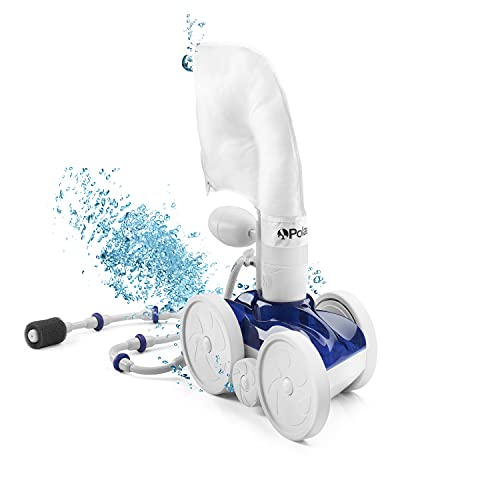
- Dual venturi jets with shaft-drive system
- Requires a separate compatible booster pump
- 2.25-inch inlet, 31-ft feed hose, single-chamber zipper bag

- Runs from pool return pressure without a booster pump
- Triple venturi jets with all-wheel belt drive
- 2.25-inch inlet, 31-ft feed hose, single-chamber Velcro bag
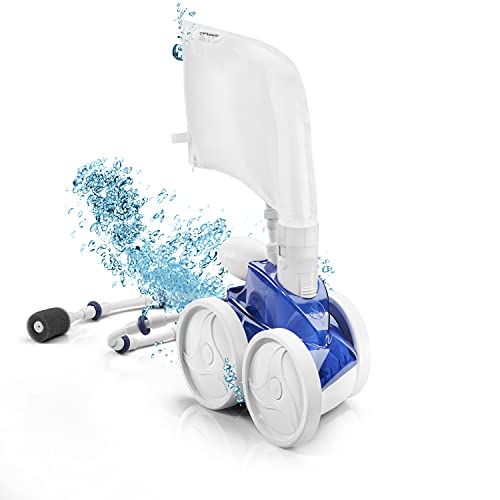
- Triple venturi jets with all-wheel belt drive
- Requires a separate compatible booster pump
- 2.25-inch inlet, 31-ft feed hose, single-chamber zipper bag
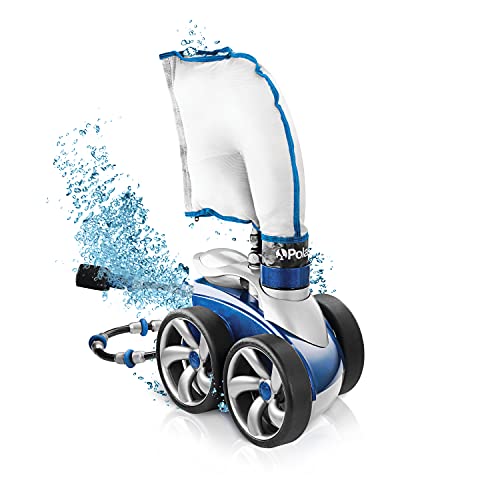
- All-wheel PosiDrive with stainless-steel chain
- 2.5-inch inlet and 5-liter dual-chamber SuperBag
- Booster pump required; TailSweep PRO included
What to Look for in the Best Pressure Side Automatic Pool Cleaner
Booster Pump Requirement
Start at the equipment pad. The 280, 380, and 3900 Sport require a separate compatible booster pump. That pump supplies the pressure needed to drive the cleaner through its dedicated pressure-cleaner line. If the pool already has a functioning booster pump and pressure line from an older Polaris installation, staying with a booster-powered model can be straightforward once compatibility and condition are confirmed.
The 360 is different. It uses clean water returning from the pool’s filtration system and does not require a booster pump. That can reduce equipment complexity, but it does not mean the 360 can be attached to any return fitting with no setup work. Return-line pressure has to be suitable, the hose has to be fitted correctly, and some pools may need the appropriate Polaris return fitting or retrofit components.
Do not assume that the 360 is a direct hydraulic replacement for a 280, 380, or 3900 Sport simply because the cleaners look related. A dedicated booster-pressure line and a standard return line serve different operating arrangements. If changing from one system type to the other, verify the plumbing configuration before buying.
Existing Return Line and Pressure-Cleaner Plumbing
Pressure-side cleaners are more dependent on the pool’s hydraulic layout than robotic cleaners. A booster-powered Polaris typically connects to a dedicated pressure-cleaner return line. The 360 instead relies on filtration-system return pressure. That difference affects installation, valve settings, energy use, and how much pressure remains available at the other pool returns.
A pool with an established dedicated cleaner line and booster pump is already set up for the 280, 380, or 3900 Sport style of operation. A pool without that equipment may make the 360 more attractive if the return system can supply suitable pressure. Adding a booster pump and dedicated plumbing can change the economics of a cleaner purchase considerably, especially if the equipment pad was never designed for one.
Venturi Jets and Water Flow
Venturi jets use moving water to create suction at the cleaner’s intake. The 280 uses two jets, while the 360, 380, and 3900 Sport use three. Jet count is one mechanical difference, but it should not be interpreted as a simple performance score. A triple-jet cleaner still needs proper water pressure, unrestricted screens, sound hoses, and correct wheel speed to perform as intended.
The 280 has remained a widely used design despite having two jets because its shaft-drive layout and hydraulic system are built around that configuration. The 380 adds a third jet while retaining a conventional Polaris single-chamber bag and belt-drive system. The 3900 Sport combines three jets with a different drive train and larger debris-handling hardware.
Vacuum Inlet Size and Debris
The 280, 360, and 380 use a 2.25-inch vacuum inlet. That opening is intended to handle common pool debris such as leaves, acorns, pebbles, and dirt that can pass through the cleaner’s intake. The 3900 Sport increases the inlet to 2.5 inches, giving it more room for bulky debris before that material reaches the bag.
A larger inlet is most useful in a pool that regularly receives substantial leaves, seed pods, or similar material. If the pool’s main problem is a light layer of fine dust, inlet diameter matters less than hydraulic tuning and bag condition. Pressure-side cleaners are generally strongest as debris collectors; they are not powered scrubbers for established algae films.
Bag Design and Capacity
The onboard bag is one of the major advantages of pressure-side cleaning because captured debris stays out of the pool’s primary pump basket and filter. The 280 uses a single-chamber zipper bag. The 360 uses a single-chamber Velcro bag. The 380 returns to a single-chamber zipper bag. The 3900 Sport uses a 5-liter dual-chamber SuperBag.
Bag capacity matters most in leaf-heavy pools. A larger bag can reduce how often cleaning stops for emptying, but every bag becomes heavier and more restrictive as it fills. Fine sand also loads filter fabric differently from large leaves. Regular emptying preserves flow through the bag and reduces strain on the cleaner’s movement.
Drive System
The drive system is one of the clearest mechanical differences among the four cleaners. The 280 uses shaft drive. The 360 and 380 use all-wheel belt drive. The 3900 Sport uses an all-wheel PosiDrive system with a stainless-steel chain. Each system contains wear components, but the service parts and adjustment points are not the same.
The 280’s shaft-driven layout is relatively direct and familiar to many pool service technicians. Belt-driven 360 and 380 cleaners depend on belts and wheel-drive components staying in good condition. The 3900 Sport’s chain drive is designed around its higher-torque PosiDrive arrangement. Buyers maintaining their own cleaner should consider parts availability and their comfort with the specific drive system rather than assuming all Polaris interiors are identical.
Feed Hose Length and Pool Geometry
Each of these Amazon packages includes a 31-foot feed hose. That number does not mean every pool should use the hose exactly as delivered. Polaris installation guidance for these cleaners emphasizes fitting the hose to the pool so the cleaner can reach the farthest point without carrying excessive extra hose.
Too little hose prevents full coverage. Too much hose can tangle, bunch, or alter cleaner movement. Pool shape matters as well: a simple rectangular pool is easier to fit than a free-form pool with steps, benches, a deep hopper, or a long narrow section. Hose sizing should be treated as part of installation, not as optional fine-tuning after poor coverage appears.
Wall Coverage and the Meaning of “Scrubbing”
Polaris describes these pressure-side cleaners as sweeping, scrubbing, and vacuuming pool surfaces, and the models are intended to travel across floors and walls when correctly set up. Their official specifications, however, list active brushing as “No.” There is no motorized brush roll applying powered scrubbing force in the way some other cleaner designs use rotating brushes.
The contact of wheels, sweep hose, water movement, and cleaner body can disturb loose material, but a pressure-side cleaner should not be expected to remove established algae solely through mechanical brushing. Pools with algae on walls or floors still require appropriate chemical treatment and manual or powered brushing as part of water care.
Backup Valve, Sweep Hose, and TailSweep PRO
All four models include an automatic backup function. The backup valve periodically changes water flow so the cleaner reverses direction and can move away from corners, steps, or other areas where it may become trapped. If a cleaner repeatedly stays in one section, the backup valve is one of the components worth checking after hose length and flow.
The sweep hose moves behind the cleaner and helps disturb debris in corners and along surfaces. Its movement can also spray water out of the pool when it reaches the waterline. The TailSweep PRO accessory is designed to reduce that spraying while maintaining sweeping action. It is compatible with the 280, 360, and 380, while the 3900 Sport package includes it.
Service Parts and Routine Maintenance
Pressure-side cleaners are mechanical devices that live in chlorinated or saltwater environments, so tires, bearings, belts or chains, swivels, bags, hoses, backup valves, screens, and sweep-hose parts are consumables over a long service life. Polaris has an established replacement-parts ecosystem, but the correct part depends on the exact model.
Routine care is simpler than a full rebuild. Empty and rinse the debris bag, clear the in-line filter screen, check hose swivels for leaks, inspect tires and drive components, and make sure the sweep hose and backup valve move normally. A cleaner that suddenly becomes slow may have a hydraulic restriction or leak rather than a failed drive train.
Polaris Vac-Sweep 280 Pressure-Side In-ground Pool Cleaner
The Vac-Sweep 280 is the simplest mechanical design in this four-model group and remains distinct because it combines dual venturi jets with shaft drive. It requires a compatible booster pump and is intended for in-ground pools. Polaris specifies a 2.25-inch vacuum inlet, automatic backup, a single-chamber zipper bag, and compatibility with the TailSweep PRO accessory.
Design and Drive System
The 280 uses two jets to create suction and a shaft-drive system to transfer power to its wheels. That layout is different from the belt systems in the 360 and 380 and the chain-driven PosiDrive system in the 3900 Sport. For an owner already familiar with 280 maintenance, the straightforward mechanical arrangement can be an advantage because the cleaner does not introduce a new belt or chain architecture.
The cleaner uses the familiar three-wheel Polaris layout with a rear sweep hose. Its movement is powered by water pressure rather than an onboard electric motor. Because the booster pump supplies the hydraulic energy, correct pump operation and a clean pressure line are fundamental to cleaner speed and suction.
Important Specifications
- Pool type: In-ground pools
- Booster pump: Required
- Venturi jets: 2
- Drive: Shaft drive
- Vacuum inlet: 2.25 inches
- Debris bag: Single-chamber zipper bag
- Feed hose in Amazon package: 31 ft
- Automatic backup: Yes
- TailSweep PRO: Compatible; not listed as included with this package
- Active brushing: No
The numbers explain what the 280 is meant to do. A 2.25-inch inlet gives it room for leaves and other larger pool debris, while the single bag keeps that material out of the filtration system. The two-jet configuration is not intended to compete with the 380 or 3900 simply on jet count; it works as part of a complete hydraulic design that depends on the booster pump and wheel-speed setup.
Installation and Setup
The 280 connects to a dedicated cleaner return line and uses a separate booster pump. Polaris installation guidance calls for the filtration pump to be running and primed before the booster pump operates. This matters because the booster is designed to work with water supplied by the main circulation system, not as a dry standalone pump.
Hose fitting is equally important. Polaris instructs the feed hose to be adjusted so it reaches the farthest point of the pool within roughly six inches. The leader-hose section is then matched to the deepest part of the pool. Leaving the complete hose untrimmed in a smaller pool can create excess slack that interferes with navigation.
The 280 manual specifies an operating wheel speed of 28 to 32 RPM. If speed falls outside that range, the cause can be hydraulic rather than mechanical: a clogged screen, dirty filter, full pump basket, hose leak, valve setting, or pressure restriction can all reduce cleaner performance.
Practical Cleaning Performance
Polaris and the Amazon listing describe the 280 as cleaning the floor and walls of an in-ground pool and state a cycle of three hours or less under suitable conditions. Treat that as a manufacturer performance claim rather than a guarantee for every pool. Shape, plumbing pressure, debris load, wall angle, steps, and hose setup all influence coverage.
The 280’s main practical strength is large-debris pickup without sending that debris to the pool filter. Leaves, small pebbles, and similar material enter the 2.25-inch inlet and collect in the bag. This makes it useful in landscaped yards where leaf fall can quickly fill a skimmer basket.
Bag Care and Debris Handling
The single-chamber zipper bag is easy to understand: unzip, empty, rinse, reinstall. Polaris specifically advises emptying the 280 bag when it is about half full, especially when it contains sand. That guidance reflects how heavy fine debris can affect movement even before the bag looks packed with leaves.
A bag should also be inspected for tears and for debris packed into the fabric. Water must pass through the bag while solids remain inside. If the fabric becomes heavily coated, the cleaner can lose effective flow even though the booster pump is still running.
Important Strengths
The 280’s strongest buying argument is compatibility with an established booster-pump Polaris installation combined with a relatively direct shaft-drive design. It handles the same basic pressure-cleaner job without the belt drive of the 380 or the more elaborate PosiDrive and dual-bag arrangement of the 3900 Sport.
Its 31-foot feed hose and 2.25-inch inlet make it appropriate for many residential in-ground pools. The onboard bag keeps coarse debris separate from the main filtration system, and the automatic backup valve helps the cleaner work its way out of common hang-up points.
Important Limitations
A separate booster pump is mandatory, so the 280 is a poor fit for a pool with no pressure-cleaner plumbing unless the owner is prepared for the additional equipment requirement. The single-chamber bag also holds less debris than the 3900 Sport’s 5-liter dual-chamber SuperBag.
The 280 has two venturi jets rather than the three used by the 360, 380, and 3900 Sport, and it has no active powered brush. It can disturb and collect loose dirt, but buyers expecting a motorized scrubbing system should consider a different cleaner category.
Who Should Consider It
The 280 makes sense for an in-ground pool that already has a compatible booster pump and cleaner line, especially when the owner values a proven shaft-drive layout and primarily needs leaves and general debris collected into a separate bag.
Who Should Consider Another Option
Choose another model if the pool has no booster system and the return plumbing is better suited to the 360. Heavy-debris pools may also benefit from the larger inlet and 5-liter dual-chamber bag of the 3900 Sport, while buyers wanting a triple-jet booster cleaner in a conventional single-bag format may prefer the 380.
Pros
- Direct shaft-drive design with automatic backup
- 2.25-inch inlet handles leaves and common pool debris
- Single-chamber zipper bag keeps debris out of the main filter
- 31-ft feed hose included in the Amazon package
Cons
- Requires a separate compatible booster pump
- Single-chamber bag has less capacity than the 3900 Sport SuperBag
- No active powered brushing system
Polaris Vac-Sweep 360 Pressure-Side Cleaner for In-Ground Pools
The Vac-Sweep 360 is the outlier in this comparison because it does not use a booster pump. It is powered by clean water returning to the pool from the filtration system. That changes both installation and operating considerations, while the cleaner itself still uses three venturi jets, an all-wheel belt drive, a 2.25-inch inlet, automatic backup, and an onboard single-chamber bag.
No-Booster Hydraulic Design
For a pool without a booster-pump cleaner system, the 360 can avoid adding a second pump. The cleaner connects to an appropriate return line and uses that flow to power movement and venturi suction. This can reduce equipment complexity, but the pool’s filtration pump and return plumbing must provide enough pressure for correct operation.
Polaris also offers an eyeball-fitting connection approach for pools that need to adapt a standard return. The practical point is that the 360 should be treated as a return-line cleaner, not as a booster cleaner with the booster omitted. If a pool currently has a dedicated high-pressure line for a 280, 380, or 3900 Sport, verify the plumbing configuration before assuming the 360 will attach to it directly.
Drive, Jets, and Inlet
The 360 uses three venturi jets and all-wheel belt drive. That gives it a different internal drive system from the shaft-driven 280 while keeping the same 2.25-inch inlet size. The belt system transfers hydraulic power to the wheels and is serviceable with model-specific replacement parts.
Three jets can move a strong stream of water through the cleaner when the return line is correctly adjusted, but the absence of a booster pump means available system pressure is especially important. A restrictive filter, partially closed valve, weak circulation pump, or competing return flow can affect the cleaner even when the cleaner itself is mechanically sound.
Important Specifications
- Pool type: In-ground pools
- Booster pump: Not required
- Power source: Pool filtration-system return water
- Venturi jets: 3
- Drive: All-wheel belt drive
- Vacuum inlet: 2.25 inches
- Debris bag: Single-chamber Velcro bag
- Feed hose in Amazon package: 31 ft
- Automatic backup: Yes
- TailSweep PRO: Compatible; not listed as included with this package
- Active brushing: No
Pressure Testing and Hose Setup
A no-booster design makes hydraulic setup more important, not less. Polaris installation guidance for the 360 uses a pressure-testing process to determine whether the return line provides suitable flow. The hose is then fitted so the cleaner can reach the farthest part of the pool without carrying excessive extra length.
Polaris specifies a 28-to-32-RPM wheel-speed target for the 360. If the cleaner runs too slowly, the troubleshooting path starts with water delivery: inspect the filter screen, filtration system, valves, hose connections, and jets before assuming the belt drive has failed. If it runs too fast, pressure can be reduced according to the installation components and instructions.
Practical Cleaning Use
The 360 is well suited to owners who want the debris-handling behavior of a pressure-side cleaner but do not want a separate booster pump. Leaves and larger material stay in the cleaner bag instead of being carried to the main pool filter. That can reduce the amount of coarse debris handled by the skimmer and pump basket.
Because the 360 shares the 2.25-inch inlet size used by the 280 and 380, its debris opening is similar even though the pressure source differs. The single-chamber Velcro bag is the main collection point and should be emptied before its weight or restriction begins to affect movement.
Coverage and Backup Function
The automatic backup valve periodically reverses cleaner movement and helps it leave corners or steps. Polaris troubleshooting information also points to hose length, thrust-jet position, wheel speed, and the flow through all three vacuum jets when coverage becomes uneven. These adjustments can matter more than replacing parts when a new installation does not cover the pool evenly.
The 360 is intended to clean pool floors and walls, but wall coverage depends on hydraulic pressure and pool geometry. Smooth transitions are easier for an automatic cleaner than sharp ledges or complex benches. Because active brushing is not part of the specification, stubborn wall films still require separate brushing.
Important Strengths
Avoiding a booster pump is the 360’s defining advantage. For the right pool, it means one less pump to install, maintain, and power. It still provides triple-jet pressure-side cleaning, an onboard bag, automatic backup, and the familiar sweep-hose arrangement.
The 31-foot included hose and standard 2.25-inch inlet make it suitable for a wide range of residential in-ground pools once the return-line pressure and hose length are set correctly. TailSweep PRO compatibility also allows owners to address water spray from the sweep hose if needed.
Important Limitations
The same no-booster design can become a limitation if the filtration system cannot spare enough return pressure. A pool with marginal circulation or many open return fittings may require valve adjustment or other setup changes. It is therefore important to confirm hydraulic suitability rather than purchasing the 360 only to avoid a booster pump.
The Amazon A+ information also distinguishes the 360 from cleaners intended for a dedicated booster-pressure line. Owners replacing a 280, 380, or 3900 Sport should not assume the existing cleaner connection is automatically correct for the 360.
Who Should Consider It
The 360 is the most relevant model here for an in-ground pool that lacks a booster pump but has suitable return-line pressure. It also fits owners who want an onboard debris bag and pressure-side operation without adding a second pump to the equipment pad.
Who Should Consider Another Option
If the pool already has a compatible booster system, the 280, 380, or 3900 Sport may use that infrastructure more directly. Pools with very heavy leaf loads may also benefit from the 3900 Sport’s larger 2.5-inch inlet and 5-liter dual-chamber bag.
Pros
- Only model in this comparison that does not require a booster pump
- Triple venturi jets with all-wheel belt drive
- 2.25-inch inlet and onboard single-chamber debris bag
- 31-ft feed hose included and TailSweep PRO compatible
Cons
- Performance depends strongly on available filtration-system return pressure
- Not a direct hydraulic substitute for a booster-line cleaner without checking plumbing
- Single-chamber bag is smaller than the 3900 Sport dual-chamber SuperBag
Polaris Vac-Sweep 380 Pressure Side Pool Cleaner, Triple Jet Powered
The Vac-Sweep 380 sits between the 280 and 3900 Sport in mechanical complexity. Like the 280, it requires a compatible booster pump and uses a 2.25-inch inlet with a single-chamber zipper bag. It upgrades the hydraulic layout to three venturi jets and uses all-wheel belt drive rather than the 280’s shaft drive.
Triple-Jet Booster-Pump Design
The 380’s three-jet system is supplied by a separate booster pump. That dedicated pressure source gives the cleaner a consistent hydraulic foundation when the plumbing and booster are correctly sized and operating. It also means the cleaner should not be chosen for a pool that has no booster setup unless adding that equipment is part of the plan.
Polaris and the Amazon listing state that the 380 can sweep, scrub, and vacuum an in-ground pool’s floor and walls in three hours or less under suitable conditions. The practical result varies with pool shape, pressure, debris load, and setup, so the time claim is best treated as a manufacturer benchmark rather than a fixed schedule.
Belt Drive Compared With the 280
The 380 uses all-wheel belt drive, separating it mechanically from the shaft-driven 280. Belts allow the drive system to transfer power among the wheels, but they are wear parts and should remain properly seated and tensioned. If one wheel stops driving while water pressure appears normal, the belts and drive components become part of the diagnostic path.
The choice between 280 and 380 should therefore not be reduced to “two jets versus three.” Owners familiar with shaft-drive service may prefer the 280’s layout, while owners who want the 380’s triple-jet, belt-driven design may accept belt replacement as normal long-term maintenance.
Important Specifications
- Pool type: In-ground pools
- Booster pump: Required
- Venturi jets: 3
- Drive: All-wheel belt drive
- Vacuum inlet: 2.25 inches
- Debris bag: Single-chamber zipper bag
- Feed hose: 31 ft
- Automatic backup: Yes
- TailSweep PRO: Compatible; not listed as included with this package
- Active brushing: No
Debris Collection
The 2.25-inch inlet handles the same general debris class as the 280 and 360. Leaves, small stones, seed pods, and other material are lifted into the onboard bag rather than sent through the main circulation filter. This is particularly useful for pools beneath trees, where a suction cleaner can transfer a large leaf load to the pump basket.
The single zipper bag is easy to remove and empty, but it does not have the volume of the 3900 Sport’s 5-liter dual-chamber SuperBag. In a moderate-debris pool, that may not matter. In a pool that regularly collects large piles of leaves, fewer bag-emptying stops can become a meaningful convenience advantage.
Hose and Navigation
The included 31-foot hose should be fitted to the pool’s geometry, not simply attached at full length. Proper reach to the farthest point helps the cleaner cover the pool while reducing excess hose that can tangle. The backup valve and thrust-jet adjustment then influence how the cleaner changes direction and leaves problem areas.
Steps, ladders, sharp benches, and unusual transitions can still interrupt an automatic pressure cleaner. No model can guarantee access to every ledge. If a cleaner repeatedly catches on the same feature, hose fitting, backup operation, thrust-jet position, and local pool geometry should all be checked before assuming the drive system is defective.
Important Strengths
The 380 offers triple-jet booster-powered cleaning without moving to the larger dual-chamber bag and chain-drive system of the 3900 Sport. That gives it a clear middle position for an owner who already has a booster pump and wants the established Polaris belt-drive architecture.
The onboard zipper bag isolates debris from the main filtration equipment, and the automatic backup valve supports unattended navigation. TailSweep PRO compatibility also gives owners a way to reduce sweep-hose spray if the hose frequently reaches the waterline.
Important Limitations
The booster pump requirement is the largest limitation for a pool that is not already plumbed for pressure-side cleaning. The 380 also retains the 2.25-inch inlet and single-chamber bag, so buyers with especially heavy, bulky debris do not get the capacity increase offered by the 3900 Sport.
Like the other cleaners here, the 380 has no active powered brush. Its movement and sweep system can loosen debris, but established algae or strongly adhered film still calls for proper chemical treatment and brushing.
Who Should Consider It
The 380 is most appropriate for an in-ground pool with a compatible booster system where the owner wants triple-jet pressure-side cleaning and a conventional single-bag, belt-drive design.
Who Should Consider Another Option
The 280 is a better comparison if shaft drive is preferred, while the 3900 Sport is more relevant when larger debris capacity, a 2.5-inch inlet, chain-driven PosiDrive, and an included TailSweep PRO matter. The 360 is the option to examine when a booster pump is not part of the pool system.
Pros
- Triple venturi jets with dedicated booster-pump pressure
- All-wheel belt-drive system
- 2.25-inch inlet and single-chamber zipper bag
- 31-ft feed hose, automatic backup, and TailSweep PRO compatibility
Cons
- Requires a separate compatible booster pump
- Single-chamber bag holds less than the 3900 Sport’s 5-liter SuperBag
- Belts are wear components that may require periodic service
Polaris Vac-Sweep 3900 Sport Pressure Side Pool Cleaner
The Vac-Sweep 3900 Sport is the most heavily equipped cleaner in this comparison. It requires a compatible booster pump and combines three venturi jets with all-wheel PosiDrive, a stainless-steel drive chain, WideTrax tires, a larger 2.5-inch vacuum inlet, a 5-liter dual-chamber SuperBag, automatic backup, and an included TailSweep PRO.
PosiDrive and Stainless-Steel Chain
Instead of the 360 and 380 belt system, the 3900 Sport uses a stainless-steel-chain PosiDrive layout. Polaris designed this system to transfer hydraulic power through an all-wheel drive train while providing strong wheel torque. The mechanical difference matters to buyers comparing service parts: chain-drive components are not interchangeable with 380 belts or 280 shaft-drive parts.
The WideTrax tires also distinguish the model’s contact system. They are intended to provide traction as the cleaner crosses pool surfaces and transitions. Traction still depends on tire condition and proper hydraulic speed, so worn tires or incorrect wheel RPM can reduce climbing and coverage even when the booster pump is operating.
Larger 2.5-Inch Inlet
The 3900 Sport increases the vacuum inlet from 2.25 inches on the other three models to 2.5 inches. The difference sounds small numerically, but the larger opening gives bulky debris more room to enter. Pools with large leaves, seed pods, acorns, and similar material are the most likely to benefit.
A larger inlet does not mean every object should be left for the cleaner. Sticks, toys, stones larger than the opening, and sharp material should still be removed manually. The cleaner is a maintenance tool, not a substitute for skimming unusually large debris after storms.
5-Liter Dual-Chamber SuperBag
The 5-liter dual-chamber SuperBag is the clearest capacity upgrade in this comparison. It provides more debris storage than the single-chamber bags on the 280, 360, and 380, which can reduce emptying frequency in leaf-heavy conditions. Dividing the collection volume into two chambers also helps distribute debris around the cleaner body.
More capacity is not permission to run the bag until it is packed solid. Wet leaves, sand, and small stones add weight quickly. Emptying before the bag becomes heavily loaded helps preserve navigation and water flow through the collection fabric.
Important Specifications
- Pool type: In-ground pools
- Booster pump: Required
- Venturi jets: 3
- Drive: All-wheel PosiDrive with stainless-steel chain
- Tires: WideTrax
- Vacuum inlet: 2.5 inches
- Debris bag: 5-liter dual-chamber SuperBag
- Feed hose: 31 ft
- Automatic backup: Yes
- TailSweep PRO: Included
- Active brushing: No
TailSweep PRO Included
The TailSweep PRO is included with the 3900 Sport rather than being only an optional compatibility item. It fits over the sweep-hose end and is intended to reduce the amount of water sprayed out of the pool while still allowing the hose to move debris from edges and corners.
That accessory is most noticeable on pools where the sweep hose regularly reaches the waterline near decks, windows, or furniture. It does not change the core suction system, but it addresses a common pressure-cleaner annoyance without requiring a separate accessory purchase.
Setup and Wheel Speed
The 3900 Sport connects to a 1.5-inch dedicated pressure-cleaner line and requires a booster pump. As with the other models, the 31-foot feed hose needs to be fitted so it reaches the farthest pool point without excessive slack. Hose length and swivel condition influence navigation throughout the pool.
Polaris troubleshooting guidance lists a 30-to-36-RPM wheel-speed range for the 3900 Sport. A cleaner outside that range should be checked for pressure, screen condition, hose leaks, valve settings, and drive condition. The factory thrust-jet position can also be adjusted when coverage or climbing behavior needs correction.
Practical Use in Heavy-Debris Pools
The combination of the 2.5-inch inlet and 5-liter bag makes the 3900 Sport the most debris-capacity-oriented model of the four. That is useful in pools surrounded by trees or landscaping, where a smaller bag can fill before the cleaner finishes covering the pool.
The larger hardware does not eliminate ordinary maintenance. The in-line screen must stay clean, the chain and drive components should be inspected as they wear, and the bag needs rinsing. A heavy-duty debris configuration pays off only when water flow and movement remain unobstructed.
Important Strengths
The 3900 Sport combines the largest inlet and largest published bag capacity in this group with a distinct chain-driven all-wheel system. TailSweep PRO is included, and the automatic backup function supports navigation without manual repositioning every time the cleaner reaches a difficult feature.
For an existing booster-pump pool with substantial leaf debris, those differences are practical rather than cosmetic. Larger collection capacity can reduce interruptions, and the 2.5-inch inlet provides additional room for bulky material.
Important Limitations
The 3900 Sport still requires a booster pump and dedicated pressure-cleaner plumbing, so it is not the easiest first pressure-side cleaner for a pool with no such system. Its more elaborate drive train also introduces chain-specific service parts rather than the simpler shaft or belt arrangements used by the other models.
It remains a non-active-brushing cleaner. If the maintenance problem is mainly fine plaster dust or algae film rather than leaves and larger debris, the advantages of the larger inlet and bag may be less important than a different cleaner type or a dedicated brushing routine.
Who Should Consider It
The 3900 Sport is aimed at in-ground pools that already support a booster-powered pressure cleaner and regularly collect enough leaves or larger debris to make bag capacity and inlet size meaningful. It also suits buyers who want TailSweep PRO included rather than added later.
Who Should Consider Another Option
The 360 is the more relevant model if avoiding a booster pump is the priority. The 280 offers a simpler shaft-drive approach, while the 380 retains triple jets and booster power without moving to the 3900 Sport’s larger dual-bag and chain-drive platform.
Pros
- 2.5-inch inlet is the largest among these four cleaners
- 5-liter dual-chamber SuperBag provides high debris capacity
- All-wheel PosiDrive uses a stainless-steel chain
- TailSweep PRO is included with the package
Cons
- Requires a compatible booster pump and pressure-cleaner line
- More complex drive system introduces model-specific chain components
- Extra debris capacity is less important in pools with mainly fine dust rather than leaves
Detailed Buying Guide for Pressure-Side Pool Cleaners
How a Pressure-Side Cleaner Creates Suction
A pressure-side cleaner receives pressurized water from the pool system and sends that water through venturi jets inside the cleaner. As the high-velocity water passes through the venturi section, it creates a low-pressure area that pulls pool water and debris through the intake. The debris is trapped in the onboard bag while water passes back out.
This explains why correct hydraulic pressure is central to performance. The cleaner does not contain an electric vacuum motor. If the booster pump is weak, the return pressure is inadequate, a screen is clogged, or a hose leaks, the venturi effect and wheel drive both suffer. Troubleshooting therefore begins with water delivery before mechanical parts are replaced.
Booster-Pump Models Versus Return-Pressure Models
The 280, 380, and 3900 Sport use a booster pump to create dedicated cleaner pressure. This separates cleaner power from ordinary return flow and can provide consistent performance when the installation is correct. The downside is an additional pump, electrical load, plumbing, and maintenance item at the equipment pad.
The 360 eliminates the booster pump and uses filtration-system return pressure. That can be simpler and can reduce the number of motors running, but it makes the cleaner more dependent on the main circulation pump and valve arrangement. Neither design is universally preferable. The existing pool infrastructure usually determines which is more practical.
What a Dedicated Pressure Line Means
A dedicated pressure-cleaner line is a pool return specifically plumbed for the cleaner. Booster-powered Polaris systems typically use this line to carry boosted water from the equipment pad to the wall fitting. The cleaner hose attaches there through the appropriate wall fitting and quick-disconnect hardware.
This is not the same as assuming any return jet can accept booster pressure. If a pool was not originally built for a booster cleaner, adding one may require plumbing and electrical work. A return-powered 360 may avoid that requirement when the existing circulation system is compatible.
Hose Length Is Part of Cleaner Calibration
The 31-foot hose supplied with these packages is a starting point, not a universal finished setting. Polaris installation guidance repeatedly uses the farthest point in the pool as the reference. The hose should reach that point with only a small amount of extra length rather than several feet of loose hose trailing behind.
Excess hose can knot around itself, wrap around rails, and alter the cleaner’s turning radius. Too little hose leaves an area permanently out of reach. Deep pools also require correct leader-hose proportions so the cleaner can move between the deep end and shallower water without pulling the wall connection.
Why Wheel RPM Matters
Wheel speed is a practical way to check whether hydraulic energy is reaching the cleaner correctly. The 280 and 360 use a target of 28 to 32 RPM, while Polaris troubleshooting guidance lists 30 to 36 RPM for the 3900 Sport. Counting a marked wheel over one minute can reveal an under-pressure or over-pressure setup.
Low RPM should not immediately trigger a parts order. Check the pool filter, pump basket, wall-fitting screen, hose connections, pressure-relief components, and valves. High RPM can also reduce useful navigation and indicates pressure should be corrected according to the model’s installation procedure.
Debris Type Should Influence Model Choice
Pressure-side cleaners are especially useful for larger debris because the bag is located on the cleaner. Leaves, acorns, small pebbles, flower petals, and seed material can be collected without filling the pump basket. A pool under mature trees therefore benefits more from bag capacity than a screened pool that receives only fine dust.
The 3900 Sport has the strongest hardware advantage for bulky debris because of its 2.5-inch inlet and 5-liter dual-chamber bag. The 280, 360, and 380 share a 2.25-inch inlet and single-chamber format. For modest debris loads, those smaller bags may be entirely adequate and easier to handle.
Fine Dust and Silt Require Different Expectations
An onboard bag is not the same as a cartridge filter designed for extremely fine particles. Fine silt can pass through some standard debris bags or load them rapidly. Polaris offers different bag types for some applications, but the exact bag supplied with each cleaner should not be assumed to capture every micron-size particle.
If very fine dust is the primary cleaning problem, check compatible bag options and consider whether a robotic or suction cleaner with finer filtration better matches the pool. Large-debris capacity is not automatically an advantage for powdery sediment.
The Main Pool Filter Still Matters
Pressure-side cleaners keep collected debris out of the primary filtration system, but the pool’s filter still affects cleaner operation. A dirty filter can reduce return flow and therefore reduce pressure available to the 360. The filtration pump also supplies water to booster-pump systems, so severe circulation restrictions can affect the 280, 380, and 3900 Sport as well.
This is why cleaner troubleshooting often starts outside the cleaner. Confirm normal filter pressure, clear pump and skimmer baskets, inspect the in-line cleaner screen, and verify water flow before opening the drive system.
Backup Valves Are a Navigation Tool
The backup valve periodically redirects flow and causes the cleaner to reverse. This is intentional behavior, not a malfunction. It helps the cleaner leave stairs, corners, or tight curves where forward motion alone could keep it trapped.
A backup valve that never cycles can reduce coverage, while a valve stuck in backup can prevent normal cleaning. Hose tangles and poor wall coverage can therefore come from a backup-valve problem even when wheel drive and suction are normal.
Thrust-Jet Adjustment Changes the Cleaner Path
A rear thrust jet influences how the cleaner turns and climbs. Small directional changes can shift the cleaner’s path through the pool. Polaris provides model-specific guidance for these adjustments, and the factory position is intended as a baseline rather than a guarantee for every pool shape.
Change one setting at a time. Large simultaneous changes to hose length, thrust-jet position, and pressure make it difficult to identify what improved or worsened coverage. A methodical setup usually produces better results than repeatedly moving components at random.
Sweep Hose Care
The sweep hose helps stir debris from edges and corners so the cleaner can pick it up on later passes. Its motion should be controlled rather than violent. A worn tip, missing weight, incorrect adjustment, or excessive pressure can make the hose spray water or slap surfaces harder than intended.
TailSweep PRO is designed to reduce water spray while preserving sweeping action. It is included with the 3900 Sport and is compatible with the 280, 360, and 380. Owners with decking or windows close to the pool may find this small accessory disproportionately useful.
Bag Maintenance
Empty the bag before it becomes heavily loaded and rinse debris from the fabric. Wet leaves can become surprisingly heavy, and sand can load the bag even when little volume appears occupied. A lighter, cleaner bag allows the cleaner to move more freely and lets water pass through the fabric.
Inspect seams, zippers or Velcro closures, and the connection to the cleaner body. A torn bag can return debris to the pool, while a poorly secured bag can detach. Replacement bags should match the exact model and desired debris type.
Tires, Belts, Shafts, and Chains
A cleaner can have correct water pressure but poor movement if the drive components are worn. On the 280, inspect shaft-drive parts and wheel engagement. On the 360 and 380, belts are central to all-wheel drive. On the 3900 Sport, chain condition and PosiDrive components become the corresponding service points.
Tires also matter. Worn tires reduce traction on walls and transitions. Replacing wear parts before they fail completely can restore coverage without replacing the entire cleaner.
Pool Surface and Vinyl-Liner Considerations
Polaris lists these cleaners for common in-ground pool surfaces, but automatic cleaners make repeated contact with the same surface over many cycles. Vinyl liners should be in good condition, and areas with raised patterns, wrinkles, tears, or aged material deserve extra attention.
Follow the cleaner and liner manufacturer’s guidance, and inspect the pool periodically rather than assuming any automatic cleaner is harmless to every decorative pattern. If a cleaner repeatedly rubs one location, address the navigation cause instead of allowing continuous contact.
Remove the Cleaner for Certain Pool Activities
A pressure-side cleaner should be removed when swimmers are using the pool and when the manufacturer directs removal for chemical treatments or winter storage. Hoses and sweep components create obstacles in the water, and concentrated chemical treatment can shorten the life of cleaner materials.
Rinsing and draining the cleaner before off-season storage also reduces the amount of chemically treated water left inside components. Store hoses in a way that avoids tight coils or kinks that can create memory and affect navigation the following season.
Energy Use and Equipment Complexity
A booster pump adds another electric motor to the cleaning cycle. The 280, 380, and 3900 Sport depend on that additional pump, while the 360 draws its hydraulic power from the main circulation system. The actual operating cost depends on pump size, runtime, local electricity rates, and how the pool’s circulation schedule is configured.
Avoid making a buying decision from cleaner price alone if the pool has no booster system. The installation cost and future pump maintenance can be more important than the difference between cleaner models. Conversely, a pool that already has a functioning booster setup may make a booster-powered replacement the least disruptive option.
Replacement Parts and Long-Term Ownership
Pressure-side cleaners are repairable assemblies rather than sealed disposable appliances. Bags, tires, sweep hoses, backup valves, swivels, bearings, belts, chains, and drive parts can be replaced as they wear. That serviceability can extend usable life, especially when the body and plumbing remain sound.
Buy parts by exact model and diagram. A component that looks similar across the 280, 360, 380, and 3900 Sport may not have the same dimensions or drive interface. Keeping the model number with the pool-maintenance records makes future service easier.
Direct Product Comparisons
Polaris 280 vs 360
The 280 and 360 share a 2.25-inch inlet, a 31-foot included hose, automatic backup, and single-chamber debris collection, but their hydraulic systems are fundamentally different. The 280 requires a booster pump and uses two venturi jets with shaft drive. The 360 does not require a booster and uses three jets with all-wheel belt drive.
Choose between them by plumbing first. An established booster-pressure line naturally favors the 280. A pool without a booster system but with adequate return pressure can favor the 360. The 360’s third jet does not make it an automatic upgrade from the 280 because the two cleaners receive water pressure differently.
Polaris 280 vs 380
These two are easier to compare because both require a booster pump and use a 2.25-inch inlet with a single-chamber zipper bag. The mechanical difference is central: the 280 uses two jets and shaft drive, while the 380 uses three jets and all-wheel belt drive.
The 280 appeals to owners who prefer its direct shaft-drive layout and established service pattern. The 380 appeals to buyers specifically looking for the triple-jet belt-drive architecture. Debris capacity is similar enough that the decision is more about drive design and cleaner behavior than bag size.
Polaris 380 vs 3900 Sport
Both are triple-jet booster cleaners, but the 3900 Sport changes nearly every major debris-handling component. The 380 has a 2.25-inch inlet, all-wheel belt drive, and a single-chamber zipper bag. The 3900 Sport has a 2.5-inch inlet, chain-driven PosiDrive, WideTrax tires, and a 5-liter dual-chamber SuperBag.
The 3900 Sport is therefore more compelling in a heavy-debris pool where inlet size and bag capacity reduce interruptions. The 380 remains a simpler choice for an owner who wants triple jets and booster power without the larger bag and chain-drive platform. TailSweep PRO is compatible with both but included with the 3900 Sport package.
Polaris 360 vs 3900 Sport
These models sit at opposite ends of the plumbing decision. The 360 avoids a booster pump and uses the filtration return line. The 3900 Sport requires a booster pump and dedicated pressure-cleaner line. That difference is more important than the fact that both use three venturi jets.
The 3900 Sport offers larger debris capacity and a 2.5-inch inlet, while the 360 keeps the hardware simpler at the equipment pad. A pool with moderate debris and no booster infrastructure can favor the 360. A pool already equipped for a booster cleaner and exposed to heavy leaves can make better use of the 3900 Sport’s larger collection system.
Polaris 280 vs 3900 Sport
The 280 and 3900 Sport both require booster pumps, but they represent very different mechanical levels. The 280 uses two jets, shaft drive, a 2.25-inch inlet, and a single-chamber bag. The 3900 Sport uses three jets, chain-driven PosiDrive, a 2.5-inch inlet, and a 5-liter dual-chamber bag.
The 280 is the more straightforward choice when the owner values a simpler drive design and the debris load is moderate. The 3900 Sport provides more capacity and larger-debris handling when those features will actually be used. The higher-capacity model is not automatically necessary for a pool that collects only a few leaves each week.
Common Buying and Setup Mistakes
Buying a Booster-Pump Cleaner Without a Booster System
The 280, 380, and 3900 Sport do not eliminate their booster-pump requirement because a wall fitting happens to be available. Before buying, identify the cleaner line at the equipment pad and confirm whether a compatible booster pump is installed and operational. Adding that infrastructure can turn a simple cleaner purchase into a larger pool-equipment project.
Assuming the 360 Uses the Same Line as a Booster Cleaner
The 360 is designed around filtration-system return pressure. It should not be treated as a 380 with the booster pump switched off. If the pool is being converted from a booster-powered cleaner, verify how the existing line is plumbed and whether the return configuration needs to change.
Leaving All 31 Feet of Hose in a Smaller Pool
More hose does not create better coverage. Excess hose can tangle, loop around obstacles, and change the cleaner’s path. Fit the hose to the farthest point of the pool according to the model instructions rather than assuming the full packaged length should always remain installed.
Ignoring Wheel-Speed Checks
A cleaner that moves slowly, climbs poorly, or races around the pool may have a pressure problem. Wheel RPM provides an objective setup check. Correct hydraulic delivery before replacing mechanical parts, especially when the cleaner is new or the pool filter has recently changed condition.
Running With a Clogged In-Line Screen
The wall-fitting screen protects the cleaner from debris carried through the pressure line, but that screen can restrict flow as it clogs. Reduced cleaner speed and weak jets can result. Inspecting the screen is faster and less expensive than opening the drive system first.
Letting the Debris Bag Become Too Heavy
A full bag changes cleaner balance and restricts water through the collection fabric. Sand can create a heavy load before the bag looks full. Emptying early improves navigation and reduces stress on the cleaner.
Expecting Powered Brushing
The official specifications list active brushing as absent on all four models. These cleaners sweep and collect debris through movement, water flow, and the sweep hose, but they do not have a powered brush roll. Established algae requires appropriate brushing and water treatment.
Using an In-Ground Cleaner as an Above-Ground Recommendation
These exact Vac-Sweep models are specified for in-ground pools. Above-ground pools can have different wall structures, fittings, circulation systems, and cleaner requirements. Choose equipment designed for the actual pool type rather than assuming similar water volume makes the cleaners interchangeable.
Replacing Parts Before Checking Hydraulics
A leaking hose swivel, dirty filter, clogged screen, wrong valve position, or failing booster pump can imitate a cleaner drive problem. Diagnose pressure and flow first. Mechanical parts should be replaced when inspection supports that conclusion, not simply because the cleaner has slowed down.
Ignoring Repeated Contact With One Pool Feature
If the cleaner repeatedly rubs a step edge, ladder, drain cover, or liner pattern, address the navigation problem. Hose length, thrust-jet direction, backup operation, and local pool geometry can all contribute. Continuous contact should not be dismissed as normal simply because the cleaner is automatic.
Frequently Asked Questions
Which Polaris pressure-side cleaner does not need a booster pump?
The Polaris Vac-Sweep 360 is the only model in this four-cleaner comparison that does not require a separate booster pump. It runs from the pool’s filtration-system return pressure. The 280, 380, and 3900 Sport require a compatible booster pump.
Can I replace a Polaris 280 or 380 with a 360 on the same line?
Do not assume a direct swap. The 280 and 380 are booster-pressure cleaners, while the 360 is designed for return-line pressure. The existing wall line and equipment-pad plumbing should be checked to determine whether it can be configured correctly for the 360.
What is the main difference between the Polaris 280 and 380?
Both require a booster pump and use a 2.25-inch inlet with a single-chamber zipper bag. The 280 uses two venturi jets and shaft drive. The 380 uses three venturi jets and all-wheel belt drive.
What is the main difference between the Polaris 380 and 3900 Sport?
Both are triple-jet booster cleaners, but the 3900 Sport uses chain-driven PosiDrive, a larger 2.5-inch inlet, WideTrax tires, and a 5-liter dual-chamber SuperBag. The 380 uses belt drive, a 2.25-inch inlet, and a single-chamber zipper bag. TailSweep PRO is included with the 3900 Sport.
Do these cleaners climb pool walls?
Polaris lists these in-ground pressure cleaners for floor and wall cleaning, but actual wall coverage depends on water pressure, wheel condition, thrust-jet setting, hose fit, pool surface, and wall transition geometry. Sharp ledges and complex steps can limit where an automatic cleaner travels.
Do these Polaris cleaners have powered scrub brushes?
No. The official specifications list active brushing as “No” for the 280, 360, 380, and 3900 Sport. Their movement and sweep hoses can disturb loose material, but they do not replace powered or manual brushing for stubborn algae and adhered deposits.
Which model has the largest debris inlet?
The 3900 Sport has a 2.5-inch vacuum inlet. The 280, 360, and 380 use 2.25-inch inlets. The larger opening is most useful where bulky leaves and similar debris are common.
Which model has the largest debris bag?
The 3900 Sport uses a 5-liter dual-chamber SuperBag. The other three models use single-chamber bags. A larger bag reduces emptying frequency when debris volume is high, but it should still be emptied before heavy material affects cleaner movement.
How long is the hose included with these cleaners?
The exact Amazon packages compared here include a 31-foot feed hose. The hose should be fitted to the pool rather than automatically used at full length. Correct reach to the farthest pool point is important for navigation.
How often should I empty the debris bag?
Frequency depends on debris type and volume. Do not wait until the bag is tightly packed. Polaris specifically advises emptying the 280 bag around half full, especially when it contains sand. The same practical principle applies broadly: heavy or restrictive debris should be removed before it affects movement and water flow.
Can these cleaners be used in above-ground pools?
These exact 280, 360, 380, and 3900 Sport models are specified for in-ground pools. Above-ground owners should choose a cleaner designed for their pool structure and hydraulic system.
Why is my pressure-side cleaner moving slowly?
Common causes include inadequate water pressure, a dirty pool filter, clogged pump or skimmer baskets, a blocked in-line screen, hose or swivel leaks, incorrect valve settings, a full debris bag, worn tires, or drive-system wear. Check hydraulic restrictions and leaks before assuming the cleaner needs a major rebuild.
Final Buying Considerations
The best pressure side automatic pool cleaner among these four Polaris models depends first on the pressure source already available at the pool. If there is no booster pump and the return system can support a pressure-side cleaner, the Vac-Sweep 360 is the model designed for that arrangement. Its triple jets, belt drive, 2.25-inch inlet, and onboard bag provide pressure-side debris collection without adding a separate booster motor.
For a pool with an existing compatible booster system, the decision becomes more mechanical. The Vac-Sweep 280 uses dual jets and shaft drive, giving it the most direct drive layout of the group. The Vac-Sweep 380 adds triple jets and all-wheel belt drive while keeping a 2.25-inch inlet and single-chamber zipper bag.
The Vac-Sweep 3900 Sport is the most capacity-oriented option. Its 2.5-inch inlet and 5-liter dual-chamber SuperBag are meaningful in a pool that regularly collects bulky leaves and other larger debris. Its stainless-steel-chain PosiDrive and included TailSweep PRO also distinguish it from the 380 rather than making it merely a cosmetic update.
Before ordering any of them, identify the cleaner line, confirm booster-pump or return-line compatibility, measure the pool’s farthest hose reach, and consider the debris that actually enters the water. Correct hydraulic setup and routine bag, screen, hose, and drive maintenance have as much influence on long-term performance as the model number printed on the cleaner.
Author