

Pool safety-cover hardware has to match the surface beneath it, not just the cover brand. A standard brass insert that works well in sound concrete can be the wrong choice for a wood deck, while an anchor set into a loose paver base may need a long support tube rather than a short deck shell. That surface difference is the first thing to resolve when shopping for inground pool cover anchors.
The second issue is fit. Many replacement brass anchors use familiar dimensions, but “universal” does not mean that every anchor can be dropped into every existing hole without checking. Anchor body diameter, body length, thread style, the condition of the old shell, the cover spring hardware and the deck construction all matter. If an old installation is already in place, measuring one known-good anchor before ordering replacements is usually more useful than relying on appearance alone.
The products below fall into three distinct groups. The Door Bull and Silginnes models are short brass anchors intended for concrete or paver decks. Southeastern and The Door Bull offer wood-deck-specific brass hardware. Poolzilla, SWIMCARE and noblequest use long aluminum tubes with brass anchors for locations where a short anchor does not have a stable masonry base beneath it. The 10-inch and 18-inch tube options solve a different installation problem from ordinary 1-5/8-inch brass deck anchors.
A safety cover is a complete system of cover material, straps, springs, anchors and a supporting deck or substrate. Replacing one worn anchor can restore a damaged attachment point, but the anchor should still follow the safety-cover manufacturer’s layout and installation requirements. Do not move anchor locations, change the type of substrate connection or substitute a shallow anchor for a tube installation merely because the new part physically fits the opening.
Quick Comparison
Use this table first to separate the products by deck type and installation depth. The most important comparison is not the brand name; it is whether the hardware is intended for solid masonry, wood decking or a deeper loose-ground/paver installation.
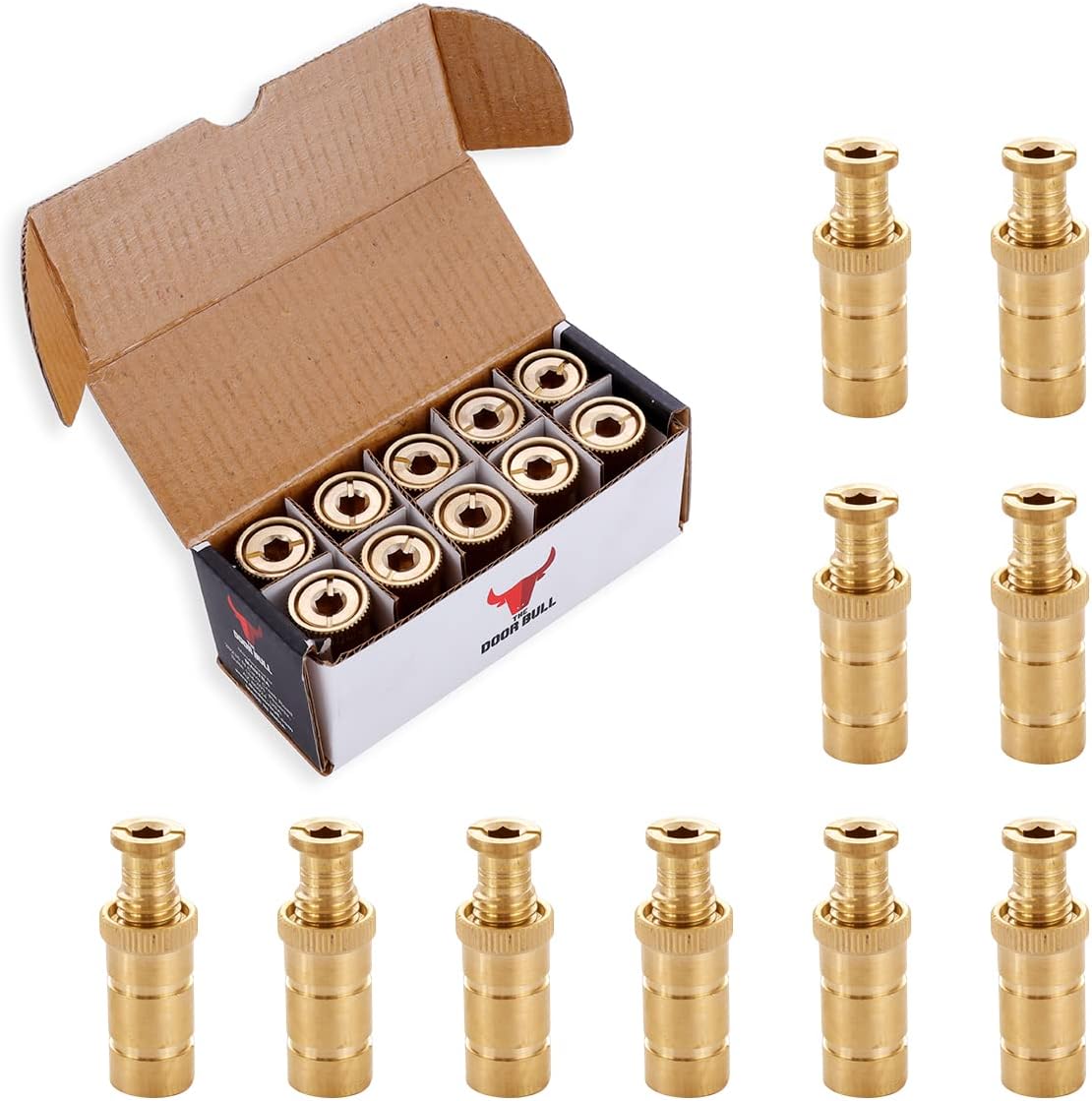
- 10-pack of solid-brass replacement anchors
- 1-5/8-inch anchor body fits a standard 3/4-inch hole
- Intended for concrete and paver deck installations

- 10-pack listing with brass anchor hardware and bolts
- 1-5/8-inch anchor size for a 3/4-inch hole
- Made for concrete and paver deck applications

- 10-pack made specifically for wood-deck anchoring
- 1-5/8-inch anchor body fits a 3/4-inch hole
- Listing describes broad pool-cover brand compatibility

- 10-pack of brass anchors intended for wood decks
- Collared design provides a broad finished surface at the deck
- Positioned as replacement hardware for major safety-cover systems

- Ten 10-inch-long, 1-inch-wide aluminum tubes
- Includes standard-style brass pool-cover anchors
- Made for loose ground or paver applications needing a deeper base
- Ten 18-inch-long, 1-inch-wide aluminum tubes
- Brass anchor component works with standard safety-cover hardware
- Extra depth for loose ground and selected paver installations

- Five 10-inch-long tubes with a 1-inch diameter
- Aluminum tubes paired with brass anchor hardware
- Intended for loose soil, grass, pavers and similar non-concrete areas

- Ten 18-inch-long, 1-inch-wide aluminum tubes
- Includes ten brass anchor pieces
- Intended for loose ground or paved-surface anchor installations
What to Look for When Buying Inground Pool Cover Anchors
Start with the Deck Surface
Concrete, mortared masonry, wood decking, pavers over a solid base, and pavers over sand or soil do not hold anchors in the same way. Standard short brass shells depend on a firm drilled hole around the anchor body. Wood-deck anchors use hardware shaped for wood and commonly rely on a wider collar or flange to distribute the connection at the deck surface. Long tube systems extend well below the visible deck surface so the brass anchor has a more substantial support structure in loose material.
Pavers need extra attention because the word “paver” does not describe what is underneath the paver. A paver laid over a concrete base may support a different anchoring method from one laid over sand or compacted soil. Safety-cover manufacturers commonly distinguish between stable masonry and paver or lawn areas that require an anchor-in-pipe or tube approach. Before drilling, identify the complete deck build-up rather than judging only the top layer.
Match the Existing Anchor Dimensions
For straightforward replacement work, the cleanest installation is often one that matches the existing shell diameter and overall anchor format. Both The Door Bull concrete/paver anchor and the Silginnes anchor list a 1-5/8-inch body intended for a 3/4-inch hole. The Southeastern wood-deck listing also gives a 1-5/8-inch anchor body and a 3/4-inch hole, but that does not make it a concrete anchor; its deck-specific construction is the meaningful distinction.
Remove and inspect an existing anchor if possible. Check the shell outside diameter, length, top profile, insert thread condition and how the spring engages the raised insert. If the old shell is sound and only the threaded insert is damaged, verify whether the replacement part is actually intended to interchange with that shell. Similar-looking pool-cover anchors from different systems should not be assumed to have identical internal threading.
Choose Short Anchors or Long Tubes for the Right Reason
A short brass anchor is compact because the surrounding deck provides the support. A long aluminum tube is used when that surrounding support is not available near the surface. The Poolzilla products in this guide use 10-inch or 18-inch tubes that are about 1 inch wide, while the SWIMCARE option uses a 10-inch by 1-inch tube and the noblequest set uses 18-inch by 1-inch tubes. That extra length is not a “stronger is always better” feature; it is an installation choice for a different substrate.
The 10-inch format can make sense where the installer needs to pass through a paver or reach below a loose surface layer without driving an 18-inch tube. The 18-inch format gives substantially more embedment depth for lawn, soil or other loose-ground situations. Local soil conditions, underground utilities, irrigation lines and the cover manufacturer’s requirements should determine the final depth choice.
Confirm the Required Drill or Installation Tool
Do not select a bit size by looking at the nominal tube diameter. For example, Poolzilla specifies a 7/8-inch bit for its 10-inch and 18-inch tube installations even though the tubes are listed at 1 inch wide. The Door Bull and Silginnes standard anchors call for a 3/4-inch hole. The noblequest listing specifies a 1-inch drilling approach for its 18-inch tube set. Those differences are a good reason to keep the product instructions beside the drill rather than using one bit for every anchor on the job.
Standard brass anchors are normally installed with an appropriate tamping tool so the shell is driven without damaging the threaded insert. Long tubes may require a different tamping method. Wood-deck hardware may need both a body hole and a shallow counterbore or collar recess depending on the exact anchor. If the replacement product does not provide enough detail for a first-time installation, the safety-cover manufacturer’s installation manual should control the layout and deck preparation.
Count Anchors by the Cover, Not by the Package
Package size affects convenience, but the cover layout decides how many anchors are required. Most products here are 10-packs. The SWIMCARE tube set is a five-pack, which can be useful for a small number of special locations or repairs. Do not reduce the number of anchor points because a package contains fewer pieces. Every strap and spring location specified for the cover needs the correct compatible attachment point.
Look Beyond “Universal” Compatibility
Several listings describe their anchors as universal or compatible with major safety-cover brands. That is useful as a starting point, especially for common screw-up brass anchor formats, but it is not a substitute for checking the existing system. A truly compatible replacement has to work mechanically with the spring and cover layout, fit the deck opening correctly and sit at the proper finished height when lowered.
If the pool uses unusual pop-up anchors, proprietary composite-deck hardware, wall anchors or a specialty raised-wall system, the products in this guide may not be appropriate even if the brass portion looks familiar. In those cases, matching the original cover manufacturer’s hardware is the safer purchasing path.
The Door Bull Brass Pool Cover Anchors for Concrete & Pavers Deck
- 10-pack of solid-brass replacement anchors
- 1-5/8-inch anchor body fits a standard 3/4-inch hole
- Intended for concrete and paver deck installations
This The Door Bull set is a conventional short brass replacement-anchor option for a solid deck installation. The selected Amazon listing is a 10-pack and identifies each anchor as 1-5/8 inches long for a standard 3/4-inch hole. That makes the set most relevant when an existing concrete or suitable paver installation already uses the common screw-up brass-anchor format.
Design and Build
The anchor is made from solid brass and uses a threaded head insert that can be raised for the pool-cover spring and lowered when the cover is removed. Brass is widely used for this hardware because it tolerates outdoor moisture well and because the threaded insert can be operated repeatedly through seasonal installation and removal. The compact 1-5/8-inch body depends on the surrounding deck for support; it is not a substitute for a long lawn or paver tube where the substrate itself is loose.
The listing describes the set for concrete and paver decks. For pavers, the important question is what supports the paver. If the paver is over a stable masonry base and the safety-cover instructions allow a standard anchor, this style can be appropriate. If the paver is over sand or soil, an anchor-in-tube system may be the better construction even though the top surface is still a paver.
Important Specifications
- Pack size: 10 anchors.
- Anchor length: 1-5/8 inches.
- Specified receiving hole: 3/4 inch.
- Material: solid brass.
- Application stated by the listing: concrete and paver decks.
Those dimensions are especially useful for replacement jobs. If an old shell measures differently, do not force the new anchor into the existing hole or enlarge the deck opening until compatibility has been confirmed. A loose shell can compromise the attachment, while an undersized opening can damage the anchor during tamping.
Installation and Practical Use
The listing’s replacement procedure is straightforward: remove the old anchor, or drill a 3/4-inch hole for a new installation; clear debris; tap the new shell into place; and reinstall the threaded head insert. In practice, the condition of the old hole matters. Chipped concrete, a wallowed-out opening or a cracked paver is not restored simply by inserting a new brass shell. The substrate needs to hold the anchor firmly at the specified location.
For new safety-cover layouts, use the cover manufacturer’s anchor positions rather than spacing anchors by eye. The strap and spring geometry controls cover tension. Once the seasonal cover is removed, screw-down style inserts should be lowered flush with the deck so they are less likely to become a trip point or catch cleaning equipment. Keep the threads free of sand and grit so the insert can move without excessive force.
Important Strengths
The main advantage here is dimensional clarity. Buyers who already know they need a 1-5/8-inch brass anchor for a 3/4-inch masonry hole can compare the new part directly with their existing hardware. The 10-pack also suits a group of replacements without forcing the buyer into a large bulk quantity.
Another useful point is that the kit is intended as replacement hardware for common in-ground safety-cover systems rather than as a specialty tube or wood-deck solution. That keeps the part simple for a sound concrete deck where deeper anchoring hardware is unnecessary.
Important Limitations
The short body is also the reason this product should not be treated as a universal answer for every deck. It does not provide the deep support of a 10-inch or 18-inch aluminum tube, and its standard shell shape is not a wood-deck anchor. Loose paver bases, grass, soil and decking boards call for different hardware.
The listing uses broad compatibility language, but a replacement still needs to match the existing insert and spring arrangement. If the old safety cover uses proprietary or unusual anchor hardware, compare dimensions and threading before replacing multiple anchors at once.
Who Should Consider It
This set is suited to a pool owner or installer replacing common screw-up brass anchors in a sound concrete deck, or in a paver application where the underlying construction supports a standard anchor. It is particularly easy to shortlist when the existing anchor measures 1-5/8 inches and the deck hole is 3/4 inch.
Who Should Consider Another Option
Choose another design if the anchor point is in a wood deck, a lawn, loose soil, sand-set pavers or another area without a stable drilled substrate. A long tube set from Poolzilla, SWIMCARE or noblequest addresses those deeper-support situations, while the wood-specific Southeastern and The Door Bull collar anchors are intended for timber decking.
Pros
- Solid-brass construction for common screw-up safety-cover anchor applications
- Published 1-5/8-inch length and 3/4-inch hole size simplify replacement matching
- 10-pack is practical for replacing several worn anchors
- Designed specifically for concrete and suitable paver deck installations
Cons
- Short anchor body is not intended to stabilize loose soil or lawn locations
- Not a wood-deck anchor
- “Universal” fit still requires checking the existing cover hardware and substrate
Silginnes Brass Pool Cover Anchors for Concrete & Paver Deck
- 10-pack listing with brass anchor hardware and bolts
- 1-5/8-inch anchor size for a 3/4-inch hole
- Made for concrete and paver deck applications
The Silginnes set targets the same broad replacement category as the first product: a compact brass anchor for a stable concrete or paver deck. The selected listing is the 10-pack version, identifies a 1-5/8-inch anchor body, and specifies a 3/4-inch hole. It also states that matching bolts are included. Those details make it easy to compare against a common existing screw-type safety-cover anchor before removing multiple old shells.
Construction and Fit
Silginnes describes the hardware as solid brass. That material is appropriate for an outdoor part that repeatedly encounters moisture and seasonal exposure, but the useful buying point is not simply “brass is durable.” The threaded surface and shell must continue to operate after grit, pool-deck debris and weather reach the opening. Keeping the assembly clean is therefore part of maintaining the fit regardless of material.
The 1-5/8-inch by 3/4-inch format closely matches many standard deck-anchor installations. If a pool already has holes of that size and the existing cover uses a compatible screw-up insert, this can reduce the amount of deck work required during replacement. A dimension match should still be checked against the old hardware rather than inferred from the cover brand alone.
What the 10-Pack Includes
The listing identifies the selected option as a 10-pack and says bolts are included. That matters for a repair where inserts have seized, stripped or gone missing along with the shells. It avoids assuming that a package contains only outer sleeves. Before installation, lay out every part and confirm that each insert threads smoothly into its matching shell; that is easier to resolve on a workbench than after the shell has been tamped into the deck.
Installation Considerations
Silginnes specifies a standard 3/4-inch hole. For a replacement, a clean existing hole that still holds the shell firmly is preferable to unnecessarily drilling a new location. For a new installation, anchor positions should come from the safety-cover layout, with the cover centered and springs adjusted according to that cover’s instructions.
Concrete drilling can chip weak or coated surfaces. Starting accurately, using the correct masonry equipment and clearing dust from the hole helps the shell seat evenly. A proper tamping tool protects the threaded area better than striking the anchor insert directly. If a paver is loose, cracked or installed over an unstable base, the problem is the substrate rather than the brass anchor; a tube system may be needed instead.
Practical Use Through the Season
A screw-up anchor is meant to provide a raised point for the safety-cover spring when the cover is installed and then retract close to the deck surface when the cover comes off. That seasonal movement is why clean threads are important. Dirt packed into the shell can make the insert progressively harder to turn and may tempt the user to apply excessive force.
Pool-cover manufacturers commonly recommend keeping screw-type anchors clean and using an appropriate silicone or PTFE-style dry lubricant rather than oily grease that traps debris. Follow the instructions supplied with the cover and anchor system, especially if the original manufacturer specifies a particular maintenance product.
Important Strengths
This set gives clearly stated replacement dimensions and uses the familiar brass screw-anchor format. The 10-pack quantity is useful for a moderate repair, and included bolt hardware is a practical benefit when both the shell and insert need replacement. The product is also purpose-specific: it is not trying to serve simultaneously as a wood-deck flange and a lawn tube.
Important Limitations
The main limitation is substrate dependence. A 1-5/8-inch shell relies on firm material around it. It cannot create a stable foundation in loose soil, and installing it directly into a sand-set paver without the construction required by the safety-cover manufacturer can leave the attachment dependent on a moving paver.
The listing also uses broad “universal” language. Treat that as a description of common safety-cover sizing, not a guarantee that every manufacturer’s insert, spring or old shell is interchangeable. For a partial replacement, matching the original geometry is more important than matching the color or general appearance.
Who Should Consider It
Silginnes is most relevant for owners with a conventional concrete-deck safety cover who need several complete brass anchor assemblies in the common 1-5/8-inch format. It can also suit appropriate paver applications where the underlying support and the cover instructions allow a short standard anchor.
Who Should Consider Another Option
For timber decking, use a wood-deck-specific anchor. For pavers over soil, lawn areas or loose ground, compare long tube systems. If only one or two anchors need attention, a 10-pack may also be more hardware than required, so count the actual failed and questionable attachment points before ordering.
Pros
- Solid-brass anchor construction with a familiar screw-up format
- 1-5/8-inch size and 3/4-inch hole specification are clearly stated
- Selected listing is a 10-pack and states that bolt hardware is included
- Appropriate for stable concrete and suitable paver deck applications
Cons
- Does not provide the deep support needed for loose-ground installations
- Not designed as wood-deck anchor hardware
- Broad compatibility claims still need to be checked against existing threads and cover hardware
Southeastern 10 Pack Swimming Pool Brass Wood Deck Anchor for Pool Safety Cover
- 10-pack made specifically for wood-deck anchoring
- 1-5/8-inch anchor body fits a 3/4-inch hole
- Listing describes broad pool-cover brand compatibility
The Southeastern set is different from the two concrete-anchor packs above because it is sold specifically for wood decks. That distinction matters even though the listing also gives a familiar 1-5/8-inch anchor length and a 3/4-inch body hole. Wood decking needs hardware that can be supported by the board structure and finished correctly at the surface; a standard concrete shell should not be substituted simply because the diameter appears similar.
Wood-Deck-Specific Design
The selected listing contains ten brass wood-deck anchors for pool safety covers. Its published dimensions identify a 1-5/8-inch anchor that fits a 3/4-inch hole, and the listing describes the hardware as broadly compatible with pool-cover brands. The useful part of that specification is the ability to compare the body size with an existing wood-deck installation.
Wood anchor systems commonly use a wider surface flange or collar arrangement so the anchor is supported and finished at the deck face. The exact recess and fastening method should follow the hardware and cover manufacturer’s instructions. Do not assume that the 3/4-inch body hole is the only deck preparation required, because the top geometry of a wood anchor is not the same as a plain short concrete shell.
Deck Strength Matters More Than the Anchor Alone
A brass anchor can only transfer spring tension into the structure that surrounds it. On a timber deck, that means the decking and supporting framework must be capable of carrying the load at the anchor location. Rotten boards, split lumber, loose fasteners or a thin unsupported board edge are not corrected by installing new brass hardware.
Before replacing several anchors, inspect the wood around each location. Pay particular attention to old holes that have enlarged, darkened from moisture or developed cracks along the grain. If the deck structure has deteriorated, repair the deck before relying on a replacement anchor. A sound anchor in weak wood is still a weak attachment point.
Replacement Fit
For an existing installation, the published 1-5/8-inch and 3/4-inch dimensions give a useful first comparison. Measure the old body, inspect the collar or flange profile and confirm the insert style that engages the cover spring. The listing’s universal-compatibility statement is helpful for common systems, but there can still be differences in top profile, thread details and the way a particular wood anchor is secured.
If the original wood anchor was installed with a recessed flange, replacing it with a different top diameter can leave a visible gap or fail to seat flush. That is why matching the complete shape is preferable to choosing only by the nominal body diameter.
Seasonal Operation
Once installed correctly, the brass insert should raise for the cover spring and lower when the cover is removed. Lowering the insert reduces protrusion on a walking surface, but the wider wood-anchor hardware remains part of the deck. Keep leaves, grit and wood dust out of the threads, especially after sanding or refinishing the deck.
If the deck is stained or sealed, prevent coating material from filling the anchor threads. The insert should move freely without using force that could twist the body in the wood. Any anchor that rotates in its opening rather than simply turning its insert needs attention to the mounting, not more torque on the hex key.
Important Strengths
The main advantage is that Southeastern is selling a wood-deck-specific anchor rather than a generic concrete insert. Buyers replacing a 1-5/8-inch wood anchor with a 3/4-inch body opening have concrete dimensions to check before ordering. Ten pieces also give enough hardware to address several points on a cover without buying individual anchors.
Important Limitations
The product listing provides the body dimensions but does not remove the need to inspect the deck construction and top recess. Wood-anchor installation is more dependent on the condition and thickness of the deck than a simple drop-in replacement might suggest. This is also not the right product for concrete, lawn or loose paver-base locations.
Who Should Consider It
This Southeastern set belongs on the shortlist for a safety cover anchored into a sturdy wood deck, especially where the existing wood hardware corresponds to the published 1-5/8-inch body and 3/4-inch opening. It is also useful when several wood-deck anchor assemblies need replacement at once.
Who Should Consider Another Option
For a new wood-deck installation where the finished appearance of a broad collar is a priority, compare The Door Bull collar-style option below. For masonry or loose-ground areas, move to the anchor type intended for that substrate instead of adapting this wood hardware.
Pros
- Made specifically for pool safety covers installed on wood decks
- Published 1-5/8-inch body and 3/4-inch hole dimensions aid replacement matching
- Brass construction suits repeated seasonal anchor operation
- Ten-piece package supports multi-anchor repairs
Cons
- Wood condition and structural support must be checked before installation
- Top recess and mounting details still need to match the existing deck hardware
- Not intended for concrete, lawn or loose-ground anchor locations
The Door Bull Wood Deck Brass Anchor with Collar for Pool Safety Cover
- 10-pack of brass anchors intended for wood decks
- Collared design provides a broad finished surface at the deck
- Positioned as replacement hardware for major safety-cover systems
The Door Bull wood-deck model uses a brass anchor with a collar, giving it a visibly different surface treatment from a plain cylindrical concrete anchor. The selected Amazon option is a 10-pack and is positioned as replacement hardware for major in-ground safety-cover systems. Its main reason for consideration is not a published body dimension; it is the wood-deck-specific collar format.
Collar Design and Deck Finish
A collar around a wood-deck anchor provides a broader finished area at the deck surface. That can help cover the prepared recess and produce a cleaner transition around the hardware than a narrow shell alone. It also signals that the part should be installed as wood-deck hardware, with the surrounding board prepared for the collar rather than treated like a concrete hole.
The selected listing does not provide enough exact dimensional detail to justify assuming that its collar diameter, body length or recess depth matches another brand’s wood anchor. For replacement work, remove one existing anchor if practical and measure the body, collar and recess before purchasing a full set. A collar that is even modestly different in diameter can leave an old recess exposed or prevent the new hardware from seating properly.
Brass Construction
The anchor is made from brass, the common material used for many screw-up pool-cover anchors. The material is useful outdoors because it handles moisture better than ordinary unprotected steel and allows the threaded insert to remain a serviceable seasonal component. As with any screw-type anchor, cleanliness matters: sand, wood dust and dried deck finish can interfere with the threads long before the brass body itself becomes the problem.
Installation on an Existing Wood Deck
Wood decks vary greatly in board thickness, species, condition and framing. Before drilling a new anchor point, verify that the location has enough sound material and structural support for the cover tension. Avoid treating a deck board as an isolated surface; the anchor load ultimately has to be transferred through the deck structure.
For replacement, inspect the old recess rather than simply pushing the new collar into place. If the opening is enlarged or the wood around it is split, the correct repair may involve rebuilding the mounting location rather than installing a new anchor in the same damaged hole. The cover manufacturer’s instructions should also determine the final anchor location and spring adjustment.
Practical Advantages of a Collared Anchor
The collar can be particularly useful where the deck has a prepared counterbore or where the owner wants a broad finished ring around the anchor. It gives a defined surface edge and can cover minor cosmetic variation around a correctly prepared hole. That is a different buying consideration from the Southeastern product, whose listing emphasizes the 1-5/8-inch body dimension rather than a collar feature.
For a mixed deck, do not use the collar design merely for visual consistency. A wood-deck anchor belongs in structurally suitable timber; concrete and loose paver zones still need their own anchoring methods. It is common for a single pool to require more than one anchor type if the surrounding deck changes material.
Important Limitations
The lack of a clearly stated body size on the selected listing means this product requires more pre-purchase measuring than the Southeastern option. The “replacement for major brands” description should not be read as proof that it can reuse every existing wood-anchor recess. Fit the geometry, not just the brand list.
It also does not solve problems caused by deteriorated decking. A wide collar may cover the surface visually, but it cannot make split or softened wood structurally sound.
Who Should Consider It
This model makes sense for owners specifically looking for a collared brass wood-deck anchor and who can compare the replacement geometry with their current installation. The 10-pack is useful for a cover with several worn or missing wood-deck anchors.
Who Should Consider Another Option
If known body dimensions are the priority, the Southeastern listing provides more explicit 1-5/8-inch and 3/4-inch measurements. If the attachment point is in masonry or a paver/lawn area without solid support, use the corresponding standard brass or long-tube hardware instead.
Pros
- Purpose-built brass hardware for wood-deck safety-cover installations
- Collar creates a broad finished surface around the anchor location
- Selected listing is a 10-pack for multi-anchor replacement work
- Positioned for common replacement use across major safety-cover systems
Cons
- Exact body and collar dimensions should be measured against existing hardware before purchase
- Cannot compensate for weak, split or deteriorated decking
- Not intended as a concrete or loose-ground anchor
Poolzilla 10-Inch Aluminum Tube with Brass Anchor for Pool Safety Cover Installation
- Ten 10-inch-long, 1-inch-wide aluminum tubes
- Includes standard-style brass pool-cover anchors
- Made for loose ground or paver applications needing a deeper base
Poolzilla’s 10-inch set moves away from the short deck-shell design and uses an aluminum tube as the support structure for a standard-style brass pool-cover anchor. The selected pack contains ten tubes, each listed at 10 inches long and 1 inch wide, together with brass anchors. This format is intended for locations where a shallow anchor does not have a reliable solid deck around it, including selected paver and loose-ground installations.
Why the Tube Changes the Installation
A standard brass shell in concrete gets its holding support from the concrete around the shell. In loose material, there is no comparable rigid wall close to the surface. The aluminum tube provides a longer, more stable body so the anchor is not relying only on a paver edge, loose soil or a shallow opening. The brass anchor then sits at the top where the safety-cover spring can engage it in the familiar way.
The 10-inch length is a middle-ground format for installations that need substantially more depth than a short deck anchor but do not require an 18-inch tube. This can be useful around pavers or other surfaces where the stable anchoring zone is below the top layer. The correct depth still depends on the actual base and the safety-cover manufacturer’s requirements.
Dimensions and Components
- Pack size: ten aluminum tubes with brass anchor hardware.
- Tube length: 10 inches.
- Listed tube width: 1 inch.
- Poolzilla installation guidance specifies a 7/8-inch drill bit.
- Application: loose ground and paver areas where a long anchor support is appropriate.
The 7/8-inch bit specification is particularly important because it is smaller than the listed 1-inch tube width. Follow Poolzilla’s installation directions rather than choosing a bit solely from the outside dimension shown in the product title. The fit of the tube in the prepared opening is part of the installation method.
Pavers and Loose Ground
This product is often more relevant than a short brass anchor when pavers sit over sand or another loose base. The tube extends through the upper surface and creates a deeper support path. That is different from a paver installed over a substantial concrete slab, where a standard masonry anchor may be permitted by the cover manufacturer.
For lawn or soil locations, the tube length gives the anchor a larger embedded section, but soil conditions still vary. Soft fill, recently disturbed ground or very loose sand may require a different depth or installation approach from compacted material. Check for irrigation, electrical lines and other buried services before creating a deep anchor hole.
Installation and Service
Plan the anchor positions from the safety-cover strap layout before drilling. A long tube is less forgiving to relocate than a short surface shell because the installation extends much deeper into the surrounding material. Keep the tube vertical so the brass insert finishes in the correct orientation and does not pull the spring sideways.
At the surface, the brass insert should remain accessible for seasonal raising and lowering. Keep debris out of the threads and avoid filling the top of the tube with soil or polymeric sand during deck maintenance. If the surrounding pavers are reset later, protect the anchor positions and finished height so the cover geometry is not unintentionally changed.
Important Strengths
The clearest advantage is that this set addresses a substrate problem that standard brass anchors cannot solve by themselves. Ten inches of tube gives meaningful embedment without the extra depth of the 18-inch model, and the ten-piece package can cover multiple special locations around a pool. The included brass anchor also means the buyer is not sourcing the tube and insert separately.
Important Limitations
A tube system requires more planning, deeper drilling or driving, and awareness of what is below the deck. It is unnecessary in sound concrete where a standard anchor is appropriate. The 10-inch length may also be insufficient for some very loose or deep-base situations, where the 18-inch Poolzilla or noblequest products offer more embedment.
Who Should Consider It
Consider this set for a safety-cover installation through pavers or other loose-surface areas where a short 1-5/8-inch shell would not have a stable base, but where a 10-inch support tube matches the installation plan. It is also a logical replacement if an existing system already uses 10-inch, 1-inch-wide Poolzilla-style tubes.
Who Should Consider Another Option
Use a short brass anchor for sound concrete if the cover manufacturer specifies it. Move to an 18-inch tube when the substrate calls for greater depth. If only a few tube anchors are needed, the five-piece SWIMCARE 10-inch set may better match the required quantity.
Pros
- 10-inch aluminum tube provides deeper support than a short brass deck shell
- Ten tubes and brass anchors are included in the selected set
- 1-inch-wide tube dimensions are clearly published
- Useful for selected paver and loose-ground safety-cover anchor locations
Cons
- Requires deeper installation and buried-service awareness
- Poolzilla specifies a 7/8-inch bit, so the nominal 1-inch tube size should not be used to guess the hole size
- May not provide enough embedment where an 18-inch tube is required
Poolzilla 18-Inch Aluminum Tube with Brass Anchor for Pool Safety Cover Installation
- Ten 18-inch-long, 1-inch-wide aluminum tubes
- Brass anchor component works with standard safety-cover hardware
- Extra depth for loose ground and selected paver installations
The 18-inch Poolzilla set uses the same basic anchor-in-tube idea as the 10-inch version but nearly doubles the embedment length. Each selected tube is listed at 18 inches long and 1 inch wide, and the 10-pack includes brass pool-cover anchors. The extra depth is the defining feature: this is hardware for locations where a shallow deck shell or shorter tube does not provide the intended support.
What 18 Inches Changes
An 18-inch tube reaches much farther into lawn, soil or a deep loose base. That can provide a more appropriate support structure where the upper layer cannot hold a safety-cover anchor. It also means installation becomes more consequential. The hole or driven path has to remain clear of irrigation, low-voltage wiring, drainage components and other buried services for the full depth.
Longer is not automatically better on every pool. If the anchor point sits above solid concrete, or a 10-inch tube is the manufacturer-specified solution, using an 18-inch tube adds work without necessarily improving the system. Choose the depth because the substrate and cover instructions call for it.
Important Specifications
- Pack size: ten 18-inch aluminum tubes with brass anchors.
- Tube dimensions: 18 inches long by 1 inch wide.
- Poolzilla guidance specifies a 7/8-inch bit for installation.
- Brass anchor component is intended for common safety-cover spring hardware.
- Primary use: loose ground and paver situations needing deep support.
The published 7/8-inch drilling instruction is the same important detail found on Poolzilla’s shorter version. Do not switch to a 1-inch bit simply because the tube is described as 1 inch wide. A hole that is too loose can change how the tube is supported by the surrounding material.
Practical Installation Issues
Establish the cover layout first, then mark every long-tube point accurately. It is easier to correct a chalk or pencil mark than a deep drilled location. Keep the tube plumb and control its final height so the brass insert operates where the spring expects it. A tube left high can create a protrusion; one driven too low can alter spring alignment or make the insert awkward to reach.
Paver installations may also require care around the top surface so the paver is not cracked or allowed to move around the tube. The tube should support the anchor through the intended base, not turn a loose paver into the structural element. If the patio is due for leveling or repair, complete that work before setting final safety-cover anchor heights.
Seasonal Maintenance
The brass insert at the top is still the serviceable part of the system. Lower it when the cover is removed, keep the threads clean and make sure paver sand, soil or mulch does not fill the opening. If the tube itself begins to move, tilts or rises with frost movement, address the substrate and tube position before reinstalling the cover rather than merely tightening the spring harder.
Important Strengths
The main advantage over the 10-inch Poolzilla set is straightforward: eight additional inches of tube depth. For loose-ground points that need a deeper anchor foundation, that is a meaningful construction difference rather than a cosmetic upgrade. The kit also includes ten matching tube-and-anchor positions, which is convenient for a pool perimeter with several non-masonry attachment points.
Important Limitations
The greater depth increases installation effort and the importance of checking for buried services. These tubes are also more hardware than necessary for a sound concrete deck. An 18-inch tube can be the correct tool for a lawn or deep loose base, but it should not be used merely because it appears more substantial than a standard anchor.
Who Should Consider It
This Poolzilla set is aimed at installations that need a full 18 inches of tube support in loose ground or selected paver areas. It is particularly easy to compare with an existing installation that already uses 18-inch by 1-inch tubes.
Who Should Consider Another Option
The 10-inch Poolzilla set is easier to justify where the installation depth is shallower. The noblequest product below is another 18-inch, ten-piece alternative with a different published drilling instruction, while SWIMCARE offers a smaller five-piece quantity in the 10-inch format.
Pros
- 18-inch tube depth provides substantially more embedment than a short deck anchor or 10-inch tube
- Ten aluminum tubes and ten brass anchor positions in the selected set
- Published 18-by-1-inch dimensions simplify comparison with existing tube systems
- Intended specifically for loose-ground and suitable paver installations
Cons
- Deep installation requires careful checking for buried utilities and irrigation
- Unnecessary for stable concrete locations that accept standard brass anchors
- Poolzilla’s 7/8-inch drilling specification must be followed rather than inferred from tube width
SWIMCARE 10-Inch Aluminum Lawn Paver Tubes with Brass Anchors
- Five 10-inch-long tubes with a 1-inch diameter
- Aluminum tubes paired with brass anchor hardware
- Intended for loose soil, grass, pavers and similar non-concrete areas
The SWIMCARE set is another 10-inch tube solution, but its package size is different from the Poolzilla set. The selected Amazon listing contains five aluminum lawn/paver tubes with brass anchors. Each tube is specified at 10 inches long with a 1-inch diameter, and the listing identifies loose soil, grass and paver areas as intended installation environments.
Five-Piece Quantity
The five-pack can be useful when only a small section of a safety-cover perimeter crosses grass, a planting strip or a paver zone. A pool surrounded mostly by concrete may need only a handful of long-tube anchors where the deck material changes. Buying five rather than ten can better match that mixed-surface layout.
The tradeoff is equally simple: a full installation with many loose-ground points may require multiple packs. Count the exact cover straps that land in the relevant surface before ordering. Package quantity should follow the cover layout, not determine it.
Dimensions and Materials
- Pack size: five tube-and-anchor positions.
- Tube length: 10 inches.
- Tube diameter: 1 inch.
- Tube material: aluminum.
- Anchor material: brass.
- Intended surfaces include loose soil, grass and pavers.
These published dimensions make SWIMCARE a close size comparison to Poolzilla’s 10-inch set. The important difference is that SWIMCARE’s selected listing does not provide the same 7/8-inch drill-bit instruction that Poolzilla publishes. Do not copy the Poolzilla hole size to this product simply because the outside dimensions look similar. Use the SWIMCARE installation instructions and the actual hardware as the reference.
Use in Grass and Paver Areas
A lawn anchor point needs a deeper support structure because there is no rigid slab around a short brass shell. The aluminum tube creates that structure while keeping the familiar brass anchor at the surface. In a paver area, the same concept can move the anchor support below the decorative top layer rather than asking a single paver to carry the cover spring load.
Surface finish still matters. The tube should end at the correct height so the brass insert can be lowered when the cover is off. In grass, keep soil and organic debris out of the top. In pavers, avoid letting joint sand or sealer lock the threaded insert in place.
Compatibility
The listing describes the brass hardware as compatible with most standard pool safety-cover springs and hardware. That is useful for common screw-up systems, but “most” leaves room for exceptions. Compare the insert shape and spring engagement with the original system, especially if only a few anchors are being replaced on an older cover.
If the original manufacturer specifies its own pipe-anchor assembly, matching that system remains the safest way to preserve the intended geometry. Tube outside diameter, brass insert threading and finished height all affect whether a replacement behaves like the original.
Important Strengths
The main purchasing advantage is the combination of a common 10-inch by 1-inch tube format with a smaller five-piece package. It can fit repair work or mixed-deck pools without leaving as many unused parts. The listing also clearly identifies the component materials and the non-concrete surfaces it is meant to address.
Important Limitations
Five pieces may be insufficient for a pool with a long lawn edge or extensive sand-set pavers. The 10-inch depth also should not be chosen for a location where the cover manufacturer calls for an 18-inch lawn tube. Finally, the lack of an explicitly verified drill-bit size means installers should not borrow a drilling dimension from a competing product.
Who Should Consider It
SWIMCARE makes sense for a small number of 10-inch tube locations in grass, loose soil or pavers, particularly on a mixed deck where most anchors use another type. Its five-pack quantity is the distinguishing practical feature among the tube products in this guide.
Who Should Consider Another Option
Choose Poolzilla’s 10-pack if the same general tube length is needed at more locations. Choose an 18-inch system when the substrate and cover instructions require deeper support. Standard concrete and wood-deck areas should use hardware designed for those surfaces instead.
Pros
- Five-pack is convenient for repairs or a limited number of loose-ground anchor points
- 10-inch length and 1-inch diameter are clearly stated
- Aluminum tube and brass anchor combination is intended for grass, loose soil and pavers
- Useful smaller-quantity alternative to 10-pack tube sets
Cons
- Five anchors may not cover a long lawn or paver section
- 10-inch depth is not a replacement for an 18-inch tube where deeper support is specified
- No verified drill-bit size should be inferred from competing 10-inch products
noblequest Heavy Duty 18-Inch Aluminum Tube with Brass Anchors
- Ten 18-inch-long, 1-inch-wide aluminum tubes
- Includes ten brass anchor pieces
- Intended for loose ground or paved-surface anchor installations
The noblequest set is an 18-inch tube alternative sold as a ten-pack. The selected listing states that each set includes ten 18-inch-long, 1-inch-wide aluminum tubes and ten brass anchor pieces. It is intended for loose-ground or paved-surface installations where a long support tube is used instead of relying on a short anchor shell near the surface.
18-Inch Tube Format
Like the Poolzilla 18-inch product, this hardware provides far more embedment than a conventional 1-5/8-inch brass deck anchor. That makes it relevant to lawn, soil and certain paver situations. The tube is not simply an oversized brass anchor; the aluminum section is the support member, while the brass piece at the top interfaces with the safety-cover hardware.
The long format makes accurate location planning important. Before drilling or driving an 18-inch path, check for irrigation tubing, outdoor-lighting cable, electrical conduit, drainage and other buried systems. The finished point also needs to stay aligned with the cover strap, so avoid shifting a location merely to make drilling easier.
Published Installation Detail
The noblequest listing calls for a 1-inch drill bit. This differs from Poolzilla’s published 7/8-inch bit for its 18-inch by 1-inch tube. That difference is a useful reminder that visually similar tube systems are not automatically installed the same way. Use the instruction belonging to the exact product in hand.
A correctly sized hole helps control the tube and its finished height. If the opening is oversized or the substrate is very loose, the tube may not receive the support assumed by the installation method. If conditions do not resemble the intended application, consult the safety-cover manufacturer or an experienced installer instead of improvising around the tube.
Paved Surfaces and Loose Ground
The listing includes paved surfaces in its intended use. That does not mean every paver patio should automatically be drilled for an 18-inch tube. A paver over a concrete base, a thick stone slab and a paver over several inches of sand are three different structures. The deeper tube makes the most sense where the anchor needs to extend beyond an unstable upper layer.
In lawn areas, the 18-inch length offers substantial depth but can also encounter changing soil layers. Compacted fill, clay, gravel and soft topsoil behave differently. Keep the tube vertical, seat it to the required finished level and verify that it does not rock before attaching the cover spring.
Maintenance and Replacement
The brass insert should remain the accessible service point. Keep its threads clean, lower it when the cover is off and inspect for movement each closing season. If the aluminum tube begins leaning or pulling out of the ground, replacing only the brass insert will not solve the problem; the tube and surrounding substrate must be corrected.
For a partial replacement, measure an existing tube before mixing brands. Both this model and Poolzilla list 18-by-1-inch tube dimensions, but their different drill-bit instructions show why nominal dimensions alone do not prove identical installation tolerances.
Important Strengths
The set combines ten long aluminum tubes with ten brass anchor pieces, making it suitable for multiple deep-support points. The 18-inch by 1-inch dimensions are explicit, and the listing gives a specific 1-inch drilling direction rather than leaving the hole size to guesswork.
Important Limitations
Deep installation takes more preparation than a standard concrete anchor and may be unnecessary where a stable masonry deck is available. The 18-inch length is also more intrusive around buried yard systems. As with other generic replacement hardware, compatibility with the existing spring and safety-cover system should be confirmed rather than assumed.
Who Should Consider It
This set is worth comparing when an installation calls for ten 18-inch tube anchors in loose ground or selected paver areas and a 1-inch drilling method matches the product instructions. It is particularly relevant as an alternative to the Poolzilla 18-inch ten-pack.
Who Should Consider Another Option
Poolzilla’s 18-inch set may be preferable when the installer is already following Poolzilla’s 7/8-inch-hole method or replacing matching Poolzilla tubes. Ten-inch sets are more appropriate where the specified embedment is shallower, while solid concrete and wood require their own anchor styles.
Pros
- Ten 18-inch aluminum tubes provide deep support for suitable loose-ground installations
- Includes ten brass anchor pieces
- Published 18-inch by 1-inch tube dimensions simplify comparison
- Listing provides a specific 1-inch drilling instruction
Cons
- Deep holes require careful checks for buried yard and utility systems
- Not necessary for ordinary sound-concrete anchor locations
- Different drilling specification from Poolzilla means similar tube dimensions should not be treated as interchangeable instructions
Detailed Buying Guide
Identify What Is Under the Visible Deck
The visible surface can be misleading. A concrete slab is straightforward, but pavers may sit on concrete, compacted aggregate or sand. A stone strip beside the pool may transition into lawn a few feet later. Map each cover strap to its actual substrate before choosing replacement hardware. Stable masonry generally suits a standard brass shell; sturdy wood needs wood-deck hardware; loose or non-masonry locations may need a tube that reaches deeper material.
Measure Before Removing Multiple Anchors
Use one intact anchor as a reference. Measure the shell length and diameter, note the top profile, and confirm how the insert raises and lowers. For tube installations, measure both tube length and outside width. Photograph the existing hardware next to a ruler before dismantling the rest of the system. This is particularly helpful on older pools where the original paperwork has been lost.
Keep Anchor Location Separate from Anchor Type
Changing from one hardware type to another does not give license to move the attachment point. Safety-cover straps, springs and overlap were laid out around specific anchor locations. If an old point cannot be reused because the deck is damaged, follow the cover manufacturer’s repair or re-layout procedure rather than moving the anchor an arbitrary distance.
Plan for Seasonal Maintenance
Screw-up brass inserts need to move freely. After the cover comes off, lower them close to the deck surface and keep grit out of the threads. If the manufacturer permits lubrication, use the type it specifies; safety-cover guidance commonly favors silicone or PTFE-style products rather than oily grease that holds dirt. Inspect long tubes for movement and wood anchors for deterioration in the surrounding decking before each closing season.
Treat Mixed Decks as Mixed Installations
A pool can legitimately use several anchor types. Concrete on one side, a timber deck at the shallow end and pavers over soil along another edge may call for three different attachment methods. Matching each point to its substrate is more important than making every visible anchor look identical.
Direct Product Comparisons
The Door Bull Concrete/Paver Anchors vs Silginnes Brass Anchors
These are the closest direct alternatives in the list. Both selected listings use a 1-5/8-inch brass anchor format for a 3/4-inch hole and target concrete or appropriate paver decks. The Silginnes listing explicitly states that bolts are included, while The Door Bull listing gives a similarly straightforward remove-or-drill, clean, tap and reinstall procedure. For replacement work, compare the actual old shell and insert geometry rather than choosing between them on brand name alone.
Southeastern Wood Deck Anchors vs The Door Bull Wood Deck Anchors
Southeastern publishes the 1-5/8-inch body and 3/4-inch hole dimensions, which helps when matching an existing opening. The Door Bull product emphasizes its collar, making the top finish and existing recess geometry especially important. Both are wood-deck products, so deck strength and condition remain part of the installation decision.
Poolzilla 10-Inch vs Poolzilla 18-Inch Tubes
The difference is embedment depth: 10 inches versus 18 inches, with both listings giving a 1-inch tube width and Poolzilla guidance calling for a 7/8-inch installation bit. Choose between them from the substrate and cover instructions. The 18-inch model is not automatically preferable simply because it is longer.
Poolzilla 10-Inch vs SWIMCARE 10-Inch Tubes
Both use a 10-inch tube around 1 inch wide with brass anchor hardware, but quantity and published installation detail differ. Poolzilla supplies ten positions and specifies a 7/8-inch bit; SWIMCARE supplies five positions and does not provide the same verified bit instruction in the selected listing. The five-pack can make more sense for a small mixed-surface repair.
Poolzilla 18-Inch vs noblequest 18-Inch Tubes
Both are ten-piece 18-inch tube sets with brass anchors and 1-inch nominal tube width. The notable difference is the stated drilling method: Poolzilla specifies a 7/8-inch bit, while noblequest specifies a 1-inch bit. That is enough to show why installation instructions should stay product-specific even when headline dimensions appear nearly identical.
Common Buying Mistakes
Buying a Concrete Anchor for a Loose Paver Base
A paver surface does not guarantee a solid substrate. If the paver floats over sand or soil, a short shell may not have the rigid support assumed by a concrete-anchor design. Determine the base first.
Assuming Every “Universal” Anchor Has Identical Threads
Universal compatibility usually means the product targets common safety-cover hardware. It does not prove that every insert will thread into every old shell. Replace complete assemblies when required and compare dimensions before mixing components.
Choosing Tube Length Without Checking Below the Deck
Longer tubes reach deeper, but they also reach closer to irrigation, wiring and drainage. Verify the required depth and underground conditions before drilling an 18-inch path.
Ignoring the Deck Around a Failed Anchor
A loose anchor may be a symptom of cracked concrete, a moving paver or deteriorated wood. Replacing the metal part without repairing the substrate can leave the same structural problem in place.
Frequently Asked Questions
Are all inground pool cover anchors the same size?
No. Several standard brass products use a 1-5/8-inch body and 3/4-inch hole, but wood-deck collars, proprietary systems and long lawn/paver tubes use different geometry. Measure the existing hardware and follow the cover manufacturer’s specifications.
Can I use a standard brass anchor in pavers?
Sometimes, but the construction beneath the paver matters. Pavers supported by a stable concrete base can allow a different method from pavers laid over sand or soil. Loose-base installations commonly use a long tube or pipe so the anchor is not relying on one movable paver.
When should I use a 10-inch pool cover anchor tube?
A 10-inch tube is relevant where a short deck shell lacks support but the installation plan does not call for an 18-inch tube. Common examples include certain paver or loose-surface locations. Match the depth to the cover instructions and substrate.
When is an 18-inch tube useful?
An 18-inch tube is intended for deeper embedment in lawn, soil or other loose-ground situations. It can also be used in specified paver applications. Check for buried services before installing hardware at that depth.
Can concrete anchors be used in a wood deck?
A wood deck should use hardware intended for wood and supported by sound decking and framing. Similar body diameters do not make a standard concrete shell an appropriate wood-deck substitute.
Should pool cover anchors stay raised all summer?
Screw-up brass inserts are normally lowered when the safety cover is removed. Lowering them reduces protrusion at the deck surface and helps keep the area easier to use. Follow the original safety-cover instructions for the exact anchor system.
How do I keep brass anchors from becoming difficult to turn?
Keep sand, dirt and deck-finishing material out of the threads. Clean the shell periodically and use only the lubricant type allowed by the cover or anchor manufacturer. Avoid forcing an insert that is bound by debris or a damaged thread.
Can I mix short brass anchors and long tubes around one pool?
Yes, when the surrounding surfaces require different anchoring methods and the safety-cover manufacturer allows the arrangement. Mixed decks often need different hardware at different strap locations. The cover layout and spring tension still need to remain correct.
Do I need to replace every anchor if one is damaged?
Not necessarily. A compatible individual assembly can often be replaced, but inspect nearby anchors and the surrounding deck at the same time. If several anchors are loose because the substrate is failing, replacing metal parts alone will not address the underlying problem.
Final Buying Considerations
The right choice among these inground pool cover anchors starts with the substrate. The Door Bull and Silginnes short brass sets fit the common 1-5/8-inch, 3/4-inch-hole category for stable concrete and suitable paver decks. Southeastern and The Door Bull offer wood-specific options, with Southeastern publishing body dimensions and The Door Bull emphasizing a collared finish.
For loose ground and pavers that need deeper support, tube length becomes the key decision. Poolzilla offers ten-piece sets in both 10-inch and 18-inch lengths; SWIMCARE provides a five-piece 10-inch alternative; and noblequest provides another ten-piece 18-inch format with its own drilling specification. Match depth, diameter, installation method and package quantity to the actual cover layout rather than choosing by appearance.
Before ordering, inspect one existing anchor, identify what lies below every problem location and confirm the safety-cover manufacturer’s requirements. Those checks do more to prevent a bad purchase than any “universal fit” claim.
Author