

The biggest difference in a Polaris 280 vs 360 comparison is not the number on the cleaner. It is the way each model gets the water pressure that makes a pressure-side cleaner move, vacuum debris, and operate its sweep hose. The Vac-Sweep 280 is built around a separate booster pump, while the Vac-Sweep 360 is designed to run from pressure supplied by the pool’s return system without a separate booster.
That plumbing difference affects installation cost, operating setup, troubleshooting, and the type of pool equipment each model fits most naturally. A pool that already has a functioning booster-pump circuit may make the 280 straightforward to replace or maintain. A pool with suitable return-line pressure but no booster circuit may be a better match for the 360. Buying only by cleaner appearance can lead to an expensive compatibility mistake.
The two cleaners also differ internally. Polaris specifies two venturi jets and a shaft-drive system for the 280, while the 360 uses three venturi jets and an all-wheel belt-drive system. Both have a 2.25-inch vacuum inlet, automatic backup operation, a separate debris bag, a sweep hose, and compatibility with in-ground pools. Those shared features make them look closely related, but their pressure requirements and drive layouts are meaningfully different.
The comparison below focuses on those differences, how they affect day-to-day ownership, what to check before installation, and which specifications should actually influence the purchase.
Quick Comparison: Polaris 280 vs 360
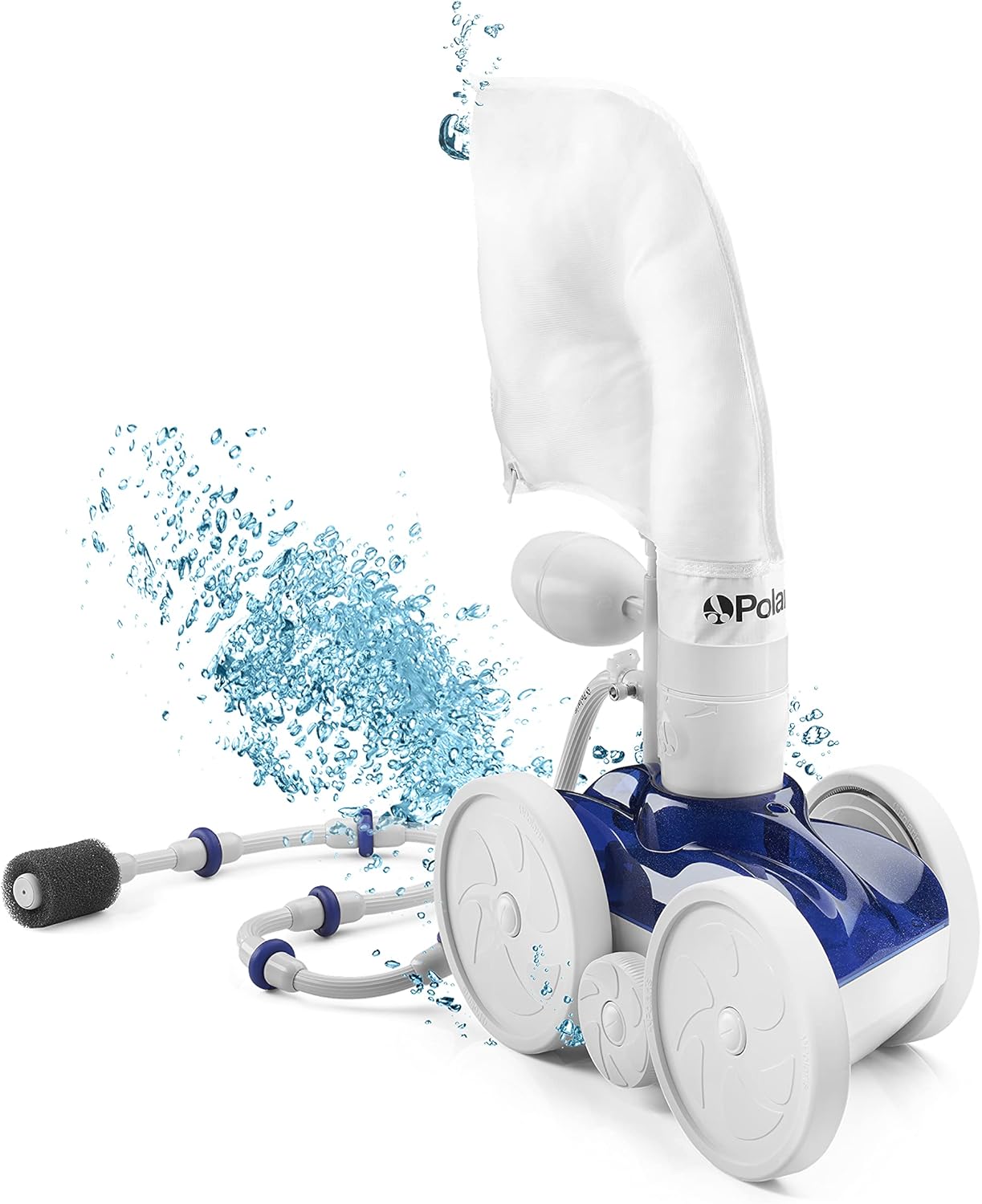
- Requires a compatible booster pump
- Two venturi jets with shaft-drive mechanism
- 2.25-inch inlet and 31-foot feed hose

- No separate booster pump required
- Three venturi jets with all-wheel belt drive
- 2.25-inch inlet and 31-foot feed hose
The table shows why comparing jet count alone is misleading. The 360 has three venturi jets, but it also relies on the pool return system for its operating pressure. The 280 has two jets and uses a dedicated booster pump. The complete hydraulic setup therefore matters more than simply assuming that three jets must outperform two in every pool.
Both listings include a 31-foot feed hose and a single-chamber debris bag. The bag keeps collected leaves, pebbles, and other debris out of the pool’s pump basket and filter, which is one of the practical attractions of pressure-side cleaning. The main ownership decision is how each cleaner integrates with the equipment pad and return plumbing.
What to Look for Before Buying a Polaris Pressure-Side Cleaner
Booster-pump plumbing comes first
Before comparing bags, wheels, or jets, identify the cleaner line at the pool wall and trace how it is supplied. The Vac-Sweep 280 requires a compatible booster pump. Its normal operating arrangement uses the pool filtration pump plus the booster pump, with the booster providing the additional pressure needed by the cleaner.
The 360 is different. It is intended to operate from clean water returning to the pool, so there is no separate booster motor in its normal system. Polaris describes the 360 around a dedicated return line, and the owner documentation also provides adapter options for some other common return fittings. That does not mean every existing return can power it correctly; sufficient flow and pressure still have to be available.
If replacing an existing cleaner, the installed plumbing often makes the decision easier. Replacing a working 280 on a healthy booster system with another 280 avoids redesigning the pressure source. Replacing a no-booster pressure cleaner may favor the 360 if the return configuration matches its requirements.
Available water pressure matters more than horsepower claims
These cleaners do not contain their own electric drive motor. Their movement and suction are created hydraulically by water flowing through the cleaner. That is why feed-line pressure, hose condition, filter cleanliness, and correct adjustment have a direct effect on travel speed and debris pickup.
Both owner procedures use wheel speed as a practical performance check. Polaris specifies a target range of 28 to 32 wheel revolutions per minute for both models. A cleaner below that range may be starved for water pressure or flow, while an over-speed cleaner may need pressure reduced. Wheel RPM is therefore a more useful setup measurement than guessing by how fast the cleaner appears to cross the floor.
Feed-hose length must match the pool
Both Amazon listings supply 31 feet of feed hose, but the hose is not simply dropped into the water at full length and forgotten. Pressure-side cleaners depend on correct hose reach, float placement, and free-moving swivels. Too much hose can tangle or change the cleaner’s pattern; too little hose prevents it from reaching the far end.
The installation instructions call for fitting the hose to the actual pool dimensions. This is especially important in long pools, irregular shapes, or installations where the wall fitting is far from the center of the pool. Measure before cutting. Feed-hose sections are service parts, but avoiding an incorrect first cut is easier than rebuilding the hose assembly afterward.
Drive system changes the repair parts
The 280 uses a shaft-drive mechanism. The 360 uses an all-wheel belt-drive layout. Both are mechanical systems exposed to water, debris, tire wear, and many hours of movement, so neither should be treated as maintenance-free.
The difference matters when diagnosing a cleaner that stops driving correctly. A 280 owner may be checking shaft-drive components and wheel engagement, while a 360 owner may need to inspect belts and related drive parts. If you already stock parts for one model or know how to service it, that can have real ownership value.
Debris type affects bag maintenance
Both cleaners use their own single-chamber collection bag rather than sending picked-up debris directly to the main pool filter. Polaris lists a zippered bag on the 280 and a Velcro-style bag on the 360. In either case, a full or restricted bag adds drag and can reduce cleaner performance.
Pools that receive frequent leaves, seed pods, acorns, or wind-blown debris will require more bag attention than relatively sheltered pools. The 2.25-inch vacuum inlet on both cleaners is useful for larger debris, but the cleaner still performs best when the bag is emptied before it becomes heavily loaded.
Wall climbing is influenced by pool geometry
Both models are intended to sweep, scrub, and vacuum pool floors and walls, but wall behavior is not identical in every pool. The 360 manual specifically notes that climbing ability depends on pool shape and water pressure or flow, with smoother floor-to-wall transitions being easier than sharp angles.
That principle applies broadly to pressure-side cleaners. A cleaner that climbs well in a rounded gunite pool may behave differently in a pool with sharp transitions, large steps, unusual benches, or a slick surface. Correct wheel speed, tire condition, thrust-jet adjustment, hose setup, and head-float position all matter.
Polaris Vac-Sweep 280 Pressure-Side In-ground Pool Cleaner
- Booster-pump-powered pressure-side design
- Two venturi jets and 2.25-inch vacuum inlet
- Shaft drive, automatic backup, and 31-foot feed hose
The Vac-Sweep 280 is Polaris model F5 in its standard blue-and-white configuration. It is a traditional booster-pump pressure cleaner: the main filtration system operates, a separate booster raises pressure to the cleaner line, and that pressurized water powers movement, vacuum action, and the sweep hose. That arrangement is the defining reason to consider—or reject—the 280.
For a pool already equipped with the correct booster circuit, the 280 fits a familiar equipment architecture. For a pool without a booster pump, the purchase is larger than the cleaner itself because the required pump, electrical work, plumbing, controls, and installation may need to be considered.
Design and Drive System
Polaris specifies two venturi jets and a shaft-drive mechanism. The jets create the hydraulic action used for debris pickup, while the shaft-drive system transfers mechanical motion to the wheels. The cleaner uses three main wheels and a rear sweep hose with a scrubber.
The 280’s 2.25-inch vacuum inlet is sized to admit more than fine dust. Leaves, small pebbles, acorns, and similar debris can be captured in the cleaner’s own bag rather than being routed to the circulation filter. This separation is useful in debris-heavy pools because it reduces how much solid material reaches the pump basket and filter.
The drive layout is relatively exposed and serviceable. Tires, bearings, drive components, the backup valve, sweep-hose parts, feed-hose swivels, filter screens, and bags are all wear or maintenance items over long-term ownership. Polaris continues to publish parts information and service documentation for the model, which is useful if the goal is to keep the cleaner operating rather than replace the entire unit after one component wears.
Important Specifications
The official specification set identifies the 280 as an in-ground cleaner with two venturi jets, a 2.25-inch vacuum inlet, shaft drive, white tires, automatic backup, and a single-chamber zippered debris bag. The standard F5 version is the familiar blue-and-white cleaner. Polaris also sells other 280 variants, so replacement parts and listing details should be matched to the exact version rather than assumed interchangeable.
The Amazon listing supplies 31 feet of feed hose. It also lists the cleaner at approximately 23 by 20 by 10 inches and 6.2 pounds, although installation fit is determined much more by feed-hose reach and wall connection than by the body dimensions.
The manufacturer’s setup procedure targets 28 to 32 wheel RPM. Polaris also states that the 280 can clean an average in-ground pool in three hours or less when properly installed and adjusted. That figure should be treated as a model operating guideline rather than a promise for every pool, because pool shape, debris load, water pressure, hose adjustment, and obstacles affect actual coverage.
Practical Cleaning Behavior
The 280 moves in a randomized path rather than mapping the pool electronically. Its backup valve periodically reverses the cleaner to help it escape corners and change direction. The sweep hose agitates debris in areas the main inlet may not directly pass over, allowing some material to be captured later by the cleaner or circulation system.
This style of cleaning is simple mechanically but depends on correct tuning. The cleaner should not race around the pool, crawl excessively slowly, repeatedly climb out of the water, or remain trapped for long periods. Those symptoms usually point to pressure, hose, float, thrust-jet, tire, or backup-valve issues rather than a need to replace the whole cleaner.
The dedicated booster is important here. It gives the 280 a pressure source specifically intended for cleaner operation, but it also means an additional electric motor must run whenever the cleaner is scheduled. The filtration pump should be running and primed before the booster operates.
Installation and Setup
Installation starts with the wall fitting and feed hose. The hose is adjusted to the pool’s dimensions, the floats are positioned, and the cleaner is assembled to the feed line. The manual recommends professional installation for best results, while also providing procedures for owners who are comfortable with pool plumbing and mechanical adjustment.
After installation, wheel RPM should be measured with the cleaner submerged. If it is below the 28–32 RPM range, the troubleshooting path includes checking the in-line filter screen, pump basket, pool filter, hose leaks, and available pressure. If it is too fast, pressure can be reduced using the system’s adjustment provisions.
This setup work is not busywork. A pressure-side cleaner that is several RPM outside its target range can show poor wall climbing, excessive speed, weak pickup, or an erratic pattern. Getting the hydraulic setup correct usually matters more than minor cosmetic differences between cleaners.
Important Strengths
The 280 is particularly logical in a pool that already has a dedicated booster pump and cleaner line. In that environment, the pressure source is already present, the cleaner is designed around it, and the pool owner is not trying to divert return flow that may be needed elsewhere.
Its shaft-drive layout and long-standing parts ecosystem are also practical advantages for owners who prefer repairable mechanical equipment. Bags, tires, hose components, backup valves, and internal drive parts are replaceable. That does not eliminate maintenance, but it can extend the useful life of the cleaner when wear items are serviced.
The separate debris bag is another meaningful benefit. Large material is intercepted before reaching the main pool filter, and the 2.25-inch inlet can take in debris that would be awkward for smaller openings.
Important Limitations
The required booster pump is the 280’s largest limitation in a pool that does not already have one. Installing a booster is not equivalent to attaching an accessory. It may involve equipment-pad space, plumbing, electrical supply, bonding requirements, a timer or automation relay, and professional labor.
The booster also adds another motor to maintain and operate. A worn booster, clogged feed-line screen, leaking hose, or incorrect valve setting can reduce cleaner performance even when the 280 itself is mechanically sound.
Randomized cleaning also means coverage is probabilistic rather than mapped. Steps, benches, tight corners, sharp floor-to-wall transitions, and unusual pool shapes can affect where the cleaner spends its time. No pressure-side cleaner should be purchased with the expectation that it will treat every architectural feature identically.
Who Should Consider It
The 280 makes the most practical sense for an in-ground pool with an existing, serviceable booster-pump pressure-cleaner system. It is also a sensible replacement path for owners who are already familiar with 280 parts, tuning, and maintenance and want to keep the same basic hydraulic arrangement.
It is less attractive if the pool has no booster circuit and the owner specifically wants to avoid adding another pump. In that case, the 360’s no-booster architecture deserves a closer look, provided the return system can deliver the required pressure and flow.
Pros
- Uses a dedicated booster-pump pressure source
- 2.25-inch inlet handles common large pool debris
- Shaft-drive system with widely serviceable wear parts
- Separate zippered bag keeps collected debris out of the main filter
Cons
- Requires a compatible booster pump
- Adds another pump motor and associated plumbing to maintain
- Performance depends on correct hose fit and pressure adjustment
Polaris Vac-Sweep 360 Pressure-Side Cleaner for In-Ground Pools
- Runs from pool return pressure without a separate booster
- Three venturi jets and 2.25-inch vacuum inlet
- All-wheel belt drive, automatic backup, and 31-foot hose
The Vac-Sweep 360 is Polaris model F1 and is the no-separate-booster option in this comparison. Instead of depending on an auxiliary pump at the equipment pad, it uses water pressure from the pool’s return system. For buyers comparing Polaris 280 vs 360, this is the specification that should be evaluated before almost anything else.
The absence of a booster does not make the 360 independent of the pool pump. The filtration pump still has to operate and supply enough water through the cleaner line. The installation procedure therefore includes testing and adjusting pressure before finalizing hose fit and cleaner tuning.
Design and Drive System
Polaris specifies three venturi jets for the 360, compared with two on the 280. It also uses an all-wheel belt-drive mechanism rather than the 280’s shaft drive. The cleaner retains the familiar three-wheel pressure-side layout, rear sweep hose, head float, feed hose, backup valve, and separate debris bag.
The three jets help create vacuum action inside the cleaner, but the extra jet should not be read as a universal performance ranking. The available return-line pressure has to support the design. A properly supplied 360 can work as intended; a poorly supplied one may underperform regardless of the jet count.
The all-wheel belt drive also changes maintenance. Drive belts are wear components and can stretch, slip, or need replacement over time. Wheel condition, bearings, and internal turbine components still matter as well. Owners moving from a 280 should not assume the same drive troubleshooting steps apply.
Important Specifications
The official 360 specification set lists an in-ground application, three venturi jets, a 2.25-inch vacuum inlet, all-wheel belt drive, classic white tires, automatic backup, a single-chamber Velcro debris bag, and compatibility with TailSweep PRO. A separate booster pump is not required.
The Amazon listing includes 31 feet of feed hose. It lists approximate cleaner dimensions of 20 by 10 by 22.75 inches and an item weight of 14 pounds. Those figures describe the product listing, but wall-fitting compatibility, hose reach, and available return pressure are still the measurements that matter most during installation.
As with the 280, Polaris specifies a target wheel speed of 28 to 32 RPM. That gives owners a concrete way to check whether the hydraulic setup is in range rather than relying only on visual impressions.
Return-Line Operation
The 360 is intended to use pressure from the return side of the filtration system. Polaris describes installation around a dedicated return line, and its manual also explains special adapter kits for certain pools without a dedicated line. The practical question is whether enough pressure can be directed to the cleaner while maintaining acceptable pool circulation.
Pools differ substantially in pump size, variable-speed settings, return plumbing, number of open return jets, heater or chlorinator restrictions, and filter condition. A 360 that works well at one pump speed may slow down at a lower variable-speed setting. Owners trying to reduce circulation-pump RPM should therefore verify cleaner wheel RPM after changing pump schedules.
This is also why “no booster pump” should not be interpreted as “no energy is used for cleaning.” The 360 eliminates the separate booster motor, but the main circulation pump still supplies the hydraulic energy. The real operating effect depends on how the filtration pump is scheduled and what speed is required to maintain cleaner performance.
Practical Cleaning Behavior
The 360 vacuums, sweeps, and scrubs while traveling randomly across the pool. Its backup valve changes the pattern and helps the cleaner move away from obstacles. The sweep hose disturbs material near corners and edges, and debris entering the 2.25-inch inlet is collected in the external bag.
Wall climbing depends on pool geometry and hydraulic setup. Polaris specifically notes that the 360 climbs more readily where the transition from floor to wall is smooth rather than sharply angled. If wall behavior is weak, wheel RPM, hose floats, filter screens, thrust-jet position, and tire traction should be checked before assuming the cleaner is defective.
Because it uses the pool’s return flow, the 360 may also interact more directly with return-valve settings than the 280. Diverting too much flow to other returns can reduce cleaner speed. Diverting too much toward the cleaner can make it run too fast. Setup is a balancing exercise rather than a one-time plug-in step.
Installation and Setup
The 360 installation sequence includes the Universal Wall Fitting, return or eyeball regulation as needed, a pressure test, feed-hose adjustment, cleaner assembly, and wheel-RPM verification. Polaris documentation describes a pressure tester supplied on the hose for checking the initial water-pressure condition.
After the cleaner is installed, the same 28–32 RPM target gives a useful reference point. If the unit runs slowly, the owner should check the cleaner-line screen, pool filter, pump basket, hose connections, and return flow. If it runs too quickly, the system needs pressure reduced or redistributed according to the installation instructions.
A variable-speed pool pump deserves special attention. A speed that is adequate for filtration or chlorination is not automatically adequate for the 360. The cleaner should be checked at the exact pump speed that will be used during its scheduled cleaning window.
Important Strengths
The 360’s clearest strength is avoiding a separate booster-pump requirement. For a compatible pool, that means one less electric motor, one less pump body, and no need to create a new booster circuit just to run the cleaner.
The cleaner still provides the core pressure-side features many owners want: a separate debris bag, a large 2.25-inch inlet, a sweep hose, wall and floor cleaning, and an automatic backup system. The three-jet hydraulic layout is designed specifically around return-line operation.
The 360 is also a long-established Polaris platform with published service documentation and replaceable drive, hose, bag, and wheel components. The belt-drive mechanism is different from the 280, but it remains mechanically serviceable.
Important Limitations
The 360 depends more directly on the main circulation system. If the return line cannot provide sufficient pressure, the cleaner will not reach its intended operating range simply because it has no booster pump. Some pools may need valve changes, return fitting adjustments, adapter hardware, or higher pump speed.
This can matter for owners who run variable-speed pumps at very low RPM to minimize electrical use. If cleaner operation requires a higher circulation-pump speed for several hours, that should be considered when comparing the real operating arrangement with a dedicated-booster system.
The belt-drive layout also brings its own wear items. A cleaner that loses traction or drives inconsistently may need belt inspection in addition to the normal checks for pressure, tire wear, swivels, and debris restrictions.
Who Should Consider It
The 360 is most attractive for an in-ground pool that has a compatible cleaner return and sufficient circulation-pump pressure but no desire or need for a separate booster motor. It can also make sense when replacing an existing no-booster pressure-side cleaner and retaining a similar plumbing concept.
It deserves more caution when the pool’s return pressure is marginal, the pump is intentionally operated at very low speed, or the plumbing arrangement cannot dedicate enough flow to the cleaner. In those situations, confirming hydraulic compatibility before purchase is more important than comparing cleaner body features.
Pros
- Does not require a separate booster pump
- Three venturi jets with a 2.25-inch vacuum inlet
- Separate debris bag reduces material reaching the pool filter
- All-wheel belt-drive system with replaceable service parts
Cons
- Requires sufficient return-line pressure from the filtration pump
- May need valve or pump-speed tuning to reach correct wheel RPM
- Drive belts are wear components that may need replacement
Detailed Buying Guide for the Polaris 280 vs 360
Start with the equipment pad, not the cleaner
A pressure-side cleaner is part of a hydraulic system. Before buying either model, inspect the equipment pad and identify the filtration pump, return plumbing, cleaner-line valve, automation controls, and any existing booster pump. Photographing the valve positions and tracing which wall fitting serves the cleaner can prevent confusion later.
If a booster pump is already installed, note its condition and how it is controlled. A leaking, noisy, seized, or incorrectly wired booster can turn a straightforward 280 replacement into a larger repair. If there is no booster, do not assume one is needed until the return system has been evaluated for the 360.
The pool wall connection matters too. The 280 normally belongs on a dedicated pressure-cleaner line fed through its booster arrangement. The 360 is intended to work from return pressure and can use specified adapters in some non-dedicated-return situations. Existing plumbing should be identified before ordering adapters or modifying fittings.
Understand the difference between pressure-side and suction-side cleaning
Both the 280 and 360 are pressure-side cleaners. Water is sent to the cleaner under pressure, and internal venturi action creates the vacuum that lifts debris into a bag. This is different from suction-side cleaners, which pull debris through a suction line toward the pool pump and filter.
The separate bag is important because leaves and pebbles collected by these Polaris cleaners do not have to pass through the pump basket or filter media. That can be useful in pools with substantial coarse debris. Fine suspended dust may still require normal filtration, brushing, or other cleaning methods depending on conditions.
Do not choose by venturi-jet count alone
Three jets on the 360 and two on the 280 are real design differences, but they exist within different hydraulic systems. The 280 receives pressure from a booster pump; the 360 is engineered around return-line pressure. Jet count therefore cannot be isolated from pressure source, nozzle design, hose adjustment, and the rest of the cleaner.
A buyer should treat the jet specification as part of product identification rather than a simple performance score. The more useful question is whether the cleaner reaches its specified operating wheel speed and moves through the pool with the intended pattern.
Use wheel RPM as a diagnostic measurement
The shared 28–32 RPM wheel-speed target is one of the most useful numbers in this comparison. If a cleaner is under-speed, it may not climb, back up, or pick up debris consistently. If it is over-speed, it can move too quickly and spend less useful time vacuuming an area.
Wheel RPM also helps separate hydraulic problems from mechanical ones. For example, if wheel speed is low and the feed-line screen is clogged, cleaning the screen may restore operation without replacing drive parts. If water pressure is correct but one wheel does not drive properly, the mechanical system deserves closer inspection.
Measure speed with the cleaner submerged and follow the model-specific procedure. Do not estimate RPM from deck level while the cleaner is partly out of the water, because the hydraulic load changes.
Hose setup affects coverage and tangling
A 31-foot feed hose is useful only when fitted correctly. The wall fitting’s location, pool length, depth, and farthest reachable point determine how the hose should be adjusted. Hose floats keep the line positioned correctly in the water, while swivels allow sections to rotate rather than twist into loops.
A hose that is too long can encourage tangling and change the cleaner’s random path. A hose that is too short leaves areas unreachable and can tug against the wall fitting. Stiff hose that has retained a coil from storage may also need time laid straight in warm conditions before final adjustment.
Check hose sections for pinholes or leaking connections during troubleshooting. Pressure lost through the feed line is pressure unavailable to the cleaner, and a small leak can produce symptoms that look like a worn internal drive system.
Bag style changes handling, not the basic cleaning principle
The 280 uses a single-chamber zippered bag, while the 360 specification calls for a single-chamber Velcro bag. Both perform the same basic job: intercept debris lifted through the cleaner before that material reaches the main circulation equipment.
Empty the bag before it becomes heavily loaded. A waterlogged or packed bag can add drag and change how the cleaner sits in the water. Inspect the attachment collar and fabric for tears, and make sure the bag is positioned so it does not interfere with the feed hose or cleaner movement.
Specialty replacement bags are available for different debris conditions, but they should be matched to the exact cleaner and intended debris size. Extremely fine material may require a finer bag than the standard all-purpose style, while large-leaf pools may benefit more from frequent emptying than from trying to maximize bag density.
Consider the maintenance path before purchase
Pressure-side cleaners are mechanical devices operating in chlorinated or salted water, so long-term ownership involves wear. Tires lose tread, bearings develop play, sweep-hose scrubbers wear down, backup valves can stick, swivels can leak, and bags eventually need replacement.
The 280’s shaft drive and the 360’s belt drive create different service routines. An owner comfortable replacing 280 shaft-drive parts may prefer staying with that platform. Someone already familiar with 360 belts and turbine parts may see no reason to change. Parts familiarity can be more valuable than a small specification difference.
Inspect the wall-fitting filter screen regularly. A partially blocked screen restricts cleaner flow and can cause slow movement. Main filter pressure, pump-basket condition, and skimmer restrictions should also be considered because they can affect the water available to the cleaner.
Think about automation and pump schedules
A 280 installation usually has two pumps to coordinate. The filtration pump should start and establish flow before the booster pump runs. Automation or timers should also stop the booster before the filtration pump shuts down. This sequencing protects the booster from operating without the intended supply flow.
The 360 removes that two-pump sequence, but its cleaner window still has to match a circulation-pump speed that can provide adequate return pressure. Owners with variable-speed pumps may create a specific higher-speed cleaner schedule and then return to a lower filtration speed afterward.
Neither arrangement is automatically more economical in every pool. Actual electrical use depends on pump efficiency, speed, run time, plumbing resistance, and the existing equipment. The no-booster design removes one motor but may require the main pump to operate differently during cleaning.
Pool shape can matter as much as cleaner model
Both cleaners use random hydraulic movement, so architecture influences coverage. Rounded transitions are easier to climb than abrupt floor-to-wall angles. Large tanning ledges, narrow shelves, unusual steps, deep benches, ladders, and raised drains can interrupt the cleaner’s path.
The automatic backup valve is designed to help the cleaner move away from obstructions, but it cannot make every pool shape equally accessible. A cleaner that repeatedly hangs on the same obstacle may need thrust-jet adjustment, hose correction, a ladder guard, or changes to removable pool hardware.
If a particular ledge or step must be scrubbed consistently, plan on some manual brushing regardless of which model is chosen. Pressure-side cleaners reduce routine debris collection; they do not replace every form of pool maintenance.
Direct Product Comparisons
Polaris 280 vs 360: booster pump requirement
The 280 requires a compatible booster pump; the 360 does not. This single difference can outweigh every other specification because adding or removing a booster circuit changes installation scope.
If a pool already has a healthy booster pump and dedicated cleaner line, the 280 uses that infrastructure directly. If no booster exists and the pool return can supply the 360 correctly, the 360 avoids adding a separate pump. If the return system is weak or difficult to balance, the apparent simplicity of the 360 may disappear during setup.
For replacement purchases, match the cleaner to the existing hydraulic architecture unless there is a clear reason to redesign the system. Changing cleaner type should be a deliberate plumbing decision, not an accidental consequence of buying the wrong model.
Polaris 280 vs 360: two jets vs three jets
The 280 has two venturi jets; the 360 has three. The 360 therefore uses a different internal water-flow design, but jet count by itself does not establish which cleaner will collect more debris in a specific pool.
The pressure source is different, and both cleaners have the same 2.25-inch vacuum inlet. A correctly tuned two-jet 280 with a booster pump may operate more effectively than an under-supplied 360, while a correctly supplied 360 can operate without the extra booster motor. Hydraulic setup wins over spec-sheet counting.
Polaris 280 vs 360: shaft drive vs belt drive
The 280’s shaft-drive system transfers power through mechanical drive components, while the 360 uses belts to drive the wheels. Both approaches can be serviced, but the parts that wear and the troubleshooting sequence are different.
A 360 that stops driving correctly may have stretched or damaged belts even when water flow is acceptable. A 280 may instead have wear in shaft-drive or wheel-engagement components. Tires and bearings matter on both. This distinction becomes especially relevant for owners who perform their own seasonal rebuilds.
Polaris 280 vs 360: debris bag and inlet
Both cleaners share a 2.25-inch inlet and use a separate single-chamber bag. The 280 specification identifies a zippered bag; the 360 uses a Velcro bag. In practical cleaning terms, both are designed to capture debris before it reaches the pool’s primary filtration equipment.
The choice between them should not be based on inlet size because that specification is the same. Bag handling preference may matter slightly, but plumbing compatibility and pressure source remain much larger differences.
Polaris 280 vs 360: operating adjustment
Both models target 28–32 wheel RPM, which makes operating adjustment surprisingly comparable once the correct pressure source is in place. The difference is where the water comes from. The 280 is adjusted within a booster-fed system; the 360 is adjusted within the main return-flow system.
For a variable-speed pool, that distinction can affect scheduling. The 360 may need the main pump at a specific speed during cleaning. The 280 needs the main pump running plus the booster. Neither should be evaluated without considering the whole equipment schedule.
Installation and Setup Tips
Confirm the cleaner line before disconnecting old equipment
Identify the wall fitting and the valve that controls it. If an old cleaner is still installed, note how the hose connects and which equipment runs when the cleaner is active. Do not remove plumbing components simply because the new cleaner includes a wall fitting; existing installations may already contain compatible hardware.
If the pool has a booster pump, verify whether it serves only the pressure cleaner. A booster in poor condition may leak at unions, make bearing noise, fail to start, or deliver insufficient pressure. Correcting that equipment problem may be necessary before judging a new 280.
Adjust the hose to the actual pool
Lay the hose straight and follow the model-specific measurement procedure before cutting. The goal is to give the cleaner enough reach to cover the pool without leaving a large excess of hose that can coil, tangle, or pull the cleaner off pattern.
Position floats according to the instructions and verify that swivels rotate freely. A swivel installed backward or seized by scale can twist the hose. After the first few cleaning cycles, recheck hose behavior because a new hose may relax after being exposed to warm water and sun.
Verify pressure before fine-tuning direction
Do not start by adjusting the thrust jet because the cleaner seems slow. First verify the hydraulic basics: clean filter screen, clean pump basket, normal filter condition, leak-free hose, correct valve position, and wheel RPM in the 28–32 range.
Once water supply is correct, use the thrust jet and head-float adjustments to influence direction and climbing behavior. A directional adjustment cannot compensate for a system that is several RPM below target.
Test under the pump schedule you will actually use
A 360 should be tested at the circulation-pump speed programmed for its cleaning window. If it reaches 30 RPM during setup at maximum pump speed but the everyday schedule later drops the pump much lower, the cleaner may not perform the same way.
For the 280, confirm that automation starts the filtration pump first and then the booster. If the cleaner and filtration equipment are controlled by separate timers, keep their schedules coordinated so the booster does not run without the main circulation system supplying water.
Maintenance That Matters on Both Models
Keep the filter screen clear
Restricted water supply is one of the easiest problems to mistake for a failing cleaner. Inspect the feed-line or quick-disconnect screen and remove debris. Also check the skimmer basket, pump basket, and main filter if system flow has dropped.
A clean screen is particularly important after storms or heavy debris events. The cleaner bag may catch material from the pool, while the feed-line screen protects the hydraulic system from material moving toward the cleaner.
Empty and inspect the debris bag
Remove debris before the bag becomes packed. Rinse the fabric as needed and inspect seams, the zipper or Velcro closure, and the collar that attaches to the cleaner. A damaged bag can release debris back into the pool or alter the cleaner’s balance.
Allow the bag to dry when the cleaner is stored for extended periods. Do not leave organic debris decomposing inside it, because that increases staining, odor, and material stress.
Watch tires, sweep hose, and backup valve
Worn tires reduce traction and can change wall-climbing behavior. A worn sweep-hose scrubber can let the hose tip contact pool surfaces more aggressively, while an overactive sweep hose may spray water out of the pool. The sweep adjustment should produce a controlled motion rather than violent whipping.
The backup valve should cycle and pull the cleaner away from obstacles. If the cleaner repeatedly stays trapped, confirm that the valve is operating before changing multiple other settings. A failed backup function can make an otherwise healthy cleaner appear to have poor coverage.
Common Buying Mistakes
Buying the 280 without accounting for the booster pump
The cleaner price is not the whole project if the pool has no booster system. Adding a pump may require plumbing changes, electrical work, bonding, automation, and a professional installer. That makes the 280 a very different purchase in a no-booster pool than in a pool already built for it.
Assuming the 360 works on any return line
No separate booster does not mean no hydraulic requirements. The 360 still needs sufficient return pressure, a suitable connection, and correct flow adjustment. A return line that barely supplies normal circulation may not automatically support cleaner operation.
Before purchase, identify the return fitting and determine whether the pool has a dedicated cleaner return or will require an approved adapter arrangement. If the system uses a variable-speed pump, determine whether a practical cleaner speed can be scheduled.
Choosing by jet count instead of system compatibility
The 360’s three jets are not a reason to ignore the 280 in a booster-equipped pool. The 280’s two jets operate within a different pressure architecture. Comparing these cleaners as if they were identical machines with only a two-versus-three-jet difference misses the main engineering distinction.
Cutting the feed hose too soon
Feed hose should be straightened, measured, and adjusted according to the pool. Cutting first and measuring later can leave the cleaner short of the far wall. Extra hose can be corrected; missing hose requires replacement sections and fittings.
Ignoring wheel RPM
Owners sometimes replace tires, backup valves, or internal drive parts before checking whether the cleaner is actually receiving enough water. The 28–32 RPM range gives a simple diagnostic starting point. Measure it before buying unnecessary parts or assuming the cleaner body has failed.
Expecting automatic cleaning to replace all pool care
The 280 and 360 collect debris and sweep surfaces, but neither tests water, balances chemistry, empties skimmer baskets, cleans the main filter, or guarantees perfect coverage of steps and ledges. A pressure-side cleaner reduces one important part of maintenance; it does not eliminate the rest of the pool-care routine.
Frequently Asked Questions
What is the main difference between the Polaris 280 and 360?
The main difference is the pressure source. The Polaris 280 requires a separate compatible booster pump, while the Polaris 360 is designed to run from the pool’s return-line pressure without a separate booster. They also use different drive systems: shaft drive on the 280 and all-wheel belt drive on the 360.
Does the Polaris 360 need a booster pump?
No. Polaris specifies that the Vac-Sweep 360 does not require a separate booster pump. It still needs the filtration pump and return system to provide adequate pressure and flow, so the pool plumbing and pump settings must be compatible.
Does the Polaris 280 need a booster pump?
Yes. The standard Vac-Sweep 280 is designed to operate with a compatible booster pump. The filtration pump should be running and primed before the booster is operated.
Which cleaner has more venturi jets?
The Vac-Sweep 280 has two venturi jets. The Vac-Sweep 360 has three. Jet count should not be used as a stand-alone performance ranking because the two models receive pressure differently.
What wheel RPM should a Polaris 280 or 360 run at?
Polaris specifies a target range of 28 to 32 wheel revolutions per minute for both models. Measuring wheel speed with the cleaner submerged is an important way to confirm that water pressure and flow are in the correct operating range.
Can the Polaris 280 and 360 pick up leaves?
Yes. Both use a 2.25-inch vacuum inlet and a separate debris bag intended to collect common pool debris, including leaves and other larger material. Very heavy debris loads will fill the bag faster and require more frequent emptying.
Do both cleaners include a feed hose?
The Amazon listings for both models include a 31-foot feed hose. The hose still needs to be adjusted to the pool according to the installation instructions. Pool size and the wall fitting’s position determine whether the supplied length is suitable without additional sections.
Can the Polaris 360 work with a variable-speed pool pump?
It can operate with a compatible return system supplied by a variable-speed pump, but the pump speed must provide enough pressure for correct cleaner operation. Verify the 28–32 wheel-RPM target at the actual speed scheduled for cleaning rather than assuming a low filtration speed will be sufficient.
Which model is easier to install?
That depends on the existing pool plumbing. A 280 can be straightforward when replacing another booster-fed pressure cleaner on an existing booster line. A 360 can avoid adding a booster pump when the pool already has a suitable return configuration. Either model can become a larger installation project if the pool is not plumbed for its pressure requirements.
Do the Polaris 280 and 360 climb walls?
Both are intended to clean pool floors and walls, but actual climbing depends on water pressure, wheel speed, pool shape, surface, tire condition, hose setup, and the floor-to-wall transition. Sharp transitions and unusual pool geometry can limit climbing behavior.
What maintenance parts wear most often?
Common wear areas include tires, bag material, sweep-hose scrubbers, swivels, backup valves, bearings, and drive components. The 280 uses a shaft-drive mechanism, while the 360 uses belts, so their internal service parts differ.
Can I replace a Polaris 280 with a 360 without changing plumbing?
Not automatically. The 280 is designed around booster-pump pressure, while the 360 uses return-line pressure. A pool professional should evaluate the cleaner line, return plumbing, valves, and pump settings before assuming a direct conversion will work without changes.
Final Buying Considerations for Polaris 280 vs 360
The Polaris 280 vs 360 decision is primarily a plumbing decision. The 280 is built for a booster-pump system. The 360 is built to use pressure from the pool’s return system without a separate booster. Once that compatibility question is answered, the other differences become much easier to evaluate.
The 280 brings two venturi jets, shaft drive, a zippered single-chamber bag, automatic backup, a 2.25-inch inlet, and a 31-foot feed hose. It fits naturally where a dedicated booster circuit already exists and is in good condition. Its long-running mechanical design also suits owners who are comfortable maintaining shaft-drive pressure cleaners.
The 360 brings three venturi jets, all-wheel belt drive, a Velcro single-chamber bag, automatic backup, the same 2.25-inch inlet, and a 31-foot feed hose. Its main attraction is eliminating the separate booster motor, but that benefit depends on the main return system being capable of supplying the cleaner at the correct operating pressure.
Whichever model fits the pool, installation quality has a direct effect on results. Correct hose length, clean filter screens, free swivels, proper bag condition, suitable pump settings, and a measured wheel speed of 28–32 RPM are more important than minor cosmetic differences. Match the cleaner to the pool’s hydraulic system first, then choose the drive and maintenance arrangement you prefer.
Author