

A pool vacuum for leaves needs to do something that many ordinary pool vacuums handle poorly: move bulky, irregular debris without clogging a narrow inlet or filling a small filter cup after a few passes. A pool under maples, oaks or other shedding trees can collect wet leaves, seed pods, twigs and acorns much faster than fine-dirt cleaning equipment was designed to handle.
The products below solve that problem in four distinct ways. Garden-hose leaf vacuums use water jets to lift debris into a mesh bag. Cordless leaf vacuums use an onboard motor and rechargeable or replaceable batteries. General-purpose handheld vacuums trade very large debris capacity for better access to steps and mixed dirt. Pressure-side cleaners such as the Polaris models are installed as automatic in-ground pool cleaners rather than used as handheld tools.
Those differences matter more than a single suction number. A 15-inch leaf head can clear an open floor efficiently but may be clumsy on steps; a fine filter bag can retain smaller particles but may load faster; a powerful cordless unit still has a finite runtime; and an automatic pressure-side cleaner is only useful when the pool plumbing supports it. The comparison and detailed reviews below focus on those practical tradeoffs.
Quick Comparison
Use this table to separate the leaf-specific cleaners from general handheld and automatic pressure-side designs. Flow figures and runtimes are manufacturer or listing specifications; they should be read as product specifications rather than guarantees of identical results in every pool.

- 15-inch ABS vacuum body
- 8 pressure jets and 4 rotating wheels
- Includes 2 reusable leaf bags

- Cordless, hoseless leaf vacuum
- Up to 3 hours of runtime on 8 AA batteries
- Reusable all-purpose filter bag

- Rechargeable heavy-duty leaf vacuum
- Standard and fine filter bags included
- Listed flow rate up to 62 GPM

- 15-inch diameter ABS body
- 8 high-pressure water jets
- 4 multidirectional wheels

- Up to 18.5 GPM listed flow
- Up to 1 hour listed runtime
- Telescopic pole included

- Rechargeable lithium-ion power
- Up to 60 minutes listed runtime
- Captures leaves, dirt, sand and silt

- Up to 18.5 GPM listed suction flow
- 59-inch extendable pole
- Transparent wide-mouth cleaning head

- Garden-hose-powered jet cleaning
- 56.5-inch six-section pole
- 2 fine-mesh bags and 3 scrub brushes

- 6.6-foot telescopic pole included
- Up to 60 minutes listed runtime
- Two reusable 10-liter debris bags

- 24 GPM listed flow rate
- Up to 75 minutes listed runtime
- 10-liter 50 and 180 micron filter bags

- 48 GPM listed flow rate
- Up to 120 minutes listed runtime
- Sectional aluminum poles and two 10-liter bags

- 15-inch leaf-cleaning head
- Garden-hose-powered operation
- Large mesh debris bag

- Pressure-side automatic in-ground cleaner
- 3 Venturi jets and 2.25-inch inlet
- No booster pump required
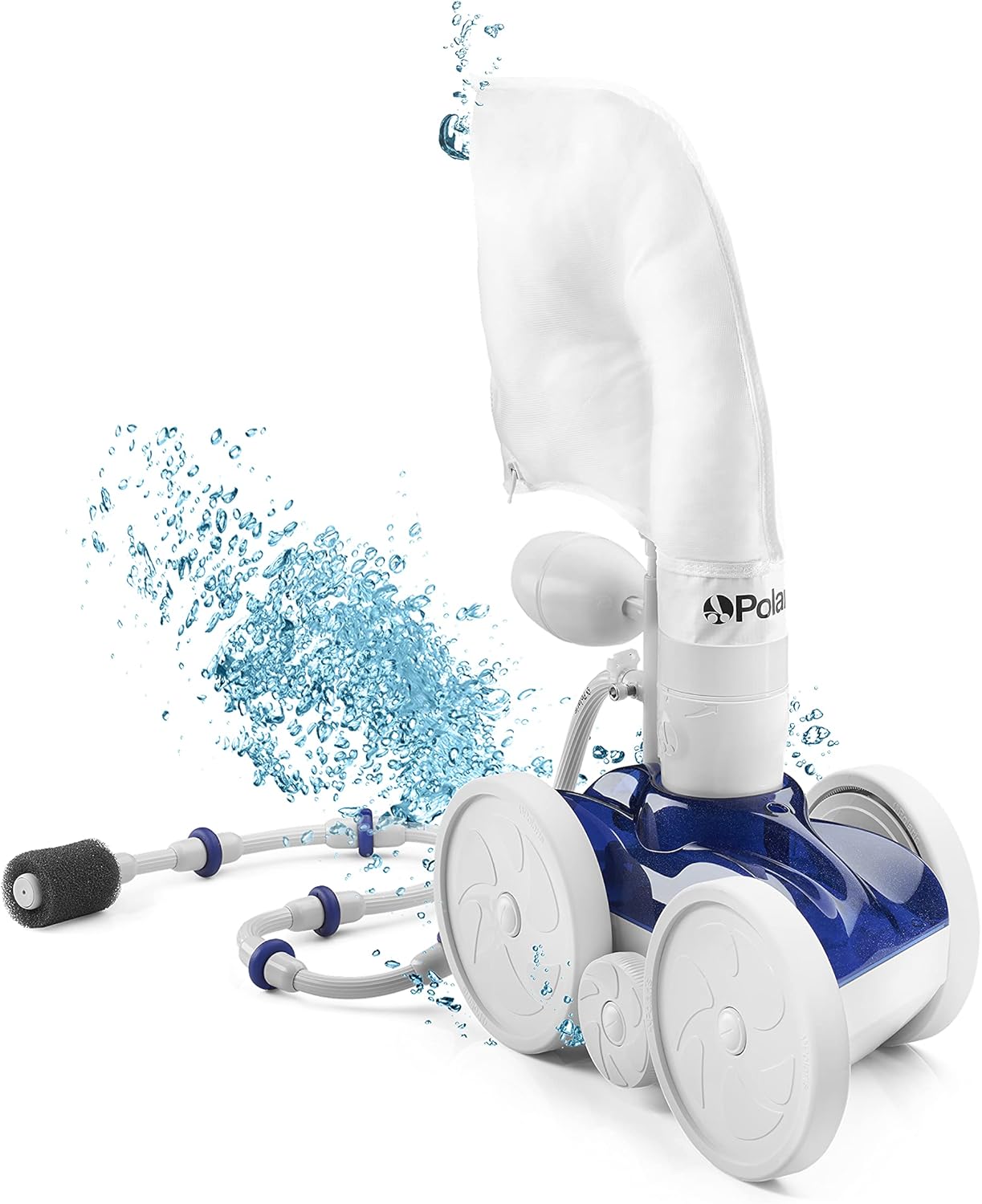
- Pressure-side automatic in-ground cleaner
- 2 Venturi jets and 2.25-inch inlet
- Requires a compatible booster pump
What to Look for When Buying a Pool Vacuum for Leaves
Choose the cleaner type before comparing small specifications
Start with the way the cleaner creates suction. A garden-hose leaf vacuum is mechanically simple and can run as long as water is available, but it adds water to the pool and leaves a hose trailing behind the head. A cordless vacuum is quicker to deploy and does not add water, yet runtime, charging and battery condition become part of ownership. A pressure-side automatic cleaner is an entirely different category: it can clean without constant manual guidance, but it depends on compatible in-ground pool plumbing.
For a small above-ground pool, the convenience of a compact cordless or jet cleaner may outweigh the coverage of a large head. For an in-ground pool that receives heavy seasonal leaf fall, bag volume and reach become much more important. If the pool already has a dedicated pressure-side line, an automatic cleaner can be considered alongside manual equipment; without that infrastructure, it should not be treated as a plug-and-play substitute.
Match the intake and bag to the size of the debris
Leaves are bulky. A vacuum can have useful suction yet still become frustrating if its inlet is narrow or its debris chamber is tiny. Wide-mouth leaf heads and external bags are valuable because large debris can enter without being forced through a small tube. The 10-liter bags on several leaf vacuums, for example, are aimed at extending the interval between emptying stops.
Mesh size changes what the bag holds. Coarser mesh is generally well suited to leaves and supports freer water movement, while finer mesh can retain smaller material. Models that include two filtration grades, such as the KOKIDO XV910 and the PoolCent leaf vacuums, let the user select a bag that better matches the job. A fine bag is not automatically better for every leaf cleanup because it can load more quickly with small particles.
Treat GPM as one specification, not the whole performance story
Gallons per minute can help compare motorized leaf vacuums, but it is not a direct measurement of how quickly a particular pool will be cleaned. Head width, inlet geometry, bag loading, leaf size, water depth and technique all influence pickup. A 48 GPM listing should therefore be understood as a higher stated flow capability than a 24 GPM listing, not a promise that the job will finish in exactly half the time.
Check pole reach and what is actually included
Pole details are easy to miss. Some vacuum heads accept a standard telescopic pool pole but do not include one. Others include a short sectional or extendable pole that works well for an above-ground pool but may feel inadequate at the deep end of a large in-ground pool. Measure the practical distance from the deck to the areas you need to clean and account for a comfortable working angle rather than using water depth alone.
Separate leaf cleanup from fine-dirt cleaning
A large mesh bag is excellent for leaves because it can hold a lot of bulky material without sending it through the pool filter. It is not necessarily the right tool for a film of fine sand, dead algae or powdery silt. If your pool regularly has both problems, either choose a model with genuinely fine filtration or expect to use a second cleaning method for the smallest particles.
Verify pool compatibility before buying an automatic cleaner
The Polaris Vac-Sweep 360 and 280 are not simply cordless leaf vacuums with longer hoses. They are pressure-side cleaners for in-ground pools. The 360 is designed to run without a separate booster pump on a compatible pressure-side setup, whereas the 280 requires a compatible booster pump. Plumbing compatibility can therefore matter more than any individual feature on the cleaner itself.
U.S. Pool Supply Leaf Terminator
- 15-inch ABS vacuum body
- 8 pressure jets and 4 rotating wheels
- Includes 2 reusable leaf bags
U.S. Pool Supply Leaf Terminator is a manually guided, water-powered option that keeps leaves in a separate bag rather than routing them through the main pool filter.
How the water-jet design works
The U.S. Pool Supply Leaf Terminator takes a very different approach from a suction-line pool vacuum. A garden hose connects to the head, and eight integrated pressure jets use that incoming water to create the flow that lifts leaves from the floor into the attached mesh bag. Because the debris stays in the bag, large leaves do not have to travel through the pool pump, skimmer basket or filter.
Its 15-inch ABS body is broad enough to make deliberate passes over open floor areas. Four 360-degree rotating wheels support multidirectional movement, while three perimeter brushes help disturb debris sitting against the surface. This is a practical configuration for pools that accumulate leaves after wind or storms, especially when the main goal is removing bulky organic debris rather than polishing fine dust.
Setup and everyday use
There is no battery to charge, but the tradeoff is hose management. The quick-disconnect garden-hose fitting must remain connected while the vacuum is working, and the head is normally guided with a standard pool pole. The kit includes two reusable leaf bags, which matters when a pool contains enough material to fill a bag partway through the job.
The water-jet method also means fresh water enters the pool while cleaning. That may be insignificant during a short session, but it is worth considering if the water level is already high. For a user who wants a mechanically simple leaf remover and does not mind a hose across the deck, this design avoids the runtime limits of a cordless vacuum.
Where it fits best
This model makes the most sense when leaves are the primary problem and the pool floor is reasonably accessible with a pole. The large body, rotating wheels and mesh-bag collection system are all oriented toward coarse debris. If the recurring problem is sand, pollen-like sediment or algae dust, a cleaner with finer filtration may still be needed alongside it.
Pros
- Wide 15-inch body covers a substantial strip of pool floor on each pass.
- Eight water-pressure jets create suction without using the pool filtration system.
- Four rotating wheels and three perimeter brushes support controlled floor cleaning.
- Two reusable leaf bags are included, which is useful during high-debris cleanups.
Cons
- Requires a connected garden hose while cleaning.
- A standard pool pole is still needed for practical reach.
- The leaf-bag design is more naturally suited to leaves and larger debris than very fine silt.
POOL BLASTER Leaf Vac
- Cordless, hoseless leaf vacuum
- Up to 3 hours of runtime on 8 AA batteries
- Reusable all-purpose filter bag
POOL BLASTER Leaf Vac uses cordless power to remove the hose or filtration connection from normal cleaning, but its battery, debris capacity and head design determine how well it fits a leaf-heavy pool.
Cordless leaf collection without a hose
The POOL BLASTER Leaf Vac is unusual among cordless pool cleaners because it is purpose-built around leaf collection rather than a narrow handheld vacuum chamber. Water Tech specifies a reusable all-purpose filter bag and a light 2.35-pound vacuum body measuring about 21.25 by 15 by 7 inches. The broad format is useful when leaves are spread across a larger area.
Power comes from eight AA batteries, and the manufacturer lists up to three hours of runtime. That avoids both a garden hose and a rechargeable-unit charging cycle. The compromise is the need to keep suitable AA batteries available, which is a different ownership pattern from models with built-in lithium-ion packs.
Bottom cleaning and surface skimming
One useful design feature is the ability to turn the Leaf Vac over and use it as a surface skimmer. That gives the same tool a role before leaves sink and after they settle. A push-button on/off control keeps operation simple, and the vacuum attaches to a standard telescopic pool pole for reach; the pole itself is not included.
For a pool surrounded by trees, the long listed runtime and large leaf-catching area are more important than a very fine filter rating. The Leaf Vac is intended to collect leaves and general debris efficiently, not to replace every other form of pool-floor cleaning.
Who should choose a different format
A rechargeable handheld vacuum may be preferable when the pool also has a persistent layer of sand or silt and the user wants one tool for steps, corners and fine floor debris. A garden-hose leaf vacuum may also suit buyers who prefer not to manage batteries at all. The Leaf Vac’s strongest reason for consideration is its combination of hoseless operation, long listed runtime and leaf-specific geometry.
Pros
- Operates without a garden hose or connection to the pool filtration system.
- Up to three hours of listed runtime suits longer leaf-removal sessions.
- Can be flipped over for surface skimming as well as bottom debris pickup.
- Light 2.35-pound listed weight makes the vacuum head comparatively easy to guide.
Cons
- Uses eight AA batteries rather than an integrated rechargeable battery.
- A telescopic pool pole is not included.
- Its large-debris focus does not replace a fine-particle vacuum for every cleaning job.
KOKIDO XV910
- Rechargeable heavy-duty leaf vacuum
- Standard and fine filter bags included
- Listed flow rate up to 62 GPM
KOKIDO XV910 uses cordless power to remove the hose or filtration connection from normal cleaning, but its battery, debris capacity and head design determine how well it fits a leaf-heavy pool.
High-flow leaf removal
The KOKIDO XV910 is a larger rechargeable leaf vacuum intended for debris-heavy cleaning. Its listed flow rate reaches 62 gallons per minute, and its debris chamber is substantially larger than the small cups found on compact handheld vacuums. That matters most during a pool opening or after a storm, when stopping every few passes to empty a small filter can become the slowest part of the job.
The cleaner is supplied with two filtration options: a standard 250-micron bag and a finer 75-micron bag. The standard bag favors flow and larger debris, while the finer bag gives more control over smaller particles. Switching filtration according to the debris is more useful than expecting one mesh size to perform equally well with both oak leaves and fine grit.
Battery, safety and reach
The XV910 uses a rechargeable lithium-ion battery, with published specifications listing about 75 minutes of working time per charge and roughly five hours for a full recharge. Its body is waterproof for submerged use, and an automatic shutoff feature is intended to stop the motor when the cleaner is not submerged. A standard telescopic pool pole can be fitted for longer reach, but the pole is not part of the package.
At around 6.9 pounds in published specifications, this is not the lightest cleaner in the group. The extra size and capacity are useful when the pool contains a lot of debris, but a smaller handheld model will feel less cumbersome for quick work on steps and shallow areas.
Practical limits
KOKIDO positions this as a heavy-duty leaf and debris cleaner. Very fine algae residue or powdery silt can behave differently from leaves, so filtration choice and water conditions still matter. Buyers who mainly perform light daily touchups may not need the XV910’s size, while buyers facing repeated heavy leaf loads can benefit from the combination of high listed flow and large-capacity collection.
Pros
- High listed flow rate is aimed at bulky leaf and debris pickup.
- Two filtration bags let the user switch between larger debris and finer material.
- Rechargeable design avoids both a garden hose and disposable operating batteries.
- Large debris chamber reduces the need to stop as often during leaf-heavy pool openings.
Cons
- The larger cordless body is heavier than compact handheld vacuums.
- A standard telescopic pole is not included.
- Fine algae and very light silt may call for different filtration or a dedicated fine-debris cleaning method.
Poolmaster 28300 Big Sucker
- 15-inch diameter ABS body
- 8 high-pressure water jets
- 4 multidirectional wheels
Poolmaster 28300 Big Sucker is a manually guided, water-powered option that keeps leaves in a separate bag rather than routing them through the main pool filter.
Simple pressure-jet construction
The Poolmaster 28300 Big Sucker is a classic manual leaf-vacuum head. Its 15-inch-diameter ABS body contains eight high-pressure water jets and rides on four multidirectional wheels. Connect a standard garden hose to the quick-disconnect fitting, guide the head with a pool pole and the water flow carries leaves upward into the reusable bag.
This arrangement is mechanically straightforward. There is no motor, battery pack or charging circuit to maintain, and the leaf bag keeps bulky debris outside the pool’s circulation filter. Replacement bags and wheels are available from Poolmaster, which is relevant for a tool that may see repeated seasonal use.
What the 15-inch head changes
A wide head is most helpful on unobstructed sections of pool floor. It lets the user cover area with fewer passes than a small spa vacuum, but the tradeoff is less agility on narrow steps, benches and tight corners. The wheels are intended for hard pool surfaces, so owners should also match the tool to the type and condition of their pool finish.
Poolmaster sells the pole separately. That is easy to overlook because the vacuum head looks complete in product photos, but reach is an essential part of the setup. Buyers who already own a compatible telescopic pole may view the head-only format as an advantage.
Best use case for the Big Sucker
The Big Sucker is at its most logical in a pool where large leaves are the main nuisance and a garden hose is readily available. It does not have a published battery runtime because it has no battery; practical session length is governed more by hose access, bag capacity and the user’s willingness to guide the head. Fine sediment is not the main reason to choose this design.
Pros
- Simple garden-hose-powered design has no battery to charge or replace.
- Fifteen-inch body and eight water jets are purpose-built for collecting leaves.
- Four multidirectional wheels help the head move across hard pool surfaces.
- Reusable leaf bag keeps large debris out of the pool filter.
Cons
- Requires a garden hose and continuous water flow during use.
- A standard pool pole is sold separately.
- It is a leaf-focused tool rather than a complete replacement for a fine-dirt pool vacuum.
Enhulk PC10
- Up to 18.5 GPM listed flow
- Up to 1 hour listed runtime
- Telescopic pole included
Enhulk PC10 uses cordless power to remove the hose or filtration connection from normal cleaning, but its battery, debris capacity and head design determine how well it fits a leaf-heavy pool.
Handheld versatility rather than a dedicated leaf head
The Enhulk PC10 combines a rechargeable motor with a handheld body and included telescopic pole. The Amazon listing specifies a 20-volt, 40-watt motor with water flow up to 4,200 liters per hour, or about 18.5 gallons per minute. Its listed working time reaches one hour. Those figures put it in a different class from a wide garden-hose leaf bag: it is a portable general pool vacuum that can also collect leaves.
This format is useful for above-ground pools, stairs and targeted areas because the cleaning head can be directed precisely. There is no garden hose to drag behind the user and no need to connect the cleaner to the pool circulation system.
Runtime and debris load
One hour is enough for many routine sessions, but a heavily leaf-covered large pool can challenge both runtime and debris capacity. A dedicated leaf vacuum with a 10-liter external bag or a high-flow wide head may need fewer interruptions when the job consists almost entirely of bulky leaves.
The PC10 becomes more attractive when the debris mix changes from day to day. Leaves, small twigs and ordinary settled material can be addressed with one cordless tool, and the included pole means a buyer does not have to source a separate handle before first use.
Who benefits from this design
Small and medium above-ground pools are a natural match because portability and quick setup often matter more than maximum bag volume. In an in-ground pool, verify that the supplied reach is sufficient for the deepest areas you intend to clean. If the priority is collecting baskets of leaves after seasonal drop, a dedicated high-capacity leaf vacuum will be the more specialized choice.
Pros
- Cordless rechargeable format avoids hoses and filtration-system connections.
- Included telescopic pole makes the package more complete than vacuum-head-only options.
- Listed 18.5 GPM flow is useful for routine leaves and mixed debris.
- Handheld form can reach steps and smaller areas that wide leaf vacuums may not handle as neatly.
Cons
- One-hour listed runtime is shorter than some larger leaf-specific cordless models.
- Narrower handheld cleaning geometry means more passes in a large leaf-covered pool.
- Heavy seasonal leaf loads can fill a handheld debris chamber faster than a large external mesh bag.
POOL BLASTER Max
- Rechargeable lithium-ion power
- Up to 60 minutes listed runtime
- Captures leaves, dirt, sand and silt
POOL BLASTER Max uses cordless power to remove the hose or filtration connection from normal cleaning, but its battery, debris capacity and head design determine how well it fits a leaf-heavy pool.
A general-purpose cordless cleaner
The POOL BLASTER Max is less narrowly focused on leaves than the company’s Leaf Vac. Water Tech lists a rechargeable lithium-ion battery with up to 60 minutes of runtime, plus a large debris capture chamber intended for material ranging from leaves, acorns and twigs to dirt, sand and silt. That wider debris range is the central reason to consider the Max.
Its hoseless layout is convenient for spontaneous cleaning. Press the power button, submerge the unit and work the problem area without attaching a garden hose or routing a vacuum hose to the skimmer. For many pool owners, that lower setup burden makes it easier to clean small accumulations before they spread.
Attachments and pool access
A crevice corner nozzle and scrubbing brushes are included, which gives the Max more flexibility around edges than a 15-inch leaf head. The cleaner can also attach to a standard telescopic pole for deeper sections, although the pole is not included. That makes the cost of a compatible pole part of the full setup for buyers who do not already own one.
The 60-minute listed runtime is typical of many rechargeable handheld cleaners, but it is not unlimited. Large pools with dense seasonal leaf cover may be better served by a dedicated leaf collector with a very large mesh bag or by an automatic pressure-side system.
Leaf vacuum or all-around vacuum?
Choose the Max when leaf pickup is only one part of the cleaning job. Its ability to capture finer material gives it a broader role than a coarse mesh leaf vacuum. If the pool is otherwise clean and the recurring problem is simply a thick layer of leaves on the bottom, the wider Leaf Vac, KOKIDO XV910 or another large-bag leaf-specific tool may clear that particular mess with fewer stops.
Pros
- Handles a broader debris mix than a coarse leaf-bag-only cleaner.
- Rechargeable hoseless operation makes spot cleaning quick to start.
- Large debris capture chamber is useful for leaves, acorns and twigs as well as finer material.
- Crevice nozzle and scrubbing brushes add flexibility around corners and problem spots.
Cons
- A telescopic pool pole is not included.
- Up to 60 minutes of listed runtime may require planning for larger pools.
- For a floor covered with bulky leaves, a dedicated wide-mouth leaf vacuum can hold more coarse debris between emptying.
InoKraft Cordless Pool Vacuum
- Up to 18.5 GPM listed suction flow
- 59-inch extendable pole
- Transparent wide-mouth cleaning head
InoKraft Cordless Pool Vacuum uses cordless power to remove the hose or filtration connection from normal cleaning, but its battery, debris capacity and head design determine how well it fits a leaf-heavy pool.
Visible cleaning and an included pole
The InoKraft cordless vacuum is built around a transparent cleaning head, so debris movement can be seen while the head is on the pool floor. The listing gives a maximum suction flow of 18.5 gallons per minute and includes a 59-inch extendable pole. A wide-mouth intake is intended to admit leaves and twigs without forcing them through a narrow opening.
Visibility is more than cosmetic on a handheld vacuum. When leaves are scattered among shadows or patterned liners, being able to see material enter the head can reduce repeated passes over the same spot. The quick-detachable filter is also intended to make rinsing and backflushing more direct after a cleaning session.
Reach and pool size
A 59-inch pole is convenient in an above-ground pool and for shallow areas, but it is not equivalent to a long professional telescopic pole. Before buying for a deep in-ground pool, consider the distance from the deck to the deepest floor area and whether the supplied pole provides comfortable reach.
The 18.5 GPM listed flow is similar to the Enhulk PC10’s maximum listed rate, so the more meaningful differences are head design, pole format, filtration and ergonomics rather than expecting a dramatic gap from flow alone.
Where it makes sense
This model is best viewed as a rechargeable routine-maintenance vacuum that can handle leaves, not as an industrial-scale leaf collector. It suits buyers who value a transparent head, included pole and quick filter access. Pools that receive buckets of leaves at once will benefit more from a larger external bag and wider floor head.
Pros
- Transparent head lets the user see debris entering the vacuum while cleaning.
- Listed 18.5 GPM flow targets routine leaves, twigs and mixed debris.
- A 59-inch extendable pole is included for above-ground and in-ground pool reach.
- Quick-detachable filter design simplifies rinsing and backflushing after use.
Cons
- The 59-inch pole may not provide enough reach for every deep or large in-ground pool.
- Its handheld debris capacity is smaller than large-bag dedicated leaf vacuums.
- Buyers mainly dealing with very heavy seasonal leaf fall may prefer a wider high-capacity collector.
Mini Pool Vacuum Jet Cleaner
- Garden-hose-powered jet cleaning
- 56.5-inch six-section pole
- 2 fine-mesh bags and 3 scrub brushes
Mini Pool Vacuum Jet Cleaner is a manually guided, water-powered option that keeps leaves in a separate bag rather than routing them through the main pool filter.
A small water-jet cleaner for compact pools
The Mini Pool Vacuum Jet Cleaner uses garden-hose water pressure instead of a battery or pool-pump suction. The package includes a six-section adjustable pole reaching about 56.5 inches, two fine-mesh bags and three scrub brushes. Its stated applications include above-ground pools, spas, ponds and fountains.
This is a compact tool rather than a full-size 15-inch leaf vacuum. That distinction matters: the smaller head is easier to place in tight areas, but it also covers less floor with each pass. For a small seasonal pool or spa, that can be a reasonable tradeoff.
No charging, but water is part of the system
The absence of a motor keeps setup simple, yet the cleaner must remain connected to a garden hose. As the jets operate, hose water enters the pool. Owners should watch water level during longer cleaning sessions, especially in a small above-ground pool where added volume changes the level more quickly.
The included fine-mesh bags give the tool more debris retention than an open leaf net, while the brushes can disturb material resting on the floor. Still, suction strength depends on the available water pressure, so performance can vary between properties.
Who should consider a larger vacuum
A large in-ground pool under mature trees is outside the Mini cleaner’s most comfortable use case. In that setting, a 15-inch leaf head, high-flow rechargeable leaf vacuum or automatic pressure-side cleaner can reduce the number of passes. The Mini model is more appealing where compact storage, low mechanical complexity and a complete small-pool kit are priorities.
Pros
- No battery, charger or electrical connection is required.
- Included sectional pole and bags make it a relatively self-contained manual kit.
- Compact head fits small above-ground pools, spas, ponds and fountains.
- Three scrub brushes can loosen debris while the water jet feeds material into the bag.
Cons
- Garden-hose operation adds water to the pool or vessel while cleaning.
- Compact size is slower for a large pool floor covered in leaves.
- Sectional pole construction is less convenient than a long telescopic pole for frequent large-pool use.
POOL STOMACH Cordless Leaf Vacuum
- 6.6-foot telescopic pole included
- Up to 60 minutes listed runtime
- Two reusable 10-liter debris bags
POOL STOMACH Cordless Leaf Vacuum uses cordless power to remove the hose or filtration connection from normal cleaning, but its battery, debris capacity and head design determine how well it fits a leaf-heavy pool.
Large bags in a cordless leaf-focused package
The POOL STOMACH model combines cordless operation with two reusable 10-liter debris bags. That capacity is the key feature for leaf cleanup: bulky leaves occupy volume quickly, and a large bag can keep the user cleaning rather than repeatedly opening a small internal canister. The package also includes a 6.6-foot telescopic pole and a three-wheel floor head.
Runtime is listed at up to 60 minutes. That is enough for many residential sessions, but it is important to distinguish runtime from debris capacity. A large bag can still be useful even when the battery is limited to an hour because fewer bag-emptying interruptions make better use of the available operating time.
Floor coverage and maneuverability
The three-wheel head is oriented toward rolling across the bottom of above-ground and in-ground pools. A 6.6-foot pole provides useful deck-side reach, especially compared with short handheld handles. The tradeoff is that a broad wheeled leaf head is not as nimble on steps and benches as a compact suction nozzle.
The reusable bag format also means post-cleaning care involves removing the captured leaves, rinsing the mesh and allowing it to dry. That is simple work, but it should be done before organic material sits in the bag for an extended period.
Best match
This model is well aligned with users who want the coarse-debris capacity of a traditional leaf vacuum without dragging a garden hose. If the pool’s main contamination is very fine dust rather than leaves, filter fineness becomes more important than a 10-liter bag, and a different vacuum style may give better results.
Pros
- Two 10-liter bags provide substantial coarse-debris capacity for leaf cleanup.
- Included 6.6-foot telescopic pole gives more reach than short handheld-only kits.
- Cordless rechargeable operation avoids garden-hose drag.
- Three-wheel layout is intended to keep the leaf head moving along the pool floor.
Cons
- The one-hour listed runtime is shorter than some high-capacity cordless competitors.
- Large mesh-bag leaf cleaning is less specialized for very fine sediment.
- The wide floor-oriented head is less nimble on narrow steps than a compact handheld vacuum.
PoolCent 24 GPM Leaf Vacuum
- 24 GPM listed flow rate
- Up to 75 minutes listed runtime
- 10-liter 50 and 180 micron filter bags
PoolCent 24 GPM Leaf Vacuum uses cordless power to remove the hose or filtration connection from normal cleaning, but its battery, debris capacity and head design determine how well it fits a leaf-heavy pool.
Balanced flow, runtime and filtration
The PoolCent 24 GPM model lists a 24-gallon-per-minute flow rate and up to 75 minutes of runtime. It uses two 10-liter filter bags with different mesh ratings: 180 microns for larger debris and 50 microns for finer material. That dual-bag approach is helpful because leaf pickup and fine-debris pickup impose different demands on filtration.
A coarser bag generally allows easier water movement while holding leaves; the finer bag is useful when smaller particles are part of the job. The ability to choose between them makes this model more adaptable than a leaf vacuum supplied only with a coarse mesh sack.
What is included and what is not
This version is designed to fit a standard telescopic pool pole, but the pole is not included. For buyers who already have a quality pole, that keeps the package focused on the vacuum itself. New pool owners should include a compatible pole in their setup plan rather than assuming one will arrive in the box.
Published specifications also put maximum working depth at about 10 feet, which is relevant for in-ground pools. Reach still depends on the pole length and the user’s position on the deck.
Choosing it over the 48 GPM PoolCent
The 24 GPM model is the more restrained option in PoolCent’s leaf-vacuum pair here. It has lower listed flow and shorter listed runtime than the 48 GPM version, but it retains the same useful concept of large-capacity bags with two mesh choices. For a typical residential pool with moderate leaf fall, that may be enough without stepping up to the larger package.
Pros
- Dual 50- and 180-micron bags provide useful flexibility between finer debris and leaves.
- Up to 75 minutes of listed runtime gives more working time than many one-hour cordless units.
- Twenty-four GPM listed flow is targeted at leaf and debris pickup without a hose.
- Large 10-liter bag format can reduce emptying frequency during routine leaf cleanup.
Cons
- A telescopic pole is not included with this version.
- Lower listed flow and runtime than PoolCent’s 48 GPM model make it less suited to the heaviest cleanups.
- A bag-based leaf vacuum still may not match a filtration-connected vacuum for persistent ultra-fine dust.
PoolCent 48 GPM Leaf Vacuum
- 48 GPM listed flow rate
- Up to 120 minutes listed runtime
- Sectional aluminum poles and two 10-liter bags
PoolCent 48 GPM Leaf Vacuum uses cordless power to remove the hose or filtration connection from normal cleaning, but its battery, debris capacity and head design determine how well it fits a leaf-heavy pool.
High listed flow for bigger cleanup sessions
PoolCent’s 48 GPM model doubles the listed flow rate of the 24 GPM version and extends listed runtime to as much as 120 minutes. Those specifications are aimed squarely at larger leaf loads. The vacuum also uses two 10-liter filter bags, one rated at 180 microns and the other at 50 microns, so the user can match filtration to the debris.
A higher listed flow rate does not automatically mean a pool will be cleaned in half the time; head geometry, debris type, bag loading and technique also affect pickup. It does, however, signal that this model is built for more aggressive water movement than the 24 GPM version.
A more complete reach package
Sectional aluminum poles are included. That is useful for a buyer starting without pool-cleaning accessories, although sectional poles require assembly and storage in multiple pieces. A telescopic pole can be faster to adjust, so existing equipment and personal preference should influence how much value the included pole set adds.
The two-hour listed runtime is the strongest operational difference for long sessions. It reduces the chance that a large pool cleanup will end because the battery is depleted before the debris is removed.
Who needs this much capacity
The 48 GPM model is most relevant to pools under trees, seasonal openings and users who routinely remove a lot of bulky debris. A small above-ground pool with occasional leaves does not necessarily benefit from the larger high-flow setup, especially if storage space and simplicity matter more than maximum session length.
Pros
- Highest listed flow rate among the two PoolCent leaf-vacuum versions compared here.
- Up to two hours of listed runtime suits larger or more debris-heavy cleaning sessions.
- Includes sectional aluminum poles rather than requiring a separate pole purchase.
- Two 10-liter bags in 50- and 180-micron mesh support both leaf collection and finer debris work.
Cons
- Larger high-capacity equipment is more cumbersome than a compact handheld unit.
- Sectional poles take more assembly than a one-piece or quick-adjust telescopic pole.
- The extra capability may be unnecessary for a small pool with only occasional leaves.
POOLMAVEN 15-inch Leaf Vacuum Head
- 15-inch leaf-cleaning head
- Garden-hose-powered operation
- Large mesh debris bag
POOLMAVEN 15-inch Leaf Vacuum Head is a manually guided, water-powered option that keeps leaves in a separate bag rather than routing them through the main pool filter.
Traditional leaf-vacuum geometry
The POOLMAVEN leaf vacuum head uses a 15-inch body, garden-hose power and a large mesh debris bag. Its operating principle is the same general idea as other water-jet leaf vacuums: hose water creates the flow that carries leaves off the floor and into the attached bag, keeping coarse debris separate from the pool’s circulation filter.
A 15-inch head is a sensible size for open pool-floor coverage. It is intended for above-ground and in-ground pools, so the key compatibility questions are less about the vacuum motor—there is none—and more about hose access, pole reach and the surfaces you need to cover.
What the simple design does well
Garden-hose-powered cleaners have an advantage during occasional seasonal use: there is no battery to leave discharged over winter and no charger to locate the next year. They can also keep working as long as the hose supply and bag capacity allow. The compromise is a hose that must follow the head around the pool.
The large mesh bag favors leaves and other visible debris. If fine sand is the dominant problem, a finer filtration strategy is generally more important than a broad leaf head. This is why many pool owners use different tools for seasonal leaf removal and routine fine cleaning.
Decision point
Consider the POOLMAVEN when you specifically want a wide, hose-powered leaf collector and prefer mechanical simplicity over cordless convenience. Compare it closely with the U.S. Pool Supply Leaf Terminator and Poolmaster Big Sucker, paying attention to included bags, wheel/brush details and the pole setup you already own.
Pros
- Fifteen-inch cleaning width is well suited to broad passes over leaf-covered pool floors.
- Garden-hose power eliminates charging and disposable batteries.
- Large mesh bag keeps collected leaves separate from the pool filtration system.
- Works as a straightforward coarse-debris tool for above-ground and in-ground pools.
Cons
- Requires a garden hose throughout the cleaning session.
- A mesh leaf bag is not the same as a fine-sediment filtration system.
- Manual leaf-head operation requires the user to guide the cleaner across the pool floor.
Polaris Vac-Sweep 360
- Pressure-side automatic in-ground cleaner
- 3 Venturi jets and 2.25-inch inlet
- No booster pump required
Polaris Vac-Sweep 360 belongs to the automatic pressure-side category, so its value depends on pool-system compatibility as much as on its leaf-handling hardware.
Automatic pressure-side cleaning
The Polaris Vac-Sweep 360 is fundamentally different from the manual and cordless vacuums above. It is an automatic pressure-side cleaner for in-ground pools. Rather than being guided by hand, it connects to a compatible return line and uses three Venturi jets to generate vacuum action while the drive system moves the cleaner through the pool.
Its 2.25-inch vacuum inlet is intentionally large enough for leaves and other sizeable debris, and collected material goes into the cleaner’s bag instead of directly into the pool filter. That can reduce the amount of bulky debris reaching the pump basket and filtration media.
No booster pump, but plumbing still matters
A major distinction of the 360 is that Polaris does not require a separate booster pump for this model. That does not mean it will run in every pool without preparation. It still needs a suitable pressure-side connection and correct hose setup. The Amazon package specifies a 31-foot hose and bag.
Automatic backup helps the cleaner change direction if it becomes stuck in a corner or at an obstacle. The 360 is intended to sweep, vacuum and move through the pool on its own, which changes the ownership experience compared with holding a pole for every cleaning pass.
Who should consider the 360
This cleaner is relevant to an in-ground pool owner who wants routine automatic debris collection and has compatible plumbing. It is not a logical purchase for an above-ground pool or for someone seeking a small vacuum that can be grabbed for a five-minute spot clean. System compatibility should be checked before purchase because it determines whether the main advantage—automatic pressure-side cleaning—can be used at all.
Pros
- Automatic pressure-side cleaning reduces the need to manually guide a leaf vacuum.
- Three Venturi jets and a 2.25-inch inlet are built to pick up larger debris.
- Does not require a separate booster pump when installed on a compatible return line.
- Debris bag captures material before it reaches the pool pump basket and filter.
Cons
- For in-ground pools only and requires compatible pressure-side plumbing.
- Installation and hose setup are more involved than dropping in a cordless handheld vacuum.
- It is a whole-pool automatic cleaner rather than a quick spot-cleaning tool.
Polaris Vac-Sweep 280
- Pressure-side automatic in-ground cleaner
- 2 Venturi jets and 2.25-inch inlet
- Requires a compatible booster pump
Polaris Vac-Sweep 280 belongs to the automatic pressure-side category, so its value depends on pool-system compatibility as much as on its leaf-handling hardware.
Two-jet pressure-side architecture
The Polaris Vac-Sweep 280 is another automatic in-ground pressure-side cleaner, but its system requirements differ from the 360. It uses two Venturi jets, a 2.25-inch vacuum inlet and shaft drive. Polaris specifies use with a compatible booster pump, so the pool equipment setup is an essential part of the buying decision.
The large inlet is well suited to leaves, pebbles, acorns and similar debris that can be awkward for narrow handheld openings. Material is captured in the cleaner’s all-purpose debris bag before it enters the pool filter.
Cleaning cycle and hose setup
The Amazon listing supplies 31 feet of hose, and Polaris lists a cleaning cycle of three hours or less under suitable conditions. Automatic backup helps the unit get away from common obstacles and continue its route. As with any automatic cleaner, hose length, return-line setup and pressure adjustment affect how well it covers the pool.
The 280 does not use active powered brushes; its cleaning is driven by the pressure-side movement, inlet and sweep action. That distinction matters if the main concern is adhered algae, which is a different problem from collecting loose leaves.
280 versus a handheld leaf vacuum
A booster-pump pressure-side cleaner is a bigger system commitment than a rechargeable handheld model, but it also performs a different job. The 280 is meant to operate automatically in a compatible in-ground pool rather than wait for the owner to guide it. For pool owners who only need occasional storm cleanup, a manual or cordless leaf vacuum may be simpler. For ongoing automatic debris collection, the 280’s integrated role can make more sense if the required booster setup is already present.
Pros
- Automatic operation is suited to ongoing in-ground pool floor and wall cleaning.
- Large 2.25-inch inlet accommodates leaves and other sizeable debris.
- All-purpose debris bag keeps collected material out of the main pool filter.
- Manufacturer lists a cleaning cycle of three hours or less under suitable conditions.
Cons
- Requires a compatible booster pump, adding system requirements and operating hardware.
- Not intended for above-ground pools.
- More complex and costly to set up than a manual garden-hose leaf vacuum or cordless handheld cleaner.
Detailed Buying Guide for Pool Leaf Vacuums
Garden-hose leaf vacuums: why the jet method works
A garden-hose leaf vacuum does not suck through a hose connected to the pool pump. Instead, incoming water is directed through jets in the vacuum head. The resulting flow carries leaves upward into a bag mounted above the head. This method is especially useful for large debris because leaves are captured locally and do not have to pass through skimmer plumbing.
The design also has practical consequences. Water is added to the pool during cleaning, so a high water level may need attention. Hose pressure influences how strongly the jets work, and a long garden hose can be awkward around furniture or landscaping. On the positive side, there is no battery aging, charging delay or electrical motor in the head. For occasional heavy leaf cleanup, that simplicity is attractive.
Cordless leaf vacuums: balance runtime with capacity
Cordless models remove the garden hose and are often faster to start. For leaf cleaning, runtime should be considered together with bag capacity. Sixty minutes can be useful if the cleaner has a large bag that rarely needs emptying; the same hour can feel short if a small chamber requires frequent stops. Higher-capacity models such as the PoolCent 48 GPM unit extend both the listed runtime and the amount of debris the system can handle between interruptions.
Battery care is part of long-term ownership. Follow the maker’s charging and storage instructions, keep charging contacts dry as specified, and do not assume that every waterproof cleaner can be charged while wet. A cordless cleaner should also be removed from the pool after use rather than treated as a permanently submerged automatic cleaner unless its instructions explicitly allow that use.
Large leaves, fine debris and filter micron ratings
Micron ratings describe the approximate size of openings a filter is designed to retain, but real filtration performance also depends on the bag material, seams, loading and water flow. A 180- or 250-micron bag is a practical leaf and coarse-debris choice. A 50- or 75-micron bag can retain smaller particles, although it may need more frequent rinsing as the fabric loads.
Do not select the finest available bag by default. If the bottom is covered with intact leaves, start with the bag intended for larger debris so the cleaner can maintain strong water movement. Switch to the finer option for the second pass if smaller material remains. This two-stage approach often makes more sense than forcing every type of debris through the finest mesh from the beginning.
Head width, wheels and pool geometry
Wide wheeled heads are efficient on broad, relatively flat pool floors. A 15-inch manual leaf vacuum can cover more area per pass than a compact spa cleaner, and large cordless leaf heads make similar use of width. The penalty is maneuverability. Steps, benches, ladders, tight corners and curved transitions are easier to reach with a smaller handheld nozzle.
Wheels reduce drag but also determine how the head follows the surface. Check the manufacturer’s intended pool types and avoid forcing a wheeled head over delicate features or obstructions. Brushes around the perimeter can help disturb loose material, but a leaf vacuum should not be assumed to remove adhered algae simply because it has brushes.
How pole length affects real reach
A pole is a lever, not just an extension. As depth increases, the user needs enough length to hold the head at a useful angle without leaning over the pool edge. A 59-inch or 6.6-foot included pole may be convenient for an above-ground pool and shallow sections, while a deeper in-ground pool can justify a longer standard telescopic pole. Products that accept a standard pole give the owner more freedom to choose reach later.
When an automatic pressure-side cleaner makes sense
Automatic pressure-side cleaners are appropriate when the goal is recurring whole-pool cleaning rather than occasional spot removal. They travel through a compatible in-ground pool and collect debris in their own bags. That can be especially useful in a pool that receives frequent leaves because the owner does not have to manually sweep every square foot with a pole.
System requirements are the deciding factor. The Vac-Sweep 360 can operate without a separate booster pump but still needs the appropriate return-line arrangement. The Vac-Sweep 280 calls for a compatible booster pump. If a pool does not already support the required pressure-side configuration, installation complexity may outweigh the convenience for a buyer who only needs seasonal leaf removal.
Cleaning and storage after a leaf-heavy session
Empty leaves promptly. Wet organic debris left in a bag can compact, smell and make the next cleaning session unpleasant. Rinse reusable bags from the clean side toward the dirty side where practical, remove twigs from seams and inspect the fabric for small tears that could release debris back into the water.
Rinse the vacuum head according to its instructions, especially after use in a chemically treated pool, and let components dry before storage. For cordless models, store the battery system according to the manufacturer’s temperature and charging guidance. For hose-powered heads, inspect quick-connect fittings and wheel movement before the next season.
Direct Product Comparisons
U.S. Pool Supply Leaf Terminator vs Poolmaster 28300 Big Sucker
These are close competitors because both use 15-inch ABS bodies, eight water-pressure jets and garden-hose power. Both are manually guided and collect leaves in a reusable bag rather than through the pool filter. The U.S. Pool Supply model lists four 360-degree rotating wheels, three perimeter brushes and two included leaf bags, while Poolmaster specifies four multidirectional wheels and one reusable all-purpose leaf bag.
The purchase decision is therefore less about motor power—neither has a motor—and more about included accessories, wheel/brush layout, replacement-part preference and current availability. Either format is better suited to bulk leaves than fine silt. Owners who dislike managing a garden hose should move to a cordless leaf vacuum instead of trying to find a major operational difference between these two jet heads.
POOL BLASTER Leaf Vac vs KOKIDO XV910
Both are leaf-focused and hoseless, but their power systems are different. The POOL BLASTER Leaf Vac runs on eight AA batteries and is listed for up to three hours, while the KOKIDO XV910 has an integrated rechargeable lithium-ion system with a shorter published working period of about 75 minutes. The XV910 counters with a much higher published flow figure and two filtration bags, including a finer 75-micron option.
Choose between them according to operating style. The Leaf Vac is light and has unusually long listed runtime for repeated leaf pickup, and it can double as a surface skimmer. The XV910 is larger and built around high-flow heavy-debris removal with selectable filtration. A buyer who values rechargeability and fine-bag flexibility may prefer the KOKIDO approach; a buyer who prioritizes low head weight and long AA-powered sessions may favor the Leaf Vac format.
Enhulk PC10 vs InoKraft Cordless Pool Vacuum
Both list maximum flow around 18.5 GPM and both include a pole, so the raw suction specification does little to separate them. The Enhulk PC10 listing provides up to one hour of runtime and describes a 20-volt, 40-watt motor. The InoKraft emphasizes a transparent wide-mouth head, a 59-inch extendable pole and a quick-detachable filter.
These are better viewed as routine handheld cleaners than dedicated high-capacity leaf machines. The PC10 has the clearer published runtime information, while the InoKraft makes visual pickup and filter access central to its design. For either one, compare pole reach with pool depth and remember that a handheld debris chamber will fill more quickly than a 10-liter external leaf bag.
PoolCent 24 GPM vs PoolCent 48 GPM
The two PoolCent models use the same basic idea—cordless leaf collection with 10-liter filter bags in 50- and 180-micron grades—but their listed performance targets are different. The 24 GPM version is rated for up to 75 minutes and does not include the standard telescopic pole. The 48 GPM version is rated for up to 120 minutes and includes sectional aluminum poles.
The 48 GPM model is the more appropriate specification set for long, debris-heavy sessions, but the larger capability is not automatically useful in a small pool. Moderate leaf fall, shorter cleaning sessions and an existing telescopic pole can make the 24 GPM version sufficient. Heavy seasonal drop, a large floor area and a desire for the longest listed cordless runtime point toward the 48 GPM package.
Polaris Vac-Sweep 360 vs Polaris Vac-Sweep 280
Both Polaris cleaners are pressure-side automatic systems for in-ground pools, both use a 2.25-inch debris inlet and both collect material in an onboard bag. The 360 uses three Venturi jets and is designed to work without a separate booster pump on a compatible pressure line. The 280 uses two Venturi jets and requires a compatible booster pump.
That plumbing difference is more important than simply counting jets. If the pool is already configured for a 280-style booster-pump system, the 280 fits that architecture. If the objective is a pressure-side cleaner without adding a separate booster pump and the return setup is suitable, the 360 deserves attention. Neither is intended as an above-ground cleaner, and neither offers the instant portability of a handheld cordless vacuum.
PoolCent 48 GPM vs KOKIDO XV910
For heavy cordless leaf cleanup, these two compete more directly. KOKIDO lists up to 62 GPM and around 75 minutes of runtime, with 250- and 75-micron bags. PoolCent lists 48 GPM but extends runtime to as much as 120 minutes and supplies 180- and 50-micron 10-liter bags plus sectional poles.
The KOKIDO leans toward higher stated flow during a shorter session; the PoolCent leans toward longer stated operating time and a more complete pole package. Because GPM alone does not determine cleaning speed, pool size, debris volume, desired mesh fineness and how long a typical cleanup lasts are better decision factors than assuming the highest flow number automatically wins.
Common Buying Mistakes
Buying a fine-dirt vacuum for a bulk-leaf problem
Small handheld vacuums can be excellent for sand and localized debris, but a tiny inlet and filter cup become a bottleneck when the floor is covered with large leaves. For recurring tree debris, prioritize intake size, bag volume and clog resistance before looking at fine-particle capability.
Assuming every included pole reaches the deep end
An included pole sounds convenient, but 56 to 79 inches of reach is not the same as a long telescopic pool pole. Check your pool dimensions and working position. If a vacuum accepts a standard telescopic pole, purchasing the appropriate length separately may be more useful than choosing a kit solely because it includes a short pole.
Comparing pressure-side cleaners with handheld vacuums as if installation were identical
The Polaris 360 and 280 are automatic in-ground cleaners with plumbing requirements. They should not be selected only because they pick up leaves. Confirm the return-line and booster-pump requirements first; otherwise a simpler cordless or garden-hose vacuum may be a much more practical purchase.
Treating a mesh leaf bag as a substitute for fine filtration
Leaf bags are valuable because they hold a lot of coarse material and keep it out of the pool filter. Very fine silt can pass through coarser mesh. If fine particles are a regular issue, choose a model with a verified finer bag option or plan for a second cleaning step.
Ignoring how the vacuum will be emptied and rinsed
A large bag is only useful if it can be removed, emptied and rinsed without turning maintenance into a chore. Look at the bag attachment method, filter access and availability of replacements. For cordless models, also consider where the cleaner can dry before charging and storage.
Choosing by maximum GPM alone
Flow rate is meaningful, but it is not a complete performance ranking. A high-flow vacuum with the wrong head shape or an overloaded fine bag can still require more passes. Use GPM together with runtime, intake size, debris capacity, filter mesh and pool geometry.
Frequently Asked Questions
What type of pool vacuum works best for large leaves?
For large leaves, look for a wide intake and a large debris bag. Garden-hose leaf vacuums and high-capacity cordless leaf vacuums are built specifically around bulky debris. A compact handheld vacuum can still collect leaves, but it usually needs more passes and more frequent emptying.
Can a pool leaf vacuum pick up sand as well?
Some can, especially models supplied with finer filter bags. A coarse mesh leaf bag may let very small sand or silt pass through. If sand is a regular problem, check the verified filter specification rather than assuming every leaf vacuum handles fine particles equally well.
Does a garden-hose pool vacuum connect to the pool pump?
The jet-style models in this guide do not. They connect to a garden hose, and water jets in the head create the flow that lifts debris into the attached bag. This keeps leaves out of the main pool filtration path.
Will a garden-hose leaf vacuum raise the pool water level?
Yes. Because hose water is discharged into the pool while the vacuum is operating, the water level can rise during a longer session. Monitor the level, particularly in smaller above-ground pools or after heavy rain.
How much cordless runtime is enough for a pool leaf vacuum?
That depends on pool size and debris volume. Around 60 to 75 minutes can be adequate for routine residential cleanup, while a two-hour model gives more margin for large pools or heavy seasonal leaf fall. Bag capacity matters too because frequent emptying consumes useful session time.
Is a higher GPM pool vacuum always better?
No. Higher listed flow indicates greater water movement, but cleaning also depends on intake geometry, head width, filter loading, leaf size and technique. Compare GPM together with runtime, bag capacity and the type of debris you actually have.
Do I need a telescopic pole for a pool leaf vacuum?
Most manually guided vacuums need some form of pole. Some products include a sectional or extendable pole, while others accept a standard telescopic pool pole sold separately. Deeper in-ground pools usually benefit from a longer telescopic pole.
Can I use a Polaris Vac-Sweep 360 or 280 in an above-ground pool?
These Polaris models are specified as pressure-side cleaners for in-ground pools. Above-ground pool owners should choose a cleaner designed for their pool type rather than trying to adapt an in-ground pressure-side system.
What is the main difference between the Polaris 360 and 280?
The Vac-Sweep 360 uses three Venturi jets and is designed to operate without a separate booster pump on a compatible pressure-side setup. The Vac-Sweep 280 uses two Venturi jets and requires a compatible booster pump. Both are automatic in-ground cleaners.
Should I use the fine or coarse filter bag for leaves?
Start with the bag intended for larger debris when the pool contains whole leaves and twigs. A coarser bag generally maintains freer water flow. Use the finer bag when smaller particles remain, provided that bag is approved for the vacuum.
Final Buying Considerations
The right pool vacuum for leaves depends first on the amount of debris and the way you want to clean. For occasional leaves in a small or medium pool, a cordless handheld model such as the Enhulk PC10, InoKraft or POOL BLASTER Max is easy to deploy and useful for more than one type of debris. For larger seasonal leaf loads, bag capacity and a wide intake become more important, which is where the KOKIDO XV910, PoolCent leaf vacuums, POOL STOMACH model and dedicated leaf-head designs have a clearer role.
Garden-hose models such as the U.S. Pool Supply Leaf Terminator, Poolmaster Big Sucker and POOLMAVEN 15-inch head avoid battery limits and keep the mechanical system simple, but they require a hose and add water during operation. The POOL BLASTER Leaf Vac occupies a different middle ground by delivering leaf-specific cordless cleaning from AA batteries with a long listed runtime.
For an in-ground pool owner who wants automatic cleaning rather than a manually guided tool, the Polaris Vac-Sweep 360 and 280 belong on a separate decision path. Verify pressure-side plumbing first, especially the 280’s booster-pump requirement. Once compatibility is settled, their onboard debris bags and large inlets can make regular leaf collection less dependent on manual vacuuming.
Before ordering, confirm three practical details: the pool type, the reach you actually need and the debris you see most often. A wide mesh bag is valuable for leaves; a fine filter is valuable for smaller particles; and a long runtime matters only if the cleaner also has enough capacity and reach to use that time productively. Matching those characteristics to the pool will prevent more purchasing mistakes than choosing by one headline specification.
Author