

Brass pool cover anchors look simple, but small dimensional differences determine whether a replacement fits the existing deck hole and works correctly with the safety-cover spring hardware. Most standard concrete-deck anchors in this comparison are built around a 3/4-inch installation hole and a retractable brass insert, yet the packages differ in what is included, how the anchor size is described, and whether installation or extraction tools are supplied.
The practical decision is therefore not just which pack contains ten pieces. You need to know whether you are replacing complete anchor assemblies or only damaged hardware, whether the deck is poured concrete or pavers, whether the old holes are still sound, and whether any anchors are seized below the deck surface. A straightforward replacement job may need nothing more than matching brass anchors. A damaged or frozen anchor can turn the same project into an extraction and rethreading job.
This guide compares five brass pool cover anchor options for inground safety covers, including four conventional replacement packs and one larger removal-and-installation kit. The emphasis is on verified dimensions, included hardware, deck compatibility, installation implications, and the tradeoffs that matter before drilling or replacing anything.
Quick Comparison
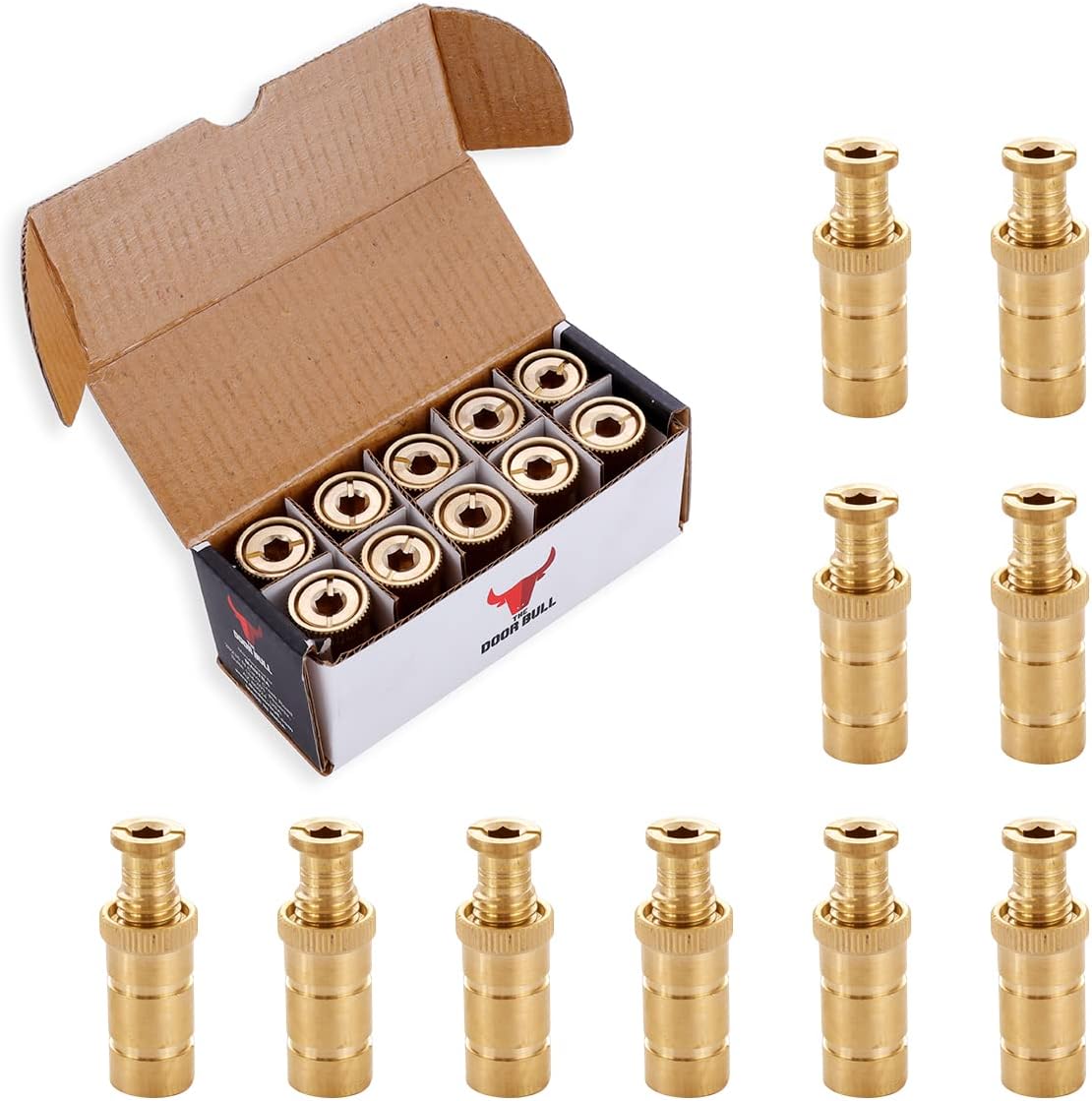
- 10 complete brass anchors with head screw bolts
- Fits a 3/4-inch hole; 1-5/8-inch anchor length
- For concrete and paver decks

- 10 brass anchors plus 10 matching head screw bolts
- 0.75 x 0.75 x 1.63-inch listed dimensions
- Concrete/paver compatibility and rust-resistant brass

- 10 solid-brass safety-cover anchors
- Fits a 3/4-inch hole; 1-5/8 inches long
- Universal-style replacement for most major cover brands

- 10 brass anchors plus an aluminum tamping tool
- 5/8-inch anchor size designation; fits a 3/4-inch hole
- Concrete and paver deck use

- 10 brass anchors plus a 13-piece tool set
- 3/4-inch anchor diameter; 1-5/8-inch length
- Includes removal, rethreading and installation hardware
The first three products are closest in concept: standard brass replacements for existing safety-cover anchors. The mistcooling pack is more installation-oriented because it includes a tamping tool. The noblequest package goes further by adding removal and thread-repair tools, which matters if old anchors are stuck, stripped, or difficult to lift from the deck.
What to Look for When Buying Brass Pool Cover Anchors
Match the Existing Hole Before You Match the Brand
A 3/4-inch deck hole is the most important recurring dimension in this group. The Door Bull, Silginnes, Poolzilla, and mistcooling listings all state compatibility with a 3/4-inch hole, while the noblequest kit lists its replacement anchors at 3/4-inch diameter. That does not mean every safety-cover system is mechanically identical. The existing anchor body, threaded insert, spring geometry, and deck condition still need to agree with the replacement hardware.
If you are replacing a single failed anchor, pull or expose one undamaged neighboring anchor and measure it rather than assuming the original installer used a standard part. Compare body length, outside diameter, insert style, thread engagement, and the position at which the anchor sits flush with the deck. This simple check is more useful than relying on a broad “universal fit” description.
Anchor Length and Deck Engagement
Several products here list a body length of about 1-5/8 inches. That dimension is useful because a replacement that is substantially shorter or longer can change how the body seats in the prepared hole. A proper installation is not about forcing the part to fit; the anchor should sit firmly without leaving a raised body that becomes a trip point when the cover is removed.
Length matters differently on pavers. A paver is not the same structural material as a monolithic concrete deck, and installations may require methods that transfer load below or through the paver rather than relying only on the paver itself. If the original pool cover was professionally installed in a paver deck, copy the established anchor method unless the cover manufacturer specifies otherwise.
Complete Anchor Assembly vs Replacement Insert
The products in this guide are sold as complete brass anchor assemblies rather than just loose top screws. The Door Bull and Silginnes listings specifically describe ten anchor bodies and ten head screw bolts. Poolzilla lists ten brass anchors, while its product description discusses removing the insert, placing the anchor body, tamping it flush, and reinstalling the insert.
This distinction matters because a damaged top insert does not always require replacing the body embedded in the deck. Conversely, a body that spins, is deformed, sits loose in the hole, or has damaged internal threads may not be fixed by replacing only the top screw. Before ordering, identify which part has actually failed.
Why Brass Is Common Around Pool Decks
Brass is widely used for retractable pool-cover anchors because it tolerates outdoor exposure well and can be machined into threaded parts that move repeatedly during seasonal opening and closing. The material also avoids the red rust associated with ordinary carbon-steel hardware. That does not make a brass anchor maintenance-free. Dirt, concrete dust, mineral deposits, and damaged threads can still make the insert hard to turn.
A light cleaning before the cover season helps. Keep grit out of the internal threads, operate the insert with the correct hex tool, and avoid cross-threading. If a screw becomes difficult to turn, forcing it with excessive leverage can damage the softer brass. Investigate the cause before applying more torque.
Installation Tools Change the Real Value of a Pack
If the old holes are clean and the existing anchors lift out easily, a basic ten-pack can be enough. New installations usually require a rotary hammer or suitable drill, the correct masonry bit for the deck, a way to remove drilling dust, a tamping tool, and a mallet. The mistcooling set removes one small purchase by including a tamping tool.
Anchor extraction is a different job. A stuck brass body may need to be drilled, tapped, threaded with an extraction bolt, and pulled upward using a sleeve or bearing arrangement. That is the reason the noblequest kit is materially different from the other four choices: much of the package is dedicated to dealing with anchors that do not simply pull out by hand.
The Door Bull Brass Pool Cover Anchors for Concrete & Pavers Deck – 10 Pack
The Door Bull set is a conventional replacement package for inground pool safety-cover hardware. The listing specifies ten brass anchor bodies and ten head screw bolts, with each anchor intended for a standard 3/4-inch hole and measuring 1-5/8 inches long. It is positioned for both concrete and paver decks and is described as working with most major safety-cover brands.
That combination makes the pack easiest to understand as a like-for-like replacement option. It does not include a tamping tool, drill bit, extraction hardware, or a spring installation rod. If your old anchors are intact enough to remove and the deck holes remain usable, the absence of extra tools may not matter.
Design and Build
The anchor uses the familiar two-part retractable layout: a brass body remains installed in the deck, while the upper threaded insert can be raised for attaching the cover spring and lowered when the cover is removed. The listing identifies the material as brass and also describes the set as bronze-colored brass.
The stated 1-5/8-inch length is especially useful for replacement work because it can be checked against the old body before removal. The 3/4-inch hole specification is equally important. Those two measurements are more meaningful than the generic “universal” language when deciding whether this is a sensible substitute for existing hardware.
Important Specifications
- Quantity: 10 brass anchor bodies and 10 head screw bolts.
- Installation hole: 3/4 inch.
- Anchor length: 1-5/8 inches.
- Deck types: concrete and pavers.
- Material: brass.
One Amazon product-overview field shows a broader package dimension that should not be confused with the actual anchor-body length. For compatibility, the specific 1-5/8-inch anchor measurement and 3/4-inch hole requirement are the dimensions that matter.
Practical Use
This set makes sense for seasonal maintenance where a few original anchors have become damaged or difficult to operate and you want spare replacements on hand. Ten pieces can also cover a small repair batch without committing to a large contractor-size quantity. Because the insert is included with each body, you do not need to reuse a worn top screw from the old anchor.
During the swimming season, the retractable insert should be lowered so the anchor sits as close to flush as the system allows. During cover installation, the insert is raised enough for the spring to engage. Keeping that threaded movement clean is important because the cover hardware is repeatedly exposed to water, dirt, and deck debris.
Installation and Replacement
For a clean replacement hole, the basic sequence is to remove the old body, separate or lower the insert as appropriate, clean the hole, seat the new body, tamp it carefully until flush, and operate the insert to confirm that it moves normally. For a new hole, the listing specifies drilling a 3/4-inch opening in the concrete or paver surface.
Do not treat drilling into pavers exactly like drilling into poured concrete. Pavers can crack or loosen if the wrong method is used, and some safety-cover installations use tubes or other support methods below the paver. Existing professional installations should be matched rather than simplified just because the replacement anchor itself fits a 3/4-inch opening.
Important Strengths
The strongest point is clarity: quantity, hole size, anchor length, material, and included head screws are all stated. That makes the pack easy to compare with existing hardware. It is also a complete anchor-and-insert replacement rather than a bag of bodies that expects you to reuse old top pieces.
Important Limitations
There are no installation or removal tools in the package. If a damaged anchor is frozen into the deck, stripped internally, or broken below the surface, the replacement parts alone do not solve the extraction problem. The “universal” description should also be read as broad compatibility, not as a guarantee that every safety-cover brand uses the same threads and dimensions.
Who Should Consider It
Consider this set if your current anchors measure about 1-5/8 inches long, occupy 3/4-inch deck holes, and you mainly need complete replacement assemblies. It also suits owners who already have the drilling, tamping, and spring-handling tools required for their cover.
Who Should Consider Another Option
Choose a tool-equipped kit instead if the real problem is removing seized anchors rather than sourcing replacement bodies. The mistcooling set is more convenient for basic tamping, while the noblequest package is better aligned with extraction and thread-repair work.
Pros
- Clearly specified 3/4-inch hole and 1-5/8-inch length
- Includes both anchor bodies and matching head screw bolts
- Brass construction for outdoor pool-deck use
- Suitable for concrete and paver deck replacement work
Cons
- No tamping or extraction tools included
- Compatibility still needs to be checked against the original cover hardware
- Not a complete solution for seized or stripped anchors
Silginnes Brass Pool Cover Anchors – 10 Pack
The Silginnes pack is very close in format to The Door Bull set but provides unusually clear dimensional data. Amazon lists each anchor at 0.75 x 0.75 x 1.63 inches, which corresponds closely to the advertised 3/4-inch diameter and 1-5/8-inch length. The package contains ten anchors and ten matching head screw bolts.
Its main appeal is straightforward replacement of standard-size anchors in concrete or paver decks. The listing emphasizes solid brass construction and resistance to rust and corrosion. It also states that a full warranty is included, although buyers should check the current seller terms for the exact coverage rather than assuming a specific warranty duration.
Design and Dimensions
At 0.75 inch across and approximately 1.63 inches long, the Silginnes body follows the common dimensions used by several products in this comparison. That gives you a concrete reference point when measuring an existing anchor. If the old body is materially different, the fact that both products are called pool-cover anchors is not enough to establish compatibility.
The upper screw is supplied as part of the package. That is useful when old inserts have rounded hex sockets, damaged threads, or visible wear. Replacing the body and insert together avoids mixing a new base with a questionable old screw.
Important Specifications
- Pack size: 10 complete anchors with 10 head screw bolts.
- Listed dimensions: 0.75 x 0.75 x 1.63 inches per anchor.
- Installation hole: standard 3/4-inch hole.
- Material: solid brass.
- Deck compatibility: concrete and paver decks.
Amazon also lists a 1/2-13 thread-size field for this product. Thread data can be useful during replacement, but it should be compared directly with the original insert rather than used in isolation. Safety-cover systems from different manufacturers can look similar while using different details in their anchor hardware.
Practical Use
A ten-pack is a practical quantity for a pool that has several worn anchors but does not need a complete perimeter replacement. Keeping a few identical spares after the repair can also be useful, especially if your existing system already matches these dimensions.
The brass body is intended to remain in the deck year-round. The movable top insert should be operated cleanly and without excessive force. If the hex recess starts to round or the screw binds, stopping early is usually better than forcing the part until removal becomes an extraction job.
Installation
The listed procedure is conventional: remove the old anchor or drill a 3/4-inch hole, clear debris, tap the body into place, then install the head screw. The critical part is maintaining the hole and anchor alignment so the body is not distorted or cocked at an angle. A flush, stable body gives the threaded insert the best chance of operating smoothly.
For new holes, drilling accuracy matters more than speed. An oversized or damaged hole can reduce the anchor body’s grip, while a hole full of dust can prevent proper seating. On pavers, confirm the original installation method and any supporting tube requirements before drilling.
Important Strengths
Silginnes gives you one of the clearest dimensional descriptions in this group. The 0.75-inch diameter and 1.63-inch length can be measured directly against removed hardware. The package also includes both major brass components, so it is suited to full anchor replacement rather than only cosmetic repair.
Important Limitations
Like The Door Bull pack, Silginnes does not bundle a tamping tool or extraction set. The listing’s storm and heavy-wind language describes the intended role of the hardware, but actual safety-cover performance depends on the entire cover system, correct spring tension, deck condition, anchor placement, and installation quality. An anchor by itself cannot guarantee cover performance.
Who Should Consider It
This pack is a logical match for buyers who want dimensions spelled out clearly and need ten complete replacement assemblies for a concrete or paver deck. It is particularly easy to evaluate if you can remove one old anchor and compare measurements on a workbench.
Who Should Consider Another Option
If you have no tamping tool, the mistcooling package may reduce one extra purchase. If several old bodies are seized or their internal threads are damaged, a removal kit such as the noblequest set addresses more of the repair process.
Pros
- Clear 0.75 x 0.75 x 1.63-inch dimensions
- Includes 10 anchors and 10 head screw bolts
- Solid brass construction
- Designed for both concrete and paver decks
Cons
- No tamping tool included
- No dedicated anchor-extraction hardware
- Current warranty terms need to be checked rather than inferred from the listing headline
Poolzilla Pool Safety Cover Brass Anchors for Concrete and Pavers – 10 Pack
Poolzilla’s ten-pack follows the same basic dimensions as the common replacement anchors above: a 3/4-inch installation hole and a 1-5/8-inch anchor length. The manufacturer describes the hardware as solid brass and intended to work with most major brands of pool safety covers.
The package is particularly simple. It is sold as ten brass pool-cover anchors, without a bundled tamping tool or removal kit. That simplicity is useful if you already own the required tools and want replacement hardware from a pool-accessory brand with published installation guidance.
Design and Build
Poolzilla uses a retractable brass anchor body intended to remain in the deck. The insert can be raised when the safety cover is installed and lowered when the pool is open. This is the standard practical advantage of this anchor style: the deck does not need a permanently tall hook or eye protruding from the walking surface.
The 1-5/8-inch body length gives a meaningful compatibility checkpoint. It also matches the dimension listed for The Door Bull and Silginnes options, making these three products close competitors for standard replacement work.
Important Specifications
- Quantity: 10 brass pool safety-cover anchors.
- Hole size: 3/4 inch.
- Anchor length: 1-5/8 inches.
- Material: brass.
- Deck types: concrete and pavers.
Poolzilla publishes installation instructions that call for a 3/4-inch masonry hole, cleaning the hole, placing the anchor, and gently tapping it down with a tamping tool and rubber mallet until flush. That guidance is useful because it highlights two commonly skipped steps: removing drilling debris and controlling the final seating depth.
Practical Use
For a straightforward seasonal repair, the Poolzilla pack behaves much like the other standard ten-packs. Its value lies in predictable dimensions and simple stock replacement rather than extra accessories. If you maintain more than one pool or prefer to keep a small supply of common hardware, ten identical anchors are easy to store and replace individually as needed.
The brand also sells separate pool-cover hardware, which can be convenient if you later need other components. Still, do not assume that every separate bolt, collar, or spring in a product line fits every anchor body. Poolzilla itself notes compatibility exclusions on some of its replacement bolts, which is another reason to verify individual part dimensions.
Installation and Maintenance
A new anchor should be seated without deforming its top edge or damaging the internal threads. A proper tamping tool transfers force to the body more safely than striking the threaded insert directly. After installation, operate the insert several times before loading the safety-cover spring. It should turn smoothly and sit at the intended height.
Routine maintenance is simple: keep the recess and threads free of sand and concrete dust, avoid cross-threading, and lower the insert when the cover is off. If a top screw becomes hard to move, clean and inspect it rather than applying enough torque to strip the hex recess.
Important Strengths
Poolzilla publishes the key replacement measurements clearly and supports both concrete and paver applications. The product is also easy to evaluate against an existing standard-size anchor because the 3/4-inch hole and 1-5/8-inch body length are explicitly stated.
Important Limitations
This is a hardware pack, not an installation kit. A first-time installer still needs the proper drill, masonry bit, hole-cleaning method, tamping tool, and cover-spring tool where required. It is also not intended to solve a damaged deck hole or a seized old anchor on its own.
Who Should Consider It
Poolzilla is suited to buyers who already have the tools and want a simple ten-pack with common replacement dimensions. It also fits users who prefer a pool-focused hardware brand and expect to source related cover components separately.
Who Should Consider Another Option
If you want head screw bolts explicitly listed as separate included pieces, The Door Bull and Silginnes packages make that detail clearer. For tool-assisted installation, mistcooling includes a tamping tool, while noblequest provides a much broader removal kit.
Pros
- Standard 3/4-inch hole and 1-5/8-inch body dimensions
- Solid brass construction
- Simple 10-pack for replacement stock
- Manufacturer provides a clear basic installation sequence
Cons
- No tamping tool in the package
- No extraction or thread-repair tools
- Universal-style compatibility still requires dimensional verification
mistcooling Pool Cover Anchors for Inground Pools – 10 Pack with Tamping Tool
The mistcooling 5001ABR set is the only basic anchor pack here that includes a tamping tool. Amazon lists ten brass anchors and describes them as a 5/8-inch anchor size that fits a 3/4-inch hole. The product is intended for inground safety covers and mesh covers on concrete and paver decks.
The 5/8-inch wording should be treated as the manufacturer’s anchor-size designation rather than casually substituted for the 3/4-inch installation-hole measurement. The hole specification is explicit: 3/4 inch. If you are replacing existing hardware, compare the actual old anchor dimensions and insert design before ordering.
Design and Build
These are retractable brass safety-cover anchors with an Allen-style top recess used to raise and lower the insert. The Amazon description notes that the inserts are intended to tolerate normal pool-chemical exposure, while the manufacturer’s own product page emphasizes brass construction and outdoor weather resistance.
The included aluminum tamping tool is the practical differentiator. A tamping tool lets you drive the anchor body into the prepared hole without hammering directly on the threaded insert. That is a small accessory, but it can prevent damage during installation and saves you from improvising with a punch or sacrificial bolt.
Important Specifications
- Quantity: 10 brass anchors.
- Included tool: aluminum tamping tool.
- Anchor size designation: 5/8 inch.
- Required hole: 3/4 inch.
- Deck types: concrete and pavers.
- Application: inground safety and mesh pool covers.
Unlike the three standard packs above, the Amazon listing does not provide a 1-5/8-inch body length in the same way. That is a reason to check an existing anchor directly if body length is critical to your replacement. Avoid assuming that a matching 3/4-inch hole automatically means every other dimension is identical.
Practical Use
For a homeowner replacing several anchors, the tamping tool makes the package more self-contained. You still need a drill and suitable 3/4-inch masonry bit for new holes, but you have the dedicated tool used to seat each body. That is particularly useful if you do not already maintain a collection of pool-cover hardware tools.
The set is also useful as spare hardware for a cover that already uses compatible retractable anchors. Because the body and insert are meant to stay in the deck through the season, normal care focuses on keeping the threaded mechanism clean and preventing damage to the Allen recess.
Installation
For a new concrete hole, drill to the depth required by the anchor, remove debris, position the body, and use the tamping tool to bring it down to the correct deck level. Avoid striking the threaded insert directly. After seating, run the insert up and down to make sure the internal threads were not contaminated or distorted during installation.
For replacement work, inspect the old hole before installing the new anchor. If the hole has enlarged, cracked, or lost material, a same-size replacement may not seat securely. That is a deck-repair issue rather than a reason to hit the new anchor harder.
Important Strengths
The included tamping tool is the clearest advantage over other conventional ten-packs. The product also states compatibility with concrete and paver decks and identifies the required 3/4-inch hole. For an owner doing occasional DIY replacement, that tool can make the package more convenient than buying anchors alone.
Important Limitations
A tamping tool helps install a new anchor; it does not extract a seized old one. If your problem is a broken body below deck level or stripped internal threads, you may need drilling and pulling hardware instead. The listing’s 5/8-inch size description also means careful measurement is more important if you are trying to match a different brand’s 1-5/8-inch-long anchor.
Who Should Consider It
Choose this set if your existing system matches the 3/4-inch-hole requirement and you want a ten-pack that already includes a purpose-made tamping tool. It is especially practical for DIY maintenance where the old anchors can be removed without an extraction kit.
Who Should Consider Another Option
If you need the body length explicitly listed as 1-5/8 inches, The Door Bull, Silginnes, and Poolzilla give clearer dimensional matching. If anchor removal is the difficult part of the job, the noblequest tool kit is more relevant.
Pros
- Includes an aluminum tamping tool
- 10 brass retractable anchors
- Explicit 3/4-inch installation-hole requirement
- Listed for both concrete and paver decks
Cons
- Does not include a full extraction kit
- Body length is not presented as clearly as several competing packs
- 5/8-inch anchor designation requires careful comparison with existing hardware
noblequest Pool Cover Anchor Removal Kit with 10 Brass Anchors and 13 Tools
The noblequest package is fundamentally different from the other products because it combines replacement anchors with tools for removal, rethreading, and installation. The Amazon variation is identified as a “10Pack+13 Tool Kit.” It includes ten brass anchors plus a sleeve bearing, two flat washers, a tamping tool, two thread taps, two drill bits, three bolts, a tap-wrench handle, and a spanner.
The replacement anchors are listed at 3/4-inch diameter and 1-5/8-inch length for concrete and paved surfaces. That puts their basic size in the same general class as several conventional anchors above, but the reason to consider this product is not the anchor alone. It is the ability to address stubborn old hardware without sourcing each extraction piece separately.
What the Tool Kit Adds
A seized pool-cover anchor can be difficult because the brass body sits below or flush with a hard deck surface and may offer almost nothing to grip. Extraction kits solve that by creating a controlled pulling point. A drill bit can prepare damaged material, a tap can cut or restore threads, a bolt can engage those threads, and the sleeve-and-washer arrangement can provide a reaction surface as the anchor is pulled upward.
The included tamping tool addresses the opposite step: seating the new anchor once the old body is out and the hole is ready. The spanner and tap handle support the threaded-tool work. Having those parts in one box does not remove the need for care, but it changes the project from “find a way to pry this out” to a more structured mechanical process.
Important Specifications
- Replacement anchors: 10 brass anchors.
- Anchor dimensions: 3/4-inch diameter and 1-5/8-inch length.
- Tool count: 13 installation/removal components.
- Included tools: sleeve bearing, two flat washers, tamping tool, two thread taps, two drill bits, three bolts, tap-wrench handle and spanner.
- Deck application: concrete and paved surfaces.
The kit’s usefulness depends on the condition of the damaged anchor. A removal tool can help with many stuck bodies, but no extraction method guarantees that an old hole will remain reusable. If the deck is cracked, the hole is enlarged, or the anchor has been installed in an unsuitable substrate, additional repair may be required before a new body is installed.
Practical Use
This package makes the most sense when you already know that replacement is more than a simple swap. Typical signs include an insert that spins without rising, stripped threads, a top that has broken below the deck surface, or a body that cannot be lifted after the insert is removed. In those cases, buying ten new anchors without a removal method can leave the job half finished.
The kit can also be useful for owners maintaining an older pool with many anchors of the same type. Even if only one body is seized today, having compatible extraction hardware on hand can save time during future opening and closing seasons. The ten replacement anchors then provide stock for multiple repairs.
Removal and Installation Workflow
A careful repair begins by identifying exactly what is damaged. If only the movable insert is stuck, cleaning and thread work may be enough. If the embedded body must come out, follow the kit’s extraction sequence so the pulling force stays controlled and centered. Drilling off-axis can damage the brass unevenly or enlarge the surrounding deck hole.
Once the old body is removed, clean and inspect the hole rather than immediately installing the replacement. A sound 3/4-inch opening with intact surrounding material is different from a cratered or cracked hole. Seat the new anchor with the tamping tool, confirm the insert moves freely, and then reconnect the safety-cover spring according to the cover manufacturer’s tension guidance.
Important Strengths
The biggest advantage is scope. This is the only product in the comparison built to handle both the replacement part and much of the removal process. The anchors themselves also use familiar 3/4-inch by 1-5/8-inch dimensions, which makes the kit relevant to many standard concrete-deck systems after compatibility is checked.
Important Limitations
More tools also mean more opportunities to use the wrong component or thread size. The kit should not be treated as permission to drill aggressively into an unknown anchor. Determine what part is stripped and follow the tool sequence carefully. The package also costs space and complexity that are unnecessary if your existing anchors simply pull out and the holes are clean.
Who Should Consider It
This kit fits owners, technicians, or property managers dealing with multiple worn anchors, especially where at least one anchor is seized or stripped. It is also useful if you want to keep a dedicated anchor-repair kit with the pool-closing equipment instead of borrowing taps, bits, washers, and pulling hardware each season.
Who Should Consider Another Option
If every old anchor removes easily and you already own a tamping tool, the simpler ten-packs are more direct. A basic replacement set has fewer parts to store and no extraction tools that may never be used.
Pros
- Combines 10 replacement anchors with a 13-piece repair tool set
- Includes tools for extraction, thread work and installation
- Replacement anchors are listed at 3/4-inch diameter by 1-5/8-inch length
- Useful for seized or stripped-anchor maintenance
Cons
- More complex than needed for a straightforward replacement
- Extraction still requires careful drilling and thread alignment
- Cannot repair a structurally damaged deck hole by itself
Detailed Buying Guide for Brass Pool Cover Anchors
Start With the Cover System, Not the Replacement Pack
A safety-cover anchor is one component in a tensioned system that also includes the cover straps, springs, spring buckles, deck spacing, and the cover itself. Replacing one anchor with a visually similar part is only appropriate when the mechanical dimensions agree. If the cover manufacturer publishes replacement-hardware specifications, those should guide the job.
For older covers with unknown hardware, document one known-good anchor before removing several at once. Photograph it raised and lowered, measure the body, note the hole diameter, and compare the spring connection. That record is useful if the old part becomes damaged during removal.
Concrete Decks vs Paver Decks
Poured concrete provides a continuous substrate around the anchor. Pavers are individual units with joints and can move or crack under concentrated drilling and cover tension. That is why a product may be physically sized for a paver opening without every paver installation being identical. Some systems need supporting tubes or alternate anchoring details that reach into a more stable base.
If an existing paver installation has sleeves, tubes, or extended supports, preserve that system unless the cover manufacturer specifies a different method. Replacing it with a short standard anchor simply because the brass body fits the visible top opening can reduce the structural support beneath the cover.
How to Measure an Existing Anchor
Measure the outside diameter of the embedded body, the body length, and the upper insert. If the body cannot be removed, measure a neighboring anchor that is still serviceable. A digital caliper is helpful, but a ruler can still distinguish a common 3/4-inch body from a noticeably different size.
Also inspect the thread style and hex recess. The top screw needs to move through the body correctly and present the right shape for the safety-cover spring. Two anchors can share the same outside body dimensions while differing internally.
Why a 3/4-Inch Hole Matters
A drilled hole establishes the physical support for the anchor body. Too small and the body may be damaged during installation; too large and the anchor may not seat securely. Reusing an old 3/4-inch hole is convenient only if the surrounding deck remains sound and the hole has not enlarged through previous removal attempts.
Do not compensate for an oversized hole by hitting the new anchor harder. The problem is no longer anchor insertion; it is loss of material around the body. Repair or an alternate approved anchoring method may be needed.
Tamping Tools vs Direct Hammering
A tamping tool is shaped to transfer impact to the anchor body while protecting the movable insert and thread area. Striking the insert itself can deform the top, damage the Allen recess, or drive force through threads that were not meant to be used as an impact surface.
This is why the mistcooling set has a practical advantage for first-time replacement work and why the noblequest kit includes a tamping tool among its repair components. If you choose a bare anchor pack, budget for the correct tamping tool instead of improvising with a steel punch that can slip.
When You Need an Anchor Removal Kit
A normal anchor that can be gripped and lifted does not justify a full extraction kit. A stuck anchor is different. Corrosion products from surrounding materials, compacted dirt, damaged brass, concrete pressure, or distorted threads can leave the body effectively locked in place.
A removal kit is particularly useful when the anchor sits flush and offers no safe gripping surface. Threading a controlled puller into the body is generally more precise than prying against the deck edge. Even then, work slowly. The goal is to remove the brass without turning a 3/4-inch hole into a much larger damaged opening.
Thread Care and Seasonal Operation
Before installing the cover, raise each insert and verify that it moves freely. If one binds, clean it before attaching the spring. A difficult insert becomes harder to service once the cover is under tension and the surrounding area is cold or wet.
After removing the cover, lower the inserts so they do not remain unnecessarily raised above the deck. Keep the recesses clean enough for the proper Allen tool to seat fully. A partially inserted wrench concentrates force at the corners and can round the socket.
Do Not Judge the Anchor by Brass Color Alone
Fresh brass can look bright gold; weathered brass darkens. Color tells you very little about dimensional compatibility. Products made from brass may also use different alloys or finishes, and photos taken under different lighting can make nearly identical parts appear different.
Use measurements, part geometry, and the safety-cover manufacturer’s hardware information instead. The fact that several products in this guide look alike is exactly why a pre-purchase measurement is important.
How Many Anchors Should You Buy?
For an isolated repair, buying ten anchors usually leaves useful spares. For a full safety-cover installation, the required quantity depends on the cover design and number of perimeter straps; do not estimate it from pool size alone. The cover should have a defined anchor layout.
If many original anchors have reached the same age and several are already failing, replacing a larger group can make maintenance more consistent. However, replacing every anchor only for cosmetic uniformity is unnecessary if the existing parts operate correctly and match the cover system.
Direct Product Comparisons
The Door Bull vs Silginnes
These two are the closest match in the group. Both are ten-packs for 3/4-inch holes, both use roughly 1-5/8-inch bodies, both include matching head screw bolts, and both target concrete and paver decks. Silginnes publishes the individual dimensions as 0.75 x 0.75 x 1.63 inches, which makes its dimensional comparison especially straightforward.
The Door Bull presents the same important compatibility points in its bullets and explicitly lists ten bodies plus ten head screw bolts. Neither pack includes a tamping or extraction tool. If your existing anchor measurements agree with both, the practical distinction is less about hardware concept and more about the exact part geometry, current availability, and which listing matches your old pieces most closely.
Silginnes vs Poolzilla
Silginnes and Poolzilla both use the common 3/4-inch hole and 1-5/8-inch body size. Silginnes explicitly describes ten anchors plus ten head screw bolts, while Poolzilla lists ten complete brass pool-cover anchors and explains the removable insert in its product description.
For a buyer who wants a very explicit component count, Silginnes is easier to parse. Poolzilla’s advantage is clear pool-specific installation guidance and a broader line of related cover hardware. Neither includes the tools needed for extraction.
Poolzilla vs mistcooling
Poolzilla gives a clearer 1-5/8-inch anchor length. mistcooling instead emphasizes the 5/8-inch anchor designation and the 3/4-inch required hole. The larger practical difference is the included aluminum tamping tool in the mistcooling package.
If you already own a proper tamping tool and your old anchors match Poolzilla’s dimensions, the extra accessory may not matter. If you are assembling a small DIY repair kit from scratch, having the tamping tool in the box makes mistcooling more self-contained.
Basic 10-Packs vs the noblequest Removal Kit
The four simpler sets assume that the installation hole is ready to accept a replacement. The noblequest kit assumes that getting to that point may be the hard part. Its drill bits, taps, bolts, washers, sleeve bearing, wrench components, and tamping tool address damaged or stubborn hardware.
That extra capability is valuable only if you need it. For a clean swap, a large tool kit adds complexity without improving the brass anchor itself. For a seized anchor, however, the ability to remove and rethread hardware can be more important than differences among the replacement ten-packs.
Common Buying and Installation Mistakes
Buying by Photo Instead of by Measurement
Standard brass safety-cover anchors often look nearly identical in product photos. That visual similarity can hide differences in body length, insert thread, or top geometry. Always compare measurements and cover-system details first.
Assuming “Universal” Means Every Brand
Universal-fit wording generally means broad compatibility with common safety-cover systems. It is not proof that a replacement matches every proprietary anchor or every historical generation of hardware. A dimension check takes only a few minutes and can prevent a useless repair attempt.
Confusing the Anchor Diameter With the Drill-Hole Size
The mistcooling listing is a good example of why terminology matters: it describes a 5/8-inch anchor size while specifying a 3/4-inch hole. Do not use one number in place of the other. Follow the actual hole specification for the exact anchor and verify how the manufacturer defines the anchor size.
Hammering on the Threaded Insert
Driving the anchor by striking the movable screw can damage the threads or top recess. Use a tamping tool that bears on the correct part of the body. This is inexpensive insurance against turning a new anchor into a repair problem.
Installing Into a Dirty Hole
Concrete dust and grit at the bottom of a drilled hole can stop the anchor before it reaches the intended depth. Clean the opening thoroughly, check the depth, and then seat the body. If the anchor stops unexpectedly, remove it and inspect the hole rather than increasing hammer force.
Ignoring Damage Around an Old Hole
A replacement anchor cannot restore missing concrete or a cracked paver. If the old body has loosened the surrounding deck material, correct the substrate problem before relying on the new hardware. Cover tension should be transferred into a sound installation, not a crumbling edge.
Using an Extraction Kit Without Identifying the Failure
Drilling is not the first answer to every stuck insert. Determine whether the upper screw is dirty, cross-threaded, stripped, or whether the entire embedded body must be removed. An extraction kit is most useful when the body itself needs to come out.
Frequently Asked Questions
Are most brass pool cover anchors made for 3/4-inch holes?
A 3/4-inch installation hole is common among the products compared here, including The Door Bull, Silginnes, Poolzilla and mistcooling. It is still necessary to measure your existing hardware because other anchor systems and specialty installations can use different dimensions.
What does a 1-5/8-inch anchor measurement refer to?
For the products that publish it, 1-5/8 inches is the approximate body length of the brass anchor installed into the deck. It is a useful replacement measurement because it helps confirm that the new body is similar in depth to the old one.
Can brass pool cover anchors be used in pavers?
Several products in this guide are sold for both concrete and paver decks. The anchor may fit a paver opening, but the structural installation method can differ from poured concrete. Existing sleeves, tubes, or manufacturer-specified supports should not be discarded simply because a standard brass anchor fits the visible hole.
Do I need a tamping tool to install a brass anchor?
A tamping tool is strongly useful because it lets you seat the anchor body without striking the threaded insert directly. The mistcooling pack includes one, and the noblequest repair kit includes one among its tools. Basic anchor packs usually require you to provide your own.
Why will my pool cover anchor not screw up?
Common causes include dirt in the threads, a damaged hex recess, cross-threading, mineral buildup, or internal thread damage. Clean and inspect the mechanism before applying more force. If the body or threads are badly damaged, removal and replacement may be required.
Can I replace just the top screw instead of the full anchor?
Sometimes. If the embedded body is solid and its internal threads are undamaged, a compatible replacement insert may solve the problem. The replacement screw must match the body thread and geometry. If the body spins, is loose, or has damaged threads, replacing only the screw is unlikely to correct the fault.
What is the difference between a replacement anchor pack and an anchor removal kit?
A replacement pack supplies new brass hardware for a hole that is already usable. A removal kit adds tools such as drill bits, taps, bolts, washers, sleeves, or wrenches that help extract damaged bodies and prepare for reinstallation.
Should pool cover anchors sit flush with the deck?
Retractable safety-cover anchors are designed to lower when the cover is not in use so the hardware projects as little as intended by the system. The embedded body should also be seated to the correct deck level during installation. Follow the anchor and cover manufacturer’s instructions for the exact flush position.
Do brass pool cover anchors rust?
Brass does not develop the same red iron rust as ordinary carbon steel and is widely used outdoors for this reason. It can still tarnish, collect mineral deposits, or suffer thread damage, so periodic cleaning and correct tool use remain important.
Can I reuse an existing 3/4-inch hole?
Yes, if the hole is the correct size, depth, alignment, and the surrounding deck material is sound. An enlarged, cracked, or crumbling hole should be repaired or addressed with an approved alternate anchoring method before a new anchor is installed.
How many replacement anchors should I keep as spares?
There is no universal number, but a ten-pack is convenient for repairing several failed anchors while leaving a few spares. A full cover installation should use the quantity and layout specified for that safety cover rather than an estimated number based only on pool dimensions.
Are the listed storm-resistance claims enough to guarantee pool-cover safety?
No single anchor can guarantee the performance of an entire safety-cover system. Cover condition, strap placement, spring tension, deck integrity, anchor installation, snow load, wind exposure, and manufacturer instructions all affect the finished system.
Final Buying Considerations
For standard brass pool cover anchor replacement, begin with measurements rather than branding. The Door Bull, Silginnes, and Poolzilla all center on the familiar 3/4-inch hole and roughly 1-5/8-inch body length. The Door Bull and Silginnes explicitly package ten anchor bodies with ten matching head screw bolts, while Poolzilla offers a simple pool-focused ten-pack with the same key body dimensions.
The mistcooling 5001ABR is the more convenient basic package if you also need a tamping tool. Its listing uses a 5/8-inch anchor-size designation while specifying a 3/4-inch installation hole, so compare your existing hardware carefully rather than assuming its dimensions are identical to a 1-5/8-inch-long replacement from another brand.
The noblequest option is for a different maintenance problem. If old anchors are seized, stripped, or difficult to extract, its ten replacements are accompanied by a 13-piece removal and installation tool set. That can be more useful than buying another bare ten-pack and then discovering that the damaged brass body cannot be removed.
Whichever set you choose, treat the anchor as part of the complete safety-cover system. Confirm body size, hole diameter, insert compatibility, deck condition, and the cover manufacturer’s installation requirements. A precisely matched anchor installed into sound material is far more important than choosing hardware based on appearance or a broad universal-fit label.
Author