

Concrete anchors for pool covers are small pieces of hardware, but a replacement has to match more than the color of the old brass. The body diameter, installed length, thread or pop-up mechanism, deck material, and safety-cover spring all affect whether the new anchor will seat correctly and work with the existing cover. A common threaded replacement fits a 3/4-inch hole and measures about 1-5/8 inches long, yet not every system follows that exact format.
The seven products in this comparison include standard threaded anchor packs, a concrete-specific WaterWarden set, a mistcooling pack with its own tamping tool, a single Meyco spring-loaded POPUP anchor, and a 25-pack that adds decorative brass collars. Those differences matter during repair. Replacing three ordinary anchors is a different job from matching an older Meyco pop-up system or finishing a visible deck with collars around every anchor opening.
The safest way to buy replacement hardware is to expose or remove one known-good anchor and measure it before ordering. A “universal” description generally means broad compatibility with common safety covers; it does not prove that every thread, body length, or operating mechanism is identical. This guide focuses on the dimensions and package details that can be checked before drilling or replacing hardware.
Quick Comparison

- 10 solid-brass replacement anchors
- 3/4-inch diameter; 1-5/8-inch length
- For concrete and paved surfaces

- 10-pack, model SCBA10PK
- Brass pop-up/threaded cover anchors with head screw bolts
- Listing is specifically for concrete decks
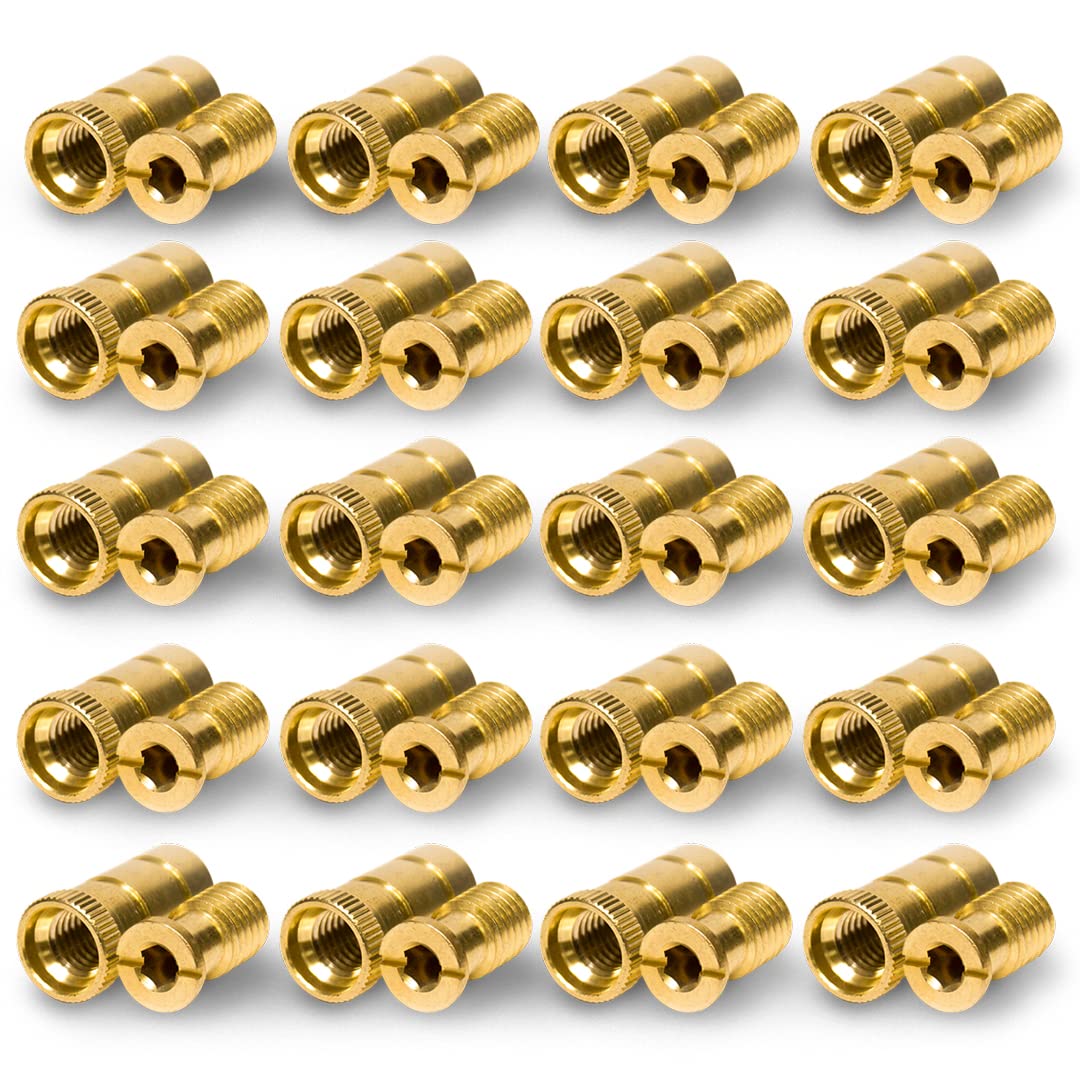
- 20-pack with brass anchors and head screw hardware
- Fits 3/4-inch holes; 1-5/8-inch anchor length
- Concrete and paver deck compatibility

- 10 brass anchors plus aluminum tamping tool
- 5/8-inch anchor designation; fits 3/4-inch hole
- Concrete and paver deck use
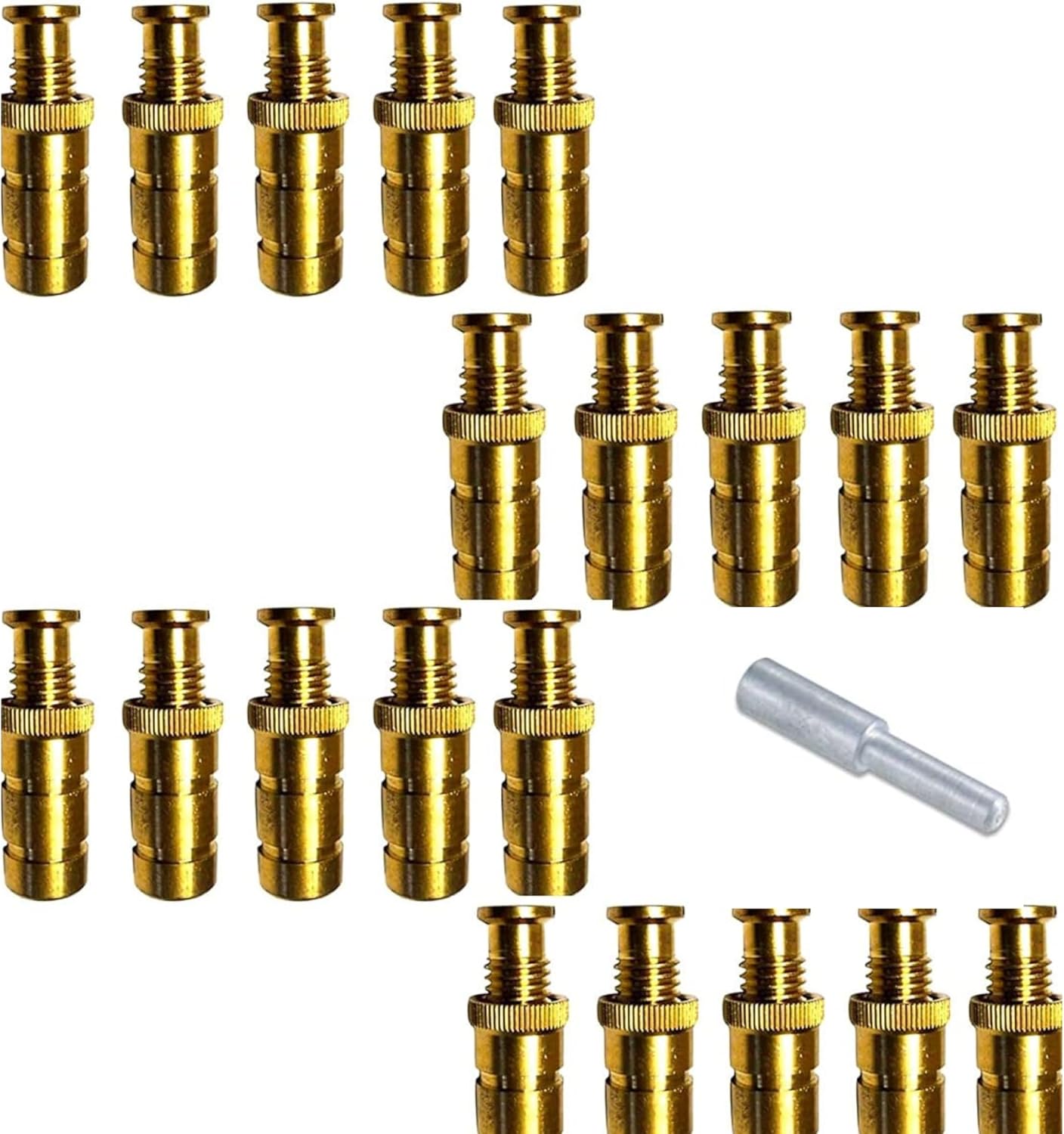
- 20-pack of brass anchors and head screw bolts
- Fits 3/4-inch holes; 1-5/8 inches long
- Concrete and paver deck compatibility

- Single replacement brass POPUP anchor
- Approx. 1.8 x 0.7 x 0.7 inches
- Spring-loaded pop-up format rather than a standard screw-up insert

- 25 anchors, 25 screws and 25 beauty collars
- Anchors fit 3/4-inch holes and are 1-5/8 inches long
- Collars: 9/16-inch ID, 1-1/2-inch OD
The standard threaded choices are closest to one another in size. The most important outliers are WaterWarden, because the exact listing is for concrete-deck use; Meyco, because its POPUP mechanism is a different operating style; and Bargain Brass, because the package adds collars as a finished deck detail rather than supplying anchors alone.
What to Look for When Buying Concrete Anchors for Pool Covers
Start With the Existing Hole Diameter
Several products in this guide explicitly fit a 3/4-inch hole: noblequest, Silginnes, mistcooling, AXE, and Bargain Brass. WaterWarden lists an anchor width of 0.75 inch on Amazon, but its exact product listing is framed around a concrete-deck replacement set rather than a universal concrete-and-paver specification. Meyco’s POPUP measures about 0.7 inch across, so it should be matched as a specific replacement style rather than assumed to be identical to a standard 3/4-inch threaded anchor.
Hole diameter matters because the embedded body relies on a controlled fit in the deck. If the hole is oversized from previous removal attempts, cracked at the edge, or full of old repair material, a new anchor may not seat correctly even if its nominal diameter looks right. A loose hole is a deck-repair problem, not a reason to strike the new anchor harder.
Check Body Length Before Replacing Multiple Anchors
A 1-5/8-inch body length appears repeatedly among noblequest, Silginnes, AXE, and Bargain Brass. That makes it a useful reference size, but it should not be treated as an industry rule. WaterWarden lists its product at about 1.5 inches long, while the Meyco POPUP listing is approximately 1.8 inches long.
Length affects how the body seats and how much deck material surrounds the anchor. If you are replacing an older system, measure one intact anchor body after removal. It is much easier to compare hardware on a bench than to discover a mismatch after drilling several new holes.
Threaded Screw-Up Anchors vs Spring-Loaded Pop-Up Anchors
Most products here use the familiar threaded insert that is raised with a hex key for cover season and lowered when the cover is removed. Meyco’s POPUP is different: it is a spring-loaded pop-up style. The external shape may still look like brass deck hardware, but the mechanism is not the same as a standard threaded screw-up insert.
If your existing cover uses Meyco pop-up anchors, matching the mechanism can be more important than buying a large generic pack. Conversely, if the deck already uses standard threaded 3/4-inch bodies, there is little reason to switch mechanism styles one anchor at a time. Consistency makes seasonal operation easier and reduces confusion when replacement parts are needed later.
Concrete vs Pavers
Concrete and paver compatibility should not be treated as interchangeable wording. A poured concrete deck provides a continuous substrate around the anchor. Pavers are individual units with joints and may require sleeves, tubes, or other support arrangements so the cover load is transferred appropriately.
noblequest, Silginnes, mistcooling, and AXE explicitly cover concrete and paved or paver surfaces. WaterWarden’s exact SCBA10PK listing is for concrete decks. If you have pavers, do not choose WaterWarden solely because the brass part looks similar. Match the installation method already used for your cover or follow the safety-cover manufacturer’s paver instructions.
What Is Included in the Pack
Pack quantity changes the practical value more than it first appears. A ten-pack is useful for routine repairs. A twenty-pack can cover a larger replacement batch. Bargain Brass includes 25 anchor retainers, 25 brass screws, and 25 collars, which is better suited to a coordinated perimeter refresh where appearance matters.
mistcooling is the only standard replacement pack here that includes a tamping tool. That tool is used to seat the brass body without hammering directly on the threaded insert. If you already own proper installation tools, the accessory may be unnecessary. If you are starting from scratch, it removes one small but important purchase.
noblequest Brass Pool Cover Anchors – 10 Pack
This noblequest set is a straightforward ten-pack for replacing common brass safety-cover anchors in concrete and paved surfaces. Amazon lists each anchor at 3/4 inch in diameter and 1-5/8 inches long, which places it squarely in the standard threaded replacement category. The pack is intended for inground safety-cover hardware rather than for wood-deck or lawn-spike installations.
The strongest reason to consider it is dimensional clarity. If an existing anchor body measures close to 0.75 inch across and 1-5/8 inches long, the listing gives you a useful like-for-like comparison before the old body is removed.
Design and Build
The anchor body and movable insert are brass. The body remains set into the deck while the upper threaded insert can be raised to accept the cover spring and lowered when the cover is off. This retractable format keeps the deck hardware close to flush during the swimming season.
Amazon identifies noblequest as both the brand and manufacturer for this listing. That helps separate this ten-pack from visually similar generic anchor sets that use the same broad dimensions but may come from unrelated sellers.
Important Specifications
- Quantity: 10 brass pool-cover anchors.
- Anchor diameter: 3/4 inch.
- Anchor length: 1-5/8 inches.
- Deck application: concrete and paved surfaces.
- Mechanism: retractable threaded head insert.
The listing describes a normal replacement sequence: remove the old anchor or drill a 3/4-inch opening, clean the hole, tap in the brass body, and screw the head insert into position. The important practical point is the cleaning step. Concrete dust at the bottom of a hole can stop an anchor before it reaches the intended depth.
Practical Use
A ten-pack is well sized for a pool with several worn anchors while still leaving a few spares. If the existing hardware is consistent around the deck, replacing failed pieces one at a time avoids unnecessary drilling and keeps the original cover geometry intact.
The pack does not include a tamping tool, drill bit, extraction tool, or spring installation rod. That is not a problem for an owner or technician who already maintains safety-cover hardware, but it matters for a first DIY replacement.
Important Strengths
The published 3/4-inch diameter and 1-5/8-inch length make the product easy to measure against existing hardware. It also supports both concrete and paved surfaces, which gives it broader listed deck compatibility than the concrete-specific WaterWarden pack.
Important Limitations
The universal-style design still requires dimensional verification. A matching outside body does not guarantee that every old insert thread or spring interface is identical. The package also does not address seized anchors that need drilling, tapping, or extraction before the new body can be installed.
Who Should Consider It
This set fits owners who already have standard-size threaded anchors and need a modest quantity of replacements. It is also practical for technicians who want a small stock of 3/4-inch by 1-5/8-inch brass hardware for common repairs.
Who Should Consider Another Option
Choose mistcooling if you need a tamping tool in the package. Choose Bargain Brass if you want collars around the anchors for a more finished deck appearance. If the existing hardware is spring-loaded Meyco POPUP rather than threaded, use the matching style instead of converting one point on the cover.
Pros
- Clear 3/4-inch diameter and 1-5/8-inch length
- 10-pack is practical for partial replacement work
- Solid brass construction
- Listed for concrete and paved surfaces
Cons
- No tamping or extraction tools included
- Universal sizing still needs to be checked against the original hardware
- Not intended to solve damaged or oversized deck holes
WaterWarden Safety Pool Cover Brass Anchors – 10 Pack
WaterWarden’s SCBA10PK is a ten-pack sold specifically for concrete-deck safety-cover installations. Amazon lists brass construction, a 10-pack quantity, and product dimensions of approximately 1.5 inches long by 0.75 inch wide. The package includes the anchor hardware and head screw bolts needed for the retractable cover connection.
The narrower application language is useful rather than limiting: buyers with poured concrete can evaluate it as a concrete-focused replacement instead of assuming paver compatibility that the exact listing does not claim.
Design and Build
WaterWarden uses solid brass anchors in its safety-cover systems, and the brand’s complete covers use anchors that recess into the deck when the cover is removed. The SCBA10PK replacement set follows that same low-profile idea. The upper head screw is raised for cover attachment and lowered for the open-pool season.
Amazon identifies the manufacturer as SPQ Brands and the model number as SCBA10PK. Model identification matters because WaterWarden also sells keys, installation tools, and complete covers; searching only the brand name can return hardware that is not the anchor pack itself.
Important Specifications
- Model: SCBA10PK.
- Quantity: 10 anchors.
- Material: brass.
- Listed dimensions: approximately 1.5 inches long x 0.75 inch wide.
- Deck application: concrete deck.
- Included hardware: brass anchors and head screw bolts.
The 0.75-inch width is close to the common three-quarter-inch body size used by other anchors in this guide, but WaterWarden does not need to be treated as a generic universal replacement. If your existing safety cover is WaterWarden, the matching model line is a meaningful advantage. If it is another brand, compare the old body and insert directly.
Practical Use
This set is best for concrete-deck repairs where a ten-pack is enough to replace damaged hardware or maintain spares. Because it is part of the WaterWarden safety-cover ecosystem, it is especially easy to justify when the original cover already uses WaterWarden anchors.
A complete replacement job still needs the correct drilling and tamping equipment. WaterWarden complete-cover kits commonly include installation tools, but this anchor-only pack should not be assumed to include the same full installation kit.
Important Strengths
The concrete-specific listing removes some ambiguity for poured decks, and the SCBA10PK model number makes reordering straightforward. The 10-pack format also avoids buying twenty or twenty-five pieces when only a few anchors need service.
Important Limitations
Paver compatibility is not the focus of this exact listing, so paver owners should choose hardware and an installation method explicitly intended for their deck. The listed 1.5-inch length is also slightly different from the 1-5/8-inch figure published for several universal-style competitors, which is another reason to measure before replacing a different brand.
Who Should Consider It
It is a logical choice for a WaterWarden safety cover on a concrete deck, or for a concrete installation where the existing hardware closely matches the published dimensions.
Who Should Consider Another Option
For paver decks, use an anchor explicitly listed for pavers such as noblequest, Silginnes, mistcooling, or AXE. For a larger replacement project, a 20- or 25-pack may be more convenient.
Pros
- Concrete-focused replacement pack from the WaterWarden safety-cover line
- Model SCBA10PK makes the exact hardware easy to identify
- Includes brass anchors and head screw bolts
- 10-pack suits routine repair work
Cons
- Exact listing is not positioned as a paver-deck solution
- Published length differs slightly from common 1-5/8-inch universal anchors
- Installation tools are not the main feature of this pack
Silginnes Brass Pool Cover Anchors – 20 Pack
Silginnes moves from a repair-size ten-pack to a larger 20-pack. The anchors are designed for 3/4-inch holes, measure about 1-5/8 inches long, and are sold for both concrete and paver decks. The set includes matching head screw hardware rather than requiring old inserts to be reused.
The larger quantity makes the pack more attractive for a perimeter refresh, a pool with many worn anchors, or a service technician who wants more spares from the same batch. It is still standard threaded anchor hardware rather than a specialized pop-up mechanism.
Design and Dimensions
The body follows the common brass replacement format used by several products in this guide. The 3/4-inch hole specification and 1-5/8-inch length are the two measurements worth comparing against a known-good anchor before installation.
Retailer data for this Silginnes model also lists dimensions close to 0.75 x 0.75 x 1.63 inches and a 1/2-13 thread field on related model data. Thread information can help with identification, but it should not replace a direct comparison to the existing insert because safety-cover hardware generations can vary.
Important Specifications
- Pack size: 20-pack.
- Hole size: 3/4 inch.
- Anchor length: approximately 1-5/8 inches.
- Material: brass.
- Deck compatibility: concrete and paver decks.
- Included hardware: anchors with head screw bolts/inserts.
The listing’s larger quantity is the main practical differentiator rather than a new anchor mechanism. That is useful if the goal is consistency across many replacement points: buying one larger batch reduces the chance of mixing several visually similar products around the same cover.
Installation
The installation sequence is conventional. For an existing good hole, remove the damaged anchor, clean the opening, and seat the replacement carefully. For a new location, drill the specified 3/4-inch hole, remove dust, tap the body into place, then install and operate the head screw.
On pavers, copy the established anchoring method rather than treating the visible paver as if it were poured concrete. If the original system uses a tube or support below the paver, that structural detail is part of the installation even though the brass top anchor is only 1-5/8 inches long.
Important Strengths
Silginnes combines the common 3/4-inch / 1-5/8-inch format with a 20-pack quantity and concrete/paver compatibility. It is therefore easy to compare with existing standard hardware and large enough for more than isolated repairs.
Important Limitations
There is no tamping tool in the core package. The larger pack can also be unnecessary if you need only one or two anchors. And, as with other universal-style products, the external body size does not automatically prove compatibility with every internal thread or unusual cover spring.
Who Should Consider It
Choose this set for a larger standard-anchor replacement project, especially when the existing bodies already measure about 3/4 inch by 1-5/8 inches and the deck is concrete or pavers.
Who Should Consider Another Option
For a ten-anchor repair, noblequest or WaterWarden may be easier to justify. For a tool-equipped starter set, mistcooling includes a tamping tool. For a deck where appearance around each opening matters, Bargain Brass adds brass collars.
Pros
- 20-pack is useful for larger replacement projects
- Common 3/4-inch-hole and 1-5/8-inch body format
- Includes head screw hardware
- Listed for both concrete and paver decks
Cons
- No tamping tool included
- Larger quantity may be unnecessary for minor repairs
- Still requires direct compatibility checking with the original cover hardware
mistcooling 5001ABR Pool Cover Anchors – 10 Pack with Tamping Tool
The mistcooling 5001ABR set adds an installation tool to the normal anchor pack. Amazon identifies the product as a 5/8-inch anchor that fits a 3/4-inch hole and states that it is intended for in-ground safety covers and mesh covers on concrete and paver decks. Ten brass anchors and an aluminum tamping tool are included.
The 5/8-inch wording is the product’s anchor-size designation, while the required deck hole is clearly 3/4 inch. Those two numbers should not be swapped when drilling. If body length is important to a like-for-like replacement, measure the old anchor rather than assuming it matches the 1-5/8-inch length used by several other products.
Why the Tamping Tool Matters
A tamping tool is used to drive the anchor body into the prepared hole without striking the threaded insert directly. This keeps impact away from the working threads and hex recess. It is a small accessory, but it makes the package more complete for a homeowner who does not already keep safety-cover installation tools.
The tool does not remove a seized anchor. Extraction is a separate task that may require drilling, tapping, or pulling hardware. The mistcooling set is best viewed as an installation-oriented replacement kit, not a full anchor-removal system.
Important Specifications
- Model: 5001ABR.
- Quantity: 10 brass anchors.
- Included tool: aluminum tamping tool.
- Anchor-size designation: 5/8 inch.
- Required hole: 3/4 inch.
- Deck compatibility: concrete and pavers.
The product is intended to work with common safety covers, but the listing does not present the same 1-5/8-inch body-length figure as the noblequest, Silginnes, AXE, and Bargain Brass products. That makes direct measurement more important if you are replacing hardware from another brand.
Practical Use
For a pool owner replacing several anchors before cover season, the included tamping tool reduces the chance of improvising with a punch or striking the screw head. The anchors can be stored as spares, while the tool remains useful for later replacements.
A clean 3/4-inch hole is still essential. If the old hole is enlarged or damaged, the tamping tool cannot restore support. Fix the substrate or follow the cover manufacturer’s approved repair method before inserting new hardware.
Important Strengths
Its advantage is convenience: anchors and a purpose-made installation tool arrive together. The product is also explicitly listed for both concrete and paver decks and clearly states the 3/4-inch hole requirement.
Important Limitations
The 5/8-inch anchor designation can be confusing when compared with products that describe their bodies by 3/4-inch outside diameter. The listing should be followed as written rather than assuming the measurements use the same naming convention. It also does not include a complete extraction kit for stuck bodies.
Who Should Consider It
It suits DIY replacement work where the existing system is compatible and the buyer needs a tamping tool. It is also useful as a small maintenance set for concrete or paver installations.
Who Should Consider Another Option
If you need an explicitly published 1-5/8-inch body length for matching, noblequest, Silginnes, AXE, or Bargain Brass make that dimension clearer. If you already own a tamping tool, a simpler pack may be sufficient.
Pros
- Includes an aluminum tamping tool
- 10 brass anchors for routine repairs
- Explicit 3/4-inch installation-hole requirement
- Listed for concrete and paver decks
Cons
- 5/8-inch anchor designation can be confusing beside 3/4-inch-body products
- Body length is not as clearly standardized in the listing
- No full extraction kit for seized anchors
AXE Pool Cover Anchors for Concrete and Pavers – 20 Pack
AXE’s 20-pack is another standard-size replacement set for concrete and paver decks. The listing states that the anchors fit 3/4-inch holes and measure 1-5/8 inches long. Head screw bolts are included, and the hardware is made from brass.
The dimensional overlap with Silginnes is substantial, so the purchase decision is less about a different anchor concept and more about matching existing hardware, quantity, and the exact insert geometry shown in the listing.
Design and Build
The body is intended to remain fixed in the deck with the head insert raised during cover season and lowered afterward. AXE describes the anchors as replacements for major safety-cover brands, which is useful for common threaded systems but should still be verified against one existing anchor.
A 20-pack is enough for a meaningful maintenance project without moving into contractor bulk quantities. If many anchors around a cover are worn from the same age and use cycle, replacing them from one matched batch can simplify future maintenance.
Important Specifications
- Quantity: 20-pack.
- Hole size: 3/4 inch.
- Anchor length: 1-5/8 inches.
- Material: brass.
- Deck compatibility: concrete and paver decks.
- Included hardware: anchors and head screw bolts.
The 1-5/8-inch length is a useful check against standard existing anchors. If the original body is shorter, longer, or uses a different insert mechanism, do not force the replacement merely because the drilled hole is also 3/4 inch.
Installation and Maintenance
AXE describes a simple installation process: remove the old hardware or drill the correct hole, clear debris, lightly tap the body into place, and screw in the insert. Use a proper tamping tool even if one is not included, because striking the threaded head directly can damage the working part of the anchor.
Once installed, keep grit out of the threads and lower the insert during the open season. Brass avoids ordinary red rust, but dirt and mineral deposits can still make the mechanism difficult to turn.
Important Strengths
The product combines a useful 20-piece quantity with clearly stated standard dimensions and concrete/paver compatibility. It is easy to compare against other 3/4-inch by 1-5/8-inch threaded replacements.
Important Limitations
The listing does not add a tamping tool, collars, or extraction hardware. That keeps the pack simple but means the buyer must already have the installation tools. “Universal” compatibility should also be treated as broad fit rather than a guarantee across every proprietary anchor.
Who Should Consider It
AXE is suitable for a pool that uses common threaded anchors and needs a larger batch of replacements for concrete or paver decking.
Who Should Consider Another Option
For a smaller repair, a ten-pack may reduce leftovers. For appearance-focused replacement around a visible deck, Bargain Brass includes collars. For a spring-loaded Meyco system, match the POPUP design instead.
Pros
- 20-pack suits larger repair projects
- Fits common 3/4-inch holes
- Published 1-5/8-inch body length
- Includes head screw bolts and supports concrete/paver decks
Cons
- No tamping tool included
- No decorative collars
- Universal-fit language still requires hardware verification
Meyco Safety Cover Pop-Up Brass Anchor POPUP
The Meyco POPUP is the most mechanically distinct anchor in the comparison. Instead of a conventional threaded screw-up insert, it is a spring-loaded pop-up brass anchor. Amazon lists the product at approximately 1.8 x 0.7 x 0.7 inches and identifies the item model number as POPUP. It is sold as a single replacement anchor rather than a multi-pack.
This is important for older Meyco installations and other covers that already use pop-up hardware. Matching the existing mechanism keeps operation consistent around the deck. A single compatible replacement can be more useful than a twenty-pack of standard screw-style anchors that would require changing the system design.
Pop-Up Mechanism
Meyco safety-cover catalogs identify this style as a brass pop-up, spring-loaded anchor. The spring action raises the connection point when needed and allows it to retract when the cover is removed. That is different from manually threading a screw insert upward with a hex key.
Because the operating principle differs, buyers should confirm that the existing anchor is truly the Meyco-style POPUP before ordering. The visual clue is useful, but the model and approximate 0.7-inch body width are better identifiers.
Important Specifications
- Model: POPUP.
- Quantity: single replacement anchor.
- Material: brass.
- Approximate dimensions: 1.8 x 0.7 x 0.7 inches.
- Mechanism: spring-loaded pop-up style.
Amazon identifies Poolweb as the manufacturer for the listing, while the product itself is sold as a Meyco safety-cover pop-up anchor. That reseller/manufacturer labeling is less important than matching the POPUP part style and dimensions to the hardware already in the deck.
Practical Use
A single anchor is ideal when one point in an otherwise serviceable Meyco system has failed. It avoids buying a large pack and keeps the same operating method around the cover. This can be especially useful on older installations where the goal is preservation rather than conversion.
The pop-up mechanism has moving parts, so dirt inside the body can affect operation. Keep the anchor clean and confirm that it rises and retracts correctly before putting the cover under spring tension.
Important Strengths
The main strength is exact mechanism matching. It serves a specific repair need that generic threaded anchors do not. The single-piece purchase also makes sense when only one pop-up anchor needs replacement.
Important Limitations
It is not the obvious choice for a deck full of standard 3/4-inch threaded anchors. The single-anchor format is also inefficient for a large replacement project. Its roughly 0.7-inch width and spring-loaded design need to match the existing hole and cover hardware rather than being treated as a universal conversion part.
Who Should Consider It
Choose it when the existing pool safety cover already uses Meyco-style spring-loaded POPUP anchors and only one or a few points need replacement.
Who Should Consider Another Option
If your deck uses threaded inserts raised with a hex key, choose a matching threaded anchor set. For a full perimeter project, a 10-, 20-, or 25-pack will be more practical than buying single pop-up units.
Pros
- Matches spring-loaded Meyco POPUP-style hardware
- Single-anchor purchase is practical for isolated repairs
- Brass construction
- Published model and dimensions make identification easier
Cons
- Not the same mechanism as common threaded screw-up anchors
- Single quantity is inefficient for large projects
- Requires closer compatibility matching than a standard 3/4-inch replacement pack
Bargain Brass / Poolzilla Anchors with Beauty Collars – 25 Pack
This Bargain Brass set, sold through the Poolzilla line on Amazon, is the most complete perimeter-refresh package in the comparison. The listing includes 25 brass anchor retainers, 25 brass screws, and 25 brass beauty collars. The anchors fit 3/4-inch holes and measure 1-5/8 inches long.
The collars are not structural substitutes for the anchors. Their job is to create a cleaner finished edge around the deck opening. Amazon lists each collar at 9/16 inch inside diameter and 1-1/2 inches outside diameter, giving the brass hardware a more deliberate appearance on visible concrete.
Anchor and Collar Design
The anchor itself uses the common threaded-retractable format. The brass body is installed in the deck, the screw insert is operated for cover attachment, and the collar sits around the visible opening. This arrangement is useful where the deck finish is neat enough that exposed drilled edges would otherwise look unfinished.
Because the collars add another dimensional layer, the package should be evaluated both mechanically and cosmetically. The anchor still needs a sound 3/4-inch hole. The collar then needs enough flat deck surface around the opening to sit properly.
Important Specifications
- Anchor retainers: 25.
- Brass screws: 25.
- Beauty collars: 25.
- Anchor hole size: 3/4 inch.
- Anchor length: 1-5/8 inches.
- Collar inside diameter: 9/16 inch.
- Collar outside diameter: 1-1/2 inches.
The Amazon listing describes broad compatibility with major safety-cover brands. As with every universal-style anchor, verify the insert and cover connection before replacing hardware from a different manufacturer. The collar does not correct a thread mismatch or damaged deck hole.
Practical Use
A 25-pack is well suited to a larger pool perimeter where many anchors need replacement or where the owner wants the collars to look consistent around the deck. Mixing a few collared anchors with many uncollared anchors is mechanically possible if compatible, but it defeats much of the visual reason for buying the set.
The package is also convenient for a renovation where the deck surface has been cleaned, resurfaced, or cosmetically upgraded and old anchor openings look rough. The collars cover the immediate edge around each opening without changing the underlying anchor function.
Important Strengths
The key advantage is completeness: anchors, screws, and collars are supplied together in a quantity large enough for a significant perimeter project. The anchor dimensions also match the common 3/4-inch-hole by 1-5/8-inch format used by several standard replacements.
Important Limitations
The collars add value only if you want the finished look. They do not increase the structural capacity of a damaged hole. The larger 25-piece quantity also makes less sense for isolated repairs, and the set does not include a tamping tool.
Who Should Consider It
Consider this package when many standard threaded anchors need replacement and you also want brass collars around the deck openings. It is particularly useful for a coordinated concrete-deck refresh.
Who Should Consider Another Option
For a few failed anchors, a 10-pack is simpler. For paver-specific work where collars are not important, Silginnes or AXE may be more direct. For Meyco POPUP systems, use the matching spring-loaded part.
Pros
- Includes 25 anchors, 25 screws and 25 brass beauty collars
- Common 3/4-inch-hole and 1-5/8-inch anchor size
- Collars create a more finished deck appearance
- Large quantity suits perimeter refreshes
Cons
- No tamping tool included
- Collars do not solve damaged or oversized holes
- 25-pack is excessive for a small repair
Detailed Buying Guide for Concrete Anchors for Pool Covers
Measure One Good Anchor Before Ordering
The most reliable reference is an anchor that still works correctly. Raise it, photograph the top, note whether it is threaded or spring-loaded, and measure the exposed parts. If possible, remove one body and measure the outside diameter and length.
This is especially important when the cover has been in service for many years. Replacement listings often use “universal” because they fit common systems, but older or proprietary hardware can differ enough to make a visually similar part unusable.
Inspect the Concrete Around the Hole
A replacement anchor is only as stable as the material holding it. Hairline surface cracks are different from a hole with missing concrete around its wall. If the body can rock in the opening, replacing it with another same-size anchor may not restore a secure fit.
Do not fill uncertainty with extra hammer force. If the hole is enlarged or the deck is damaged, use an approved repair method or consult the safety-cover manufacturer or a pool-cover installer. The anchor should seat into sound material.
Use a Tamping Tool
A tamping tool transfers impact to the anchor body while protecting the threaded insert and hex recess. Hitting the insert directly can distort the part you need to turn every season. mistcooling includes a tamping tool; the other standard packs assume you already own appropriate installation equipment.
Seat the body gradually and keep it square to the deck. If it starts crooked, stop and correct the alignment rather than driving it farther. A tilted anchor can make the insert harder to operate and can change how the cover spring sits.
Clean the Hole Thoroughly
Drilling leaves concrete dust that occupies space at the bottom and along the sides of the hole. If that material is not removed, the anchor may stop early or sit above the intended deck level. Clean the hole and verify depth before installation.
The same applies when reusing an old opening. Dirt, sand, sealant, corrosion products from nearby hardware, or fragments from the previous anchor can interfere with seating. A clean hole is easier to inspect and easier to measure.
Match the Mechanism Around the Whole Cover
Standard threaded anchors are easy to operate with the same hex key around the pool. A Meyco POPUP relies on a spring-loaded mechanism instead. Mixing operating styles can make seasonal cover installation less predictable and complicate future maintenance.
For one failed Meyco pop-up anchor, use the matching part. For one failed standard threaded anchor, use a standard threaded replacement with matching dimensions. Converting a whole system is a larger project and should not happen accidentally one anchor at a time.
Think About Quantity and Future Spares
A ten-pack is usually enough for scattered failures and leaves useful spares. A twenty-pack makes more sense if many anchors are the same age or if you maintain several covers. The 25-pack with collars is aimed at an even larger refresh where consistency around the deck matters.
Storing a few spare anchors from the same batch can simplify future repairs. Label the bag with the model, diameter, and cover brand so you do not need to identify loose brass hardware years later.
Pavers Need More Than the Top Anchor
If the pool deck is pavers, focus on the support below the visible surface. The short brass anchor at the top may be only one part of a longer tube or support system. A paver can move independently and should not automatically be asked to carry the same load as solid concrete.
Use hardware that explicitly supports paver installations and preserve the existing structural method. WaterWarden’s exact anchor pack is positioned for concrete, while noblequest, Silginnes, mistcooling, and AXE explicitly mention pavers or paved surfaces.
Brass Still Needs Maintenance
Brass is well suited to outdoor pool hardware because it does not produce ordinary red iron rust, but it can tarnish, collect mineral deposits, and become packed with grit. The threads and hex recess need to remain clean enough for the insert to move without excessive force.
If an insert binds, clean it before adding leverage. A rounded hex recess or damaged thread can turn a simple seasonal adjustment into an anchor-removal project. Keeping the hardware clean is cheaper than extracting a damaged body from concrete.
Direct Product Comparisons
noblequest vs WaterWarden
noblequest gives a clearly stated 3/4-inch diameter, 1-5/8-inch length, and concrete/paved-surface compatibility. WaterWarden is a concrete-focused 10-pack from a complete safety-cover brand and lists dimensions around 1.5 inches long by 0.75 inch wide.
If the cover already uses WaterWarden hardware on poured concrete, the branded SCBA10PK is the more obvious match. If you are replacing a common standard anchor on concrete or pavers and your old dimensions match 3/4 by 1-5/8 inches, noblequest is easier to compare as a generic-format replacement.
Silginnes vs AXE
These are close competitors. Both use the common 3/4-inch-hole and 1-5/8-inch-length format, both come as 20-packs, both include head screw hardware, and both are listed for concrete and paver decks.
Because the basic specifications overlap, direct comparison should focus on the exact insert shape, the old anchor you are replacing, and which listing matches your existing hardware most closely. There is no need to invent a performance difference where the published geometry is essentially the same.
mistcooling vs Standard Anchor-Only Packs
mistcooling’s main advantage is the included tamping tool. If you already have a proper tamping tool, that benefit is small. If you do not, the package is more complete than an anchor-only set.
The tradeoff is specification language: mistcooling calls the part a 5/8-inch anchor that fits a 3/4-inch hole, while several competitors explicitly describe 3/4-inch bodies that are 1-5/8 inches long. Match the old hardware rather than assuming those labels describe identical dimensions.
Meyco POPUP vs Threaded Anchors
This is not a pack-size comparison; it is a mechanism comparison. Meyco POPUP is spring-loaded and sold individually. The other main products use threaded retractable inserts.
Choose the Meyco part to preserve an existing pop-up system. Choose the threaded packs for decks already using threaded anchors. The correct mechanism is more important than the number of pieces in the box.
Bargain Brass 25-Pack vs Silginnes and AXE 20-Packs
All three use the common 3/4-inch-hole and 1-5/8-inch anchor format. Bargain Brass adds five more anchors and, more importantly, 25 brass collars. Silginnes and AXE focus on functional replacement without the collar system.
If the deck edge around each hole is visually important, the collars may justify the larger package. If appearance is secondary and you simply need standard replacement hardware, a 20-pack is more direct.
Common Buying and Installation Mistakes
Assuming Every 3/4-Inch Anchor Is Identical
The hole size is only one dimension. Body length, insert thread, top geometry, and mechanism can differ. Check the whole part, especially if the existing cover brand is known.
Buying a Paver Anchor for a Concrete-Only Assumption—or the Reverse
Concrete and pavers require different thinking about the substrate. Use the installation method specified for the actual deck. The brass top part can look identical while the support below it is completely different.
Striking the Head Screw Directly
The threaded insert is a moving part, not a hammering surface. Use a tamping tool on the anchor body. Direct impact can damage the hex recess or threads before the anchor is ever used.
Leaving Drilling Dust in the Hole
Dust at the bottom changes the effective hole depth and can leave the anchor proud of the deck. Clean the opening before seating the body.
Trying to Fix an Oversized Hole With a New Anchor
If the body is loose because the hole has enlarged, another same-size anchor may also be loose. Repair the substrate or use the approved anchoring method rather than relying on friction that is no longer there.
Mixing Pop-Up and Threaded Mechanisms Without a Plan
Different mechanisms can work around the same pool only if the cover hardware and installation are deliberately designed that way. For normal repair, keeping the original mechanism is simpler and less error-prone.
Buying Too Many or Too Few
A single Meyco POPUP is efficient for one failed pop-up anchor. A 25-pack is efficient for a perimeter refresh. Neither is automatically the better value if the quantity does not match the job.
Frequently Asked Questions
What size hole is common for concrete pool-cover anchors?
A 3/4-inch hole is common among the threaded brass replacements in this comparison. noblequest, Silginnes, mistcooling, AXE, and Bargain Brass all explicitly reference a 3/4-inch installation hole. Always verify the exact product and existing hardware before drilling.
How long are standard brass safety-cover anchors?
Several common replacements here are about 1-5/8 inches long. WaterWarden lists a length closer to 1.5 inches, while the Meyco POPUP listing is about 1.8 inches long. The correct length is the one that matches your system.
Can I use paver anchors in concrete?
Some products are explicitly listed for both concrete and pavers, including noblequest, Silginnes, mistcooling, and AXE. The anchor may fit either surface, but the installation method still needs to match the substrate.
Are WaterWarden anchors universal?
The exact SCBA10PK listing is best treated as WaterWarden concrete-deck replacement hardware. Its dimensions may overlap with common anchors, but another brand should be matched physically rather than assumed compatible.
What is different about a Meyco POPUP anchor?
The Meyco POPUP uses a spring-loaded pop-up mechanism. Common threaded anchors are raised and lowered by turning the insert. The mechanisms are different and should not be treated as interchangeable simply because both are brass.
Do I need a tamping tool?
A tamping tool is the preferred way to seat a brass anchor body without striking the threaded insert directly. mistcooling includes one. Other packs generally require the tool to be supplied separately.
What do beauty collars do?
Beauty collars sit around the visible deck opening to create a cleaner finished appearance. They do not repair the hole or increase the structural strength of the anchor.
Can I reuse the old head screw in a new anchor body?
Only if the thread and geometry are known to match and the old screw is undamaged. Packs that include new head screws avoid this uncertainty. If the original insert is rounded, bent, or worn, replace it with the compatible new part.
Should the anchor sit flush with the concrete?
The embedded body should be seated to the depth specified for the system, and retractable hardware is intended to remain low-profile when the cover is removed. Follow the exact anchor and safety-cover installation instructions rather than guessing the final height.
Why does my old brass anchor spin in the concrete?
The body may be loose because the hole enlarged, the deck material deteriorated, or the anchor was damaged during removal. Installing another same-size anchor without addressing the hole may not solve the problem.
Can brass anchors guarantee that a pool cover is safe?
No. The anchor is only one part of the safety-cover system. Cover condition, straps, springs, anchor placement, deck integrity, installation method, and correct tension all affect the finished installation.
How many replacement anchors should I buy?
For scattered repairs, ten anchors often leaves useful spares. Twenty-pack sets make sense for larger refreshes. A 25-pack with collars is useful when many openings are being updated together. A single Meyco POPUP is appropriate when only one matching pop-up anchor needs replacement.
Final Buying Considerations
Concrete anchors for pool covers should be chosen by mechanism, dimensions, deck type, and quantity—not by brass color alone. noblequest, Silginnes, AXE, and Bargain Brass all sit close to the common 3/4-inch-hole and 1-5/8-inch threaded format. WaterWarden’s SCBA10PK is more specifically tied to concrete-deck replacement, while mistcooling adds a useful tamping tool to a ten-anchor kit.
Meyco POPUP deserves separate treatment because its spring-loaded design is not the same as a normal screw-up insert. If that is the system already in the deck, matching the mechanism is more important than buying a larger generic pack. Bargain Brass is the opposite kind of specialist: mechanically standard-size hardware packaged with collars for a cleaner finished appearance around 25 openings.
Before drilling, remove or expose one known-good anchor, measure the body, identify the mechanism, and inspect the concrete. A correct replacement seated in sound deck material is far more useful than a nominally universal anchor forced into a damaged or mismatched hole.
Author