
A pool light cover plate is often the first part people look for when the ring around an underwater light cracks, stains or breaks loose. But the visible circle at the pool wall can belong to the light fixture, to its separate lens-retaining assembly, or to the niche that holds the fixture. Each uses its own mounting arrangement. Ordering by color or approximate diameter can leave you with a plate that will not attach, even if it looks right in a photograph.
The nine replacement parts below span Hayward AstroLite, AstroLite II, DuraLite and StarLite lights, the Hayward niche sealing frame, and two Pentair light assemblies. Some are molded plastic trim, some are stainless face rings, and one is a ring-and-gasket kit. These are not complete pool lights, and the listed parts should not be mixed across fixture families without manufacturer documentation establishing the fit.
Begin with the model number on the installed fixture, then inspect its parts diagram and the damaged component. A ring with eight rear studs, a snap-on plastic overlay and a metal ring tightened by a clamp all solve different problems. If there is water inside the lens, damaged wiring, a missing grounding fastener or any doubt about the electrical installation, arrange qualified pool-light service instead of relying on a new exterior cover.
Quick Comparison of Pool Light Cover Plates
This comparison separates the parts by the assembly they serve. The features describe identification points, not permission to substitute one ring for another. For the niche frame, match the niche model; for fixture rings, match the model on the removable light itself.

- White plastic front sealing frame
- For Hayward SP506/SP607-style niches
- Ten-hole mounting pattern

- Stainless steel AstroLite fixture rim
- For SP0580/SP0580S AstroLite family
- Different from molded SPX0580A

- Molded face rim with rear studs
- For StarLite SP0540–SP0543 lights
- Distinctive eight-stud attachment pattern

- Stainless steel Amerlite face ring assembly
- Pentair/American Products part 79110600
- Separate from lens and uni-tension clamp

- Face ring, clamp and gasket together
- Pentair replacement kit 600095
- For listed IntelliBrite/related LED configurations

- Stainless steel rim for AstroLite II
- For SP0590S and SP0590HS fixtures
- Smaller family than AstroLite SP0580
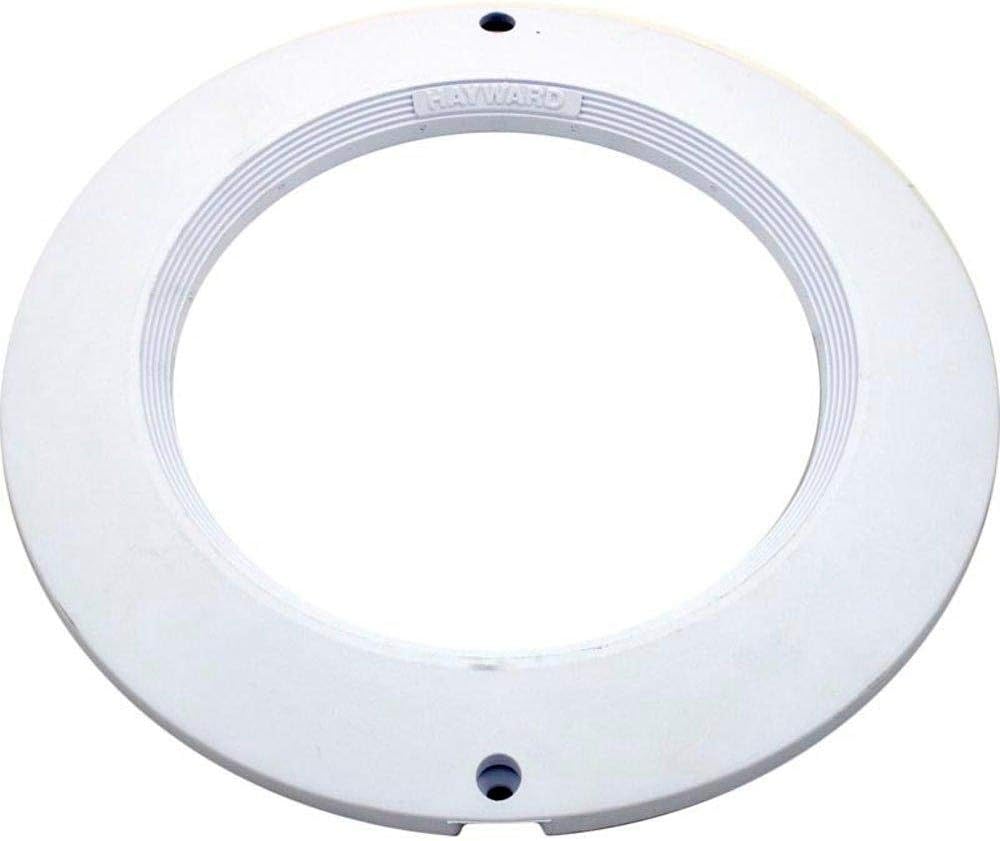
- Smooth molded DuraLite face rim
- Associated with older SP0560/SP0570 designs
- Not the later SP0570N molded plate

- Snap-on molded plastic front trim
- Listed with AstroLite II SP0590 family
- Separate from steel SPX0590A rim

- Molded white plastic AstroLite face rim
- For SP0580 and SP0580S family
- Alternative material to SPX0580AS
What to Check Before Buying a Replacement Plate
Identify the light fixture, not just the pool-wall niche
A pool niche is the housing built into the wall; the removable light sits inside it. The two can have different identification numbers and replacement parts. In an older pool, the fixture may even have been changed since the original niche was installed. The correct pool light cover plate therefore depends on which physical piece is damaged, not simply on the overall age or brand of the pool.
Find the marking on the actual light assembly through a qualified service inspection and compare it with an exploded-parts drawing. Model numbers such as SP0580, SP0590 and SP0570N contain information that matters far more than the white or silver finish. If a visible ring is broken but the lens-retaining assembly is sound, the needed part can also be different from the one required for a damaged clamp.
Distinguish front sealing frames from face rims
The Hayward SPX0507A1 is an example of a front sealing frame for the niche side of the opening. It uses multiple screw positions to work with a compatible liner niche. The SPX0580AS, by comparison, is a stainless face rim for a removable AstroLite light fixture. Buying the former to replace the latter is a category mistake even though both sit near the underwater light.
A vinyl-liner niche relies on the appropriate liner sealing components. A light fixture uses a lens gasket and a prescribed method of retaining the lens. Water behind a liner, water entering an electric light, and a discolored exterior trim ring are three different conditions. The visible symptoms should be diagnosed before parts are purchased.
Look at the fastening pattern and the back of the old ring
Front photographs often hide the detail that determines fit. StarLite SPX0540A uses a studded arrangement. Other families use separate clamps, screws or snap-on trim. Count mounting points and compare their locations; note whether the old piece has a continuous flange, rear studs, a metal attachment lip or flexible clips. A close diameter does not compensate for incompatible fastening.
Do not modify a retaining component to make it fit. Adding holes, bending a metal ring into shape or using unapproved fasteners can alter how the lens and fixture are secured. Hardware that looks trivial can have a defined electrical bonding or grounding role in the original installation.
Check whether the listing is a single ring or a complete service kit
The scope of the purchase varies markedly here. Pentair 600095 includes the face ring, clamp and gasket for its specified LED-light applications, while several Hayward listings are a face rim only. An Amerlite stainless face ring assembly is also a different item from that light family’s separately cataloged wire clamp and lens gasket.
When a fixture is being opened, the service professional should identify the required replacement gasket and all necessary mounting components. An old gasket that has hardened or been compressed is not made serviceable by adding a shiny new ring in front of it. Conversely, buying a kit for the wrong fixture gives you more components, but none of them will be appropriate.
Check the full model suffix and generation
The DuraLite family illustrates why a suffix matters. Hayward’s older SP0570-related rims and later SP0570N face plates are listed under different replacement part numbers. The AstroLite SP0580 and AstroLite II SP0590 likewise describe separate lighting assemblies. The difference is mechanical, not a choice between two decorative finishes.
If a product title lists a range, narrow it to the exact fixture in the manufacturer’s parts chart. Retail descriptions sometimes blend a series name, compatible model examples and broader category words in one headline. The part diagram offers a more dependable way to decide whether the model actually uses the ring being sold.
Hayward SPX0507A1 White Niche Face Plate
- White plastic front sealing frame
- For Hayward SP506/SP607-style niches
- Ten-hole mounting pattern
What this part actually replaces
A light opening in a vinyl-liner pool includes components that are easy to confuse. The niche forms the recess in the pool wall, while the removable light fixture carries its own lens, seal, and retaining hardware. This white SPX0507A1 belongs to the niche side of that arrangement. It is a front sealing frame, so buying it to replace a corroded metal rim around the lamp itself would leave the original problem untouched.
The distinction is especially important when a search for a pool light cover plate returns several rings of similar diameter. An existing Hayward SP506 or SP607-type niche, together with the matching ten-fastener arrangement, is the relevant starting point. A face frame from one of the AstroLite fixture families cannot be substituted simply because it sits in the same opening.
Construction and fit checks
The SPX0507A1 is a white plastic frame intended for the front of compatible Hayward niches. Its multiple mounting holes distribute fastening around the opening, rather than relying on a single light-retaining screw. The shape and hole arrangement matter more than a general outside-diameter measurement, because every hole must line up without forcing the plastic or pulling unevenly against a liner.
Check the part number in the niche drawing, the number and location of fasteners, and the condition of the existing liner sealing gasket before ordering. A frame that resembles the old one but has different spacing cannot be made correct by drilling it. Changing the hole pattern could damage the liner assembly and its watertight connection to the pool wall.
Where it helps and where it does not
This part is relevant when the front sealing frame is cracked, distorted or damaged around a screw position while the niche itself is serviceable. Its white finish can also match existing light trim, though appearance is secondary to sealing-frame compatibility. The actual underwater fixture and its lens are separate assemblies, so the frame will not repair moisture inside the light housing or a failing cord seal.
If the liner area is visibly wrinkled, leaking or pulling away from the niche, the job needs an assessment of the full niche and liner gasket system rather than a cosmetic replacement. Water behind a vinyl liner and water inside an electrical fixture are different problems, and neither should be dismissed as a simple trim issue.
Buying decision
Consider the SPX0507A1 only when the pool wall uses the compatible niche and its front-frame hardware is the part requiring replacement. Confirm the niche identification independently of the removable lamp model, especially in pools where the original light has been changed. It makes much less sense for concrete-pool AstroLite repairs or for a shopper who needs the metal or molded rim attached directly to the light fixture.
Pros
- Addresses a damaged front sealing frame on a compatible vinyl-liner niche
- White plastic finish matches common light-niche trim
- Specific ten-hole pattern gives installers a clear fit check
- Allows replacement of the frame without automatically buying a new light
Cons
- Not the lens-retaining face ring of the lamp assembly
- Niche model and bolt pattern must match
- A damaged liner gasket or niche calls for additional repair
Hayward SPX0580AS AstroLite Stainless Steel Face Rim
- Stainless steel AstroLite fixture rim
- For SP0580/SP0580S AstroLite family
- Different from molded SPX0580A
Stainless trim for the older AstroLite family
The SPX0580AS is Hayward’s stainless steel face rim for the AstroLite SP0580 series, including the SP0580S-style configuration. It belongs to the larger traditional underwater light, not to the smaller AstroLite II spa-light family. A buyer replacing an existing metal-trim AstroLite can retain the original look without converting to a different fixture design.
Hayward also catalogs SPX0580A, a molded alternative in the same broad AstroLite family. That does not make the two variants an automatic field conversion. The series, existing rim, clamp and retaining-screw configuration should be checked together because Hayward lists different associated hardware for some trim versions.
How the ring works with the lens
The visible stainless ring surrounds the glass lens at the front of the light. Behind it sit the gasket and the remaining fixture-retention hardware. A sound metal ring helps keep that assembly seated as designed, but the metal is not itself the waterproof lens seal; the correct gasket and assembly procedure provide the seal.
Inspect pitting around attachment points, bent edges, and any loss of the original contour. A replacement ring is worthwhile only when the rest of the housing and hardware can be returned to the manufacturer’s specified condition. The SPX0580AS should not be presented as a cure for a cracked lens, corroded housing or defective electrical connection.
What to verify before purchasing
Start with the manufacturer’s label on the light assembly and a parts diagram that clearly names the SP0580 family. Look for the existing rim material, its locating and fastening details, and the correct gasket and clamp part numbers. A stainless appearance is not enough: several Hayward lights have stainless rings, and a visually close AstroLite II part is a different shape and scale.
When the fixture is already being serviced, a professional should examine the lens and gasket rather than reinstall a hardened old seal. The corresponding AstroLite lens gasket is cataloged separately as SPX0580Z2. Select hardware from the specific model’s diagram instead of assuming the fastener used with a molded rim also fits the stainless variation.
Who should buy it
This is the sensible choice when the old light is positively identified as a compatible AstroLite and the original stainless rim is bent, pitted or otherwise unusable. It is a poor purchase for a niche-frame repair or an SP0590-family unit. Anyone trying to change the style of a complete light should first ask whether replacing the entire listed fixture is more appropriate than mixing trim and retaining components.
Pros
- Stainless steel finish matches original metal-trim AstroLite configurations
- Documented in AstroLite SP0580-series parts references
- Replaces a damaged rim while keeping a serviceable light housing
- Distinct factory part number simplifies matching with the original diagram
Cons
- Not intended for AstroLite II SP0590-family lights
- Lens gasket and retaining hardware are separate parts
- Corrosion or distortion elsewhere in the assembly needs its own repair
Hayward SPX0540A StarLite Face Rim With Studs
- Molded face rim with rear studs
- For StarLite SP0540–SP0543 lights
- Distinctive eight-stud attachment pattern
A very different attachment design
The SPX0540A belongs to Hayward’s earlier StarLite group: SP0540, SP0541, SP0542 and SP0543. It is the molded face rim with studs, not a smooth ring that a separate wraparound clamp grips. Those rear studs are the distinguishing feature. They make it a specific repair part, rather than a universal white bezel for any recessed underwater lamp.
Pool-parts diagrams show this rim along with separate nuts, fasteners, lens and gasket. If the old assembly has multiple studs protruding behind the rim, this listing deserves closer attention. If the existing unit has a single rim-retaining screw and a metal clamp around the lens housing, stop and confirm the model before ordering.
Physical identification
The StarLite rim has an outer diameter of roughly eleven inches; published seller dimensions are not perfectly consistent. A more decisive identifier is the manufacturer part number and eight-stud arrangement shown in replacement-parts resources. Those structural details separate it from the smoother SPX0570A DuraLite rim and the SPX0580A AstroLite trim.
Check the existing molded markings and compare the pattern on the back, not just the face visible through the water. Replacement parts often look interchangeable in front-facing photographs, especially when all are white and circular. A rear view can reveal that one uses threaded hardware where another uses a clamp.
Related parts and service considerations
The StarLite assembly includes a clear lens, a model-specific high-temperature gasket, a locking screw arrangement and fastening hardware. The face rim is only one item in that system. If a stud is missing or corroded hardware has seized onto the old rim, the correct replacement nuts and washers also need to be planned for rather than reusing damaged pieces.
A cracked lens or degraded gasket should not be ignored because a new rim has arrived. The light can be electrically hazardous if the housing admits water, so any lens disassembly belongs with qualified service and the exact manufacturer’s instructions. This is also a reason to keep the small fasteners identified and organized rather than assuming that new rim packaging contains every attachment item.
Best-fit purchase scenario
The SPX0540A makes sense for an intact StarLite fixture with a broken molded face and the matching stud attachment. It is less suitable for people who know only the outside ring size or the pool-wall niche brand. Start at the fixture label or StarLite exploded diagram, and only then use the visible shape as a secondary confirmation.
Pros
- Rear studs match the older StarLite fastening design
- Covers documented SP0540, SP0541, SP0542 and SP0543 models
- Molded white rim avoids a metal-trim finish mismatch
- Recognizable layout helps distinguish it from AstroLite clamp-style rims
Cons
- Studded design will not fit a clamp-style fixture by appearance alone
- Older mounting nuts and related hardware might also need attention
- Outer diameter reports vary slightly across sellers, so verify the part number
Pentair 79110600 Amerlite Face Ring Assembly
- Stainless steel Amerlite face ring assembly
- Pentair/American Products part 79110600
- Separate from lens and uni-tension clamp
Amerlite rather than AstroLite
Pentair’s 79110600 is the stainless steel face ring assembly associated with the American Products Amerlite underwater light. The brand history can confuse buyers: older lights may be marked American Products, while current replacement documentation and retailers use the Pentair name. The important match is the Amerlite fixture family and 79110600 service part, not the logo printed on the original installation.
This is not the Hayward AstroLite ring despite the similar names. Amerlite and AstroLite are different product lines with different mounting and sealing systems. A ring’s stainless finish does not overcome a difference in lens diameter, clamp position or locating points.
Which components are separate
Pentair’s Amerlite diagram identifies 79110600 as a face ring assembly and 79111000 as a separate uni-tension wire clamp assembly. The lens and gasket also have independent part numbers. That separation matters when buying: an assembly label on the ring listing does not promise that the full clamp, new gasket, lamp and lens are in the carton.
For reference, the official Amerlite parts list associates the standard clear lens with an 8-3/8-inch diameter, and its corresponding gasket is a distinct replacement. This dimension belongs to the specified Amerlite lens, not to the outside dimension of every product in this article. Buyers should compare service diagrams and contents rather than assume all circular lighting parts are supplied as kits.
Condition and installation issues
A corroded rim, deformation around the clamp engagement area or damage to its locating features can prevent a proper reassembly. In those circumstances, exchanging the damaged ring can be sensible if the remaining fixture is sound. If the housing, cord or lens is compromised, a new front ring alone will not correct the fault.
The manufacturer’s Amerlite instructions call for a new lens gasket whenever the light is reassembled. They also specify the special pilot screw used to secure and electrically ground the assembly. This is not ordinary cosmetic hardware that can be substituted with an unverified screw from a hardware drawer.
Recommended buyer
Choose this part when the fixture is an Amerlite and the relevant parts diagram identifies 79110600. It is particularly relevant to an original stainless-ring assembly that otherwise remains serviceable. The separate Pentair 600095 LED kit below serves a different lighting family and includes different parts; do not select between them on visual resemblance alone.
Pros
- Matches the documented Amerlite stainless face-ring assembly part
- Appropriate for original American Products/Pentair Amerlite hardware
- Metal face ring replaces a worn retaining component without replacing the lamp
- Pentair parts diagrams clearly separate the surrounding service components
Cons
- Not the separately listed plastic decorative ring
- Does not replace the lens gasket or clamp assembly
- Requires exact Amerlite fixture identification rather than brand recognition alone
Pentair 600095 LED Face Ring, Clamp and Gasket Kit
- Face ring, clamp and gasket together
- Pentair replacement kit 600095
- For listed IntelliBrite/related LED configurations
Why a kit changes the purchase decision
Unlike the ring-only listings, Pentair 600095 is sold as a replacement LED face-ring kit with a clamp and gasket. That changes the scope of the purchase. The installer is not relying on the old front clamp or an aged sealing gasket when those parts need replacement too. It also provides a clearer parts package for a planned service of the fixture’s front assembly.
The kit is associated with specified Pentair LED pool-light models, including IntelliBrite 5G white and related configurations referenced in parts listings. Model compatibility should still be confirmed from the exact light label and its current service diagram; IntelliBrite branding encompasses more than one generation and size.
What’s included and what is not
The listed parts are a stainless steel face ring, a retaining clamp and a sealing gasket. The gasket is the part that contacts the lens assembly to form the water barrier under correct compression. The clamp keeps the assembly together. Neither component should be treated as a generic universal ring, even if the kit looks similar to another Pentair light’s front hardware.
This is not a complete LED light or electrical conversion kit. It does not replace a failed lighting module, transformer, power lead or entire underwater housing. A fixture that trips protection, has water inside or shows signs of electrical damage needs diagnosis before ordering exterior parts.
Matching the correct LED fixture
Read the exact Pentair model and consult the replacement diagram for its production version. Do not infer fit from light color alone; white LED and color-changing products can have different components across generations. The 600095 number is the strongest reference for the item itself, while the service diagram determines whether it belongs to the particular fixture in your pool.
Verify the box contents on the supplied Amazon listing at purchase and confirm the correct gasket profile. The fact that three pieces arrive together reduces the risk of forgetting a needed part, but it does not replace the manufacturer’s lens-sealing procedure or electrical service requirements.
Where it makes sense
A professional repairing a matching Pentair LED light with damaged or deteriorated front-assembly components should consider this kit rather than buying a loose ring. It is much less useful for an older Amerlite lamp, a Hayward AstroLite, or a customer simply trying to change the trim color. With underwater lighting, kit completeness is valuable only after exact-model compatibility has been confirmed.
Pros
- Bundles the visible ring with clamp and gasket
- Avoids assuming existing retaining hardware is reusable
- Specifically identified as Pentair 600095 LED replacement kit
- Useful where several front-assembly parts are being renewed together
Cons
- Compatibility is limited to designated Pentair LED models
- Not interchangeable with traditional Amerlite ring 79110600
- Kit does not fix a defective LED engine, cable or power supply
Hayward SPX0590A AstroLite II Stainless Steel Face Rim
- Stainless steel rim for AstroLite II
- For SP0590S and SP0590HS fixtures
- Smaller family than AstroLite SP0580
AstroLite II is not simply another AstroLite finish
Hayward’s SPX0590A is the stainless face rim for AstroLite II, particularly the SP0590S and SP0590HS family. This is a different assembly from the larger SP0580 AstroLite range. The naming difference looks minor in a shopping search, but the replacement parts are not identical. Buyers should read the numeric model code instead of matching only the word AstroLite.
The AstroLite II is frequently associated with spa-light applications, where smaller lenses and housings are common. This context explains why a larger SPX0580AS face ring should not be selected simply because both listings say stainless steel. The factory parts references assign separate lenses, gaskets and locking screws to the SP0590 range.
What the stainless rim does
The metal face rim forms part of the front retention arrangement and creates the finished exterior appearance. A bent edge or corroded attachment point can make reassembly difficult or leave the light looking damaged. Replacing the appropriate rim addresses that specific mechanical component without automatically replacing the glass lens or internal lamp.
A separate lens gasket, SPX0590G, appears in the AstroLite II parts documentation, as does the SPX0590Z2A locking screw with fastener. The SPX0590A itself is the rim rather than a complete replacement kit. This distinction matters if the light is already open and its gasket is no longer suitable for reuse.
Metal ring versus plastic trim
Another product in this guide, SP0590E, is described as a plastic snap-on face rim for the AstroLite II family. The names are close, yet a snap-on plastic finish piece should not be assumed to perform every structural function of the stainless ring. Inspect the installation diagram before deciding which visible part is missing or damaged.
Look carefully at photographs of the removed assembly: a metal rim with a locking fastener is different from decorative plastic that clips over an existing fitting. Ordering the wrong one can leave the primary attachment defect unresolved, even if the new part looks cleaner.
Who should consider it
Choose the SPX0590A when the existing fixture is a matching AstroLite II and its stainless ring requires replacement. Avoid it when you have an SP0580, SP0570 or unidentified underwater light, and do not rely on a single diameter measurement. Exact series identification is a much stronger purchasing check than comparing front photographs.
Pros
- Specific stainless rim for SP0590-family AstroLite II lights
- Can replace a bent or corroded original metal rim
- Distinct fit keeps spa-style assemblies separate from larger pool lights
- Related lens gasket and lock-screw parts are identified in Hayward diagrams
Cons
- Does not substitute for SPX0580AS on larger AstroLite fixtures
- Rim-only listing excludes lens and gasket
- Snap-on plastic SP0590E is a separate component
Hayward SPX0570A DuraLite Molded Face Rim
- Smooth molded DuraLite face rim
- Associated with older SP0560/SP0570 designs
- Not the later SP0570N molded plate
Watch the letter after the model number
The SPX0570A is associated with the older Hayward DuraLite SP0560/SP0570 face-rim arrangement. Manufacturer part lists describe it as a molded rim with a smooth integral flange. The letter N on later SP0570N lights makes a significant difference: Hayward’s later documents identify SPX0580A1 as the molded face plate for the N-suffix version after the specified production change.
This is one of the easier purchases to get wrong because listings use the broad DuraLite name for both generations. A buyer who checks only the series name could order a perfectly genuine Hayward component that does not fit the fixture. Read the full assembly label and compare the parts drawing before using the older SPX0570A.
Shape and service role
The smooth integral-flange design is the main physical cue. It is not the StarLite’s multi-stud ring and not the AstroLite II’s small stainless rim. The replacement addresses the outer face of the compatible fixture. It does not replace the lens, gasket, bulb, clamp or grounding-related mounting fasteners.
A cosmetic similarity to another molded Hayward ring is misleading, because the fixture body and attachment arrangement determine how the front assembly is held. Do not grind, drill, trim or force this part to fit a newer DuraLite face plate. A modification that changes how the lens assembly is retained can create a serious safety problem.
A check before service
An older DuraLite lamp may have been installed decades ago or may have been replaced with a later fixture without changing the niche. That means the niche style and the removable light’s model are not necessarily the same clue. Identify the present fixture, not merely the pool’s estimated construction year or a previous owner’s memory of the brand.
If its rim is split or deformed, a suitable new SPX0570A can correct that single mechanical fault. But water in the housing, rusted electrical parts or poor fixture grounding require broader inspection by qualified service personnel. The relevant parts diagram should also be used to check the lens gasket and retention hardware.
Suitable buyer
The best buyer is someone with a positively identified, compatible older DuraLite and a damaged smooth rim. A shopper with SP0570N on the light label should stop and compare the manufacturer’s newer plate designation instead. If there is any doubt about which generation is installed, a photograph of the complete fixture label and removed rim is more useful than guessing from the front color.
Pros
- Addresses the smooth integral-flange rim on older DuraLite designs
- Identified independently from the N-suffix replacement plate
- Molded finish suits original nonmetallic front trim
- Supports repairs where the correct older fixture remains serviceable
Cons
- Later SP0570N lights call for a different part
- Not a StarLite rim with eight studs
- Gasket, clamp and fasteners need separate verification
Hayward SP0590E AstroLite II Snap-On Plastic Rim
- Snap-on molded plastic front trim
- Listed with AstroLite II SP0590 family
- Separate from steel SPX0590A rim
Know what snap-on means
The SP0590E is a plastic snap-on face rim associated with Hayward’s AstroLite II SP0590 family. Its purpose and attachment style distinguish it from SPX0590A, the stainless steel face rim also offered for AstroLite II. The plastic part is not something to substitute for a damaged metal retaining assembly merely because both products cover the same general opening.
A snap-on design is useful when the existing compatible trim piece is missing, broken or discolored. It is a poor fix for loose lens hardware or a light that is not held correctly in its niche. A decorative face component cannot take over the role of a separate locking screw or retain a leaking lens gasket.
Fit and appearance
The front ring is molded plastic rather than stainless steel, giving the fixture a different look in the water. Snap-on attachment means that the receiving features on the underlying assembly also need to be intact. If their edges are damaged, a fresh rim may not remain securely positioned and buying another copy of the same piece will not resolve the underlying issue.
Confirm the AstroLite II model number, original style and factory parts illustration before buying. Hayward part lists place the snap-on rim alongside the stainless rim but do not make them universal substitutes for every hardware condition. That context is more reliable than a retailer’s generic phrase such as ‘fits underwater lights.’
Limitations that matter
The SP0590E is not supplied as a lamp, lens, gasket, transformer or waterproof housing. It also should not be treated as a sealant for an underwater light that admits water. If water droplets or discoloration are visible inside the lens, the pool-light electrical system requires service rather than an exterior makeover.
A light whose underlying stainless assembly is bent, corroded or missing its approved fastener needs the corresponding structural parts assessed. The smaller purchase can be appropriate when the core fixture is healthy and only its snap-on plastic trim is at issue.
Recommended purchase case
This rim is for an owner or technician restoring the outward trim of a confirmed AstroLite II with the correct snap-on attachment. Buyers replacing a metal SPX0590A ring should first establish whether the metal ring is actually defective or whether only its plastic overlay is damaged. That one diagnostic step prevents a cosmetic purchase from being mistaken for a mechanical repair.
Pros
- Snap-on configuration suits the appropriate AstroLite II trim
- Plastic front finish differs from stainless SPX0590A
- Useful for a missing or broken compatible plastic face piece
- Distinct model designation makes the correct cosmetic part searchable
Cons
- Not a substitute for a damaged structural retaining ring
- Clips and fit must be checked against the fixture generation
- Does not include lens, gasket or electrical components
Hayward SPX0580A AstroLite Molded Face Rim
- Molded white plastic AstroLite face rim
- For SP0580 and SP0580S family
- Alternative material to SPX0580AS
A plastic finish for the SP0580 family
The SPX0580A is the molded face rim used on specified Hayward AstroLite SP0580-family underwater lights. It gives the fixture a white plastic front rather than a stainless steel surround. For an existing molded-trim AstroLite, it is the direct type of part to investigate when the visible rim is cracked or deteriorated.
The near-identical name SPX0580AS refers to stainless steel trim. The final letter matters. The replacement parts chart also lists different clamp and locking-screw references for some configurations, so buyers should not treat a plastic-to-metal change as a guarantee that every existing fitting can be reused.
What the assembly needs behind the rim
An underwater pool light has to maintain its sealed lens connection, even though the face rim is the part most visible to swimmers. The AstroLite lens gasket is an independent component, and the clamp assembly is also separately cataloged. A new plastic ring does not correct a hardened seal or a rusted clamping screw; it only supplies the specified molded rim.
When comparing costs, include any associated components that the fixture actually needs. A plastic face may be the right repair part, but the total job can still involve the gasket and special fasteners if the old ones have deteriorated. Avoid ordinary screws, adhesive or hardware-store clamps that have not been approved for the fixture.
How it differs from other white rims
The StarLite SPX0540A has rear studs, while DuraLite SPX0570A uses a smooth integral-flange design for older fixtures. The SPX0580A is a different molded part made for AstroLite. Side-by-side photos may make those products look similar because all are circular white plastic components; their back sides and retention arrangements tell a different story.
One useful identification approach is to compare the exact light label with the Hayward SP0580 schematic and then inspect the rim and its clamp. A measurement can support that check, but shape alone should never override the part number.
Who should consider it
Choose SPX0580A for a verified AstroLite fixture that already uses the corresponding molded rim, provided the housing, lens and mounting parts remain sound. It is not the right choice for AstroLite II, StarLite or a niche sealing frame. If you are uncertain whether to retain plastic or select the stainless SPX0580AS, have the current fixture and its hardware inspected rather than guessing from finish preference.
Pros
- Factory-style molded finish for compatible AstroLite fixtures
- Documented for the SP0580-family pool light
- Distinct from AstroLite II SP0590 rims
- Appropriate when the original plastic face has cracked or deteriorated
Cons
- Clamp, lens gasket and retaining screw are separate
- Not a guaranteed swap for every stainless-trim hardware combination
- Molded plastic can crack if incorrectly clamped or forced
Detailed Buying Guide: Pool Light Covers, Rings and Seals
The five assemblies a homeowner can easily confuse
A light opening includes more than one circular component. First is the wall niche or forming shell. Second is any front sealing frame used to secure a vinyl liner around that niche. Third is the actual electrical light housing, with its lamp or LED unit. Fourth are the lens and lens gasket that keep water out of the housing. Fifth are retaining rings, clamps, clips and decorative trims that finish and secure the front of the system.
Different lights combine or separate these jobs in different ways. Some have a visible stainless ring that forms part of the mechanical lens assembly. Others also add a plastic decorative piece that snaps over the front. The appropriate replacement therefore starts by identifying what the damaged piece does. It is not enough to ask for a white pool-light cover because one is missing at the wall.
A stripped fastener hole in a niche frame can call for a niche-system repair. A cracked plastic trim ring can be a more limited issue. Water inside a light fixture, by contrast, points toward the lens seal or other integrity problems. The cost and scope of these repairs should be considered separately even if they occur in the same location.
How to use part numbers effectively
Read every character, including suffixes. SPX0580A is not the same stocked component as SPX0580AS, and SPX0590A is for a different series. Similarly, the older DuraLite SPX0570A is different from the later molded plate identified for certain SP0570N models. Part numbers preserve mechanical distinctions that broad shopping descriptions tend to hide.
If the original part has a molded identifier on the back, record it before disposal. Some stamped casting numbers differ slightly from the replacement ordering number; compare the complete parts diagram rather than assuming they must match character for character. For older StarLite units, a molded marking and the rear-stud pattern can be useful supporting evidence after the main light model has been confirmed.
Keep a photograph of the manufacturer’s light label and another of the removed ring, taken from both the front and rear. A pool technician or authorized parts seller can often resolve an ambiguous listing from those two images and an assembly diagram. This is more effective than choosing between parts on the basis of a circular outline in an online thumbnail.
Plastic and stainless steel are different choices, but fit comes first
White molded plastic rings do not develop the same rust staining as a steel component, and the finish can blend with white pool fittings. Their downside is that plastic may crack around a stressed mounting point or deteriorate after years of exposure. If a ring has distorted, the cause should be checked so the replacement is not subjected to the same abnormal load.
Stainless rings offer a metallic appearance and can replace original metal fittings that have become bent or visibly corroded. Stainless steel is not immune to staining or corrosion in aggressive water conditions, especially around fasteners and crevices. The alloy grade and treatment should not be guessed from the description alone, and neither material is universally better across all light designs.
For a fixture originally sold with multiple face-rim materials, confirm associated screws and clamps before making a change. The AstroLite family, for instance, catalogs both molded and stainless rims but also differentiates certain retention hardware. The manufacturer’s assembly instructions take priority over an aesthetic preference.
Why the lens gasket matters more than the appearance of the trim
The lens gasket provides the seal between the lens and light housing in assemblies that use this construction. An external ring may hold the pieces together, but the gasket must have the correct profile and compression. A loose retaining component, damaged glass edge or worn gasket can compromise that assembly, and none is repaired by applying caulk to the outside face.
Pentair’s Amerlite instructions expressly require a new lens gasket whenever its light is reassembled. Other fixtures have their own service directions and gasket part numbers. This means a ring-only purchase should not be used as a reason to skip a gasket that the manufacturer requires to be renewed. A suitable gasket is chosen for the light model, not simply by measuring the apparent lens diameter.
Do not interpret a clear-looking lens as proof the seal is sound. A seal can have lost elasticity without visible flooding, and moisture under the lens may indicate a fault that needs the entire electrical assembly checked. Follow the applicable manufacturer instructions and leave underwater electrical-light work to a qualified professional.
What a lens-retaining clamp does
A clamp applies holding force around parts of the lens and front-ring assembly in designs that use one. Some ring listings omit the clamp entirely, while Pentair 600095 packages a clamp together with the face ring and gasket. These are different purchasing propositions even before the model-compatibility question is considered.
A clamp that is distorted, heavily corroded or incorrectly positioned should not be treated as a harmless old accessory. Reusing an unsuitable clamp can interfere with the prescribed assembly and sealing force. The same applies to the original screw, nut or special pilot fastener. Use the exact service arrangement specified for that light.
Do not improvise spring clips, band clamps or fastening substitutes from household hardware. Underwater light fixtures are subject to specific construction and electrical safety requirements. A compatible replacement has to preserve the tested arrangement rather than merely hold a ring in place during a quick inspection.
The difference between a decorative snap-on rim and a primary retaining ring
The Hayward SP0590E is specifically described as a snap-on plastic rim, while SPX0590A is a stainless ring for the AstroLite II family. That distinction can affect what the product is capable of repairing. A decorative outer piece can restore an appropriate finished appearance but must not be assumed to replace hardware that holds the lens or light in position.
When the plastic trim is missing, inspect the points to which it attaches. If the underlying rim or clip receivers are broken, the replacement can also fail to stay in place. Replacing the most visible item without examining the supporting piece often leads to buying the wrong second part later.
Understanding niche compatibility in vinyl-liner pools
A vinyl-liner wall detail differs from a concrete niche opening because liner material must be sealed around the fitting. The SPX0507A1 niche-frame example has a particular screw pattern and is associated with specific Hayward niches. Its purpose should not be confused with the removable lamp’s lens gasket or front rim.
A damaged liner sealing frame can be accompanied by a compressed wall gasket, a damaged liner opening or a problem with the niche body. These components should be evaluated as a set. An incorrect replacement plate can place uneven stress on the liner and fail to align with factory fasteners, even if its outside edge appears to cover the same area.
The installation procedure can also vary with pool construction and niche style. A pool may not need to be drained simply to access a serviceable removable light, but that general fact is not an installation instruction for repairing a liner sealing frame. A qualified installer should decide what work and water-level control the specific niche repair requires.
Safety checks that affect a purchase
Pool lights operate in a conductive wet environment. Manufacturers require power to be disconnected at the circuit breaker before service, and they specify a qualified installer or electrician for the relevant electrical work. GFCI protection, grounding and bonding must comply with the applicable electrical code and the light’s listing.
The special pilot screw on certain wet-niche fixtures is not just decoration. Pentair documents a role in securing and electrically grounding the Amerlite housing. Removing or replacing it with an arbitrary screw can create a serious hazard. The correct model-specific hardware belongs in the repair plan from the beginning.
Do not energize an exposed or incompletely submerged incandescent pool light outside its approved service procedure. Certain underwater lamps depend on water to dissipate heat. Likewise, do not attempt underwater wire splices, improvised seals, glue repairs or powered checks on a questionable fixture. Where the light shows moisture, tripped electrical protection or deterioration of the cable entry, proper diagnosis takes precedence over buying trim.
When to replace a face ring and when to replace the entire light
A correct replacement face ring is logical when the original fixture is correctly installed, electrically sound and mechanically serviceable, and only the documented ring or cover has failed. That is the limited repair scenario these parts serve. It can preserve a sound existing housing without turning every surface defect into a complete light replacement.
The balance changes when the housing itself is cracked, the electrical cord is damaged, the lens or retaining surfaces cannot seal properly, or the fixture no longer meets current installation requirements. In those cases, repeated trim purchases may waste money and delay a necessary safety-related repair. A qualified pool electrician should determine whether a listed whole-light replacement is the proper path.
Availability of the old part also matters. Legacy StarLite and DuraLite fixtures can require exact pieces whose hardware is different from newer products. If several critical components are unavailable or damaged, ask about an approved complete-light solution compatible with the installed niche rather than trying to piece together unrelated models.
Direct Comparisons: Which Replacement Fits Which Light?
Hayward SPX0580AS AstroLite Stainless Steel Face Rim vs Hayward SPX0580A AstroLite Molded Face Rim
These two parts are the most natural direct comparison because both belong to the larger AstroLite SP0580 family. The SPX0580AS is the stainless steel face rim and SPX0580A is the molded rim. The metal version suits the original stainless-trim configuration; the molded version suits a corresponding plastic-trim configuration. Selecting by preferred appearance alone is not sufficient.
Check the existing light label and diagram, including clamp and retaining-screw differences, before deciding on either. A damaged plastic rim on a confirmed molded-trim fixture points toward SPX0580A. A corroded metal face on a confirmed stainless-trim fixture points toward SPX0580AS. Neither is meant for the smaller AstroLite II SP0590 arrangement.
Hayward SPX0590A AstroLite II Stainless Steel Face Rim vs Hayward SP0590E AstroLite II Snap-On Plastic Rim
Both names relate to the AstroLite II SP0590 family, yet the SPX0590A is a stainless face rim and SP0590E is a plastic snap-on rim. This is not merely an expensive-metal-versus-cheap-plastic substitution. The items have different attachment roles and should be identified individually on the fixture diagram.
If the metal ring is bent or unable to perform its documented retaining function, the snap-on plastic piece is not a mechanical substitute. If only the compatible decorative plastic front has broken, replacing the stainless ring may be unnecessary. The fastest way to determine the right part is to identify which layer is actually damaged.
Hayward SPX0540A StarLite Face Rim With Studs vs Hayward SPX0570A DuraLite Molded Face Rim
The StarLite part is the molded ring with multiple rear studs, associated with the SP0540–SP0543 lights. Older DuraLite units use a different smooth integral-flange rim identified by SPX0570A. Their white circular shape can make them appear similar in catalogue images, but the fastening methods are fundamentally different.
A StarLite with missing or bent studs needs the correct studded replacement and associated hardware. A compatible older DuraLite whose smooth rim is cracked calls for its own designated part. If the DuraLite bears an N suffix, the later plate designation must be checked before either part is considered.
Pentair 79110600 Amerlite Face Ring Assembly vs Pentair 600095 LED Face Ring, Clamp and Gasket Kit
The Amerlite 79110600 is a stainless face ring assembly for a traditional Amerlite light. Pentair 600095, by contrast, is an LED front-ring service kit supplied with clamp and gasket for its designated light configurations. The first is primarily a matching ring purchase; the second bundles several parts needed for specific LED service.
The larger kit is not necessarily more useful. An Amerlite fixture cannot use a Pentair LED kit merely because it carries the same manufacturer name. An IntelliBrite or related LED fixture should not receive a traditional Amerlite ring based on a shared stainless finish. Use the precise Pentair model and part-list reference, then consider whether the required item is a ring or a complete front-assembly kit.
Hayward SPX0507A1 White Niche Face Plate vs Light Fixture Face Rims
The SPX0507A1 is a niche front sealing frame with a multi-hole mounting pattern. That is categorically different from rims that attach to removable light fixtures. Its compatibility check starts with the specific Hayward niche and liner sealing system. The fixture rims instead require an identified AstroLite, DuraLite, StarLite or other light assembly.
A cracked frame at the pool wall and a damaged ring around the glass can occur close together, so the distinction is easy to miss without separating the components. Do not buy the niche frame to cure a leaking lamp lens. Do not buy a stainless lamp face ring to hold a vinyl liner against the pool wall.
Common Pool Light Cover Plate Buying Mistakes
Matching only the outside diameter
Two circles with similar diameters can be designed for completely different mounting methods. A studded StarLite rim, a clamp-held AstroLite face and a niche frame with ten fastener holes do not become compatible merely because they overlap when held together. Dimensions are a supporting check after the exact model and attachment style have been confirmed.
If the listing gives an outside dimension, compare it with the manufacturer document rather than another seller’s packaging dimensions. Some retailer figures are approximate or refer to the shipping carton. Where a dimension is inconsistent across sources, the model-specific part number carries more authority.
Confusing AstroLite and AstroLite II
The model names differ by one short addition, but the SP0580 and SP0590 parts are not one interchangeable catalogue. A stainless SPX0580AS is not a substitute for SPX0590A simply because both descriptions mention AstroLite and stainless steel. The actual fixture model determines which ring, lens and gasket are correct.
Ignoring the DuraLite N suffix
A pool owner might identify an old Hayward DuraLite and order the first SP0570 face ring that looks right. That shortcut overlooks the later N-suffix design, for which Hayward documents a different molded face plate. Use the full light designation and production-specific parts chart before ordering an older SPX0570A.
Assuming a ring includes a new gasket
Rim-only listings do not automatically include a fresh seal. The SPX0590A, SPX0580A and several other face parts here are distinct from their corresponding lens gaskets. Pentair 600095 is a kit with a gasket, but it fits its own designated light family. Read the included-parts description and make a separate gasket decision for every other fixture.
Treating corrosion or moisture as a cosmetic issue
Discoloration on the outer trim and evidence of water inside the lamp deserve different responses. Cleaning or replacing a stained rim can restore appearance when the fixture is otherwise healthy. Condensation, visible water, repeated circuit trips, hot spots or damaged wiring warrant qualified electrical inspection. A cover plate does not restore a compromised watertight electrical assembly.
Using the wrong retaining screw or reusing failed hardware
Retaining screws and special pilot screws belong to the light’s approved mounting arrangement. In some designs they also have important grounding functions. A hardware-store substitute chosen by thread size is not necessarily equivalent. Damaged clamps, nuts, screws and seals need compatible replacements identified in the proper manufacturer documentation.
Ordering for the original pool age instead of the current light
Niches sometimes stay in a wall while the light assembly is updated. A twenty-year-old pool is not proof that the original StarLite or DuraLite lamp is still installed. Likewise, a new-looking LED lamp may use a legacy niche. The model on the component being repaired should guide the order, supported by an inspection of how it mounts to the existing niche.
Frequently Asked Questions
Are pool light cover plates universal?
No. Face rings, niche frames and snap-on trims are tied to particular lighting or niche assemblies. Match the exact part number from the fixture or niche diagram and confirm the fastening arrangement. A similar-looking ring or matching outside diameter does not establish compatibility.
Can I change a stainless face ring to a plastic one?
Only if the manufacturer documents the plastic configuration for that specific light and the correct associated hardware is used. Some AstroLite models have both molded and stainless options, but clamp and screw details can differ. Do not assume that a cosmetic conversion works with every original fitting.
What is the difference between a face ring and a niche face plate?
A fixture face ring belongs to the removable underwater light and may help retain its lens assembly. A niche front plate or sealing frame attaches at the pool-wall opening, sometimes as part of a vinyl-liner sealing system. They serve different parts of the installation and have different matching requirements.
Does a replacement ring stop water leaking into a pool light?
Not by itself. A light’s water seal depends on the correct lens, gasket, housing and prescribed assembly procedure. A ring that is deformed can be part of the problem, but simply installing a new exterior piece does not repair a cracked lens, failed gasket, damaged cable or defective housing.
Should I replace the lens gasket when the light is opened?
Follow the specific fixture manufacturer’s instructions. Pentair’s Amerlite manual requires a new lens gasket whenever the light is reassembled. Other models have their own gasket and service requirements. A qualified technician should use a model-correct seal and confirm the complete lens assembly.
What does SPX0580AS mean compared with SPX0580A?
Both are Hayward AstroLite SP0580-family part identifiers, but SPX0580AS is a stainless face rim and SPX0580A is a molded face rim. Confirm which was used with the existing fixture and check its related clamp and retaining screw before purchasing.
Are AstroLite and AstroLite II parts interchangeable?
No general interchangeability should be assumed. AstroLite SP0580-family and AstroLite II SP0590-family lights have distinct manufacturer replacement parts. The SPX0580AS stainless ring and SPX0590A stainless ring illustrate why a shared brand name and finish are not enough.
Which Hayward face rim has studs on the back?
SPX0540A is the molded face rim with studs associated with Hayward StarLite models SP0540, SP0541, SP0542 and SP0543. Compare the original mounting pattern and complete fixture label with the appropriate StarLite diagram before ordering.
What does the N suffix mean on a DuraLite light?
It identifies a later model configuration in the DuraLite family. Hayward documents SPX0580A1 for specified SP0570N molded face-plate applications, while the older SPX0570A is described as a smooth integral-flange rim for earlier designs. The complete model identifier is important.
What is included in Pentair kit 600095?
The 600095 LED front-assembly replacement kit is listed with a face ring, clamp and gasket. It is intended for specified Pentair LED light configurations rather than all Pentair lights. A failed LED module, cord or transformer is outside the scope of that kit.
Can a pool light face rim be replaced without draining the pool?
Some wet-niche light fixtures can be serviced from the deck while the pool remains filled, depending on the design and the available service-cord length. A vinyl-liner niche-frame repair is a different procedure. The required method must be determined from the specific manufacturer instructions and performed safely by a qualified professional.
Is it safe to operate the light after replacing only the cover?
A cover replacement alone is not proof that a wet-location electrical assembly is safe. The qualified installer needs to ensure the correct listed components, intact seals, proper mounting hardware, grounding and bonding, and functioning electrical protection. Do not energize a light with uncertain sealing or electrical condition.
Final Buying Considerations for Pool Light Cover Plates
The right replacement begins with a precise answer to two questions: which light or niche is installed, and which component has actually failed? For a Hayward AstroLite SP0580 with a damaged plastic front, SPX0580A deserves attention; the stainless version has the separate SPX0580AS identifier. AstroLite II parts use the SP0590 family, including a stainless rim and a distinct snap-on plastic front. Older StarLite and DuraLite installations require their own studded or flange-based replacements.
Pentair customers have another split to consider. The Amerlite 79110600 is the specified stainless face ring assembly for that traditional light, while the 600095 kit serves designated LED units with ring, clamp and gasket together. A Hayward SPX0507A1 addresses the niche sealing frame rather than the lens rim on the lamp. These differences are not minor labeling details: they decide whether the purchased component can be safely and correctly fitted.
Make the final selection with the light model, parts diagram, original fastener arrangement and required seals in hand. If the damage goes beyond exterior trim to the housing, lens, wiring or electrical protection, have the complete installation evaluated. A correct pool light cover plate can resolve a specific damaged component; it should never be used to disguise a deeper underwater-light fault.
Author